At first glance, there is nothing to question. The bridge gleams in the sunlight, its sweeping form drawing cameras long before it draws commuters. But what happens when a bridge becomes famous for everything except crossing it? For Santiago Calatrava, whose bridges have come to define the skylines of cities across the world, this paradox has surfaced more than once. His dramatic steel forms and expressive structural language have become synonymous with cities seeking iconic landmarks.
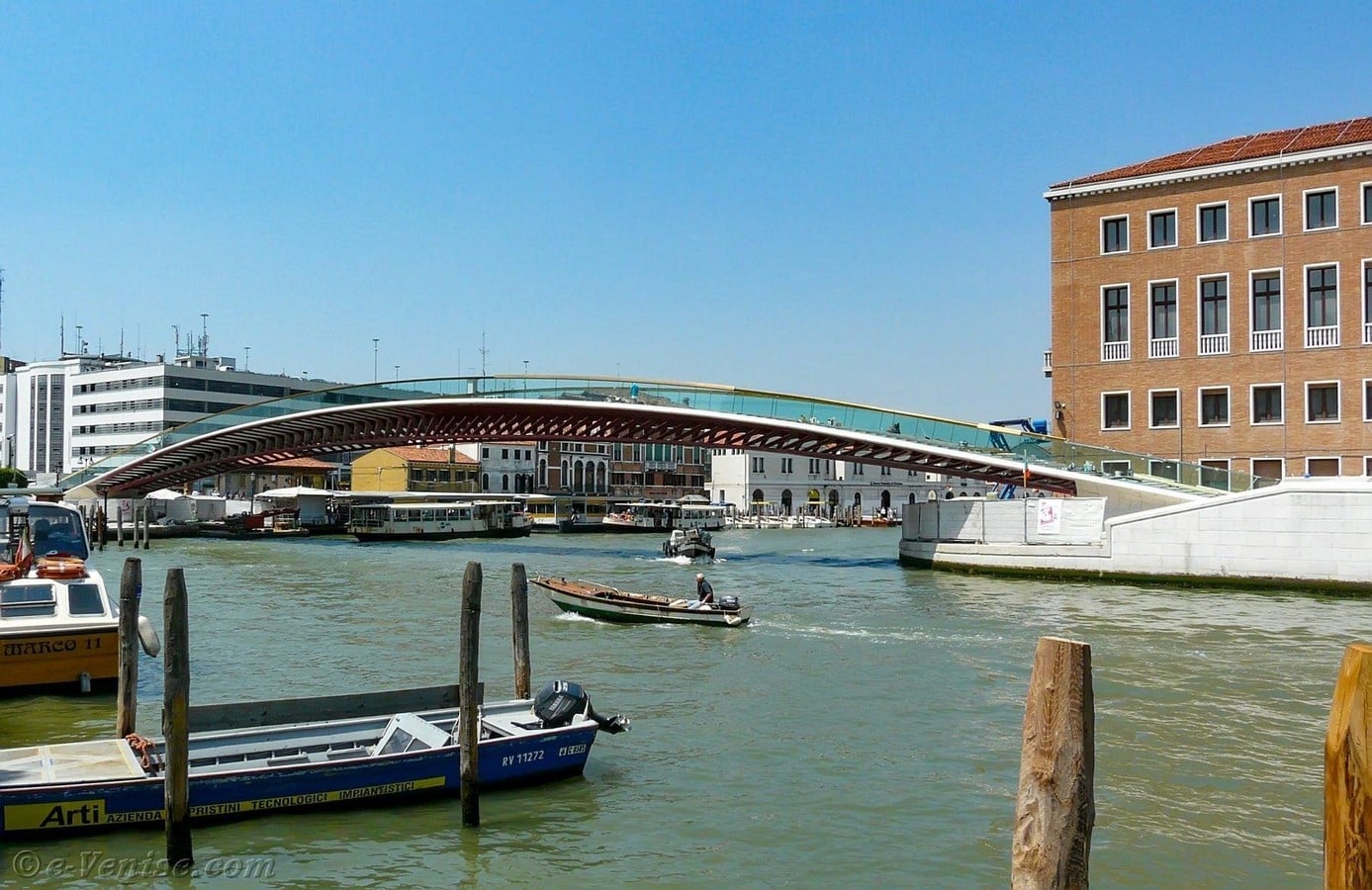
Calatrava has consistently pushed the boundaries of structural expression. This article revisits two of his most debated works, the Zubizuri Footbridge and the Ponte della Costituzione, to examine whether architectural ambition met the realities of engineering, economics, and everyday public use and explore how the pursuit of sculptural expression sometimes comes into conflict with structural performance, financial practicality, and civic responsibility.
Zubi Zuri: A Poetic Form, an Unwalkable Surface
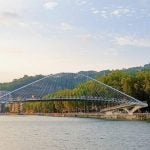
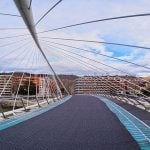
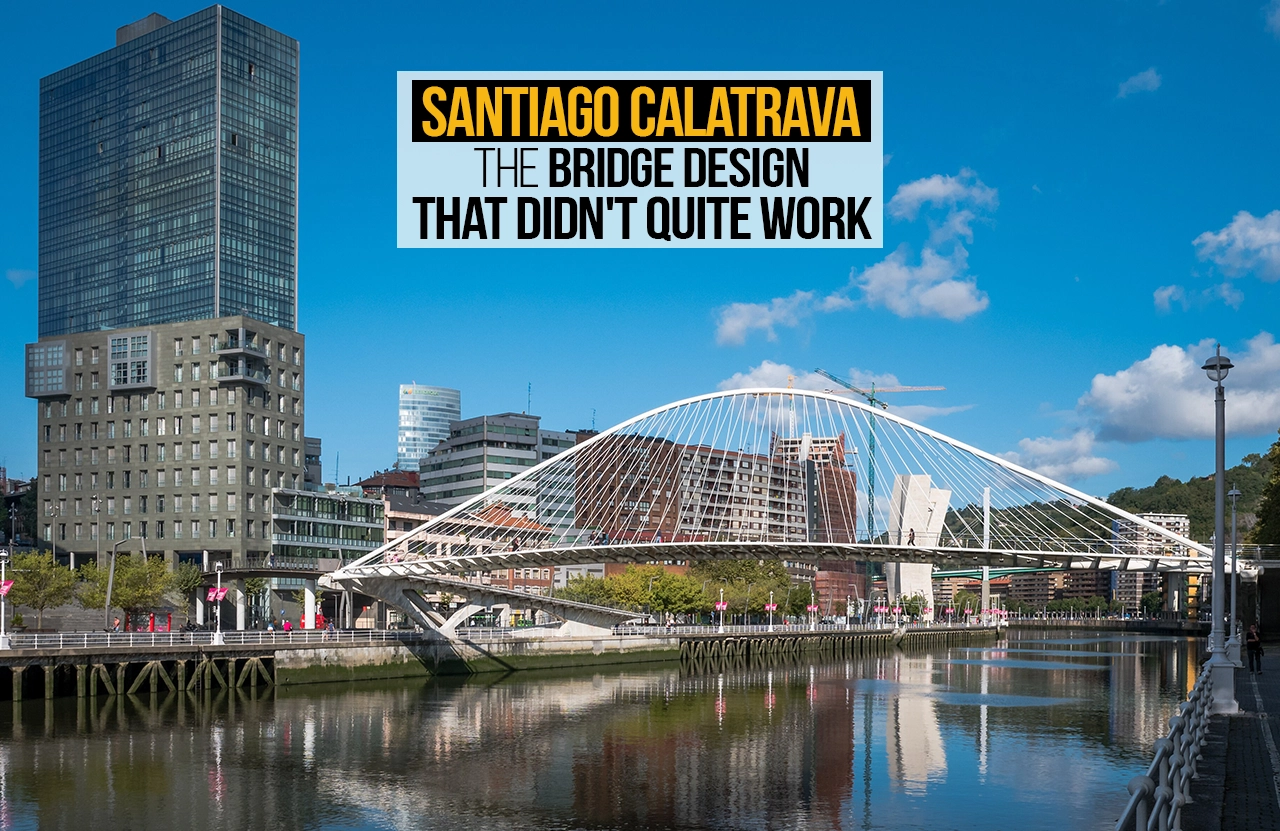
Calatrava’s pattern and its consequences become more pronounced at the Zubizuri Footbridge in Bilbao, completed in 1997. Named Zubizuri, or “white bridge” in Basque, the crossing was conceived as a luminous architectural gesture: a slender deck of translucent glass bricks suspended from a sweeping steel arch over the Nervión River, only a short distance from the Guggenheim Museum. Elegant, weightless, and unmistakably Calatrava, the bridge quickly assumed the status of an urban icon.
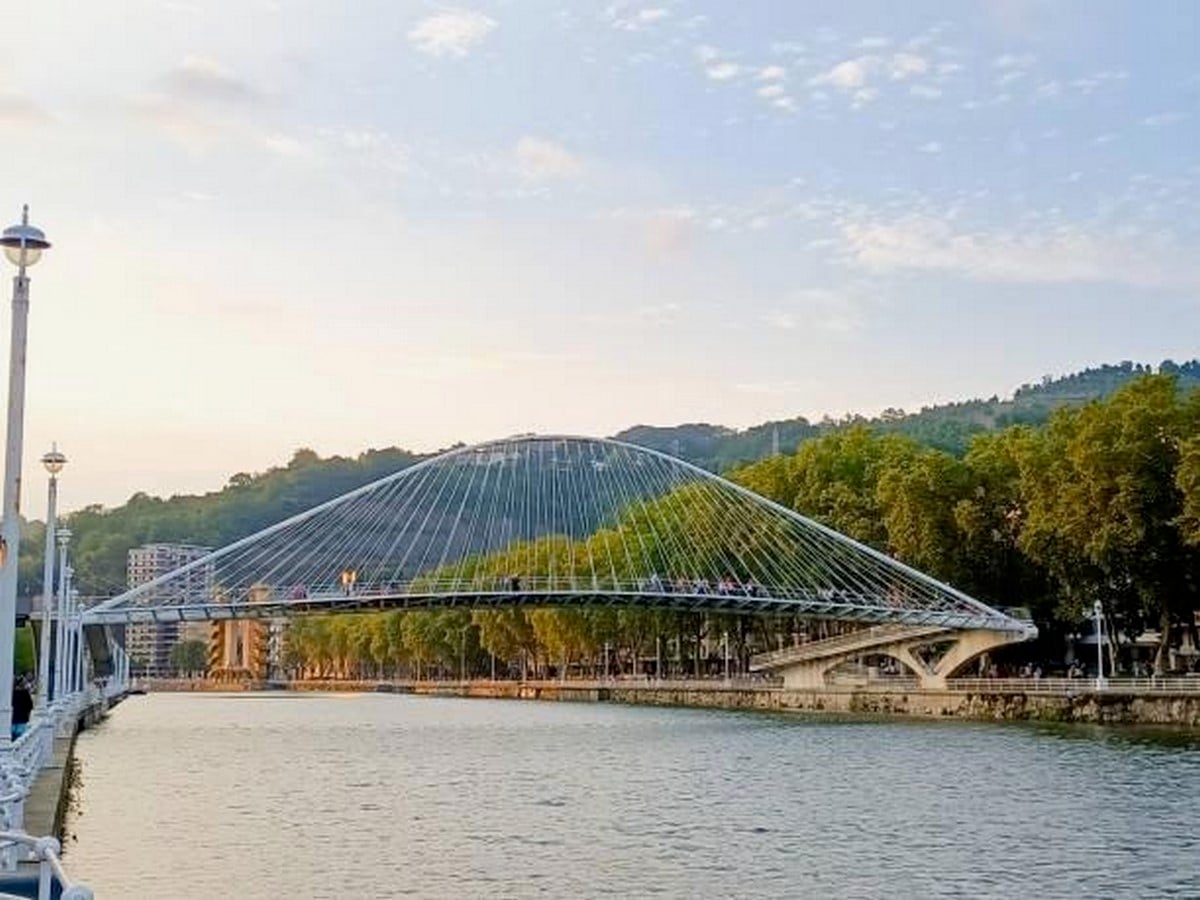
What distinguished the bridge architecturally also undermined it functionally. The translucent glass deck, conceived as an integral component of the bridge’s sculptural identity, became notoriously slippery in Bilbao’s damp climate. The resulting safety concerns compelled the municipality to install anti-slip carpeting over the walkway, replacing visual refinement with a practical solution that ensured the bridge could be used safely throughout the year.
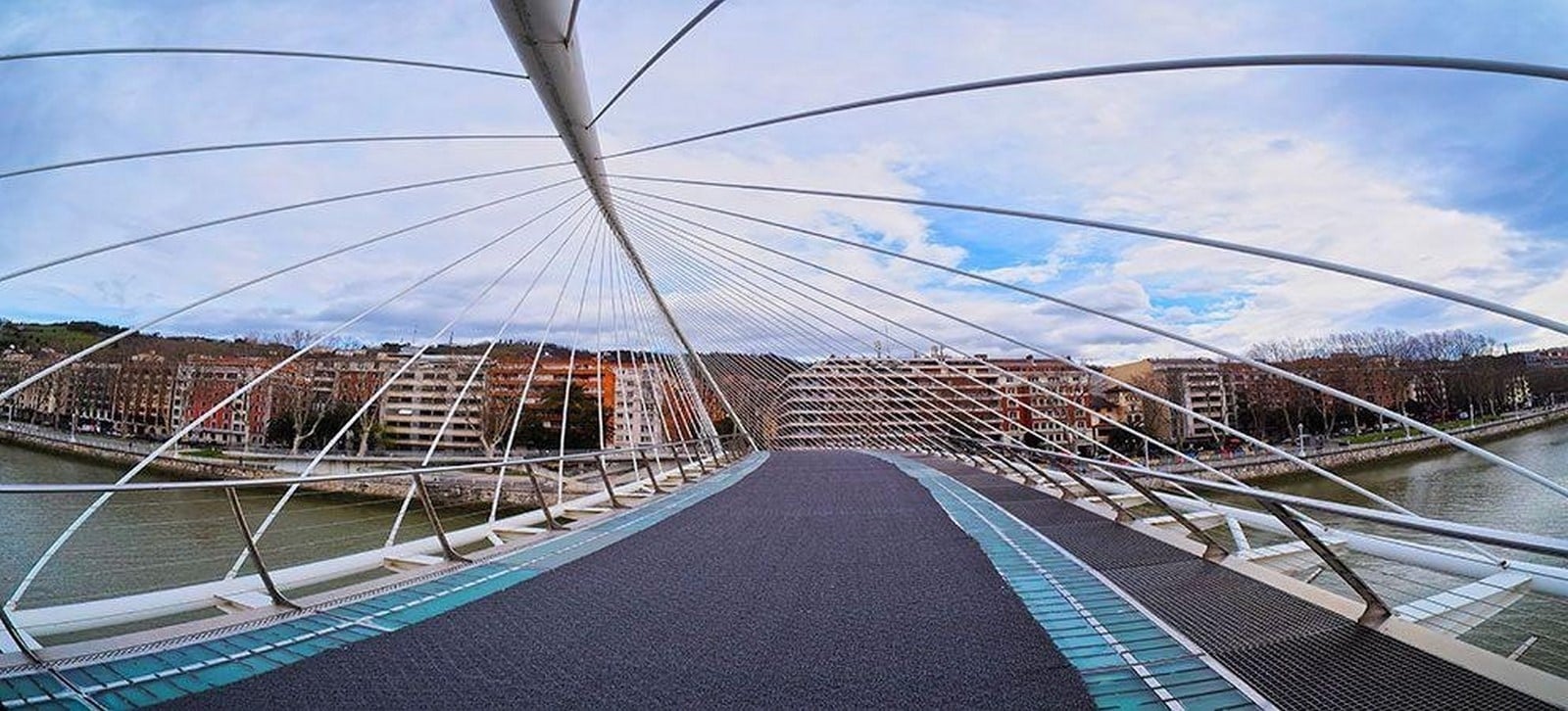
This project also prompted a wider discussion about architectural authorship. In 2007, Bilbao’s municipal authorities introduced an access ramp to improve accessibility and better integrate the bridge within its urban context. Calatrava subsequently challenged the intervention in court, arguing that it compromised the integrity of the original composition. The episode illustrates the delicate balance between preserving an architect’s design vision and accommodating the practical modifications often required of public infrastructure over its lifespan.
The Zubizuri Footbridge demonstrates the complexities that can arise when innovative material choices are applied to public infrastructure. While the glazed deck contributed significantly to the bridge’s distinctive architectural character, its performance in Bilbao’s rainy climate necessitated subsequent modifications to enhance user safety. The project serves as an example of the careful balance required between formal innovation and long-term functionality, a consideration that would again emerge in Calatrava’s later work on the Ponte della Costituzione in Venice.
Ponte della Costituzione:
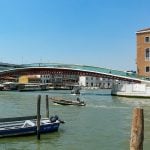
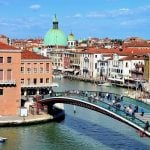
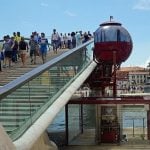
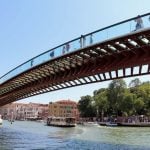
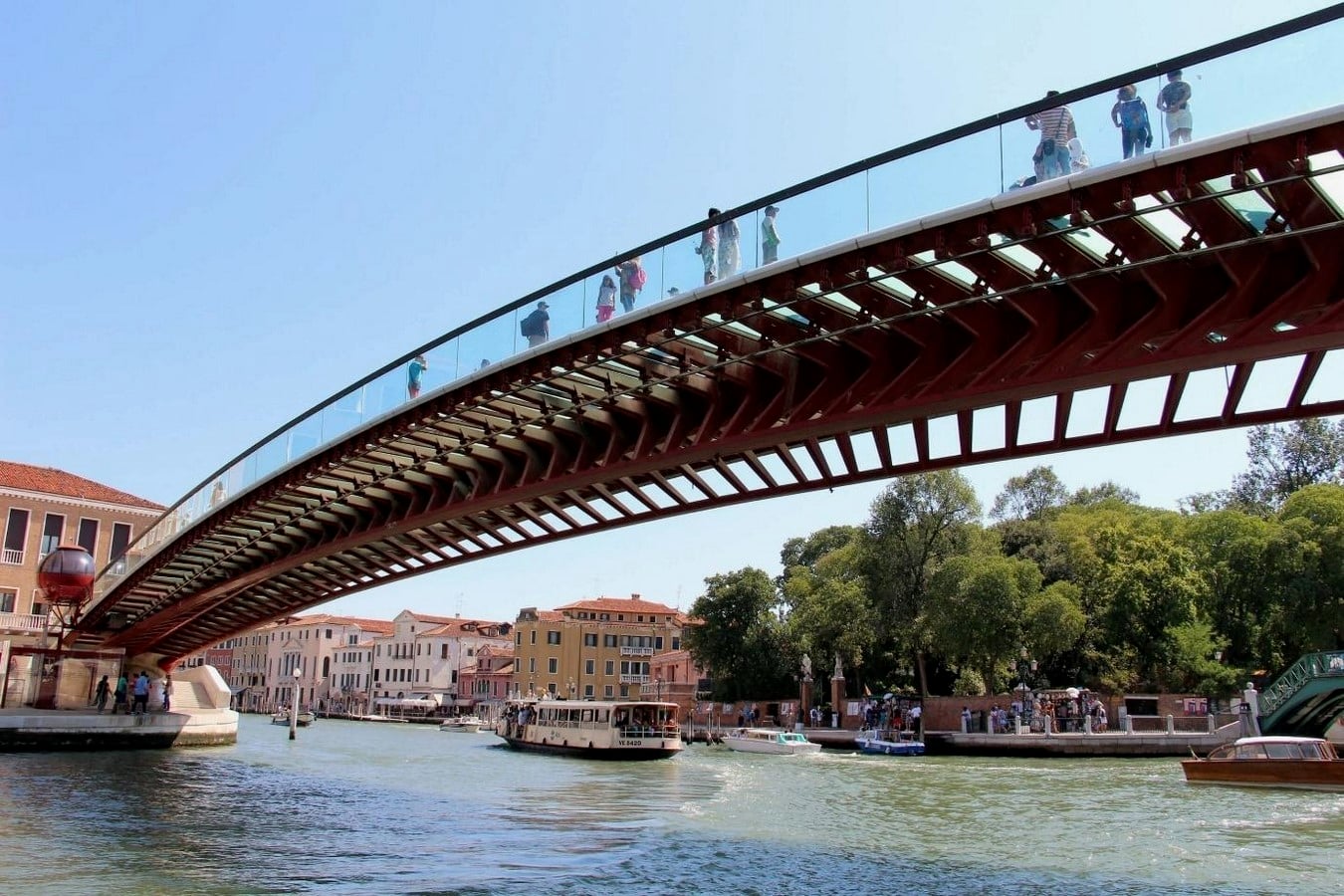
If the Zubizuri Footbridge revealed the practical challenges of an expressive material palette, the Ponte della Costituzione brought those challenges into a far more complex urban setting. Conceived as the fourth bridge across Venice’s Grand Canal, it was the first to be built in centuries. The project represented more than a new pedestrian crossing; it was an intervention in one of the world’s most historically layered urban landscapes. Commissioned in 1999 and inaugurated in 2008, the bridge introduced Calatrava’s characteristic language of steel, glass, and sculptural minimalism into a city long defined by stone arches and centuries of architectural continuity. Its contemporary design sparked debate over modern architecture in historic contexts.
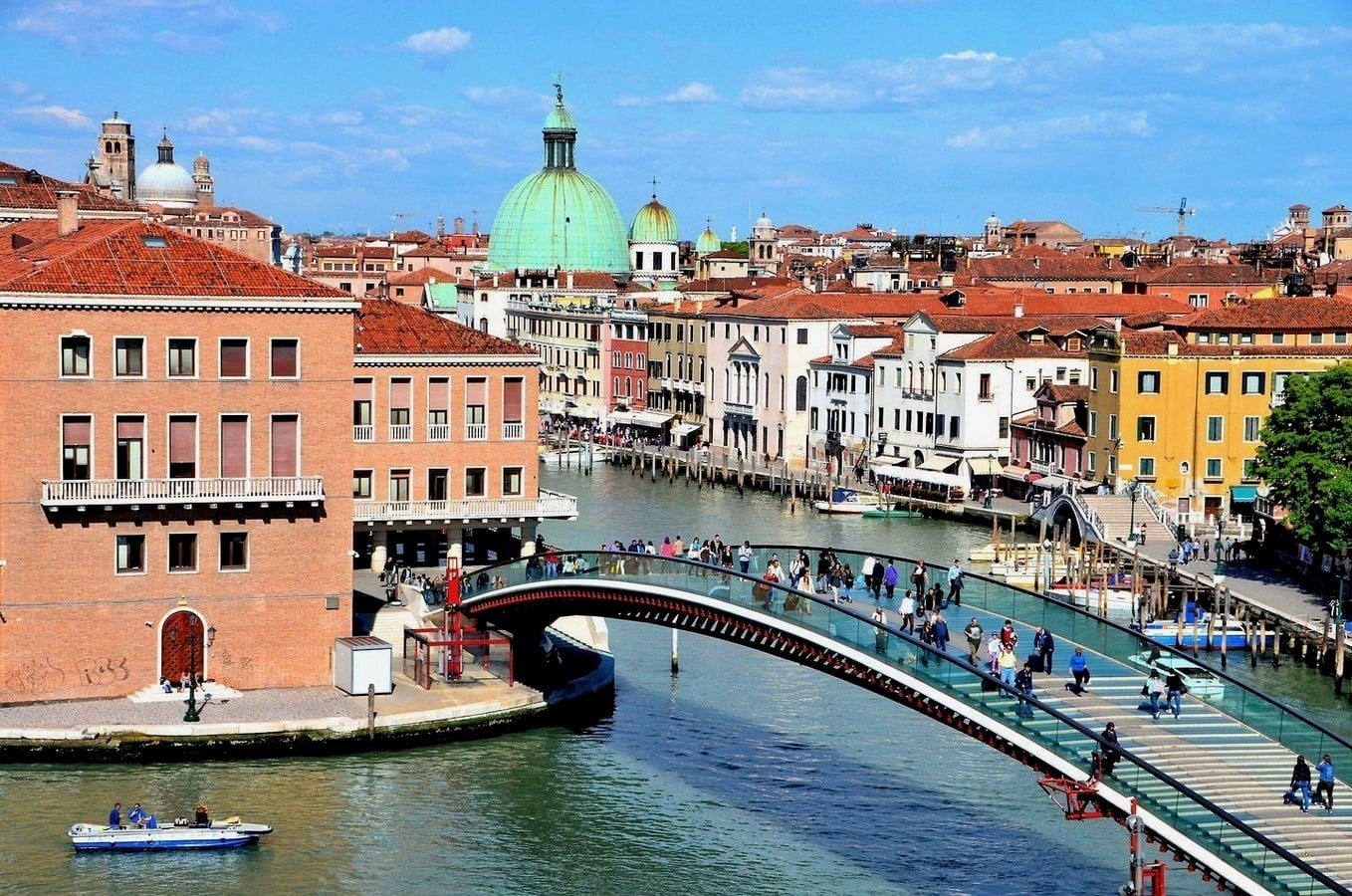
Once the bridge entered everyday use, however, attention increasingly shifted from its architectural symbolism to its performance as public infrastructure. Project costs rose significantly beyond the original estimate, while the stepped configuration drew criticism for its lack of step-free accessibility. This eventually prompted the installation of an inclined lift several years after completion. At the same time, the bridge’s glass-and-stone paving became associated with repeated reports of slips during periods of rain and winter fog, leading to renewed scrutiny of the relationship between material selection, climatic conditions, and pedestrian safety. These collectively shaped public perception of the project, gradually reframing it from an architectural landmark to a subject of wider debate about the responsibilities of civic design. (World Architecture Community, 2019; Arch Paper, 2019)
The discussion ultimately extended beyond public opinion into the legal arena. In 2019, an Italian court concluded that Calatrava was liable for aspects of the bridge’s design, stating that his professional experience required a higher standard of foresight regarding its long-term performance. The judgment also noted that components expected to remain serviceable for decades had deteriorated considerably sooner under routine pedestrian use, including exposure to wheeled luggage and persistent moisture. (CBC News, 2019; World Architecture Community, 2019)
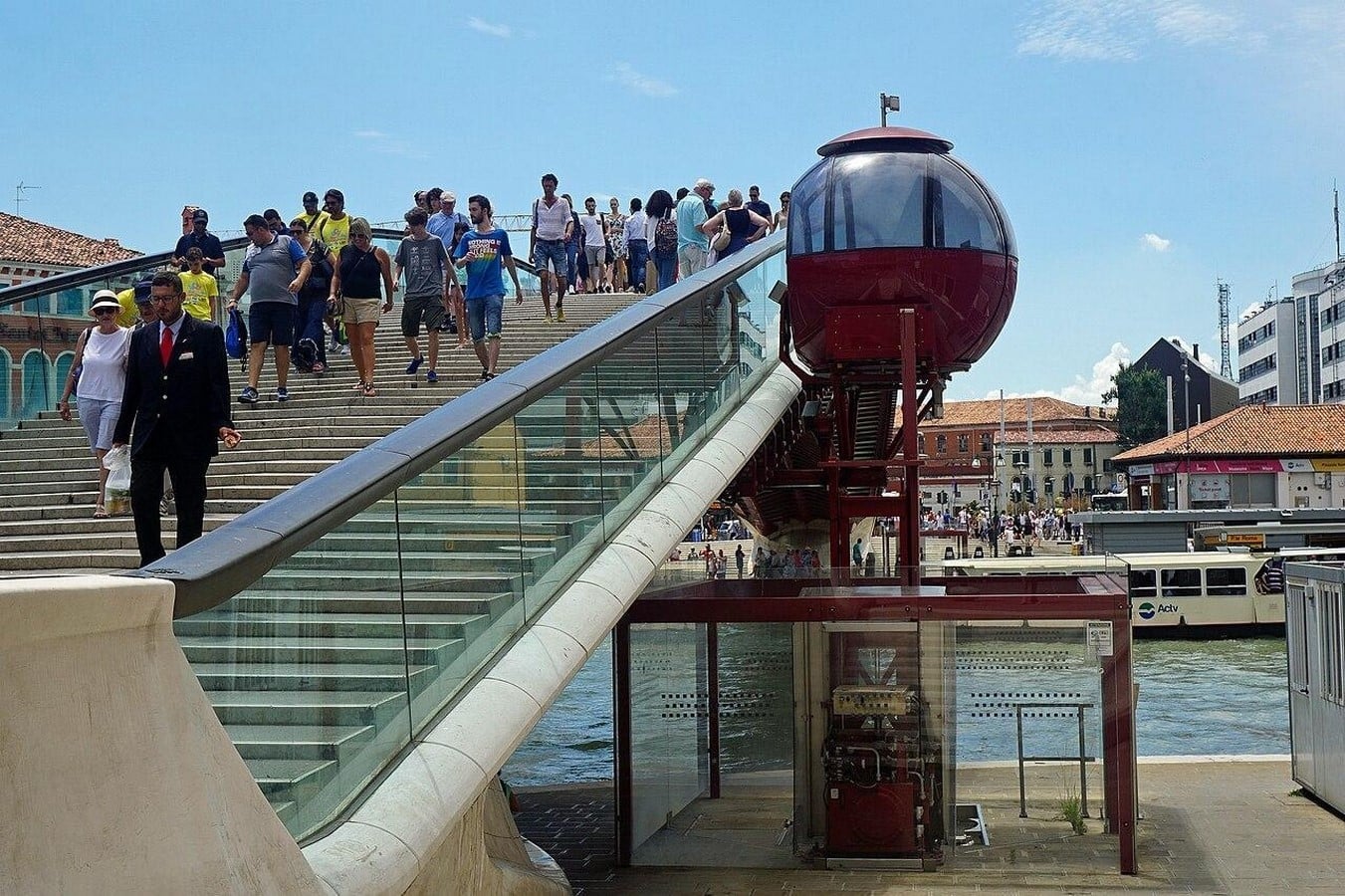
Subsequent remedial works marked the final chapter in the bridge’s evolving story. Venice’s municipal authorities began replacing the original glass panels with trachyte stone to improve durability and reduce maintenance demands, undertaking these interventions independently of Calatrava’s original design team. Today, the Ponte della Costituzione remains both an important contemporary addition to Venice‘s urban landscape and a frequently cited example of the complex negotiation between architectural innovation, material performance, accessibility, and the long-term stewardship of public infrastructure.
What can architects learn from Calatrava?
Calatrava’s bridges continue to captivate because they challenge conventional ideas of what infrastructure can be. They show that bridges transcend infrastructure, transforming the act of crossing into an experience rich with architectural and symbolic meaning. Yet these projects also suggest that the success of public infrastructure cannot be measured by visual impact alone. A bridge ultimately earns its significance in the city not through its silhouette, but through the reliability with which it serves its users. The enduring lesson is therefore not about the limits of architectural ambition, but about the responsibility that accompanies it: ensuring that beauty and performance evolve together rather than in competition.
References:
- Architectural Record (2024) Venice begins dismantling glass steps of Santiago Calatrava’s slippery glass bridge. Available at: https://www.architecturalrecord.com/articles/17273 (Accessed: 20 July 2026).
- Arch Paper (2019) Venice fines Santiago Calatrava for slippery, inaccessible bridge. Available at: https://www.archpaper.com/2019/08/venice-slippery-bridge-fines-santiago-calatrava/ (Accessed: 20 July 2026).
- Architekturaibiznes.pl (2025) Calatrava to fix: Venice bridge finally without glass. Available at: https://www.architekturaibiznes.pl/en/bridge-calatrava-venice-rebuilding,17767.html (Accessed: 20 July 2026).
- Barceló Experiences (2024) The Zubizuri, an iconic yet controversial bridge. Available at: https://www.barcelo.com/guia-turismo/en/spain/bilbao/things-to-do/zubizuri/ (Accessed: 20 July 2026).
- CBC News (2019) Calgary Peace Bridge architect fined $115K for Venice bridge that cracks under tourists’ luggage. Available at: https://www.cbc.ca/news/canada/calgary/bridge-architect-calatrava-fined-1.5252574 (Accessed: 20 July 2026).
- Columbia University (n.d.) Calatrava bridges. Available at: http://www.columbia.edu/imaging/html/calatrava/mos_book.html (Accessed: 20 July 2026).
- e-architect (n.d.) Puente del Alamillo Sevilla, Santiago Calatrava. Available at: https://www.e-architect.com/spain/puente-del-alamillo-sevilla (Accessed: 20 July 2026).
- Structurae (n.d.) Alamillo Bridge (Sevilla, 1992). Available at: https://structurae.net/en/structures/alamillo-bridge (Accessed: 20 July 2026).
- World Architecture Community (2019) Santiago Calatrava to pay fine for his ‘gross negligence’ on Venice bridge. Available at: https://worldarchitecture.org/architecture-news/ecvfc/santiago-calatrava-to-pay-fine-for-his-gross-negligence-on-venice-bridge.html (Accessed: 20 July 2026).
- World-Architects (n.d.) Fixing the Calatrava Bridge. Available at: https://world-architects.com/en/architecture-news/headlines/fixing-the-calatrava-bridge (Accessed: 20 July 2026).