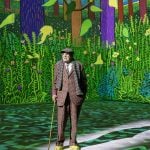
At 88 years old, the influential British artist David Hockney died on June 11, 2026. Originally from Bradford, England, he attended the Royal College of London before moving to Los Angeles in 1964. There, he was most commonly known for his contributions to the Pop Art movement in the 1960s. He also spent time in London and Paris before moving back to the Yorkshire area of England by the end of his life. More than a painter, he dabbled in different media like photography and stage design. He truly turned the ordinary everyday into something much more.
Pop Art
One could argue that one of David Hockney’s most memorable moments came from the 1960’s during the Pop Art movement. In London during his college days, he was a part of the exhibition New Contemporaries, bringing the Pop Art movement to Britain. (However, at the time, his personal works probably aligned more with Expressionism.) Continuing with his influence on Pop Art, after his move to Los Angeles, he was heavily inspired by the Southern California landscape. He uses the newer medium of acrylic to paint a series of swimming pools. A simple subject, but nonetheless one that made waves in still waters. His work, in a way, contradicts what the current American pop artists were doing, which was creating pieces around themes of consumerism, a la another artist with soup cans.
Media Forms
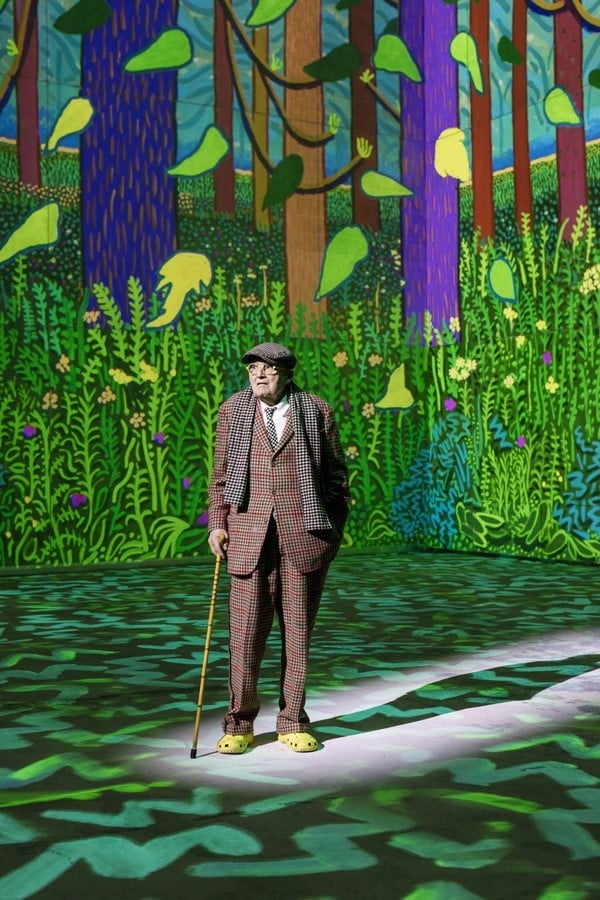
The various forms of media found in the art world were no match for David Hockney and his creativity. This man would use anything available if it sparked his imagination. He was an early adopter of acrylic paints. For their time, the new inventive paints dried much faster than their predecessors, those that were oil-based. Towards the end of his life, he had no fear of embracing digital technologies like the iPad and AI, creating no limits to his craft. Once, he even created works of art with a fax machine. Any new technology was worth pursuing, learning about, and asking questions like how this can be used to add to or even improve various art techniques. A true testament to his skills, Hockney could create art out of any material. Light, shadow and colour are employed where necessary, in subjects ranging from picturesque landscapes to the human form to everyday objects.
His Personal Life
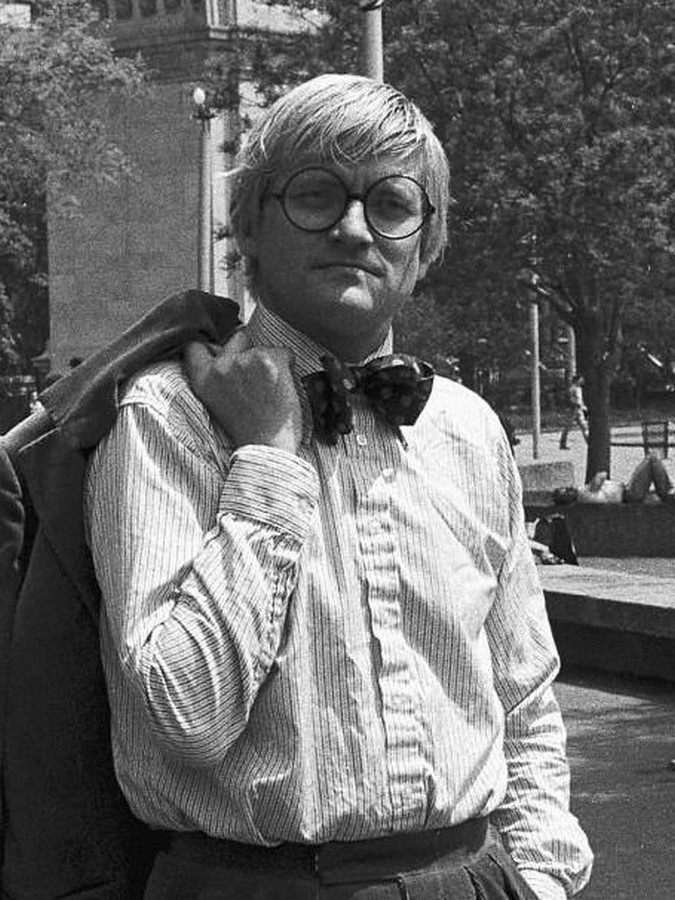
While not overly obvious in his works, it was known that David Hockney came out as gay while studying in London at the age of 23. It would be seven more years for Britain to pass the Sexual Offences Act 1967, which would legalise homosexual relations between men. Despite this, that does not mean it was widely accepted or viewed favourably among the general public. But there was Hockney, not afraid to embrace his true self. His art was just that, art. There were a few works that included homosexual themes, but not in a strategic or forceful way. Rather, these pieces are mixed in among his more common everyday themes. It brought a sense of normalisation, despite the era.
A Lasting Legacy
David Hockney lived a long life, creating art wherever he went, drawing on any inspiration he found. He lived in many places over the years, from the landscapes of California to his birthplace of Yorkshire, England. He used new media ranging from his early days with acrylic paint to the end, embracing digital technologies like the iPad and AI; he had no limits to his craft. This influential British artist created an oeuvre that will be remembered forever. His willingness to be himself and present the ordinary as art leaves a lasting legacy for anyone who interacts with his work, from the casual observer to the art aficionado.