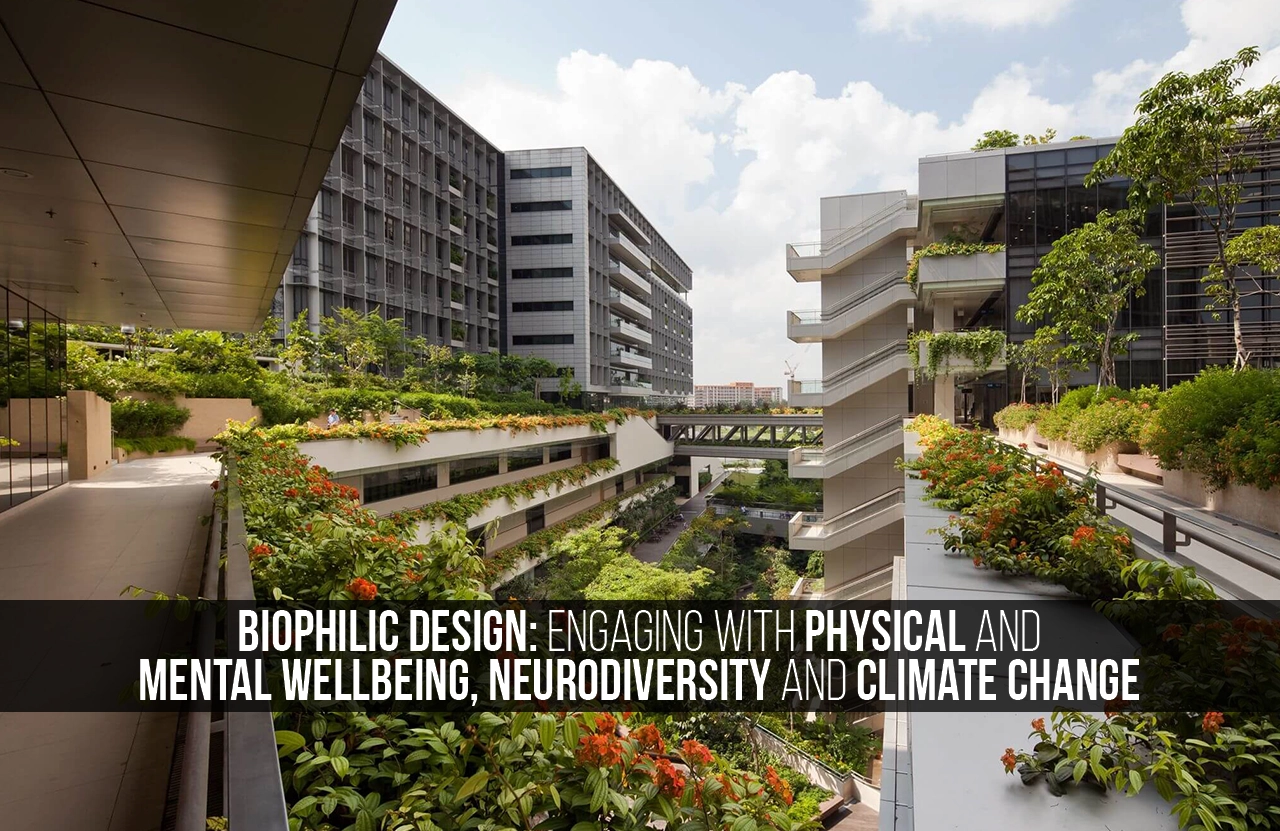
Biophilic design within the built environment is often described as performative, with many attributing its purpose to aesthetics and social value alone. The return of nature to the built environment, however, is indeed reflective of its biophilic sentiment, providing many benefits to humans regarding their wellbeing, neurodiverse counterparts and climate change.
Biophilic Design
The term ‘biophilia’, coined independently by German psychologist Erich Fromm in 1964 and American biologist E.O. Wilson in 1984, is derived from the Greek words ‘bio’ and ‘philia’, meaning ‘life’ and ‘love’ (Aminpour, Katz and Skattebol, 2024). The idea of ‘biophilia’ is strongly associated with an understanding that humans have an innate need, desire or tendency to connect with life and living things (Gaekwad et al., 2022). Biophilic design therefore describes a concerted effort to integrate nature and its living elements into the built environment, creating buildings that further connections between humans and nature in an increasingly urbanised world (Hayes Hursh, Perry and Drake, 2024). This can be expressed through green infrastructure such as green walls and Sustainable Urban Drainage Systems (SuDs) or alluded to through biomimetic innovation. Biophilia differs from biomimicry because of its human-centric focus; whilst biomimicry aims to emulate natural forms, biophilia aims to integrate the natural to improve human health and wellbeing.
Wellbeing
Studies have linked biophilic experiences with lower cortisol levels, blood pressure, and pulse rate; increased creativity and focus, better sleep, reduced depression and anxiety, higher pain tolerance, and even faster recovery from surgery – demonstrating its impact on both physical and mental wellbeing (McLendon, 2020). With 90% of people imagining themselves in a natural setting when asked to think of a place where they feel ‘relaxed and calm’ (Planteria Group, 2020), it’s no surprise that biophilic design has been incorporated into modern healthcare and recreational architecture. A 2019 study by Aarhus University, Denmark, suggested that integrating natural environments into urban planning was a promising approach to improving mental health and reducing the rising global burden of psychiatric disorders, revealing that children who grew up with the lowest levels of green space had up to 55% higher risk of developing a psychiatric disorder (Engemann et al., 2019). Furthermore, integrating nature into the office environment is also shown to improve wellbeing by 13% and productivity by 8% (Ashton, 2025).
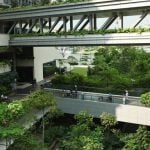
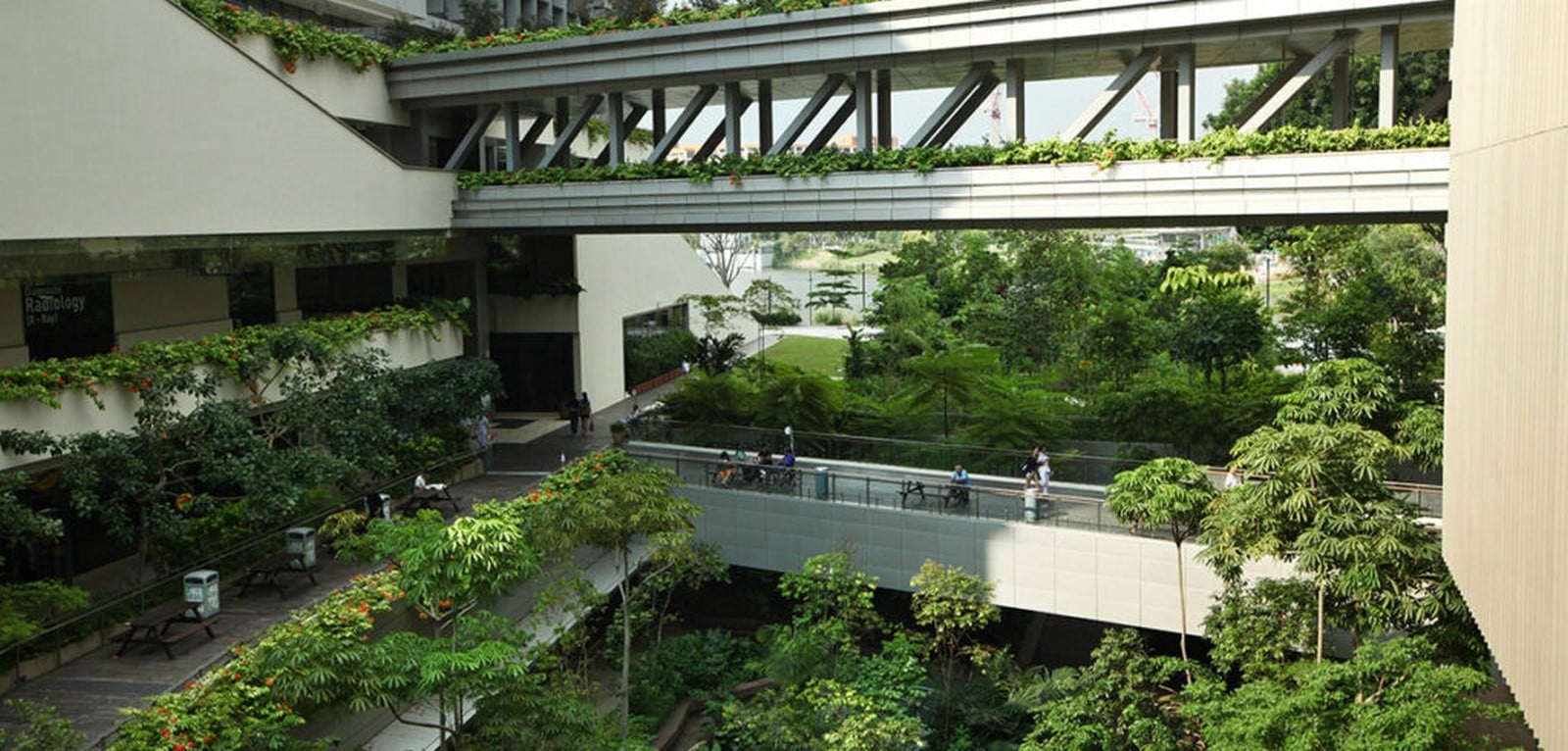
A key example of biophilic design within healthcare architecture is Khoo Teck Puat Hospital (KTPH) in Singapore; the winner of the first-ever Stephen R. Kellert Biophilic Design Award (Living Future, n.d.). Driven by the former CEO’s request that the hospital be designed so that “one’s blood pressure lowers when he/she enters the hospital grounds”, the hospital was designed to help patients forget their pain and improve their rate of recovery. This was achieved by immersing visitors in a natural healing environment; creating an invigorating park-like ambience for caregivers and the general public; enhancing views and access to nature to create a conducive working environment for staff (International Living Future Institute, 2025).
Neurodiversity
Studies suggest that neurodivergent people are more susceptible to sensory overload and difficulties with adaptive functioning, further complicating the dynamic social, intellectual and practical demands of everyday life (Robertson and Baron-Cohen, 2017). Research shows, however, that nature can not only help children with autism tolerate and process information (Li et al., 2019), but also increase the adaptive functioning of children with the presence of animals compared to toys (Droboniku and Mychailyszyn, 2021). Biophilic design interventions such as integrating natural lighting make it possible to rely less on intense artificial lighting, which can create challenges for people with sensory differences. Such studies recommend high-level windows for natural light, with placement that avoids glare and silhouetting (Aminpour, Katz and Skattebol, 2024).
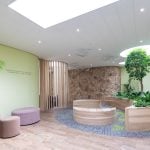
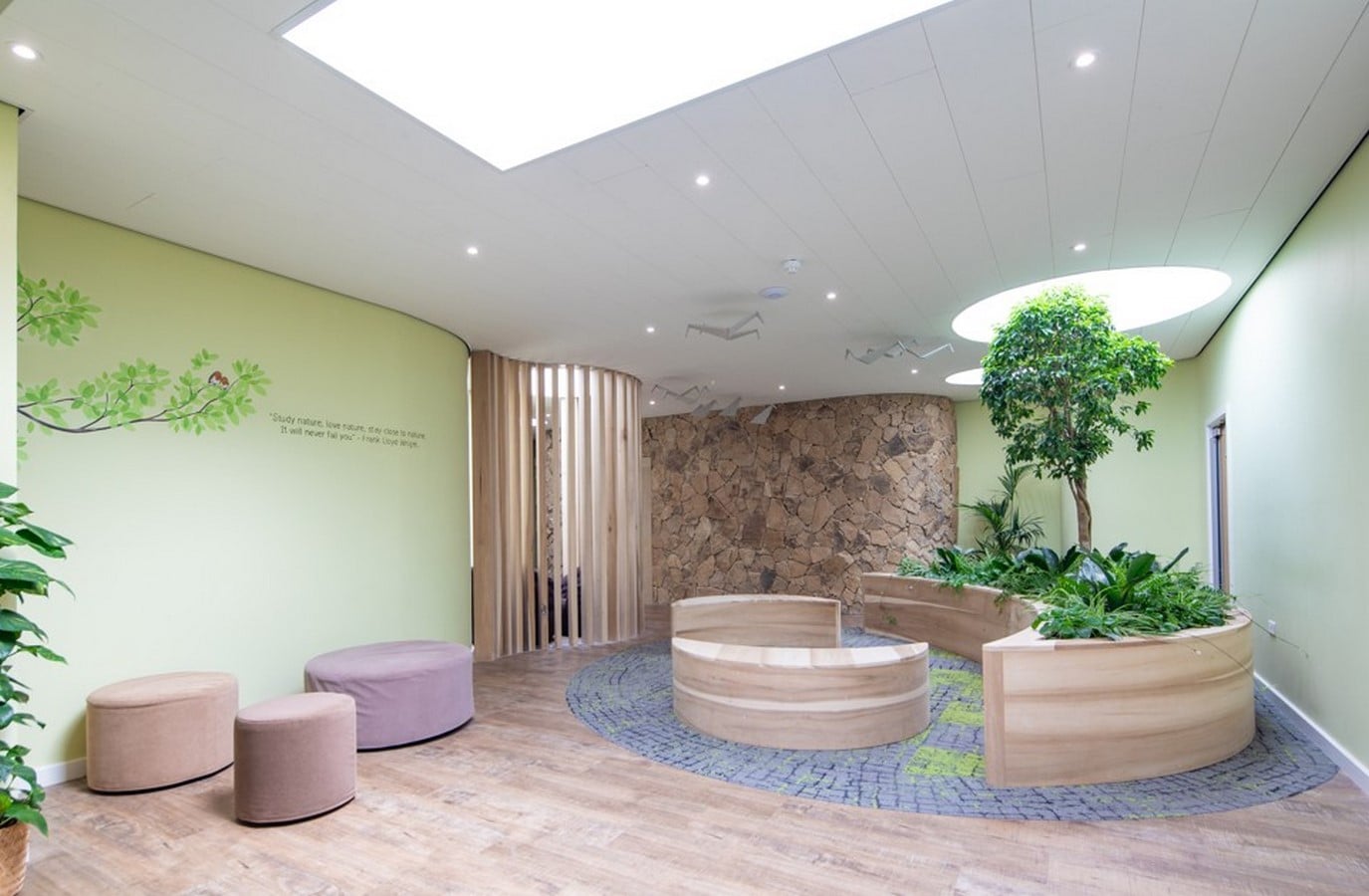
Biophilic design strategies such as these can be seen in the UK’s first biophilic SEN school, West Riding School in Barnsley, South Yorkshire. Described by Harrowgate Garden Design as fostering ‘calm, focus, and engagement’, the school aims to prioritise ‘natural light’, ‘sensory regulation’, and ‘emotional safety’ to create a nurturing atmosphere that supports both emotional and cognitive development (Mono Masonry, 2025). By introducing additional windows and rooflights to maximise daylight and improve circadian rhythm regulation, the results have led to several pupils no longer requiring melatonin to support sleep (Biophilic Innovations, 2026).
Climate Change
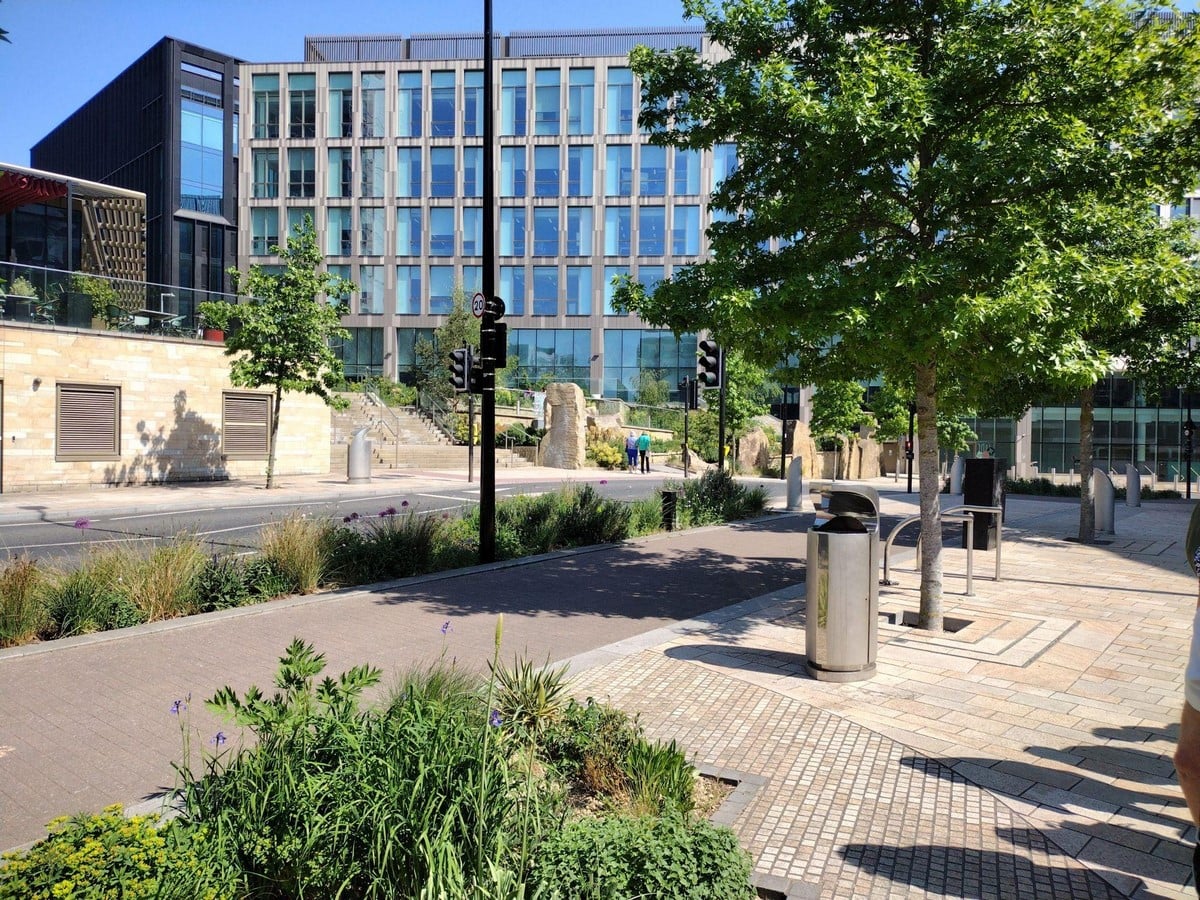
Biophilic design can also engage with the extreme weather conditions and natural disasters accompanying climate change. The Urban Heat Island (UHI) effect is a key example, describing the elevated temperatures felt in towns and cities in comparison to rural counterparts. Felt particularly at night, this is a result of the heat retained by artificial surfaces, such as concrete, being slowly released (Royal Meteorological Society, 2017). Biophilic urban design, such as the presence of a high vegetation cover, can increase shading areas, block radiation, and reduce air temperature (Li and He, 2025). Sustainable Urban Drainage systems can also
Biophilic design, therefore, whilst aesthetic, can also improve wellbeing, neurodiversity and climate change; contributing to a healthier, more inclusive and safer built environment for everyone. Though exposure to nature elicits a positive response in most individuals, it is important to note that not all individuals enjoy pleasure from being near the natural environment (Li and He, 2025) and therefore, biophilic design must not be overbearing as such. The return of nature into the built environment, therefore, is not merely an aesthetic or performative practice, but one backed by research with a proven positive impact on humankind worldwide.
Reference list:
Aminpour, F., Katz, I. and Skattebol, J. (2024). What Is Biophilic Design? 3 Ways ‘green’ Buildings Work Better for Neurodivergent People. [online] The Conversation. Available at: https://theconversation.com/what-is-biophilic-design-3-ways-green-buildings-work-better-for-neurodivergent-people-226003 [Accessed 13 Jun. 2026].
Ashton, D. (2025). What Is Biophilic Architecture? 15 real-world Examples in the Built Environment. [online] University of the Built Environment. Available at: https://www.ube.ac.uk/whats-happening/articles/biophilia-examples-built-environment/ [Accessed 13 Jun. 2026].
Biophilic Innovations (2026). West Riding SEN Provision, Barnsley. [online] biophilicinnovations.co.uk. Available at: https://biophilicinnovations.co.uk/west-riding-barnsley/ [Accessed 14 Jun. 2026].
Droboniku, M.J. and Mychailyszyn, M.P. (2021). Animal Interaction Affecting Core Deficit Domains among Children with Autism: a Meta-Analysis. Journal of Autism and Developmental Disorders. doi:https://doi.org/10.1007/s10803-021-04891-3.
Engemann, K., Pedersen, C.B., Arge, L., Tsirogiannis, C., Mortensen, P.B. and Svenning, J.-C. (2019). Residential Green Space in Childhood Is Associated with Lower Risk of Psychiatric Disorders from Adolescence into Adulthood. Proceedings of the National Academy of Sciences, [online] 116(11), pp.5188–5193. doi:https://doi.org/10.1073/pnas.1807504116.
Gaekwad, J.S., Sal Moslehian, A., Roös, P.B. and Walker, A. (2022). A Meta-Analysis of Emotional Evidence for the Biophilia Hypothesis and Implications for Biophilic Design. Frontiers in Psychology, [online] 13(13). doi:https://doi.org/10.3389/fpsyg.2022.750245.
Hayes Hursh, S., Perry, E. and Drake, D. (2024). What Informs Human–nature connection? an Exploration of Factors in the Context of Urban Park Visitors and Wildlife. People and Nature, 6(1). doi:https://doi.org/10.1002/pan3.10571.
International Living Future Institute (2025). Khoo Teck Puat Hospital. [online] International Living Future Institute. Available at: https://living-future.org/case-studies/award-winner-khoo-teck-puat-hospital/ [Accessed 14 Jun. 2026].
Li, D., Larsen, L., Yang, Y., Wang, L., Zhai, Y. and Sullivan, W.C. (2019). Exposure to nature for children with autism spectrum disorder: Benefits, caveats, and barriers. Health & Place, [online] 55(1), pp.71–79. doi:https://doi.org/10.1016/j.healthplace.2018.11.005.
Li, Y. and He, B.-J. (2025). Biophilic Street Design for Urban Heat Resilience. Progress in Planning, 199, pp.100988–100988. doi:https://doi.org/10.1016/j.progress.2025.100988.
Living Future (n.d.). Biophilic Design Award. [online] International Living Future Institute. Available at: https://living-future.org/biophilic-design/award/ [Accessed 14 Jun. 2026].
McLendon, R. (2020). How Biophilia Can Improve Your Life. [online] Treehugger. Available at: https://www.treehugger.com/how-biophilia-can-improve-your-life-4868182 [Accessed 13 Jun. 2026].
Mono Masonry (2025). West Riding School – Case Study | Mono Masonry. [online] Mono Masonry. Available at: https://monomasonry.co.uk/case-studies/west-riding-school/ [Accessed 14 Jun. 2026].
Planteria Group (2020). Biophilia – What Is It and Why Is It important? [online] Planteria. Available at: https://www.planteriagroup.com/blog/biophilia-what-is-it-and-why-is-it-important/ [Accessed 13 Jun. 2026].
Robertson, C.E. and Baron-Cohen, S. (2017). Sensory Perception in Autism. Nature Reviews Neuroscience, [online] 18(11), pp.671–684. doi:https://doi.org/10.1038/nrn.2017.112.
Royal Meteorological Society (2017). Urban Heat Islands. [online] RMetS. Available at: https://www.rmets.org/metmatters/urban-heat-islands [Accessed 14 Jun. 2026].