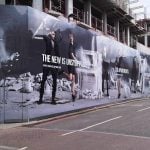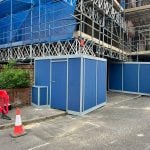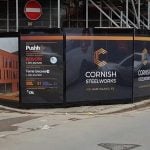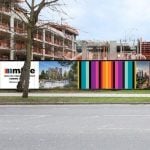
When we walk through cities and developing areas, it’s easy to spot temporary façades along the pavements, usually accompanied by the sounds of construction just beyond the advertisements for upcoming corporate and residential spaces. These façades are known as construction hoardings, providing a visual and auditory barrier between the ongoing work and passersby. But what are these partitions, really? And how can they play into the use of temporary media as a means of public communication on a larger scale—beyond just builders and developers?
What are Construction Hoardings?
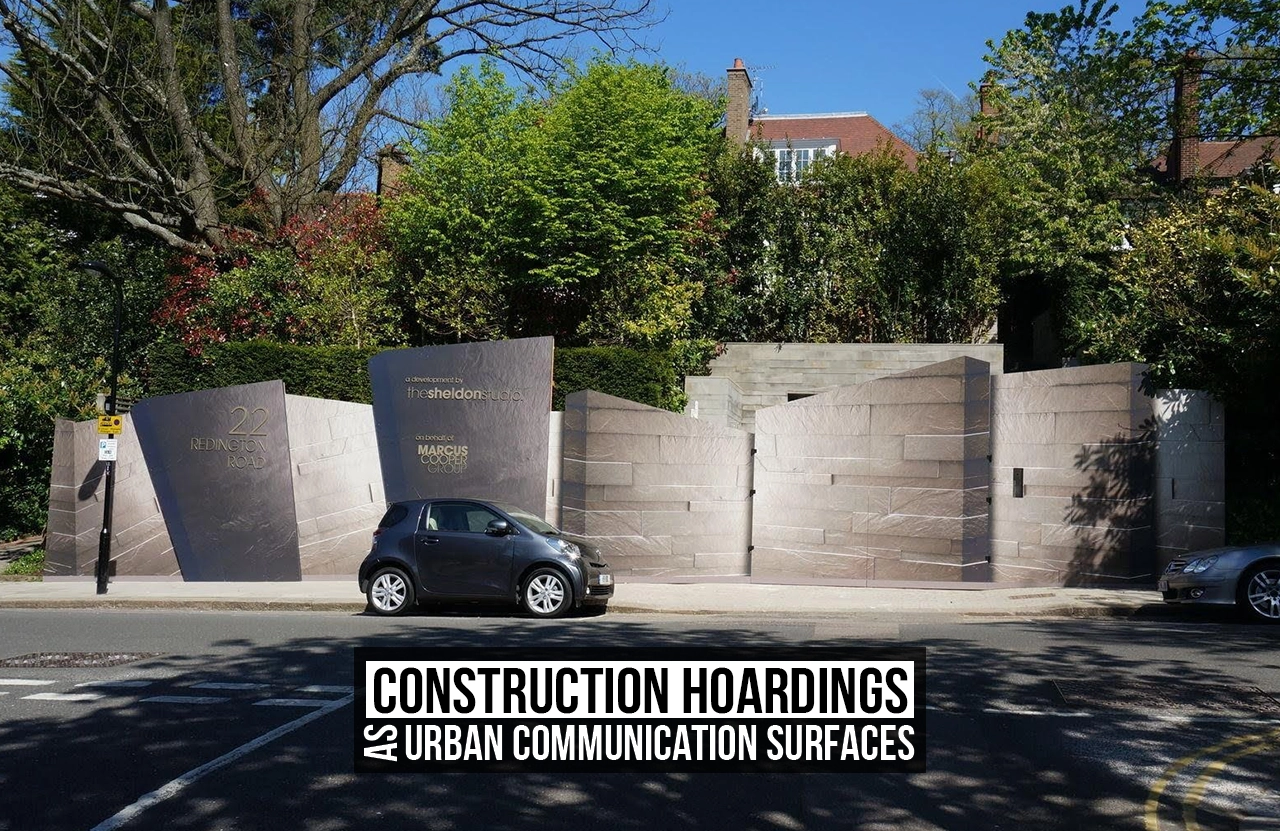
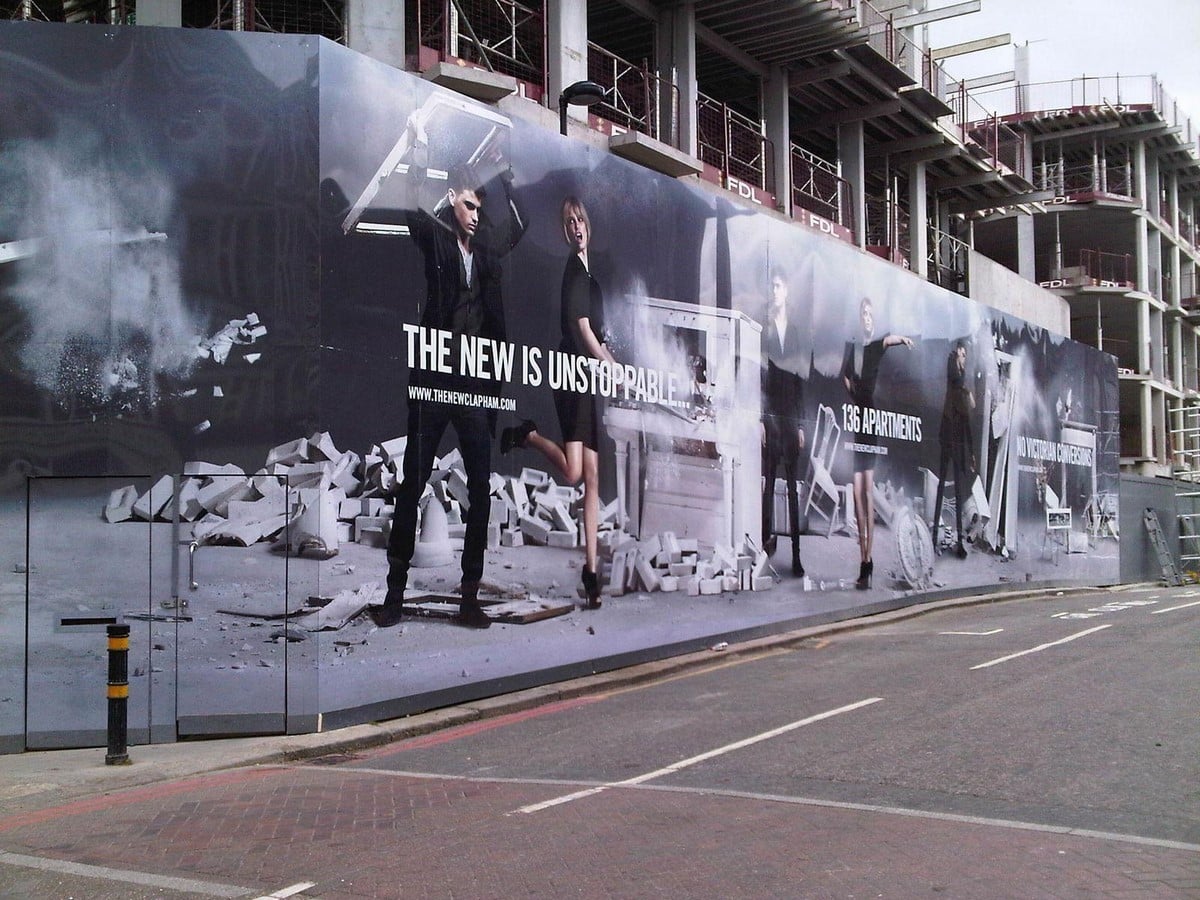
One of the most common forms of construction hoarding is the classic solid barrier that stands straight up from the ground. These barriers can be just tall enough to obstruct view and unauthorised access or multiple meters in height, in the case of multi-storey construction sites. These are commonly seen in public or outdoor spaces, providing a direct means of street communication with pedestrians and passengers alike.
However, construction hoardings can also be observed indoors—in malls, commercial centres, hospitals, public centres, etc.—and are better known as retail or internal hoardings. These hoardings are usually shorter, just above lintel level or up to the ceiling to provide a barrier for their respective indoor or semi-outdoor spaces.
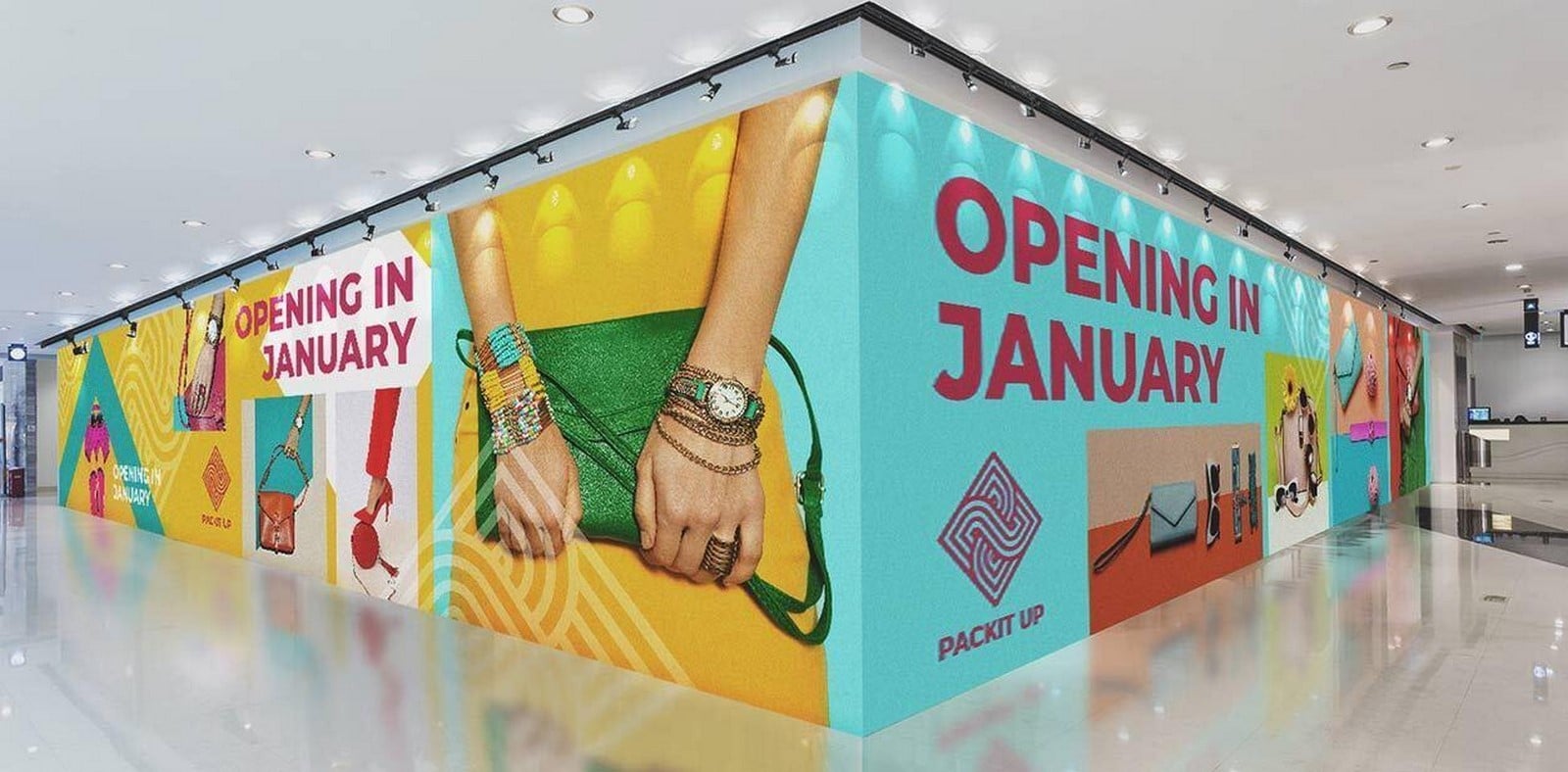
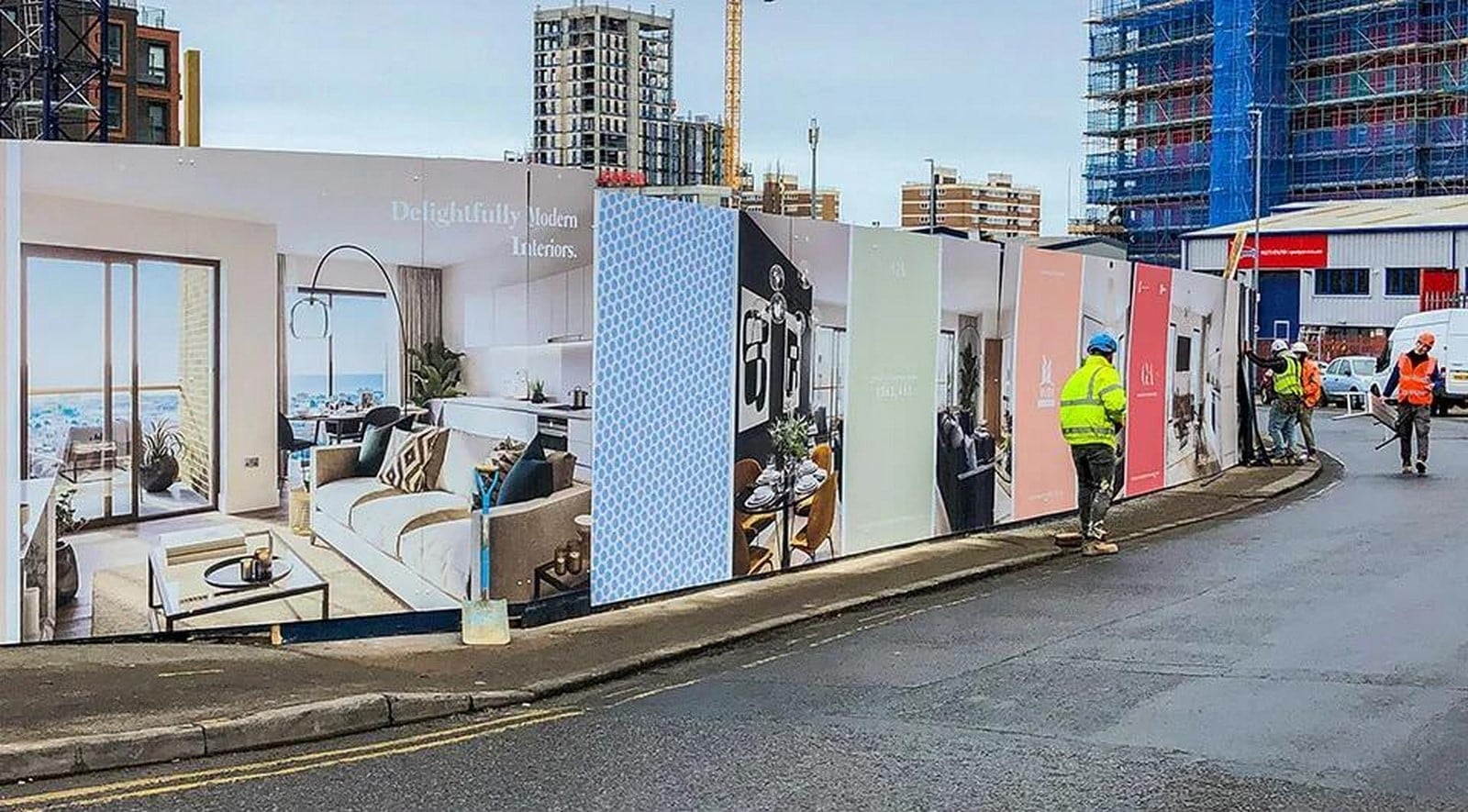
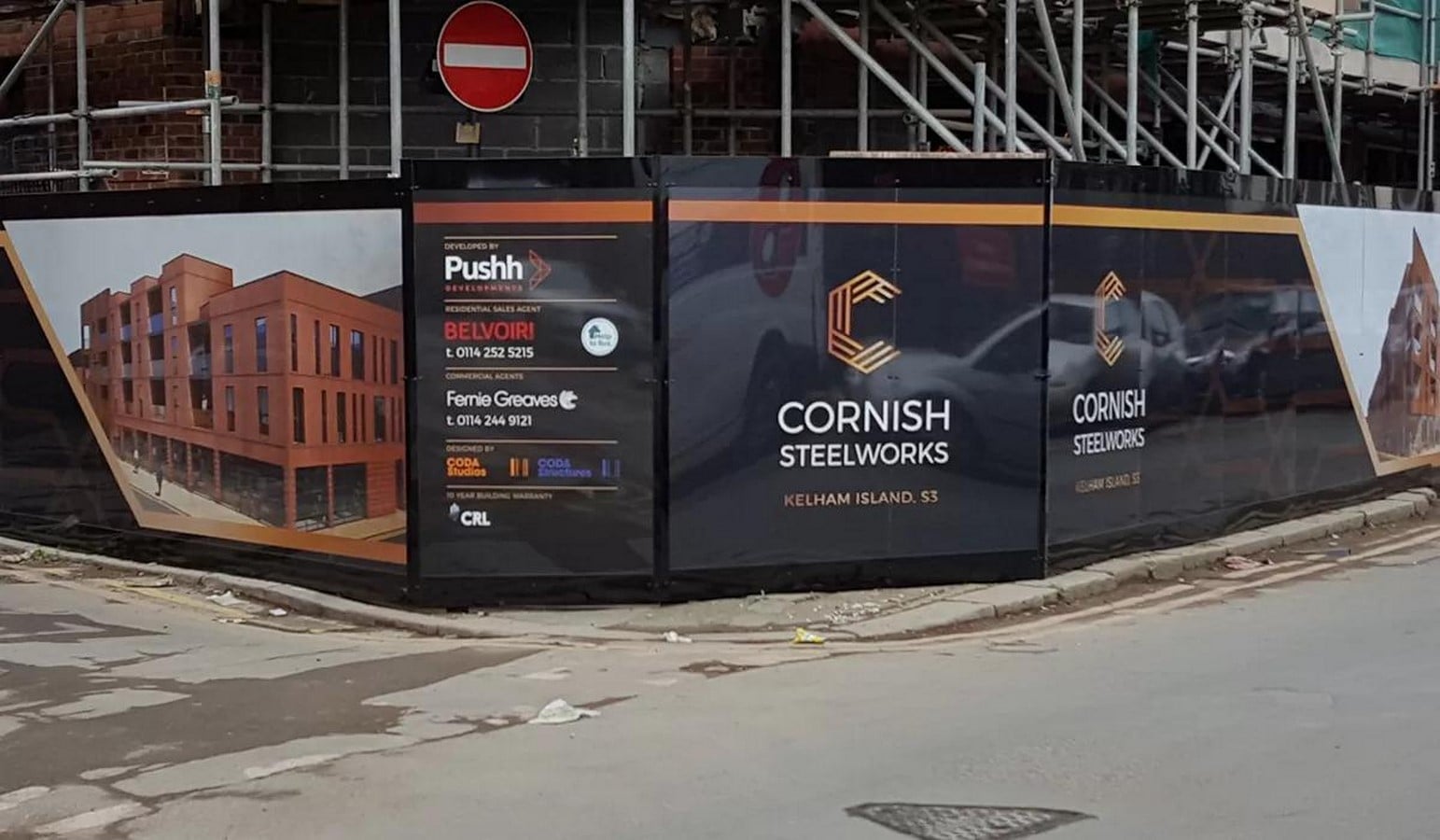
In both respects, the hoardings are used as temporary media, usually to advertise the purpose of the space under development. For outdoor construction hoardings, namely for residential and large-scale commercial developments, the outer façades showcase renders and views of the upcoming projects. Similarly, the interior hoardings often feature “Coming Soon” or “Under Construction” signs, hinting at the space to come. Both cases successfully entice their target audience and build anticipation with the right approach and advertisement.
Different Types of Hoardings
While hoardings may differ between internal/retail and construction hoardings, it is also important to note that these partitions also come in various materials and forms. For most public developments, it is common to see a metal framework with either a solid timber or steel panel attached, forming a temporary fence that blocks excess noise, dust, and other debris from the site to pedestrian/street areas. Other material options include PVC/uPVC, aluminium, sustainable plastics, composite materials, and even concrete.
Additionally, there is also the case where overhead hoarding, similar to scaffolding, is required. Overhead hoardings are less common in Indian cities, but they are a more familiar sight in other cities around the world. The main purpose of this type of hoarding is the safety of pedestrians in areas where crowds tend to gather, and it is generally not used as a form of temporary media. The structure is more complex than the upstanding hoarding and protects pedestrians from falling objects and similar potential risks.
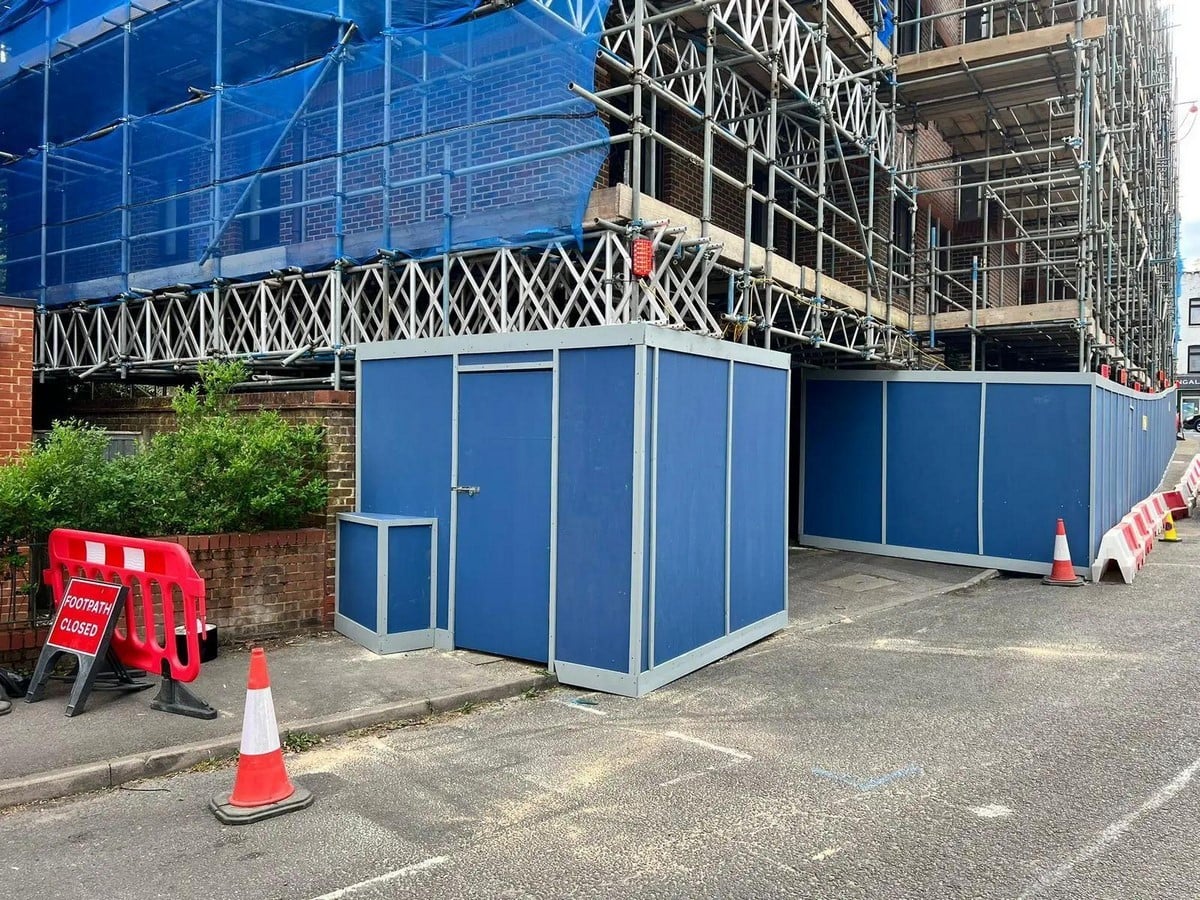
While the façades of regular hoardings can easily be customised to advertise the spaces within, so can overhead hoardings, though in a slightly different way. Here, the scaffolding can be covered with panels of the preferred material and then customised to fit the space’s theme while maintaining its own character as part of the street.
Construction Hoardings as Street Communication
Depending on the type of hoarding used in a given space, the exterior façade design or advertisement reaches a different audience. Considering the internal/retail hoardings first, the main audience reached is the people who frequent the space. In malls and commercial spaces, this will be people who are there to consume goods and services; in hospitals, this will be patients and healthcare staff; in public spaces (e.g., museums, libraries, etcetera), this will be the patrons, students, and other people who work and visit the buildings. In each case, though varied, the target audience and the audience reached by the temporary media on the hoardings are mostly the same.
Conversely, treating the upstanding and overhead hoardings as a single unit, these façades are visible to both vehicular and pedestrian traffic. Media on these hoardings may be targeted to a specific audience (e.g., advertisements for residential developments). Still, they reach a much wider audience, especially if the site is located in a high-traffic area.
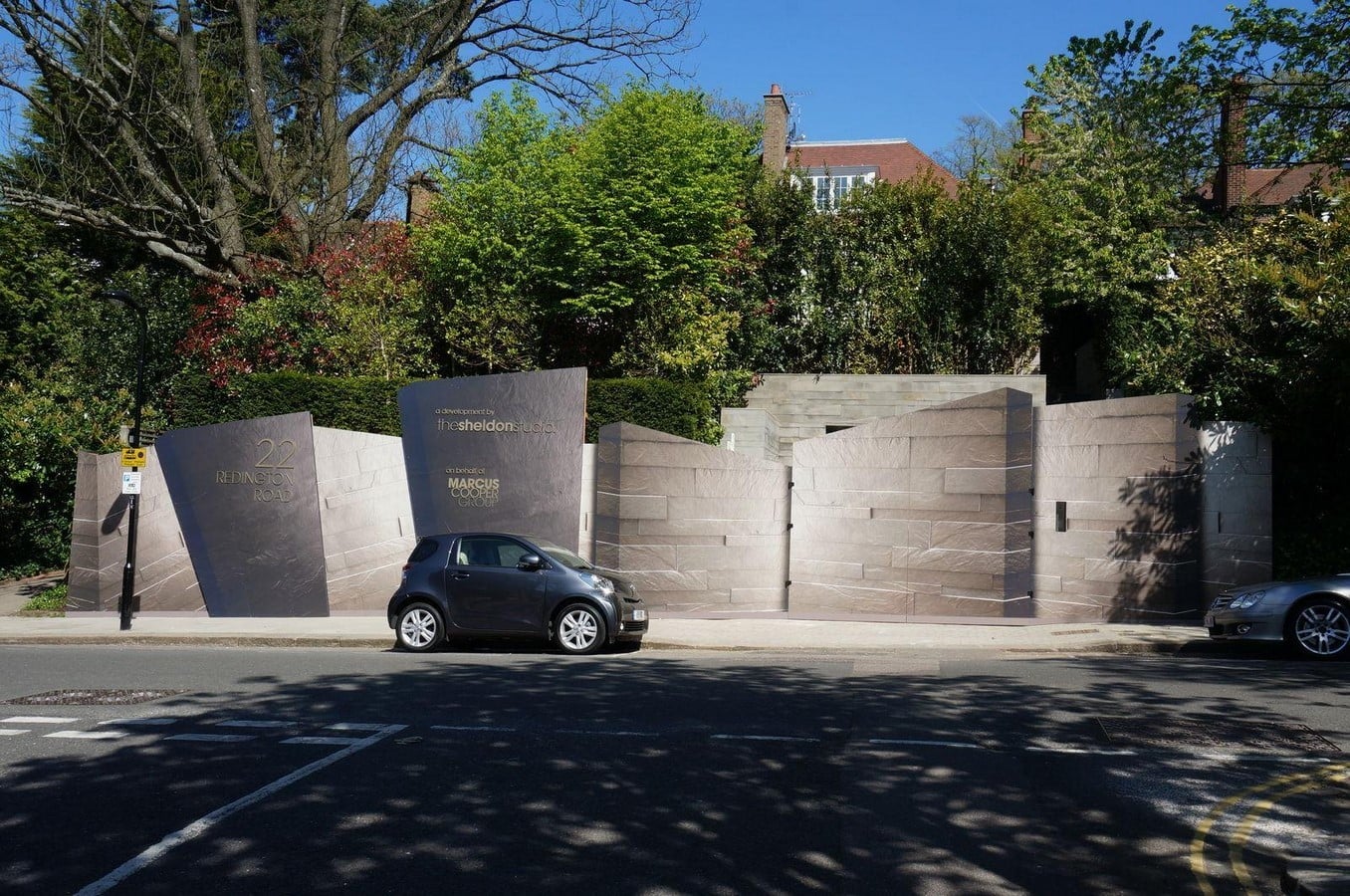
As for street communication, organisations and communities can come together to paint blank hoardings that are not being used as active advertisements, supporting local artists and even providing opportunities to raise awareness for social causes. This not only presents an opportunity for growth but also creates a space for collaboration and expression through an interactive experience. Similar to how we see commissioned art on the pillars of flyovers and walls, why not utilise blank hoardings to create another form of temporary media and display vibrant art? Why not take inspiration from the neighbourhood’s identity and communicate it for everyone to see?
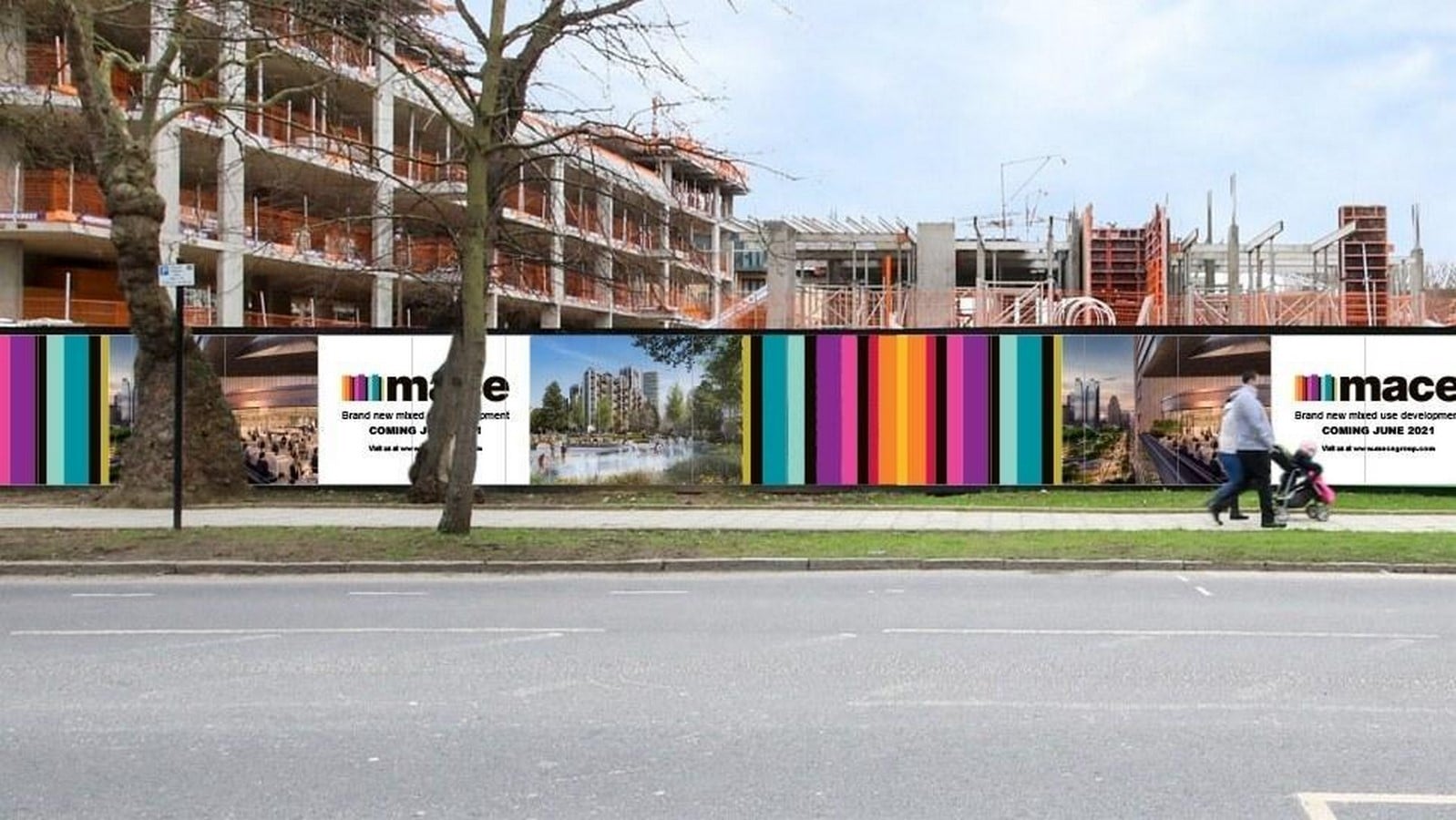
Construction-Hoarding-with-Graphics_©https://www.pauleycreative.co.uk/construction-site-hoardings/
Usage of Hoardings as Temporary Media and Community Expression
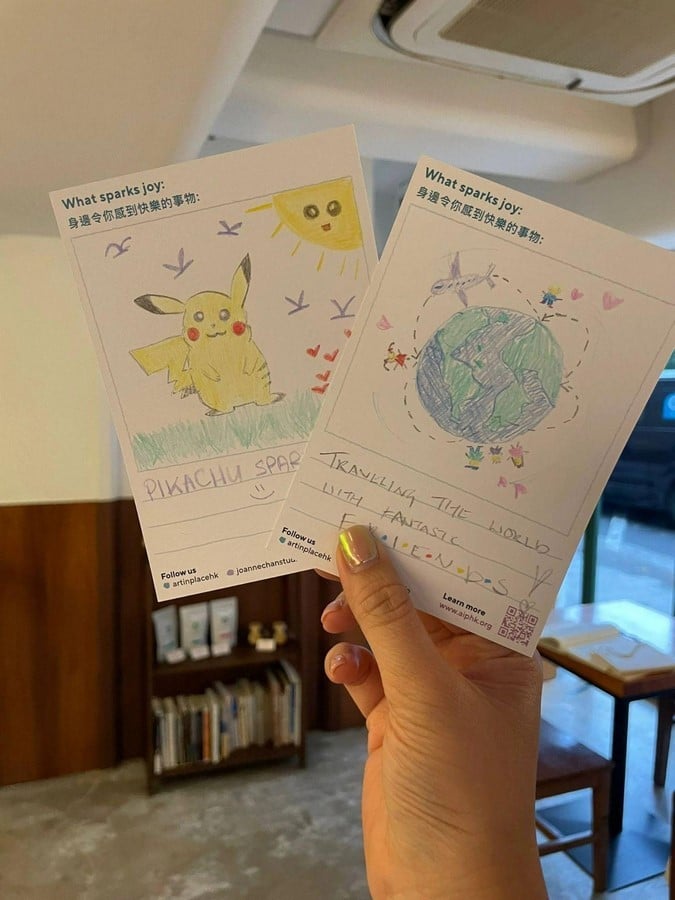
The utilisation of hoardings as a creative medium for the community can be seen in cities around the world, including one organised in 2023 by Art in Place (AIP), a non-profit initiative based in Hong Kong. The construction here was for an office tower, and the developer and community came together to create a stunning twelve-storey mural of things that “spark joy” in the community. Over the span of a few months, AIP invited artists and residents alike to share their art and ideas, even arranging workshops for primary school students in the area to ensure every voice in the community was heard.
Another program, based out in Sydney, Australia, is a little different. The City of Sydney runs a Creative Hoardings Program, which was created as a response to the community’s requests for more street art. As part of this program, developers with sites in high-traffic areas are required to cover their construction hoardings with art or historical images relevant to the neighborhood, either by commissioning an artist themself, or by using a licensed artwork provided at no cost by the City of Sydney. As of 2026, the government has confirmed that over 220 hoardings across the city have been covered in this manner, and the main way that the city selects the licensed murals is through a competition. This program not only increases community engagement, but also highlights the history of each area, encouraging both the developers and artists of the community to keep the surrounding context in mind as the city develops.

Between the two programs, the concept of temporary media is more apparent in the first, given that it pertains to one specific project, whereas the second highlights an initiative that umbrellas an entire urban community. Specifically, even though the mural was dismantled on December 7th, 2023, the panels and postcards were displayed in the newly opened building. This is to say that despite the lack of permanence of the hoarding, the art and emotions of the citizens that created it still has somewhere to be; this is some place they are inclined to revisit, some place they have a connection with and strong emotional ties to. This bond is what strengthens the community, and it can be applied in most urban settings similarly.
The blank canvas we see every day in transit need not be just that–a blank canvas. And just because we live in big cities does not mean we must be detached from every corner of it. Hoardings may be a temporary partition between a person and a site, but with the right initiative, they can be seamlessly integrated into an urban landscape to effectively communicate the area’s social identity. These partitions take up space to form safety and security barriers for those around them, and similarly, we can take up space and freely express ourselves through them.
References:
- Construction hoarding: Everything you need to know (no date) Monster-Mesh. Available at: https://monster-mesh.co.uk/news/about-construction-hoarding/ (Accessed: 02 June 2026).
- Hoarding for construction sites (2015) Hoarding for construction sites – Designing Buildings. Available at: https://www.designingbuildings.co.uk/wiki/Hoarding_for_construction_sites (Accessed: 02 June 2026).
- What is hoarding in construction? (2025) Fortawall. Available at: https://www.fortawall.com.au/blog/what-is-hoarding-in-construction/ (Accessed: 03 June 2026).
- Construction hoardings – a showcase of unique projects by Presson (no date) PressOn. Available at: https://www.presson.co.uk/case-studies/construction-hoardings-showcase/ (Accessed: 03 June 2026).
- What are the different types of site hoarding for construction sites? (2021) RTC Fencing. Available at: https://www.rtcfencing.co.uk/news/what-are-the-different-types-of-site-hoarding-for-construction-sites/ (Accessed: 04 June 2026).
- Chak, A. (2023) ‘draw whatever Sparks joy’: Art Unites Hong Kong community and developer, South China Morning Post. Available at: https://www.scmp.com/lifestyle/arts-culture/article/3242669/where-art-meets-property-hong-kong-mural-painting-initiative-brings-local-community-and-developers (Accessed: 07 June 2026).
- Creative hoardings program (2026) City of Sydney. Available at: https://www.cityofsydney.nsw.gov.au/cultural-support-funding/creative-hoardings-program (Accessed: 07 June 2026).