Many urban mobility problems do not happen during long-distance commuting. They happen in the short routes that sit between walking and driving. A trip to a nearby shop, cafe, school, market, park, or neighborhood event may only be a few miles, but it can still be too far to walk and too inefficient to drive.
From an urban design point of view, a good mobility tool is not only about speed. It is about how naturally people can use the city around them. That is where e-bikes are becoming useful. They connect short trips, neighborhood life, and light outdoor movement without making every errand depend on a car.
Short Trips Shape the Urban Experience
A city’s livability is not defined only by towers, roads, and public buildings. It is also shaped by whether people can complete everyday routes easily. Can they reach local shops? Can they move between neighborhoods? Can parks, markets, and community spaces be used often without too much friction?
E-bikes can help with this “last few miles” problem. They are lighter than cars, easier than regular bicycles on hills or longer routes, and faster than walking for many local trips. When people search for electric bikes for sale, they are often not just looking for a product. They are looking for an easier way to handle daily short-distance movement.
Micromobility Makes Neighborhoods More Flexible
Urban space should not be designed around cars alone. A more flexible neighborhood can support walking, bicycles, e-bikes, public transit, and necessary car trips at the same time. Different forms of movement can serve different distances, reducing pressure on any single mode of transportation.
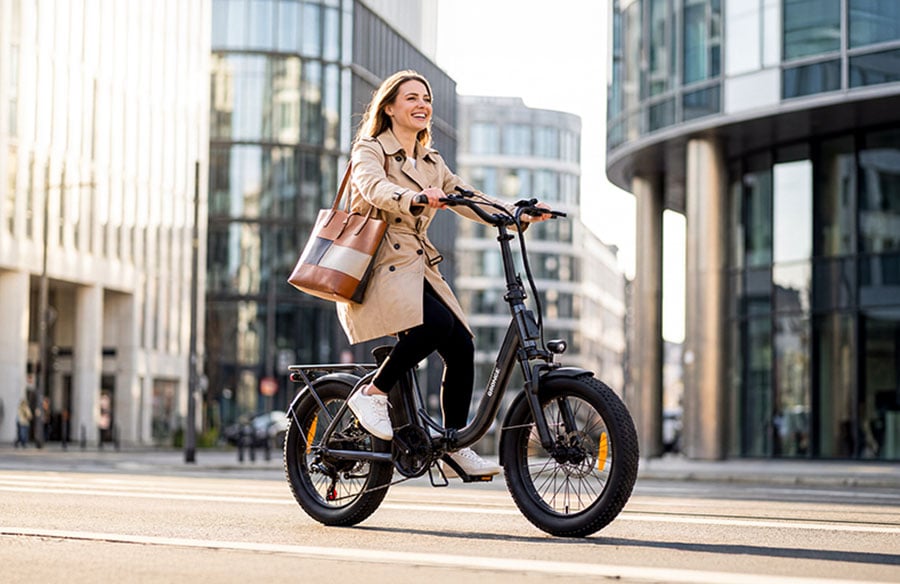
E-bikes work especially well for small destinations within and around a neighborhood. They can support commuting, grocery runs, school routes, campground movement, short errands, and light outdoor rides. They may not redesign an entire transportation system by themselves, but they can improve the way people experience daily movement.
The Right Bike Depends on the Routine
An e-bike is not a single universal answer. Different frames, tires, and layouts serve different routines. Commuter models focus on efficiency, posture, and stability. Fat tire models can suit grass, gravel, and light mixed surfaces. Folding models help riders with limited storage, garages, vehicle racks, or RV travel. Trikes may make sense for riders who want more stability or cargo support.
A practical choice is not about finding the largest specification sheet. It is about matching the bike to the route. Are there hills? Will the rider carry groceries or bags? Does the route include gravel? Does the bike need to fold for storage? These questions matter more than image or price alone.
A Better Price Still Needs the Right Use Case
Budget matters, but a lower price cannot replace judgment. When riders consider ebike clearance, it is easy to focus first on the discount. Clearance pages, seasonal offers, and limited-time pricing can reduce the entry cost, but the real value depends on whether the bike type, range, power, and route actually match.
For flat commuting, smooth assist, comfortable posture, and reliable braking may matter more than high output. For hills, cargo, or longer distances, motor output, battery capacity, and frame design deserve closer attention. The goal is not simply to buy cheaply. It is to buy correctly.
Specifications Should Serve Real Urban Routes
Power, range, and payload should be understood through real daily use. Power affects starts and hill climbing. Range determines whether the day’s route has enough margin. Payload matters for the rider, bags, groceries, or other carried items.
In urban and neighborhood settings, most riders do not need constant high-speed riding. They need low-speed stability, reliable braking, easy parking, comfortable posture, and enough battery for the day’s movement. Specifications become more useful when they are tied to actual routines.
Support Is Part of Mobility Cost
An e-bike is not a one-time object. Batteries, tires, brakes, parts, maintenance, and after-sales support can all shape long-term ownership. Looking only at the purchase price can underestimate the real cost of use. Clear warranty, trial, shipping, and return terms make the buying decision more accurate.
When comparing e-bike options from qronge, riders can first narrow the choice by commuter, fat tire, folding, or trike use, then weigh range, payload, and service terms as part of total value. That approach is more reliable than chasing the lowest price alone.
E-Bikes and Electric Off-Road Vehicles Are Different Tools
E-bikes are best suited for urban commuting, local movement, campground rides, RV travel support, and light outdoor routes. Their core strengths are ease, stability, convenience, and lower-cost mobility. Electric off-road vehicles are more suited to private land, legal off-road areas, and more demanding terrain.
Understanding this difference helps buyers avoid choosing the wrong tool. If the goal is short-distance travel and neighborhood mobility, an e-bike often makes more sense. If the goal is aggressive off-road riding, the buying criteria should be different.
Better Cities Need More Human-Scale Mobility Choices
Future cities will not solve mobility problems only by building wider roads. In many cases, better answers come from smaller, more flexible ways to move. The value of an e-bike is not that it replaces every form of transportation. It is that it gives residents another option between walking and driving.
When a vehicle helps someone take one fewer car trip, spend less time looking for parking, or stop hesitating over a short route, it improves the everyday experience of the city. A good micromobility tool should make neighborhoods easier to use, make daily routes feel lighter, and bring urban life closer to a human scale.