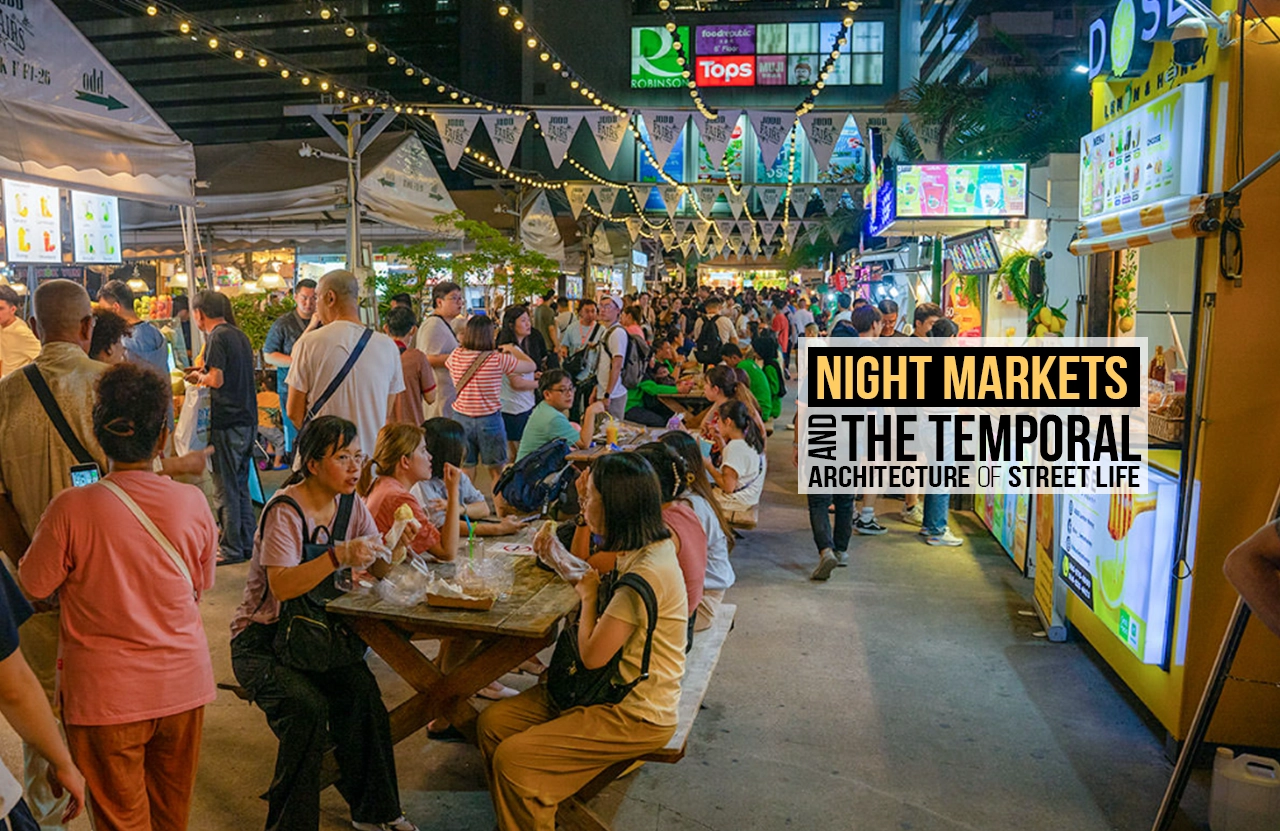
Reimagining the City after Dark
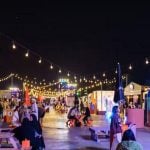
For decades, urban planning and architectural design have created “solar-centric” designs, treating nighttime as a functional “off switch” managed only by basic lighting techniques, with no effort devoted to designing the space. This approach tends to ignore 50% of a city’s operational life, causing safety issues and a lack of variety. Such urban environments can feel impersonal, almost like cities of robots rather than communities of people enjoying and sharing urban life at work due to an imbalance of work and social life. However, the rise of nocturnal urbanism, a design strategy for managing cities from 6PM to 6AM, is rewriting the urban design brief. Streets that serve as channels for traffic and commerce during the day become vibrant centers of social interactions and cultural celebration at night. These night markets serve as the primary laboratory for this transformation.
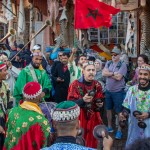
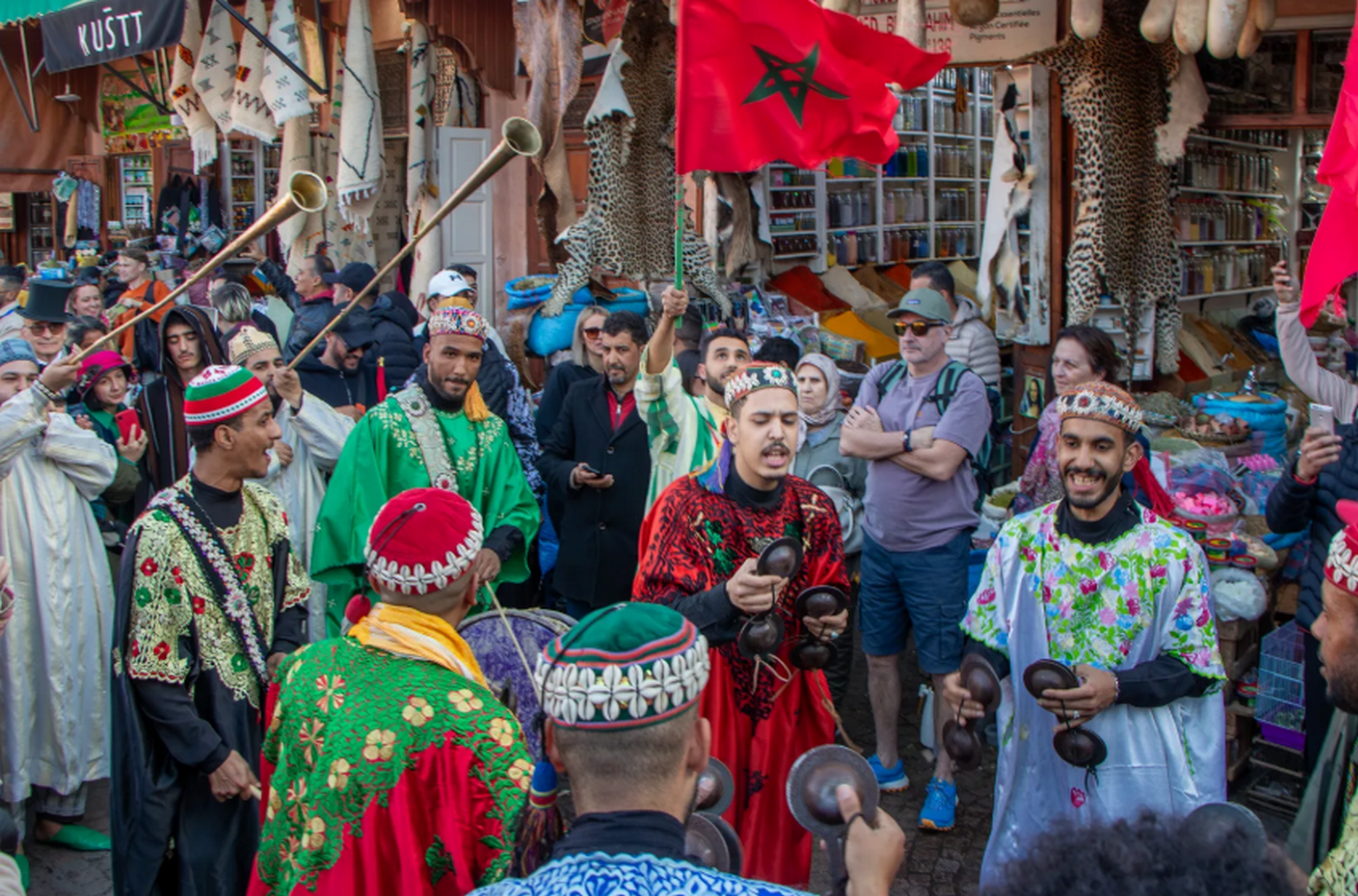
During the day, the city is dominated by spaces designed for work and commerce; at night, these spaces become more fluid for social practices. Designated as a UNESCO masterpiece, Jemaa el-Fnaa in Marrakech is a fine example of nocturnal urbanism. The square has functioned for a thousand years as a medieval ceremonial ground by day and a “nocturnal theater” by night. At sunset, dozens of food stalls serving Moroccan classics are assembled rapidly. The plaza bursts into vibrant lights illuminated by lanterns, as plumes of charcoal smoke signal the shift from a marketplace of trade to a space of traditional Gnaoua musicians, trance dancers, and storytellers. This simply demonstrates how temporal shifts allow a single civic space to host diverse cultural activities without any permanent constructions.
Night Markets as Cultural Anchors and Social Spaces
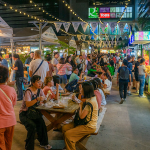
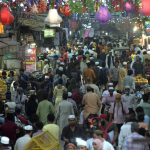
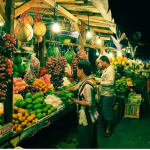
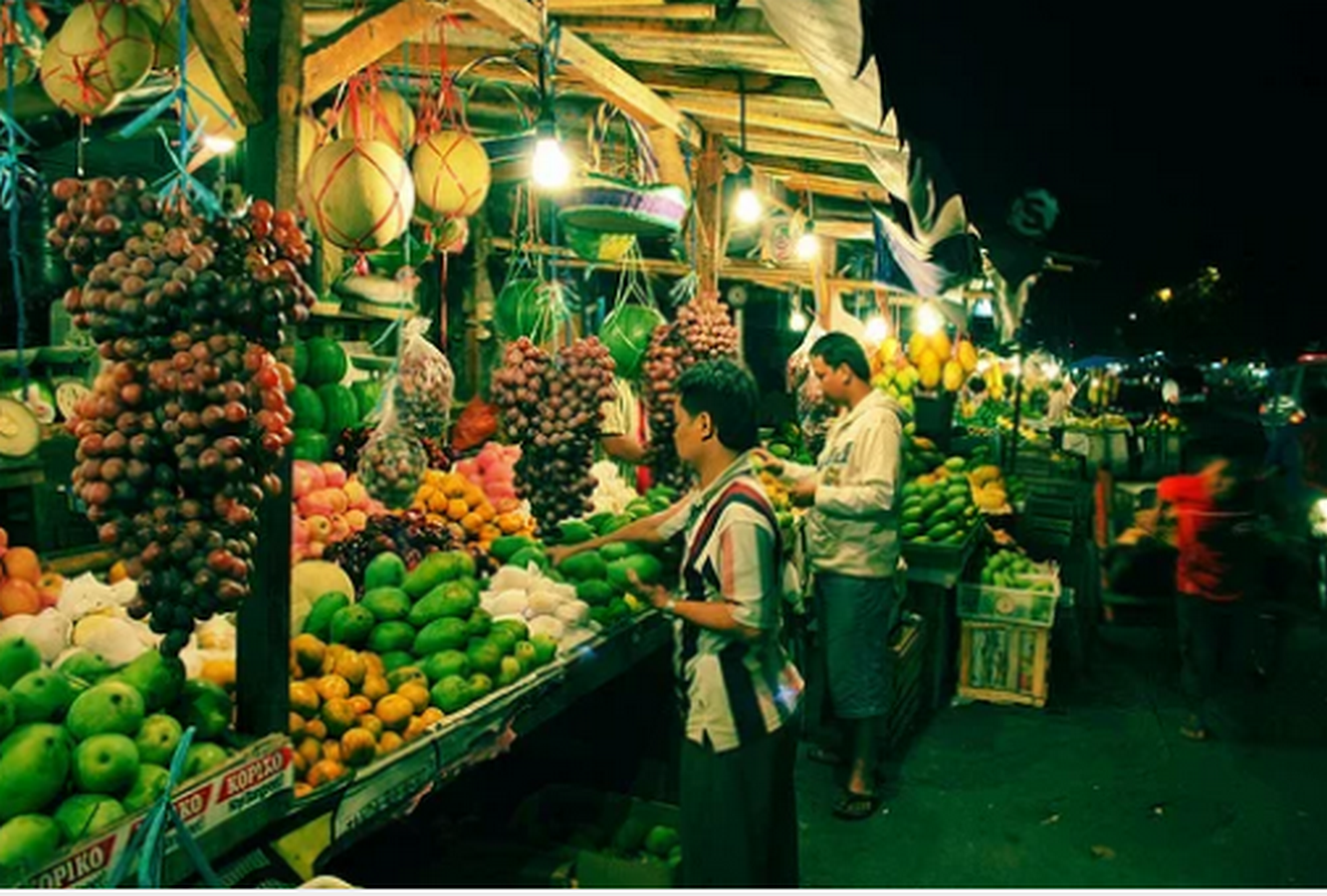
Nocturnal urbanism acts as important vessels that hold culture and tradition together. Food is often central to the night market experience. Night markets are not merely economically driven; they are microcosms of local life that preserve traditions and forge relationships. In Taiwan, the unique “walking-and-eating” culture becomes a communal ritual of sharing snacks with no single stall dominating. At the Jodd Fairs in Bangkok, visitors experience a wide variety of Thai street foods, while markets in Taiwan are famous for local delicacies such as oyster omelets and bubble tea. These culinary traditions transform eating into a shared cultural experience. The evening bazaars of India act as the food streets around Jama Masjid in Delhi during festive seasons, demonstrating how nocturnal markets become spaces of celebration and interaction.
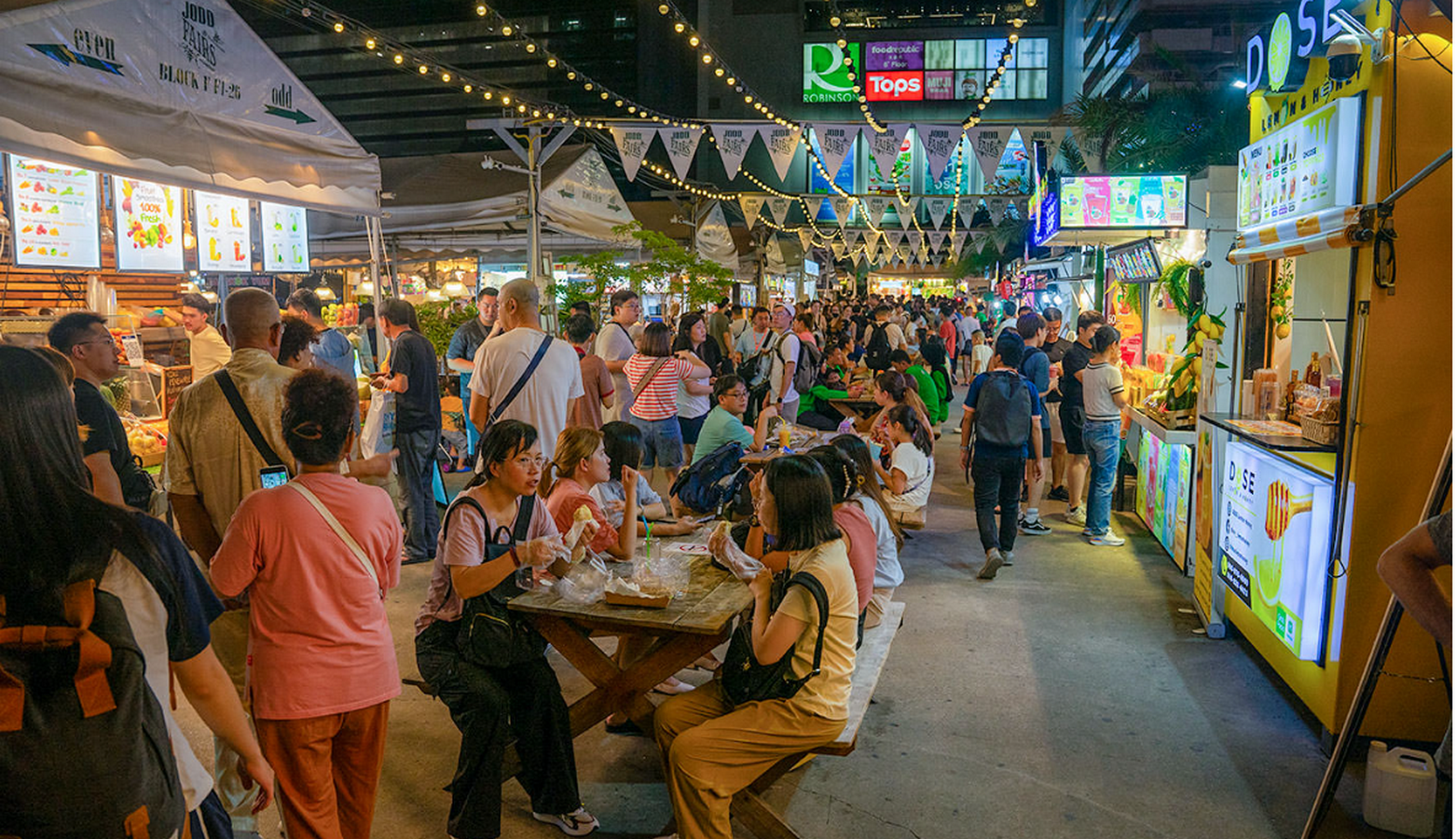
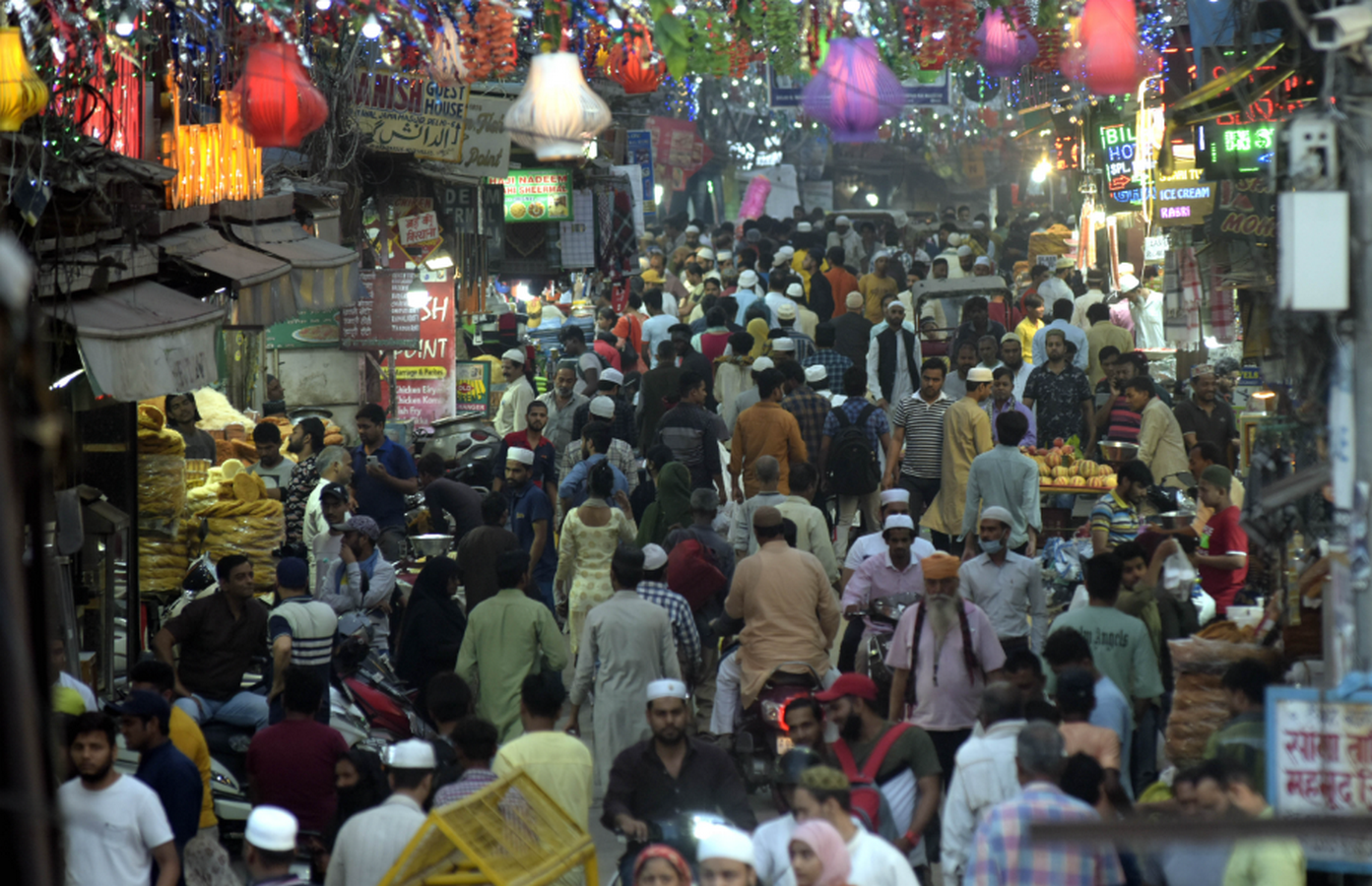
The morphology of night markets is often linear, developing along roads to allow customer movement and swift dispersion if needed. Therefore, using lightweight materials like foldable tables, tarpaulins, and rechargeable solar lamps is extremely helpful. Eventually, a parking lot or roadside transforms into a vibrant social hub at dusk. In Jakarta, the kakilima (street vendors) often collaborate with formal shops. They use the store’s frontage for their stalls while providing informal security for the shop at night in exchange for space to carry out their small business, electricity and water.
The Economic Power of the Night-Time Economy
The temperature is rising due to global warming, so the night economy is becoming an essential tool for climate adaptation. In heat-stressed regions like the UAE, Saudi Arabia, and the U.S. Sunbelt, residents are postponing going outdoors until the cooler evening hours. Cities are retrofitting parks and plazas with lighting to accommodate this shift, making the night a necessity for keeping urban environments livable.
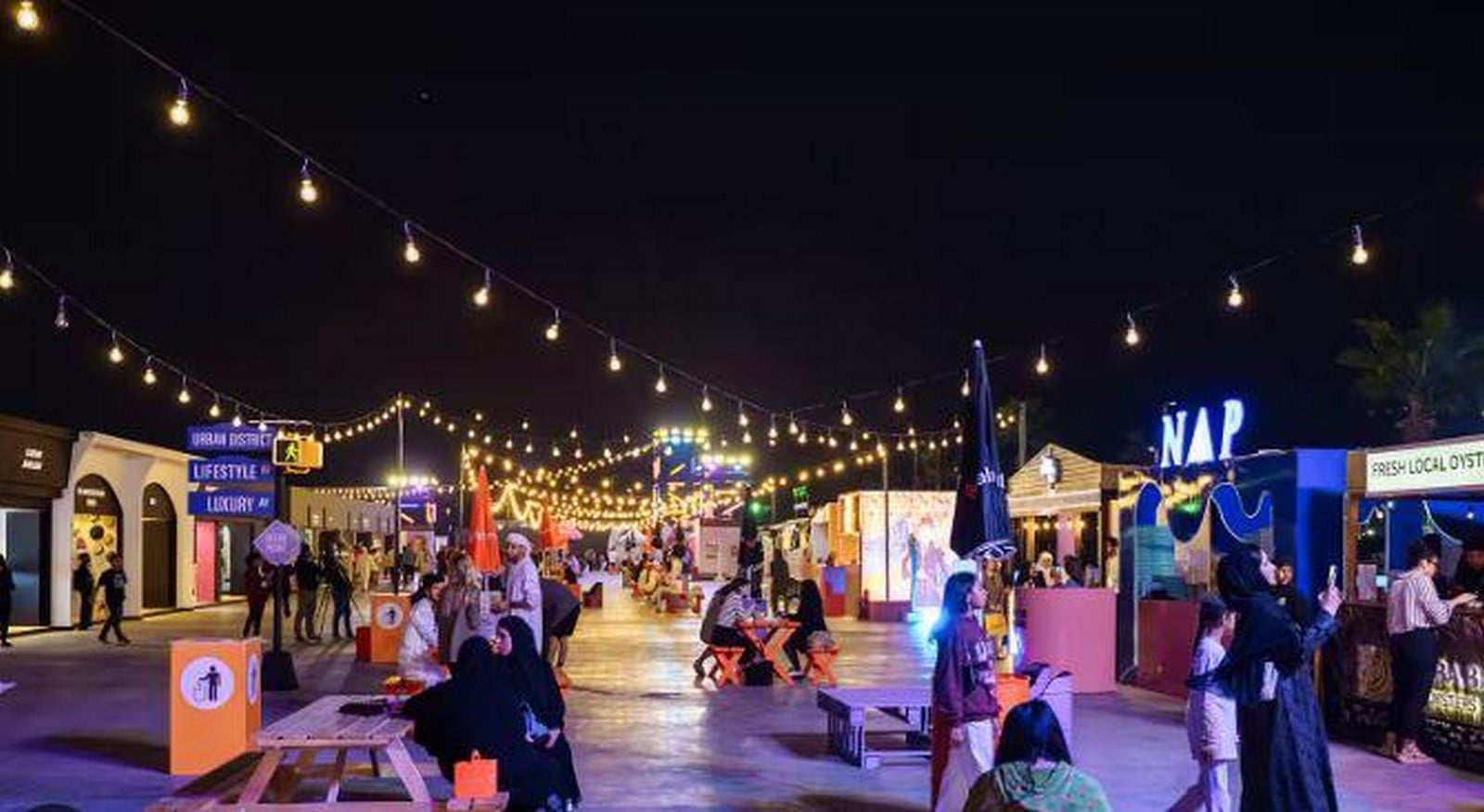
Nocturnal urbanism helps street vendors to work beyond conventional business hours, acting as an extra source of income. Rather than becoming inactive after sunset, cities continue to generate revenue through exchange. The nighttime economy has been contributing $35.1 billion annually to New York City and supporting 1.6 million workers in London. According to the reports, the United Kingdom’s nighttime economy accounts for 6% of the UK’s total GDP. Yet, many cities still suffer from “nictalopia” (night blindness).
Designing Inclusive and Accessible Night Markets
Research indicates nocturnal urbanism can serve as sites of social mixing without any prejudices or discrimination. However, this potential is often limited by physical and social barriers. For women, disabled, non-binary individuals, and the LGBTQ+ community, the second half of the day often brings up challenges with the built environment. To enhance inclusivity, urban designers should focus on creating spaces with adequate lighting, clear signage, and accessible pathways. Well-lit areas encourage broader participation, particularly among groups who may feel vulnerable in poorly illuminated environments.
The appointment of night mayors or dedicated governance bodies can facilitate dialogue between vendors, residents, and authorities, ensuring that the needs of various groups are considered in decision-making processes. The layout of the market should promote natural surveillance, where vendors and visitors can easily observe their surroundings. This can be achieved through the strategic placement of stalls and the elimination of hidden corners. Additionally, the presence of patrol guards should be promoted to ensure safety and manage crowd control in case of an emergency.
Towards a More Human-Centred 24-Hour City
Ultimately, nocturnal urbanism must, therefore, prioritise inclusive infrastructure that goes beyond creating brighter spaces to address actual safety and larger participation. The city does not have to sleep, but it merely has to reveal a second design brief once the sun goes down. Urban designers can craft environments that are vibrant, inclusive, and deeply human 24 hours a day. From this perspective, night markets can become more than commercial venues. They will become vital social infrastructures to make human connections that make urban life meaningful.
Citations-
- Patterns of Patterns: A Methodological Reflection on the Future of Design Pattern Methods
JOSEPH CORNELI∗ and ALEX MURPHY, Oxford Brookes University, UK RAYMOND S. PUZIO and LEO VIVIER, Hyperreal Enterprises Ltd, UK NOORAH ALHASAN, LBJ School of Public Affairs, The University of Texas at Austin, USA VITOR BRUNO,Milestone English, Brazil CHARLOTTE PIERCE, Pierce Press, USA CHARLES J. DANOFF,Mr Danoff’s Teaching Laboratory, USA
Available at- https://arxiv.org/pdf/2107.10497
- Jani Tartia (2024). A report on Approaching an Urban Night Space Through a‘Virtual’ Rhythmanalysis: Public Spaces, Spatio-Temporal Appropriations, Representations, and Online Live Stream: Philosophy of the City Journal2
- Phil Han(2025) Culture of Taiwan Night Markets
- https://www.cntravellerme.com/story/meet-the-people-reviving-the-ancient-art-of-storytelling-in-marrakech
- Serra Utkum Ikiz: The City Doesn’t Sleep: Nighttime Urbanism and Architecture’s Daytime Bias
- https://www.architect-us.com/blog/2025/10/nighttime-urbanism-designing-cities-after-dark/\
- https://worldcitiescultureforum.com/report/5th-edition/night-time-economy/