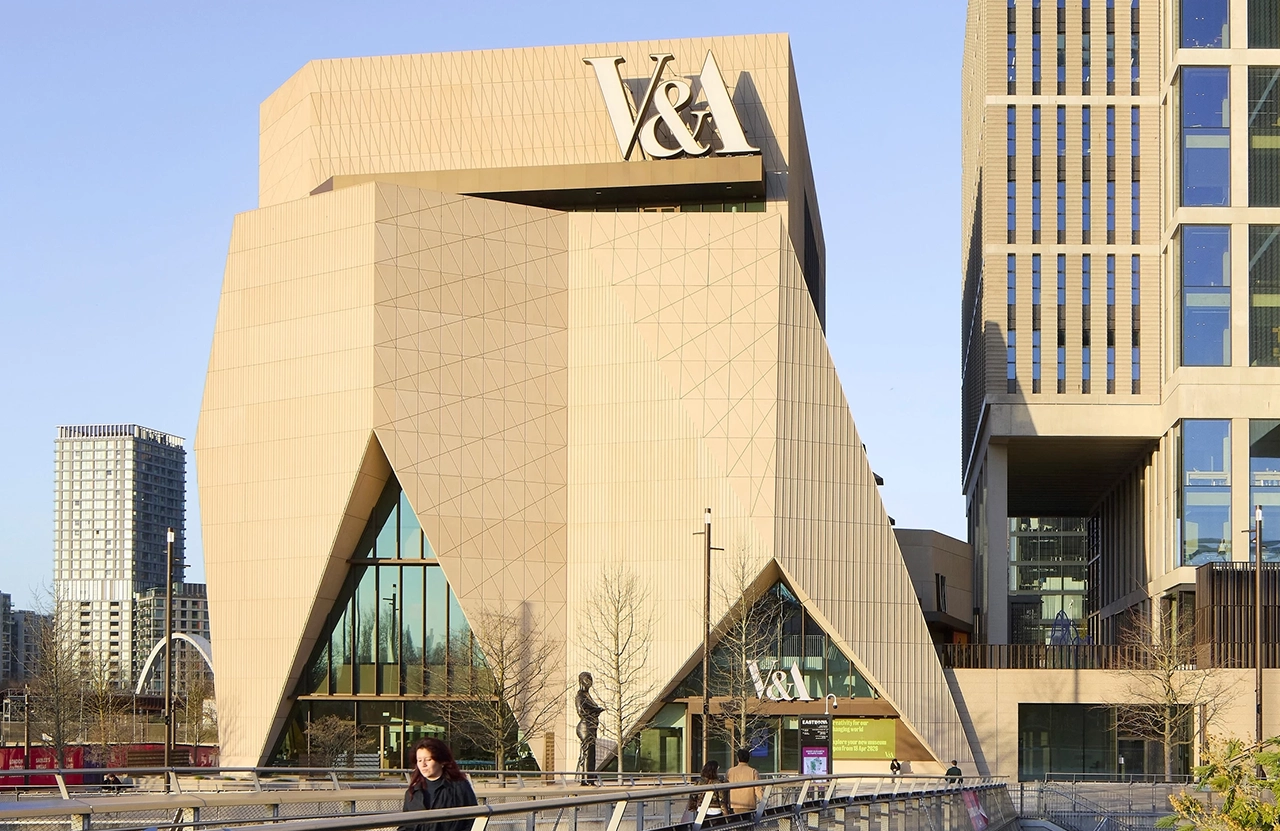
The five-storey V&A East Museum by O’Donnell + Tuomey opens in London and emerges as a unique, thoughtfully designed spatial narrative. In this masterpiece, the design inculcates and converges movement, material, and cultural intent. Sculptural tailoring techniques of Cristóbal Balenciaga and the Japanese spatial concept of Ma inspire the very concept of structure. Hereby, these architects construct a building where it is defined not simply by form, but by the layered relationships between enclosure, void, and circulation. And finally, this culminates in a worthy creation—a museum that positions itself as both a civic landmark and an experiential journey, conferring ideas from fashion into a built environment with distinguished features of depth, rhythm, and anticipation.
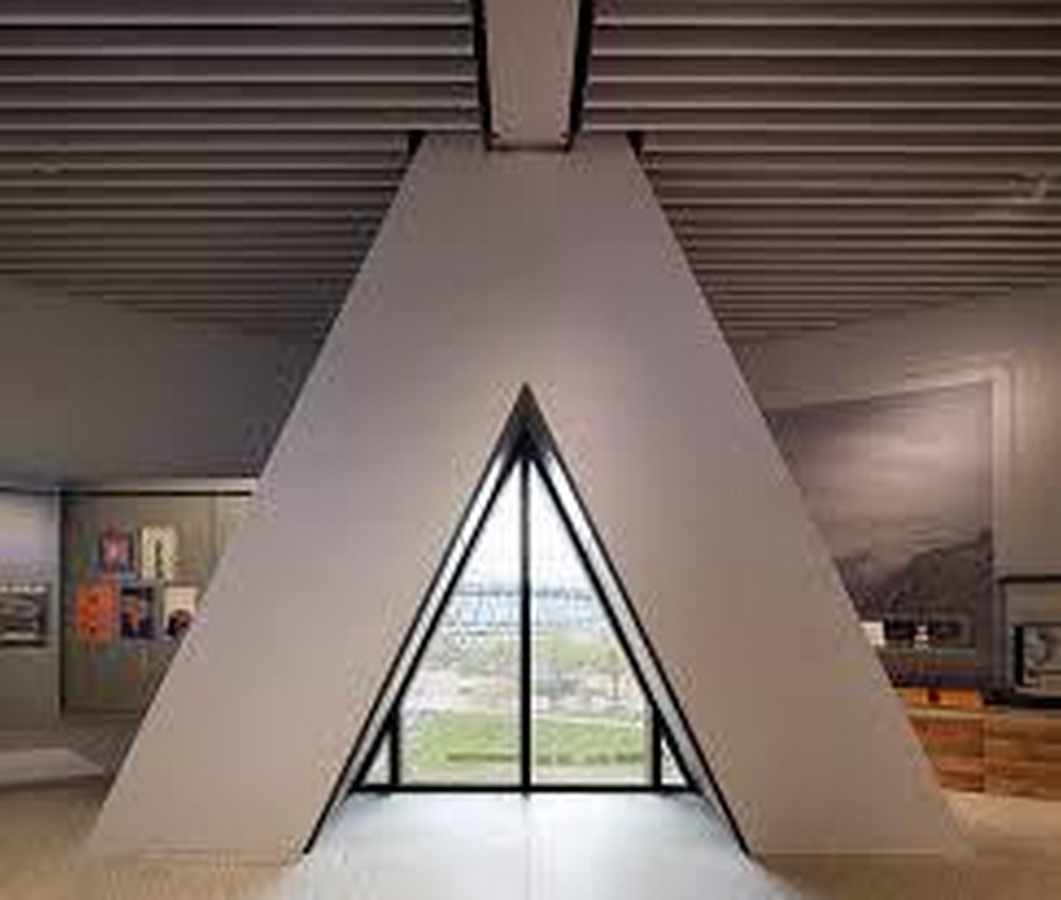
The actual concept of this design by O’Donnell + Tuomey simplifies into a dual system: firstly, a protective outer shell, and then a rational internal structure. The space between these two elements becomes the project’s defining feature. It forms an inhabited interstitial zone that accommodates movement in circulation. Usually, common practitioners treat movement as a secondary aspect. However, O’Donnell + Tuomey elevate it into the primary aspect and a guided architectural experience. Visitors are guided through a sequence of routes carved within the spread of the thick facade and ascend gradually through the building. This layered progression beautifully resembles moments of compression and release and thus highlights the conceptual Japanese idea of “Ma,” where spatial interruption and pauses hold equal importance to built form.
Interior Space of Museum
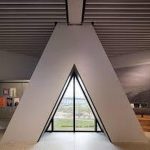
Internally, the program is organised vertically across five levels, maintaining clarity in contrast to the complexity of circulation. O’Donnell + Tuomey’s design further includes two permanent galleries, a 900-square-metre temporary exhibition space, a top-floor project and event venue, learning facilities, and public amenities including a café and shop. These functions are connected through the continuous circulation route embedded within the building envelope. Carefully positioned openings persist along this route, framing views toward the city and East Bank while also allowing natural light to deeply penetrate into the internal space. Three terraces further enhance modal transition between the interior and exterior environment, bridging them together and reinforcing a sense of openness against the background of the dense urban context.
Material Features
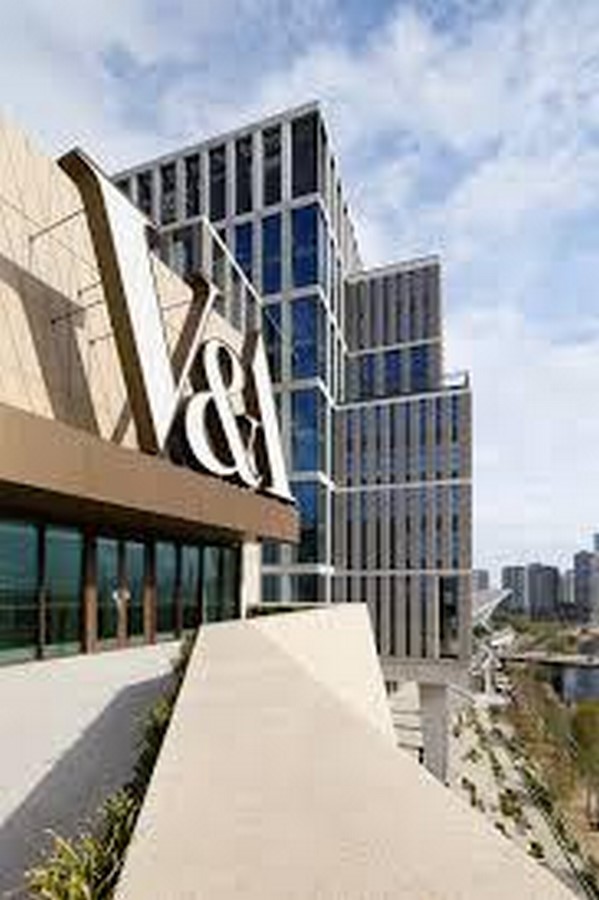
Material continuity plays a significant role in the spatial experience. Terrazzo concrete floors echo the tonal qualities and texture of the exterior panels, creating a seamless transition from outside to inside. In contrast, the gallery interiors are deliberately restrained, with white surfaces offering a neutral backdrop for exhibitions and events. This attentive consideration by O’Donnell + Tuomey ensures that the architecture supports, rather than competing with, the museum’s evolving program. The calm interior atmosphere allows art, performance, and community engagement to define the building’s character over longer periods and thereby intends timelessness.
The museum has dual entrances—one at the waterfront and the other at podium levels—imparting accessible points of entry, shaped through triangular openings that dedicate a reference to garment construction techniques such as pattern-cutting darts. This subtle detail reinforces the conceptual link between architecture and fashion, a recurring theme of sculptural tailoring by Cristóbal Balenciaga in O’Donnell + Tuomey’s design approach.
Beyond its physical form, the V&A East Museum operates as a cultural platform rooted in public engagement. O’Donnell + Tuomey conceive the building not merely as a container for artefacts, but as an important participant in urban life. Its inaugural exhibitions and community-driven programming reflect a broader ambition to democratize access to culture and creativity. In this sense, O’Donnell + Tuomey position the museum as an evolving civic space—one that adapts to contemporary cultural narratives while maintaining a strong architectural identity.
References:
Dezeen (2025) ‘O’Donnell + Tuomey completes V&A East Museum in London’, Dezeen. Available at: https://www.dezeen.com (Accessed: 24 April 2026).
ArchDaily (2025) ‘V&A East Museum / O’Donnell + Tuomey’, ArchDaily. Available at: https://www.archdaily.com (Accessed: 24 April 2026).
Designboom (2025) ‘O’Donnell + Tuomey unveils V&A East Museum with sculptural concrete facade’, designboom. Available at: https://www.designboom.com (Accessed: 24 April 2026).
Cristóbal Balenciaga (1950s) Design philosophy and sculptural tailoring concepts. Referenced in architectural interpretation.
Ma (n.d.) Concept of spatial interval in Japanese aesthetics. Referenced in spatial theory.