Artificial intelligence usage continues to grow as the technology advances and more people advocate for its adaptation into everyday life. In architecture, this can be applied in many different ways. Some people use its rendering capabilities, while others prefer to engage with it earlier on in the design process. One building typology that could greatly benefit from its implementation is in healthcare and hospital design. This complex programmatic building type requires careful consideration and flexibility for the greatest benefits for both patients and healthcare staff, and will soon become much more common in Europe.
AI Act and GenAI4EU

AI’s use in healthcare design is becoming extremely important, specifically in Europe. The European Union is establishing the AI Act, a law that regulates AI and its health and safety impacts on the public. They are also promoting GenAI4EU, or encouraging the development and use of generative AI technologies to benefit society. These new initiatives are being applied across different areas, including healthcare. This initiative will also include dedicated funding and investments to develop and advance AI technology, giving Europe a competitive edge. The belief is that using AI in these public sectors will improve efficiency and save money by reducing administrative tasks.
Benefits of AI in Hospital Design
Generative Artificial Intelligence is a growing technology. Its purpose is for efficiency. The accessibility lies in its use by everyday people. Because this AI does not require prior coding knowledge, it is much simpler for anyone to learn. That means it can be used to simplify any workflow for any job. Due to the GenAI4EU proposal, its usage will be encouraged in hospitals across Europe. From those already in existence to those yet to be fully conceptualised, AI will be employed to serve the healthcare community.
Spatial Organisation and Flexibility
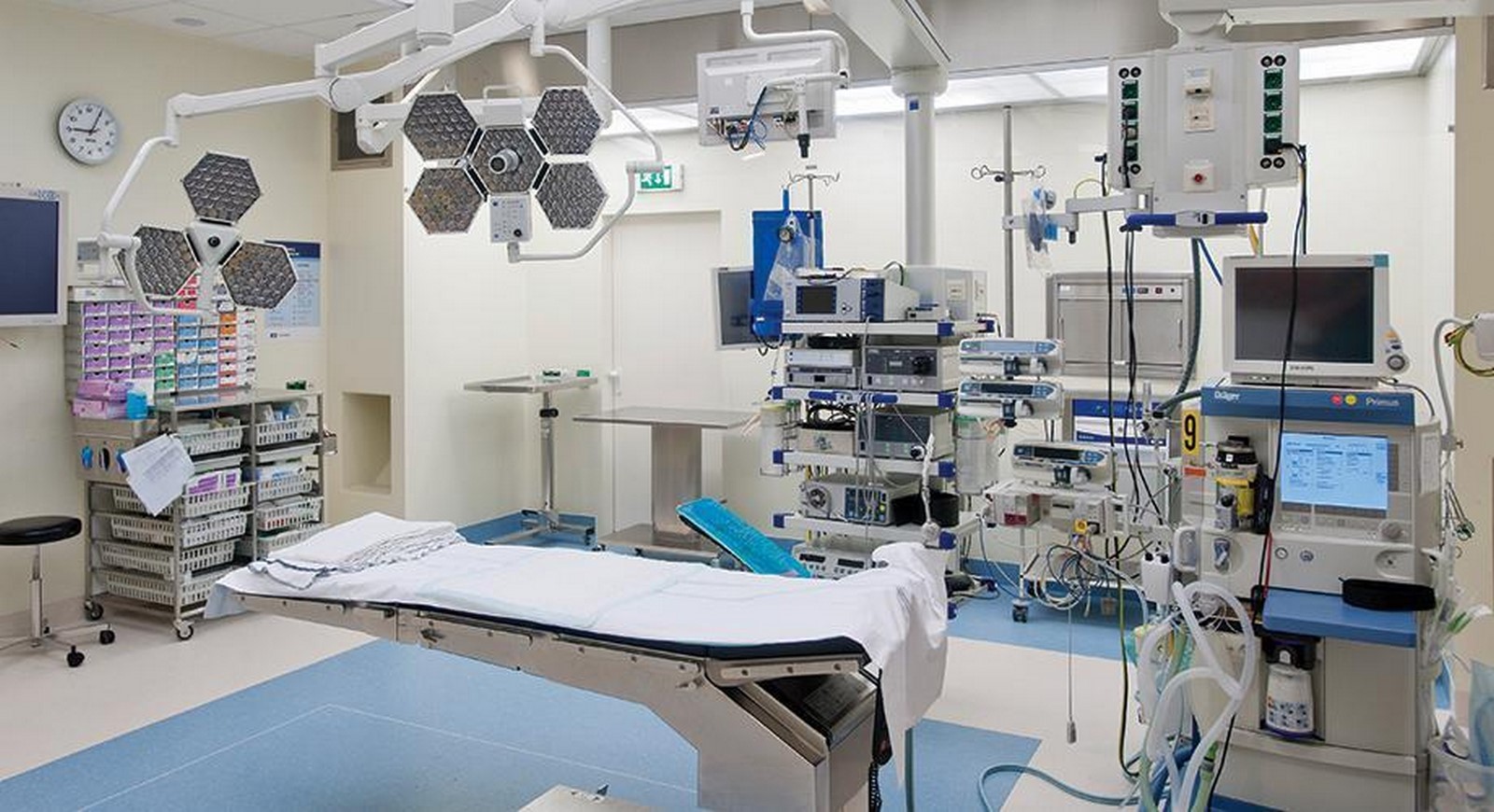
One of the supposed benefits of Generative AI is its potential to create flexible spaces. Back in the day, an important question for hospitals was how many beds were available. Now, the focus is less on that and more on how a patient moves through the space through the different departments. Furthermore, beyond hospital design in Europe, AI can be used to predict how long patients will be in the hospital and then suggest resourcing and staffing needs. It is also beneficial for back-of-house management and inventory, especially regarding reordering the necessary supplies.
Customised Patient Experience
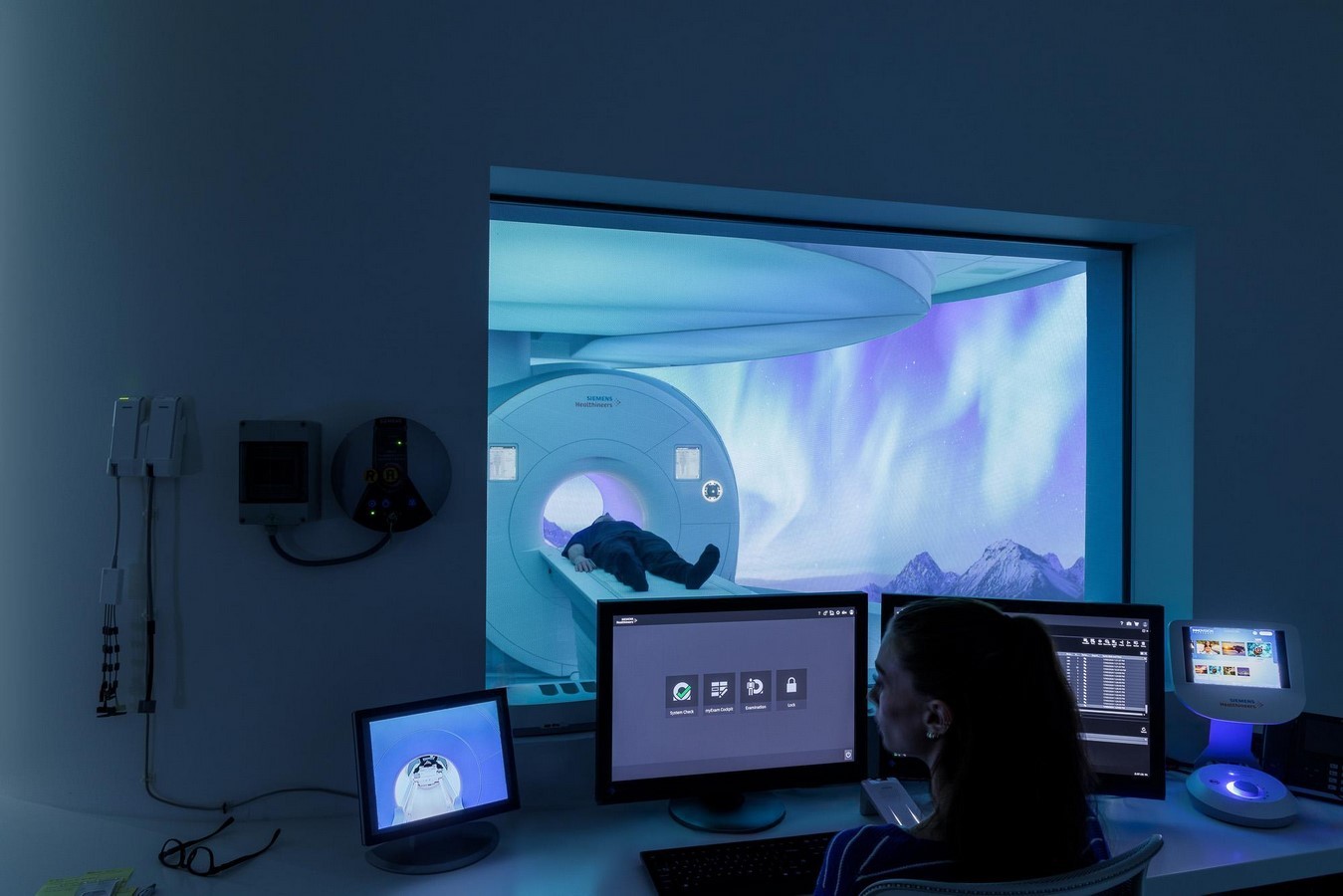
Another great way Generative AI can be used is to enhance the patient experience. The hospital experience can be uncomfortable or even frightening at times, depending on the situation. Between the various tests that may be needed to detect an injury or illness and the potential for long wait times, healthcare workers want to create a good experience for people seeking care. One way to do this is to customise the spaces the patients occupy. AI can be used to shape a patient’s environment by adjusting lighting, sound, or even graphics to their preferences to help calm their nerves.
Risks of AI in Hospital Design
Despite the many benefits of Generative AI, it is still in its infancy as a technology. It has its issues that many are unable to look past, despite the initiatives being passed in Europe. Whether from fear of AI taking over jobs to the machine’s inability to fully understand context, people have a right to be wary of this new technology. The resistance of those who don’t want to encourage it also creates potential setbacks to its progress. If people don’t support it, that could mean anything from a lack of funding to even protesting its usage in certain settings.
AI Hallucinations

The main concern many people have with generative AI is the mistakes it makes. So people try to counter this with “humans make mistakes too” as a defence. AI is known for its “hallucinations,” in which it sometimes just makes up data. Then the conversation becomes: is it worth it to have this new technology if it constantly needs to be under human surveillance? And if a person needs to monitor the AI and fix its mistakes, is it really saving time? The real answer lies in the frequency of the mistakes, comparing how often a human falters versus a machine. Regardless, the mistakes will become especially relevant as the initiatives play out in Europe.
Sustainability

Another major issue with AI use is its environmental impact. According to the GenAI4EU program, the goal of investing so much time, money, and research into it is to use it safely. This program includes creating standardisation procedures to monitor and require reporting on the energy consumption of AI models, in line with the European Commission. However, just because they have the goal of reducing resource consumption doesn’t mean these models don’t still use a lot of energy in the meantime.
Leeds Teaching Hospital

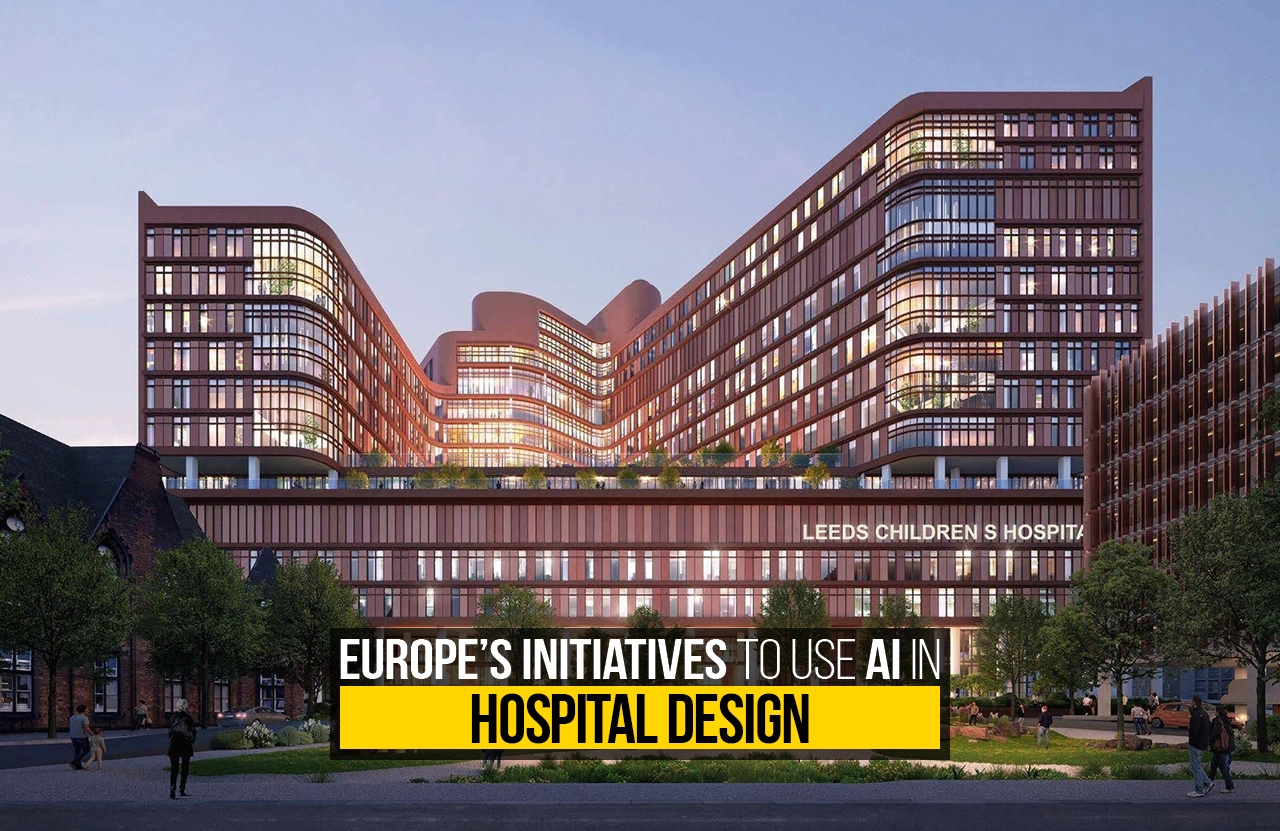
One example of AI being used in healthcare design in Europe is the Leeds Teaching Hospital in the UK, designed by Perkins and Will and Schmidt Hammer Lassen Architects, and is expected to be completed around 2027. Even though the UK is no longer in the European Union, the effects of the AI initiative are still being felt. It combines both a children’s and an adult’s hospital into one building. In 2021, the Leeds Teaching Hospitals NHS Trust launched a competition for its “Hospitals of the Future” project. Here, they want to integrate the following principles of fabric, footprint, and flow. From building operations to patient self-check-in, AI can be used across these areas.
In the end, whether someone is for or against the use of generative AI, it’s here and already being used. Why not put it to use in ways that benefit society, as the European Union aims to do? As long as it’s done carefully and slowly, the implementation of AI in European hospitals will allow healthcare workers to focus on what they do best, caring for the patients. It might take time, much longer than some people want to admit, because this technology still needs to be supervised in its early stages. However, like with GenAI4EU, the main goal is to give Europe a competitive edge in AI.