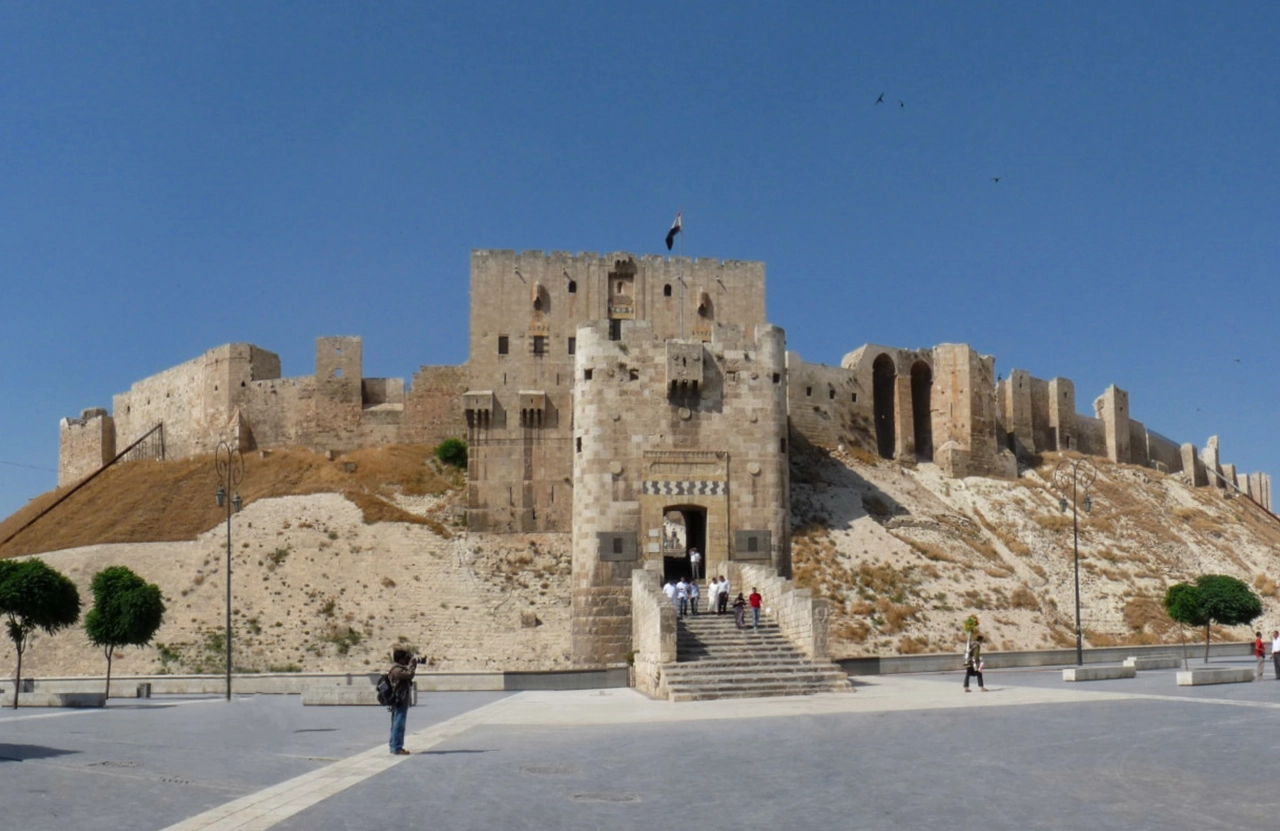
Civilizations and cities evolved throughout history, in a very systematic manner, forming the bases and foundations of the world’s cities as we see them today. Syria is at the foremost, known for its vast and majestic history and origins dating back to the early Neolithic cultures. Aleppo is a standing example of this deep history. Other civilizations may have come and gone, but Aleppo remains inhabited to this day.
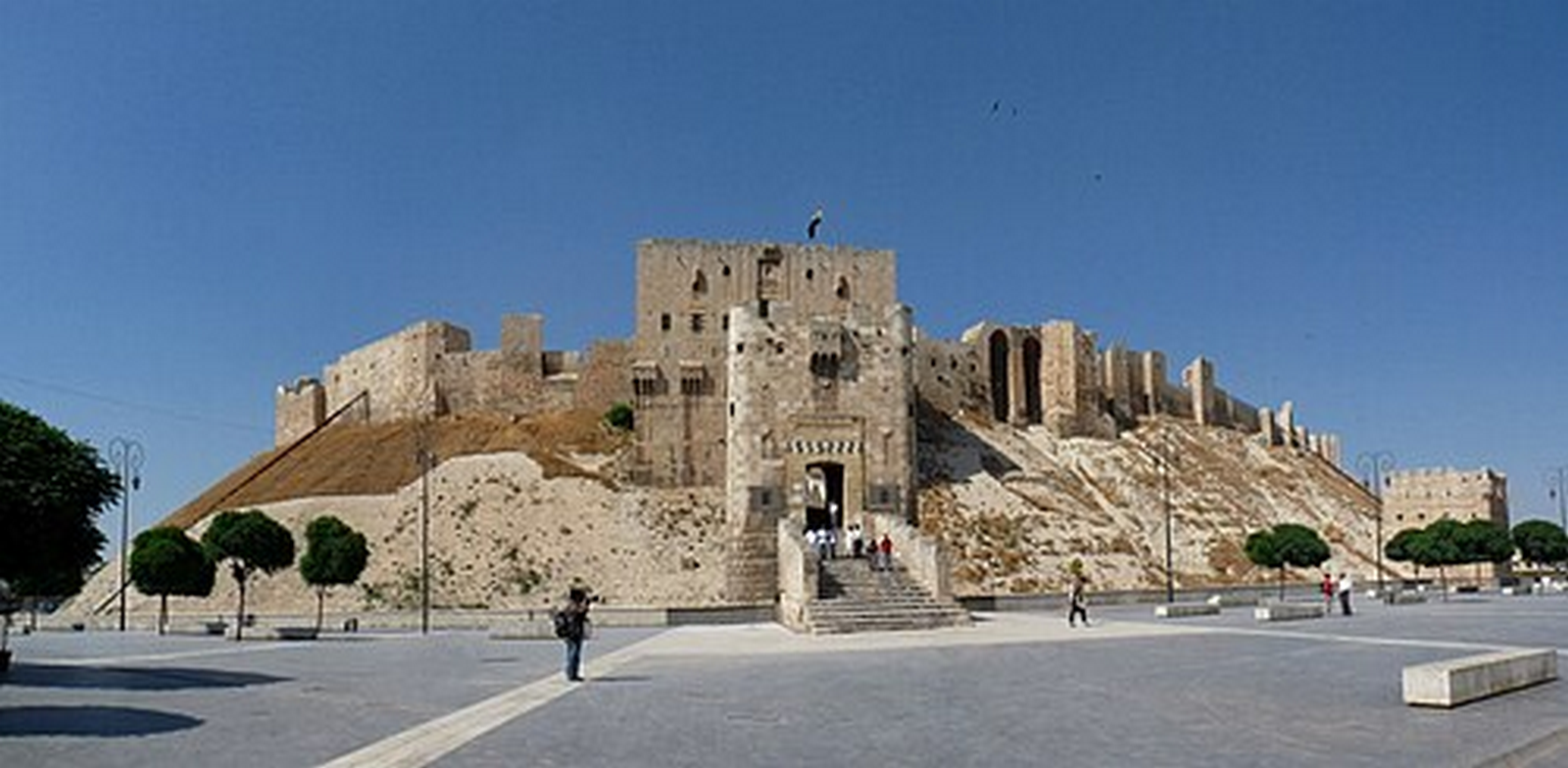
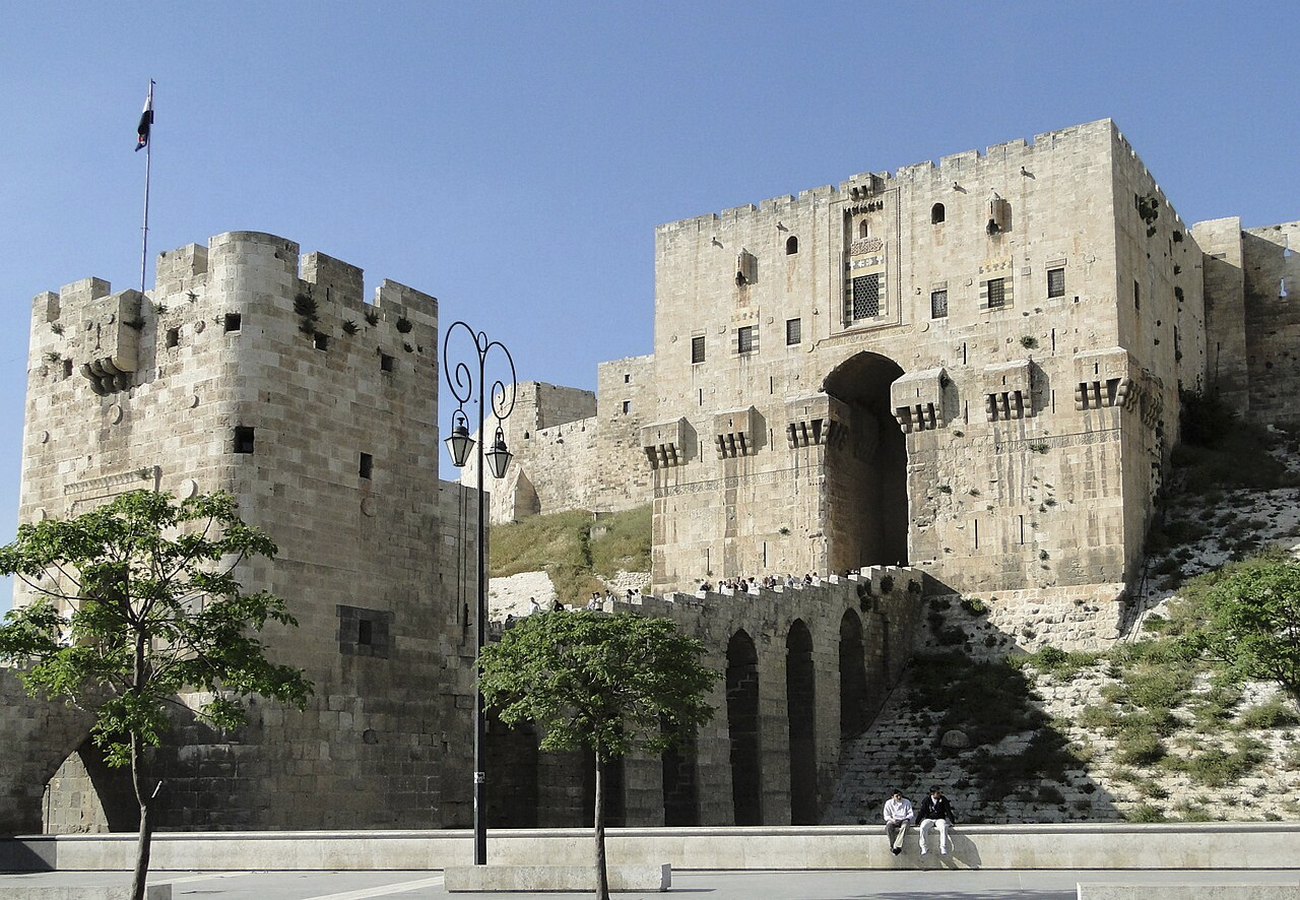
Having been hailed as the city that has been continuously inhabited since- some might say- the sixth millennium B.C. Aleppo served as a hub of trade and power, with Assyria being located smack in the middle of Mesopotamia, Egypt and Anatolia. It was a pivotal location in the silk route. Known for its textiles, crafts, spices and intricate souqs. Aleppo’s stunning UNESCO-listed old city boasts of a rich ensemble of military architecture, mosques, citadels and hammams. The Aleppo Citadel is an ancient fortified palace in the city center and is considered one of the largest castles globally.
Origins
The Citadel of Aleppo is situated upon a towering, natural mound of limestone that has been the center of civilization for over five millennia in Syria. In fact, archaeological records indicate that the site has been around for at least the 3rd millennium BC, well before the famous medieval walls of the citadel were ever constructed. While it might be associated with a defensive function, history can vouch for its much deeper significance as a spiritual location during the Bronze Age. As evidenced by the existence of a renowned temple dedicated to the storm god worshiped by the early Northwest Semites, the rise of the citadel was initially spiritual as a gods-met-earth sort of location with basalt depictions unearthed that inspire a sense of permanency that would guide its history as a central hub of Syrian power and civilization.
After the Hittites, the place underwent continuous architectural and functional evolution as it passed through successive empires: the Assyrians, Babylonians, and Persians. It gained an even more clearly urban and strategic character with the arrival of Alexander the Great and the Seleucid Dynasty that followed. The Seleucids incorporated the commanding position into the Hellenistic city plan of Beroea, that is, ancient Aleppo, appreciating its value for overseeing important trade routes. During the Roman and Byzantine periods, while much of the social life was now transferred to the city below, the citadel remained a vital military garrison. It was a bulwark against Sassanid incursions along the eastern frontier. Throughout these classical centuries, the origins of the citadel were marked by dual identifications; namely, it was a sacred hill of ancient gods and an evolving fortress that guarded the lucrative Silk Road, providing the physical and symbolic bedrock for its later medieval grandeur.
Rise to prominence- journey
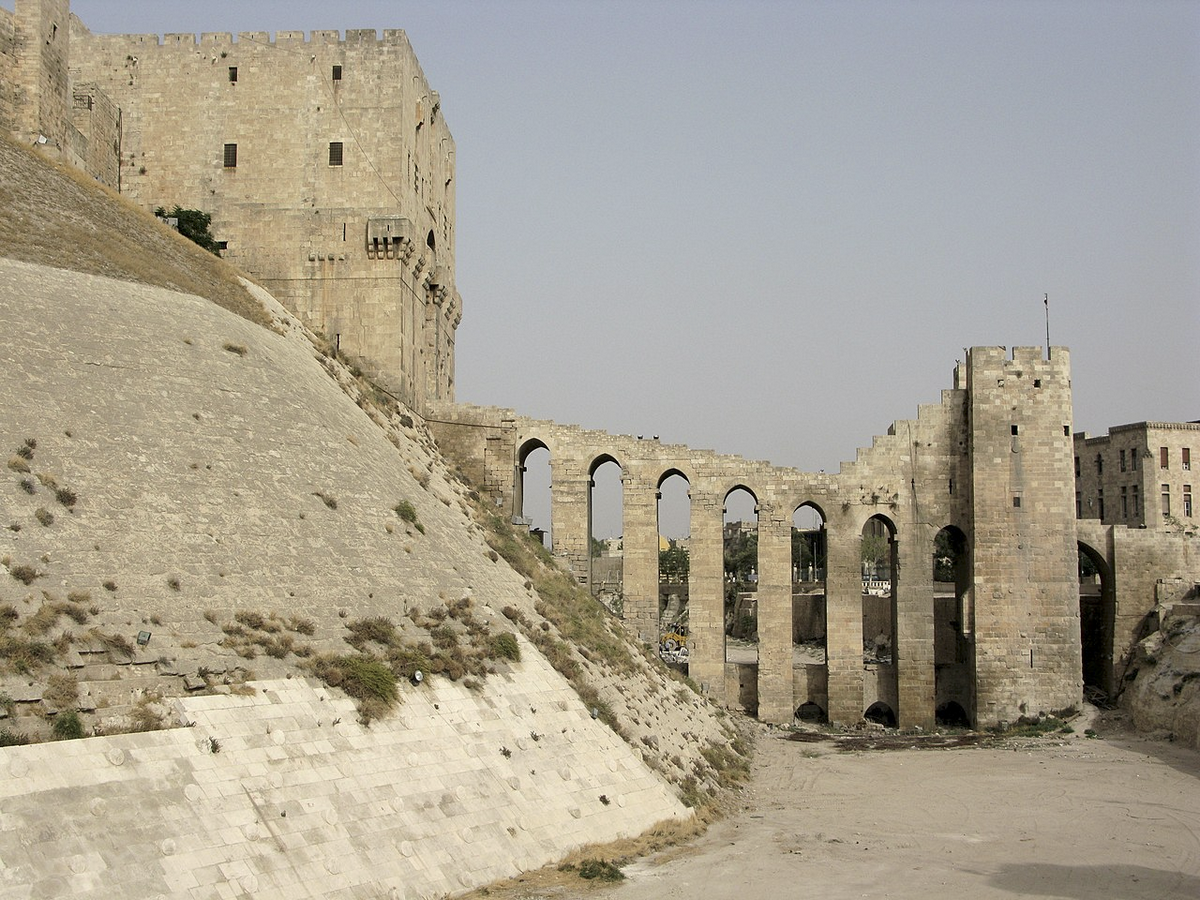
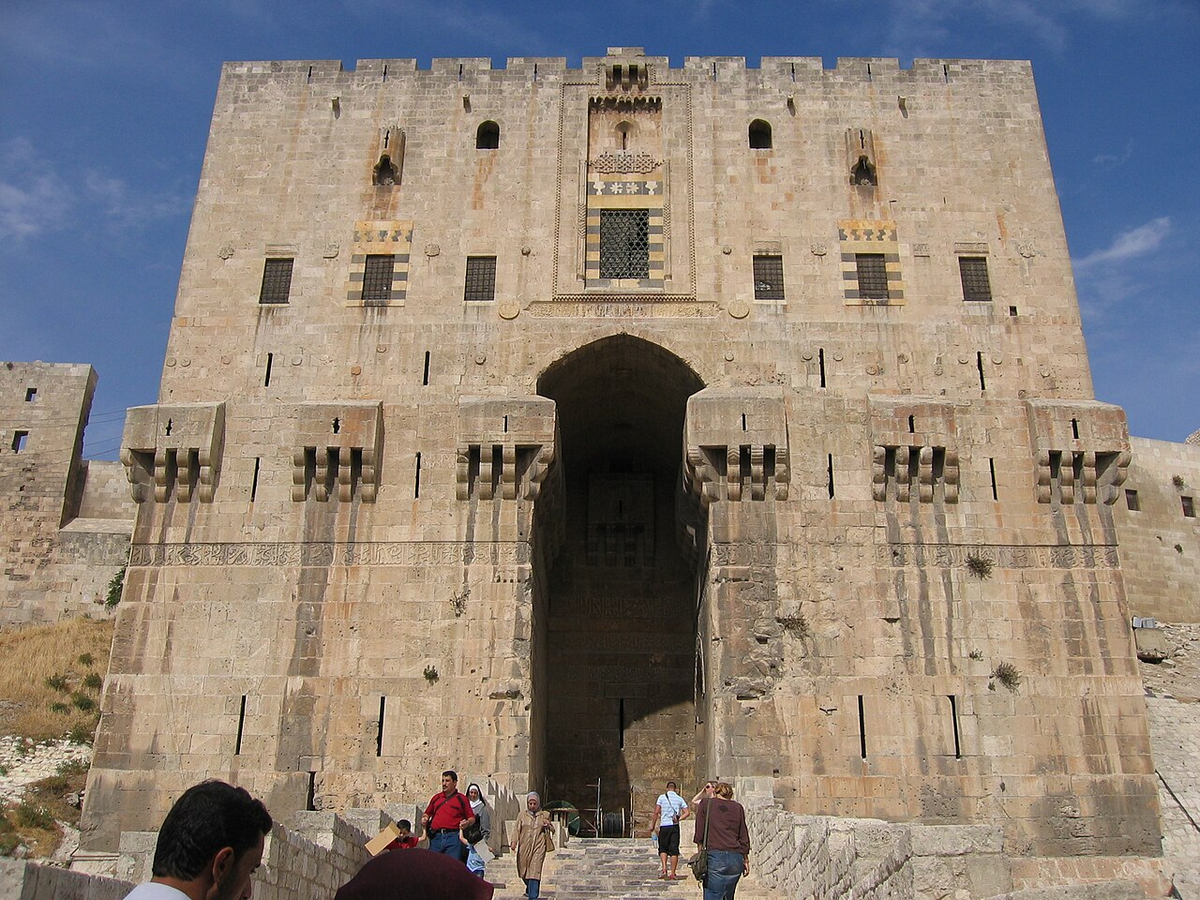
It was only after the Islamic conquest, reaching an absolute zenith during the Ayyubid dynasty, that the citadel of Aleppo actually moved to its legendary status as an impregnable fortress. Under the visionary leadership of al-Zahir Ghazi, the son of Saladin, this citadel was transformed from a simple hilltop garrison into a masterpiece of medieval military engineering. Ghazi realized well that the citadel was the key to defending northern Syria against the twin threats of the Crusaders and the expanding Mongol Empire. He ordered a huge reconstruction program that included the digging of a deep, steep-sided moat and the construction of the iconic, heavily fortified entrance bridge and gatehouse. During this time, the citadel became a “city within a city,” complete with a palatial complex, mosques, hammams, and huge granaries. This expansion was not just for defense; it was a deliberate projection of Ayyubid authority and cultural sophistication, elevating Aleppo to one of the most important political centers in the Islamic world.
Suffice to say, as the citadel rose to prominence, it did so as an icon of resilience that impacted the geopolitical environment in the Middle East during the medieval period. The test of its strategic significance in the Middle Ages was subjected to rigorous examination, particularly in the 13th and 14th centuries, during which it provided significant resistance against external invasions. Even during the overwhelming Mongol sieges during the leadership of Hulegu and, later, Timur, the centrality of its resilience as an icon remained at the core of Middle Eastern history. The citadel was also an essential part of Ayyubid and, later, Mamluk governance, where the ruling elite resided and provided a safe treasury. Its transformation from a mere religious mound to the essence of sovereignty created the Citadel of Aleppo into the definitive historical icon of Syrian heritage. Its status thus can be characterized by an extraordinary fusion of innovative design in its defenses and civil architecture, such that it was recognized not only as an attribute of conflict but also as an attribute of its power and civilization in the field of architecture.
Architectural features
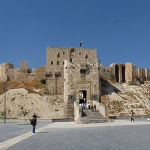
The Citadel of Aleppo is an architectural masterpiece that represents military architecture and civic architecture skillfully combining antiquity with medieval ingenuity. The most notable military feature is the imposing glacis, a deep, stone-covered slope rising from a moat, which is 20 meters deep. The entrance is tightly regulated via a bridge, which has eight arches, and a mighty gatehouse that offers a cutting-edge “bent axis” design where would-be invaders have to navigate five separate steel-plated doors via a series of five 90-degree turns, with gunmen shooting down from above via machicolation and arrow slits.
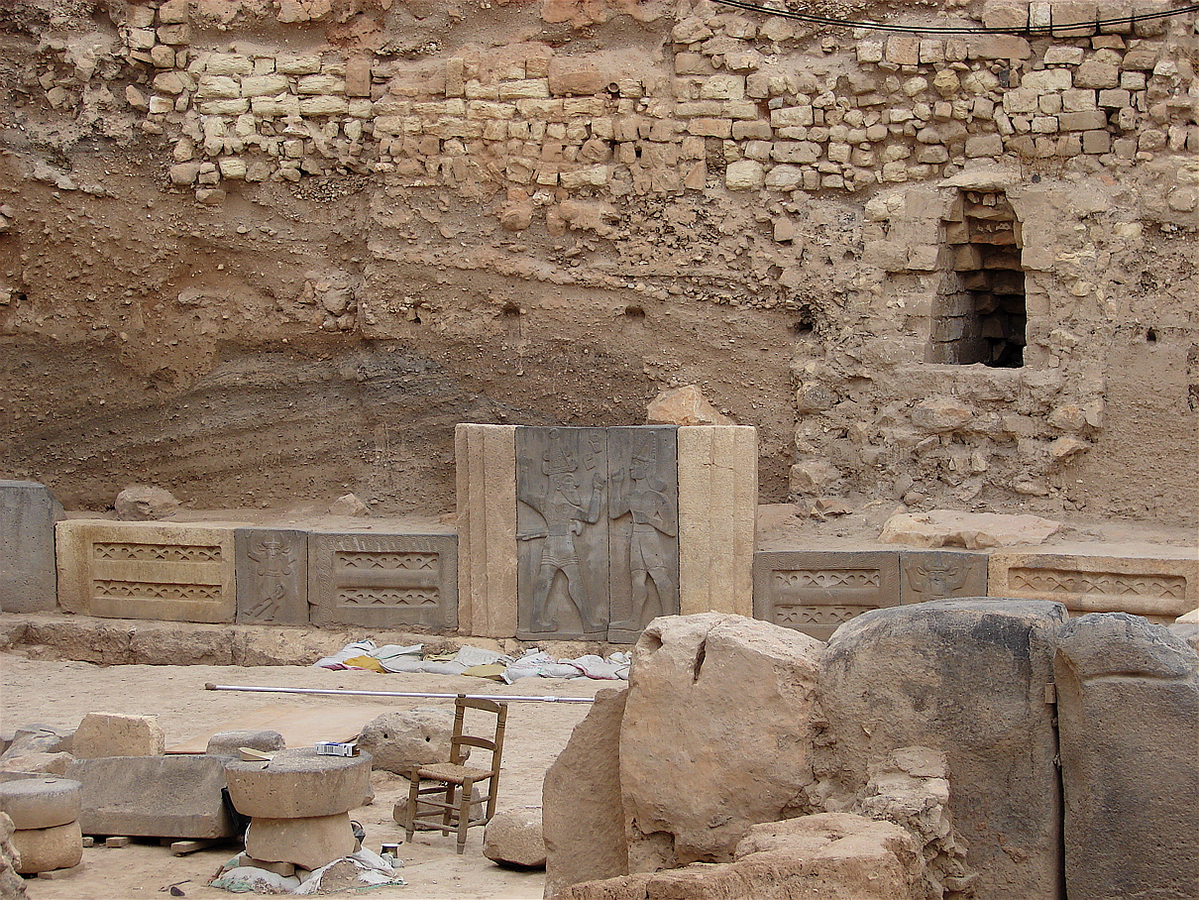
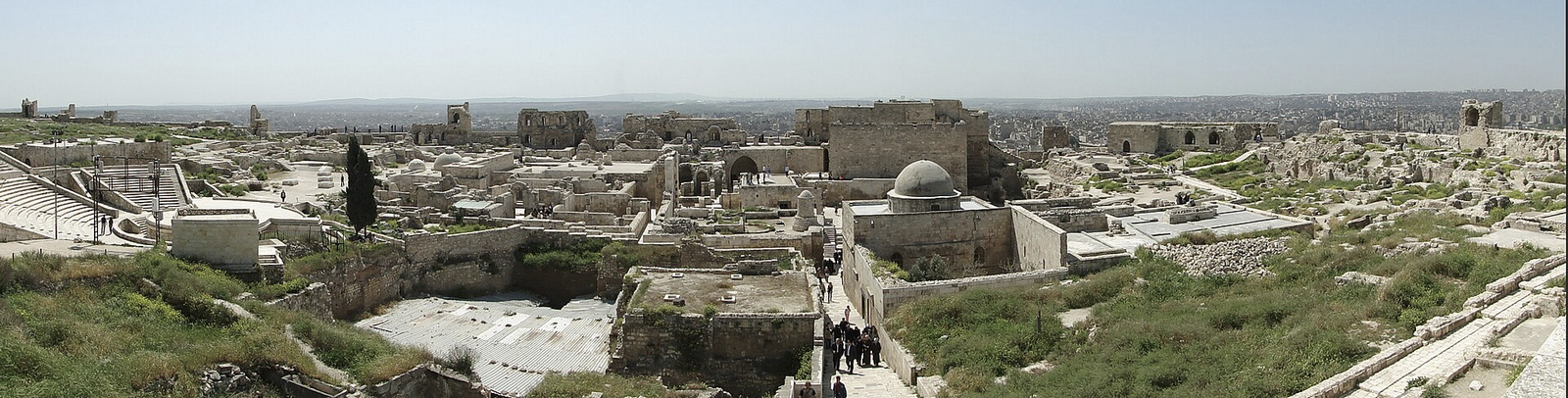
At the architectural base of the building is the Temple of the Storm-God (Hadad). As noted in the archaeological records, the temple boasts exceptional basalt orthostats and reliefs depicting Hittite and Neo-Hittite styles, indicating the site’s evolution from a Bronze Age sanctuary to a military outpost. The medieval towers attest to the peak of Islamic artistic achievement.
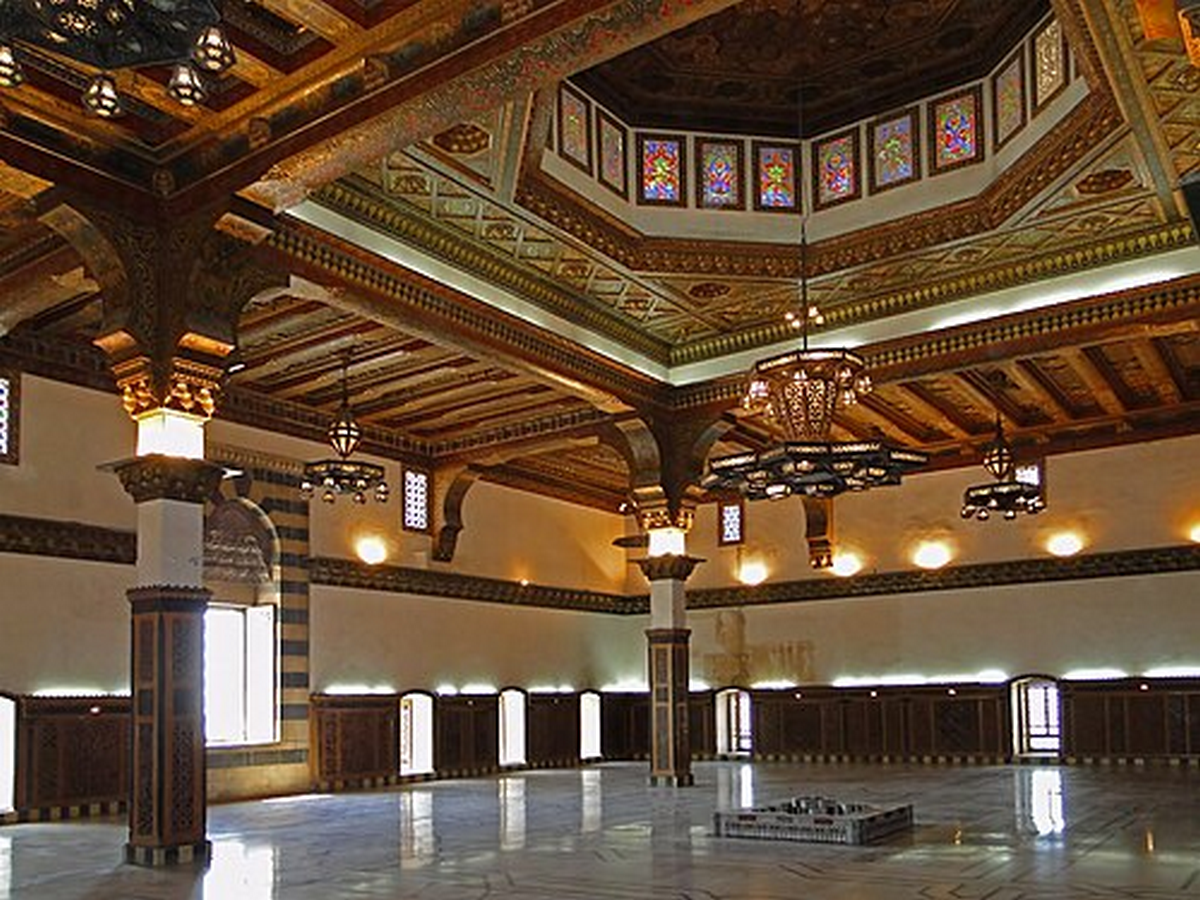
The Ayyubid Palace and the Mamluk Throne Hall, which followed, are prominent features within the complex; the latter, located directly above the main gateway, boasts a grand facade with intricate ablaq (alternating stone) decoration and an elaborately restored wooden ceiling. Within its walls, a self-contained city, the citadel housed mosques, hammams, and enormous underground cisterns and granaries. This architectural marriage of brutal fortification with decorative elegance brings a vertical history of Syria alive, with ancient basalt slabs dating from as far back as the Ptolemaics alongside sophisticated medieval palatial designs.
Significance- Culture, History and Architecture
The historical, cultural, and architectural significance of the Citadel of Aleppo lies in the fact that it is one of the oldest inhabited sites in the world. Throughout history, it has been a strategic powerhouse for over five millennia, beginning from a sanctuary in the Bronze Age, through its importance as a military bastion in the Crusades and Ayyubid eras, to its status as a defensive shield for the Silk Road trade routes. Given this significance, it was the ‘heartbeat’ of North Syria’s economic and political survival under various empires.
The Citadel translates to being a “vertical museum” of human culture and civilization. The most sacred place here is the Temple of the Storm-God (Hadad), which holds the rarest of Hittite and Neo-Hittite reliefs, combining Mesopotamian and Anatolian religious traditions. For Syrians today, the Citadel symbolizes supreme national pride and resilience, encapsulating layers of history that come with the ancient city of Aleppo.
From an architectural point of view, the building may be said to embody the acme of medieval military engineering standards. The superb quality of its design includes the massive use of glacis made of stone, the presence of a 20-meters-deep moat, and the ‘bent axis’ type of gatehouse, all of which were designed to impede the advance of intruders. Inside the building, the perfect merging of Hittite basalt orthostats, Ayyubid-style palaces, and the sumptuous Mamluk Throne Hall qualifies this fortress to attain the proud position of a UNESCO.
At Present
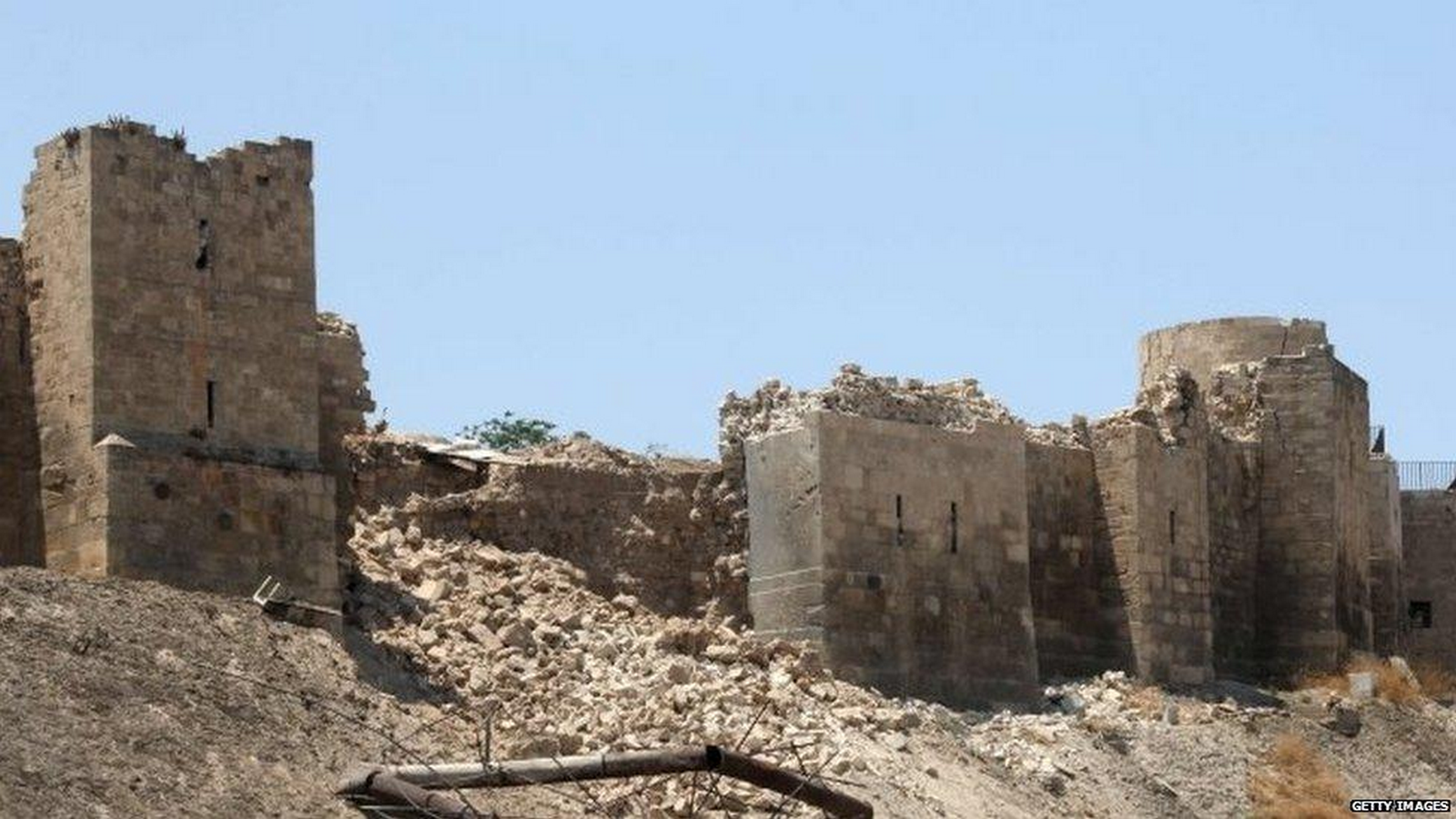
Currently, the Citadel of Aleppo serves as a powerful remnant of ruin, in which the extent of the physical damage accurately represents the depth of the social. While the site underwent a tremendous amount of damage during the battle, the city continues to struggle with economic sanctions to rebuild. In fact, the most recent change in the history of the site came late in 2024 when the city went from the government to the opposition. Today, as the imposing walls of the Citadel preside over the damaged old city, the structure serves as a symbol of civic pride and bewilderment.
A Foundation of Bedrock and Resilience
The Citadel stands today as a distinguished paradox of strength and resilience, having outlasted the forces of attacks and earthquakes, looking over a social fabric that is torn apart by war and migration. It is not only strength and resilience that mark the medieval construction, but also an essential aspect of Aleppine identity. While the “brick and mortar” of Aleppo is an embodied allegory for the fractured lives within, the transformation of the Citadel into a space for Sufi music and nights is an allegory for the transformative potential of architectural symbolism.
Moving forward, the need to preserve such landmarks must be perceived as a strategic necessity rather than a nostalgic longing. Architecture is a living format of communication. Investment in the symbolic space would cultivate the social glue necessary to cope with the challenges of globalization and environmental change. The citadel is thus a bridge for a heritage spanning six millennia and an uncertain present, suggesting that even though stones may crack, memory is the essential foundation of any urban and social rebirth.recognize belonging as a human right, comparable to those of previous as well as subsequent generations.
Citations:
- Burns, R. (2016). Aleppo: A History (Cities of the Ancient World). London: Routledge.
- Moustafa, Y. M. (2023). Post-war reconstruction of the old city of Aleppo: A value-based approach. Journal of Engineering and Applied Science, 70 (1), 1-18.
- Mehta, S. (2017). The Social Ruins of Aleppo, Syria. [online]. (Last updated: 3 May 2017). Available at: https://www.yalejournal.org/publications/the-social-ruins-of-aleppo-syria [Accessed date: 13/02/2026]
- Ancient History Sites (2024). Citadel of Aleppo. [online]. Available at: https://www.ancient-history-sites.com/sites/citadel-of-aleppo/ [Accessed date: 13/02/2026]
- Syrian Treasures (2024). Citadel of Aleppo. [online]. Available at: https://syrian-treasures.com/en/citadel-of-aleppo/ [Accessed date: 13/02/2026]
- UNESCO World Heritage Centre (2026). Ancient City of Aleppo. [online]. Available at: https://whc.unesco.org/en/list/21/ [Accessed date: 13/02/2026]
©Memorino 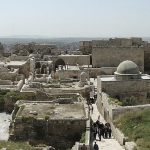
©Bernard Gagnon 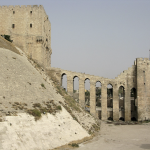
©Vyacheslav Argenberg 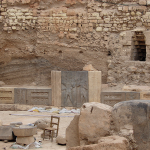
©Orf3us 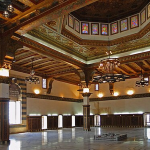
©Bernard Gagnon 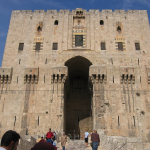
©Wikipedia 
©Getty Images 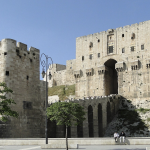
©Bernard Gagnon