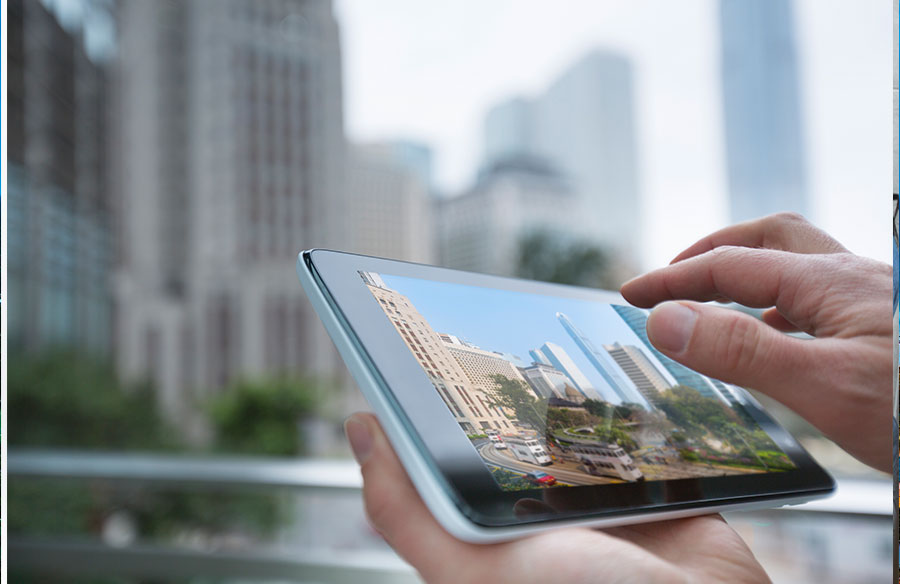
Mobile apps as an urban architecture have come in an age where technology is constantly redefining the urban scenery and are turning out to be more transformational tools that are redefining our interaction with the cities.
In the same way that classical architecture conveys city identity in the form of facades and proportions as well as the use of materials, mobile applications now present as the digital frontiers to the urban realm, merging practicality with design and social connectivity.
Other than aesthetic appeal, these applications organize the urban interface, which coordinates the flow of people, resources, and information throughout connected smart city ecosystems.
The Evolution of Urban Architecture in the Digital Age
Traditionally, cityscapes were characterized by physical structures: towers, bridges, and squares. These monuments represented civil identity, cultural priorities, and technological ability.
Nevertheless, the advent of digital technologies has broken the bounds of architecture so that it is no longer a physical object. Rather, the interface of a city tends to be stretched towards the digital space, where mobile applications play a role as virtual facades forming the perception and interaction.
In particular, people living in cities tend to use applications more and more to navigate, utilize government services, and participate in local projects. The experience of a user on these digital platforms resembles the experience of strolling in an urban street that is designed with consideration.
Thus, we can see that the modern urban canvas combines tangible elements of physical infrastructure with computerized overlays, forming hybrid spaces that apps are designed to act as utilitarian but aesthetically pleasing interfaces.
Statista states that by the year 2027, mobile app revenue in the world will reach over 935 billion USD, which means that the applications are gaining more and more importance in the everyday processes of the city environment.
Mobile Apps as Dynamic Urban Facades
Urban architecture through mobile apps is not fixed; instead, it changes as a result of user action and urban processes. Apps are flexible, unlike traditional buildings that require decades to build and change; thus, cities can easily adjust their facades with the help of apps.
This dynamism is especially essential in interrelated smart city systems where real-time information determines the planning of infrastructure, electricity distribution, and optimal transport of people.
Take an application that combines the bus and train schedules, traffic news, and local activities and alerts. These platforms are not merely tools but communicative facades that reveal the rhythm of the city, educate the behavior of citizens, and provide a sense of communal presence.
Furthermore, applications that are created under the principles of the intuitive UX/UI can be compared to architectural facades because they can attract, direct, and engage residents. A well-designed urban app is an indicator of technological savvy and inclusivity, just as the design of a building conveys civic pride through its facade.
The Role of Design and User Experience
Mobile apps as urban architecture can be built in terms of user experience (UX) and user interface (UI) design, which is similar to the way physical facades activate emotion in terms of form and materiality. When using apps, it is important to consider the urban design principles of wayfinding, hierarchy, and proportionality, because effective apps are always based on these features.
As a case in point, apps created by digital transformation company 8ration focus on a smooth interconnection with interconnected smart city systems so that the citizens are frictionless in relation to transport, healthcare, and municipal services.
The same applications enable urban planners to have anonymized behavioral data, which allows them to make repeated improvements in the digital and physical infrastructure. Thus, the app design will be a civic statement, a combination of utility, aesthetics, and social use.
Research from Gartner predicts that by 2026, over 75% of governments worldwide will adopt smart city platforms integrating mobile-first citizen services.
Bridging Physical and Digital Urban Realities
The other interesting feature in the use of mobile apps as urban architecture is that they help in closing the divide between the real city and the virtual city. Mobile applications can be used to superimpose digital intelligence on physical locations through the use of geolocation, augmented reality (AR), and real-time analytics to improve navigation, commerce, and culture.
As an example, AR-based historical tours can give users an opportunity to experience the development of urban landscapes, whereas apps with IoT can track the environmental conditions, the number of parking spaces, and energy usage.
These technologies develop integrated smart city systems, in which individuals and governments engage with the city in a permeable way. As a result, mobile apps extend beyond their traditional functionality and serve as adaptive infrastructures that add to the spatial, social, and environmental aspects of the city.
Implications for Urban Policy and Planning
City planners and policymakers need to appreciate the strategic importance of mobile applications as they acquire more urban architectural values. Digital interfaces determine the movement across cities, social behavior, and even the economy.
Through mobile applications as city architecture, cities will be able to promote civilized life, enhance accessibility, and simplify civic service.
Examples of such platforms that have been developed by companies such as 8ration include those that offer modular and scalable solutions that can be used on various infrastructures within the city. These applications allow cities to be proactive in addressing changing city needs, such as traffic optimization and citizen engagement applications.
The digital facade also provides quantifiable analytics, which can be used in long-term planning decision-making, making evidence-based interventions a possibility that is unavailable to traditional architecture alone.
Challenges and Future Directions
The challenges facing mobile apps as urban architecture imply that their potential has not been realized yet. There might be barriers to accessibility and adoption due to privacy issues, digital inequality, and reliance on proprietary platforms.
Additionally, the accelerated technological innovation demands constant development of apps, which require significant resources and cross-disciplinary cooperation among urban designers, developers, and policymakers.
However, the trend is also obvious: the cities that adopt related smart city platforms and implement mobile apps into their city politics will become more robust, adaptive, and interesting places to live.
The integration of physical infrastructure and digital interfaces will ensure that the city is redefined in a new way, and citizens will gain more agency in their relationships with the city.
“Smart cities will thrive when digital systems integrate transportation, energy, and communication into one adaptive technological ecosystem.” – Elon Musk, CEO of Tesla.
Final Thoughts!
The result is that mobile applications as urban design are transforming the very definition of city life. They act as active fronts that speak, direct, and involve the people and fit into the connected smart city systems.
Focusing on intuitive design, real-time flexibility, and strategic integration, such digital interfaces have become unavoidable components of contemporary city planning.
Acceptance of such companies as 8ration is leading the change and creating applications that are not just functional but also reflect the aesthetics and social values of modern cities. With the further development of the urban environment, the physical space will be erased, and mobile apps will become the new frontiers, essential, interactive, and dynamic.