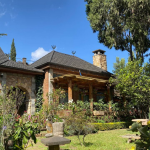
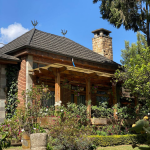
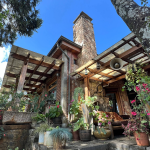
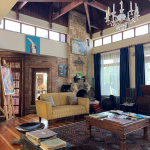
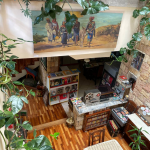
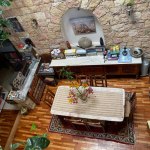
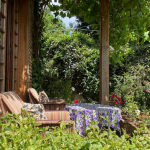
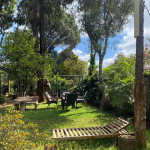
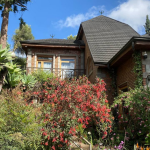
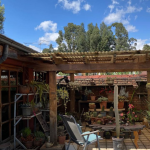
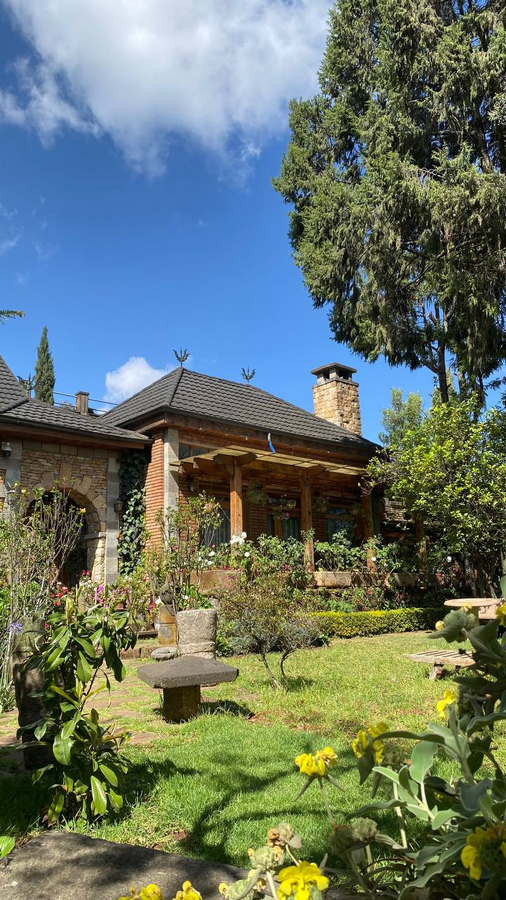
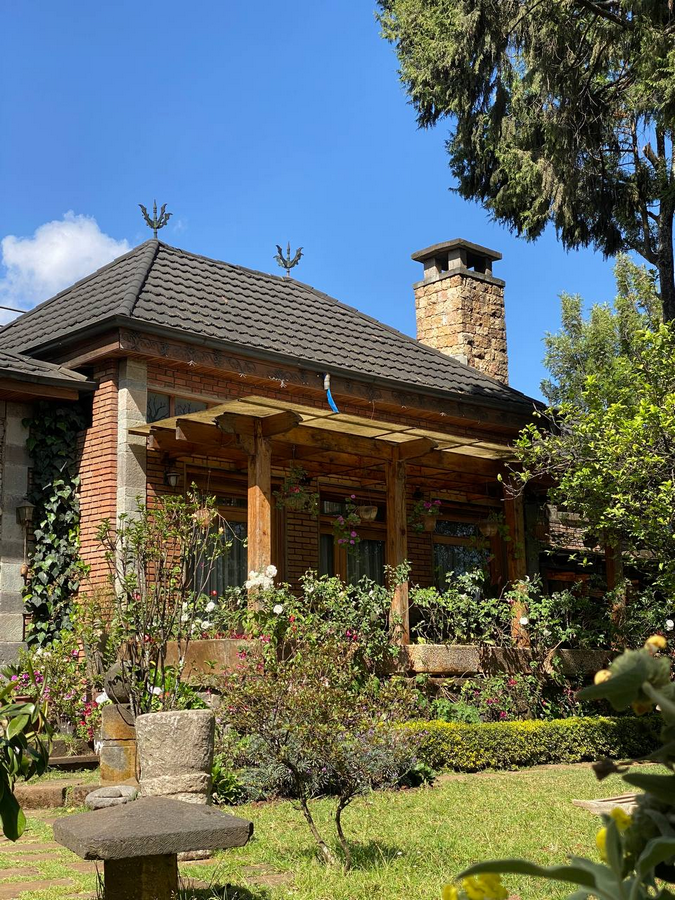
The residence located in Addis Ababa‘s old neighborhood, “Ferensay”, was constructed using reclaimed construction materials salvaged from demolished houses across the city, and holds a unique character. The design is inspired by the Addis Ababa Architectural style and preserves more than a century of architectural memory while responding to the city’s rapid transformation and continuous redevelopment.
Design
The house is designed by Ethiopian architect Ahadu Abayneh. The house draws inspiration from traditional Addis Ababa residential architecture while embracing a contemporary spatial language. One of the inspirations is an artwork by Daniel Taye, a cart boy pushing a dirt cart inside the old city hills of 4 Kilo, by extension, the new reality of Addis Ababa. The art captured the tension between the city’s historic fabric and its emerging new reality. This moment of transition, where older neighborhoods are replaced by new developments, and the demolition of precious houses begins, was the catalyst for collecting and reclaiming materials. The other inspiration for the design is a historic photograph of an old Addis Ababa house that showcases characteristics of the Architectural style, incorporating some features from the house.
“The second inspiration is the idea of “sefer”. While the term has no exact English translation, it broadly describes a neighborhood defined by close social ties, shared identity, and a strong sense of belonging. Beyond its spatial meaning, Sefer represents collective memory, everyday rituals, and social proximity qualities increasingly absent in contemporary urban housing.”
These neighborhoods were once characterized by mixed-income communities, where embassies stood alongside modest mud houses, and everyday life revolved around shared spaces. This layered urban condition echoes the coexistence and social richness of old Addis Ababa. This motivated the client to purchase a plot in an old neighborhood. After the sudden demolition of historic neighborhoods, the client began collecting reclaimed wooden doors and top windows from early houses, even before acquiring the plot.
The design process was highly collaborative and non-linear. Extended discussions between the architect and client formed the foundation of the project, followed by careful measurement and documentation of reclaimed materials, which directly informed the architectural drawings. Site surveys prioritized preserving the natural slope and existing vegetation. Unlike conventional design processes, the project remained open to on-site changes and adaptation, with the architect playing the role of a master builder throughout construction.
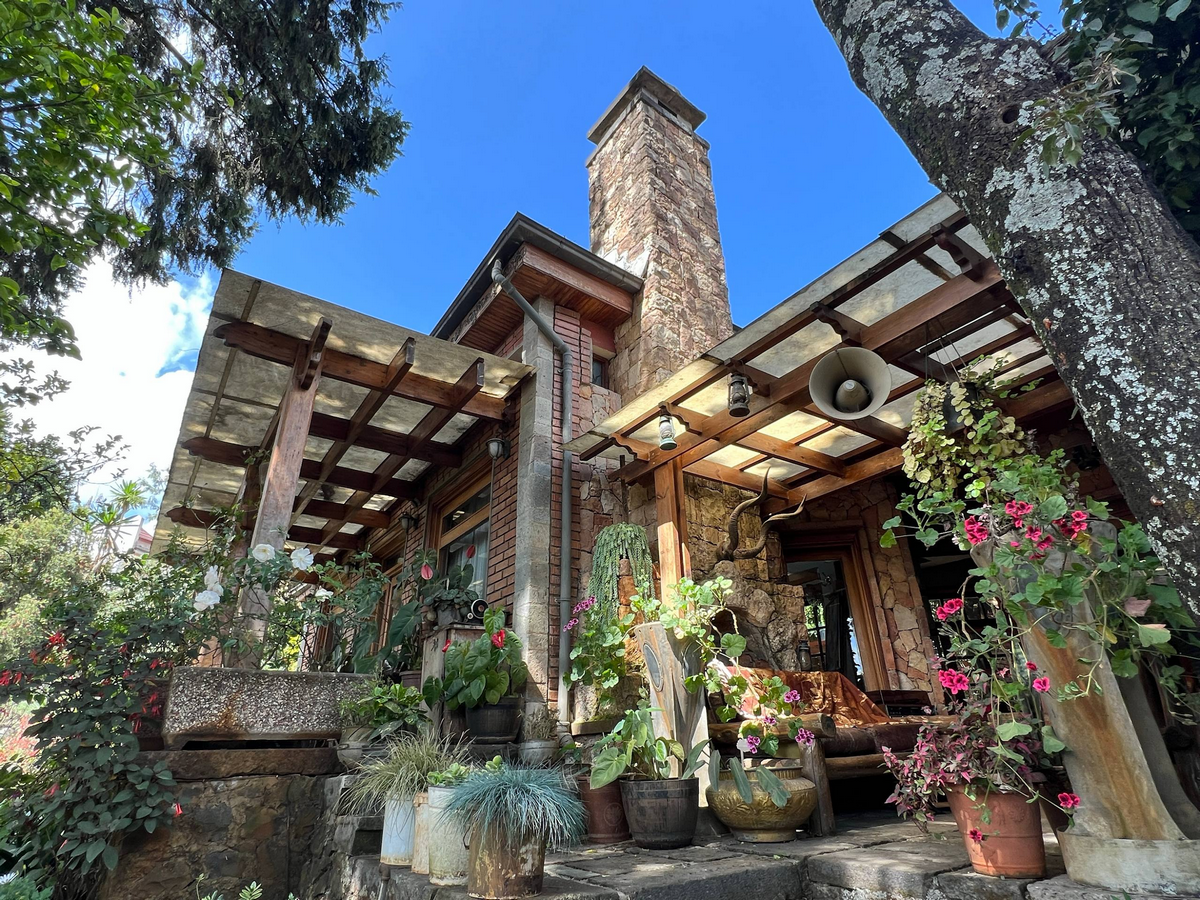
The construction took over three and a half years through a unique working agreement, allowing both to remain actively involved on the construction site. Acquiring materials before the design, given the architecture to evolve around reclaimed bricks, stone, timber, doors, windows, and furniture salvaged . This may seem a limitation in the highlight, but it also gave an understanding of sustainability – using what’s available. It also introduced locally available materials in the country, which are not usually used, and in-house experimentation with various stones is a good example.
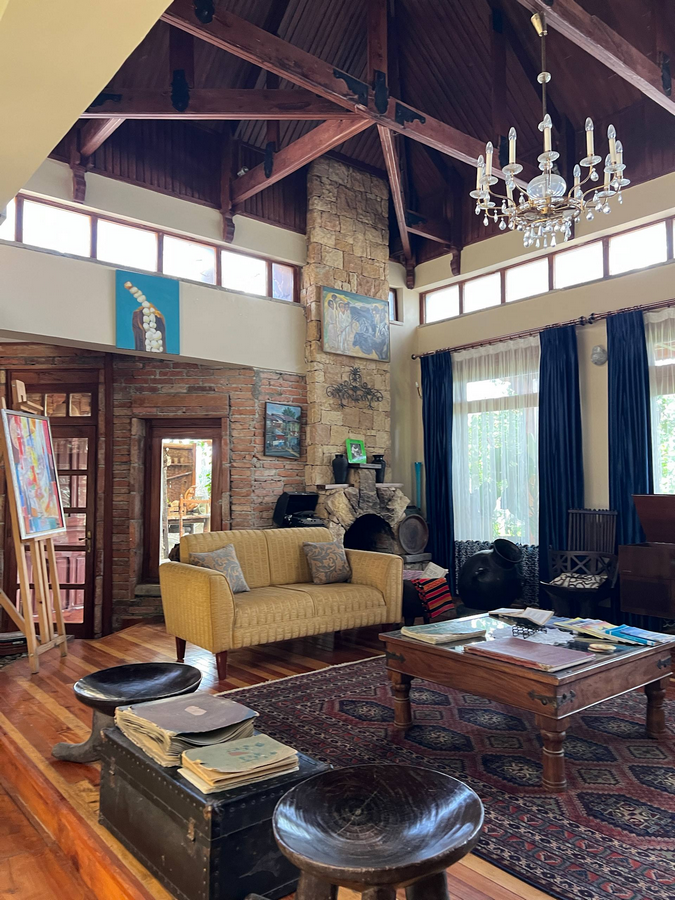
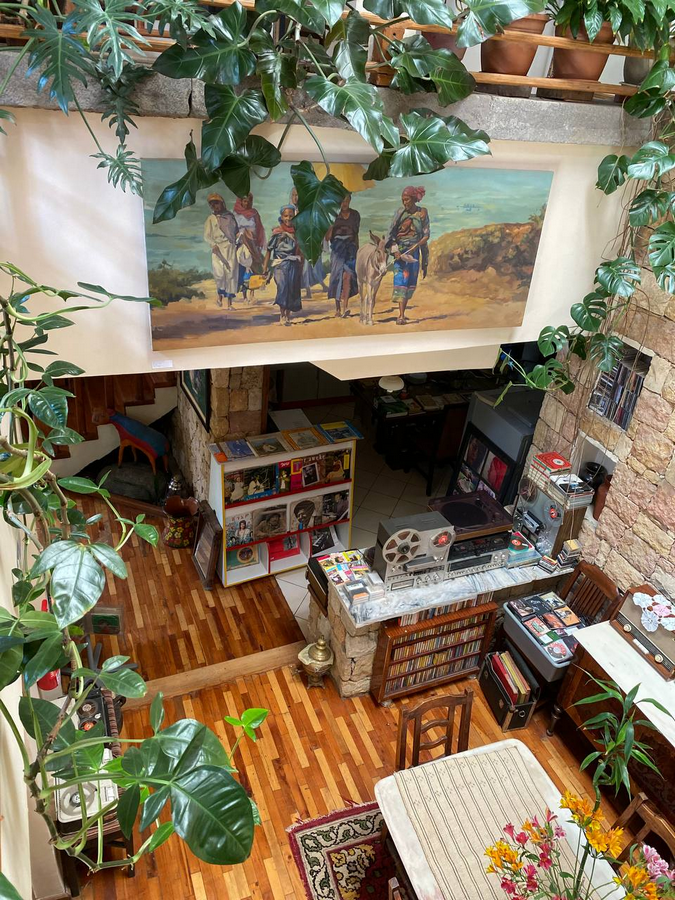
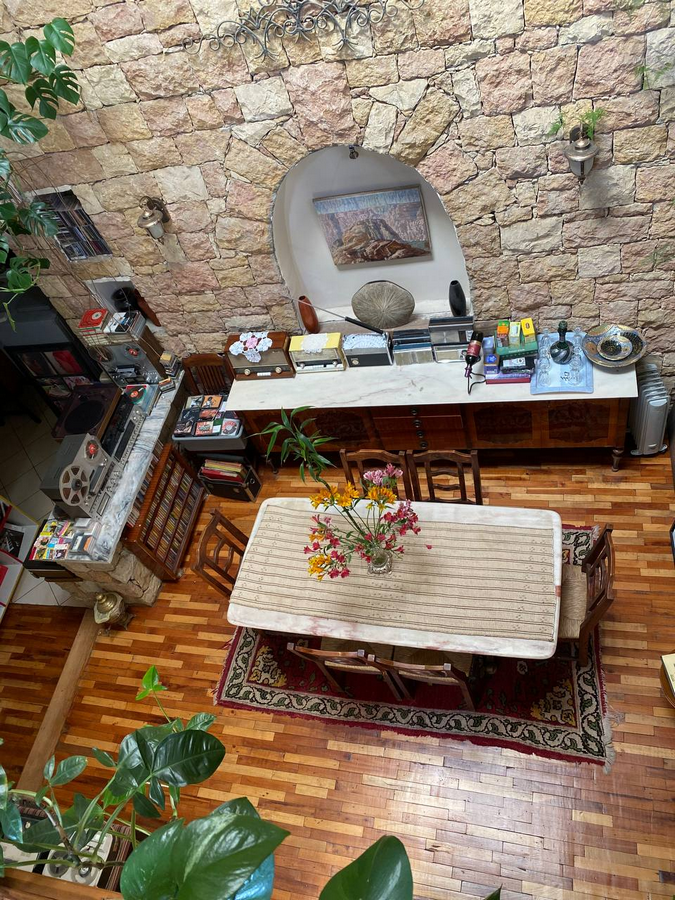
The design philosophy is fully based on an understanding of sustainability, not only the physical structure and materials, but also keeping memory, skills, economy, culture, and knowledge. It emphasizes sustaining the memory of a society by blending an old style and former local spaces in the contemporary structure. It also sustained and created knowledge transfer skills and craftsmanship among the workers, as such projects happen rarely.
Sustaining Culture through Space
Among the issues in Ethiopian contemporary houses, they neglect the traditional spaces that help culture to flourish. Food is among the most valued things in Ethiopian culture, and Ethiopian kitchens have different characters and requirements. In this house, there are three kitchen spaces: one contemporary, traditional kitchen, and an outdoor cooking space. Focusing on natural ventilation and lighting also made the house become energy friendly. The music notes of “The Shepherd with the flute” on a piano by Girma Yifrashewa are also used to create harmony and a fluid sense. The scope of sustainability in this building extends beyond materials and methods of construction. It includes social, economic, and environmental aspects, but also the sustainability of the memory of the city, its architecture, culture, skills, and workmanship.
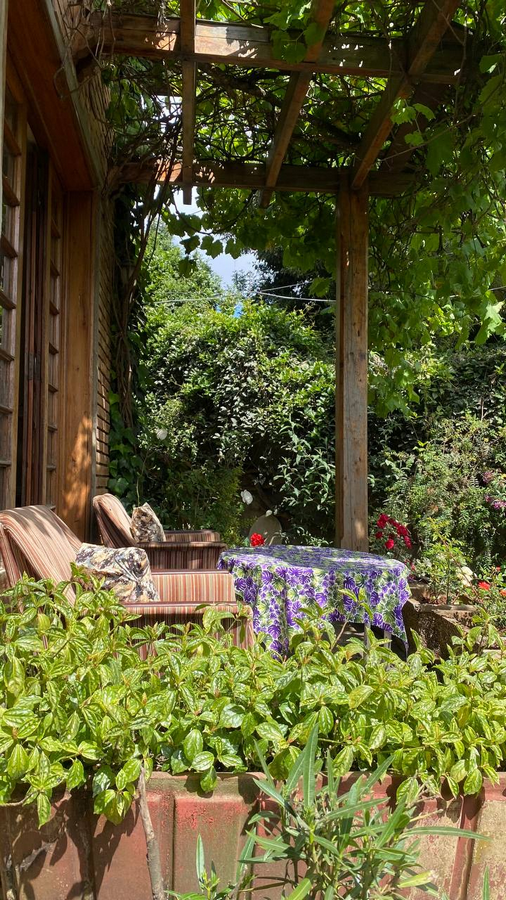
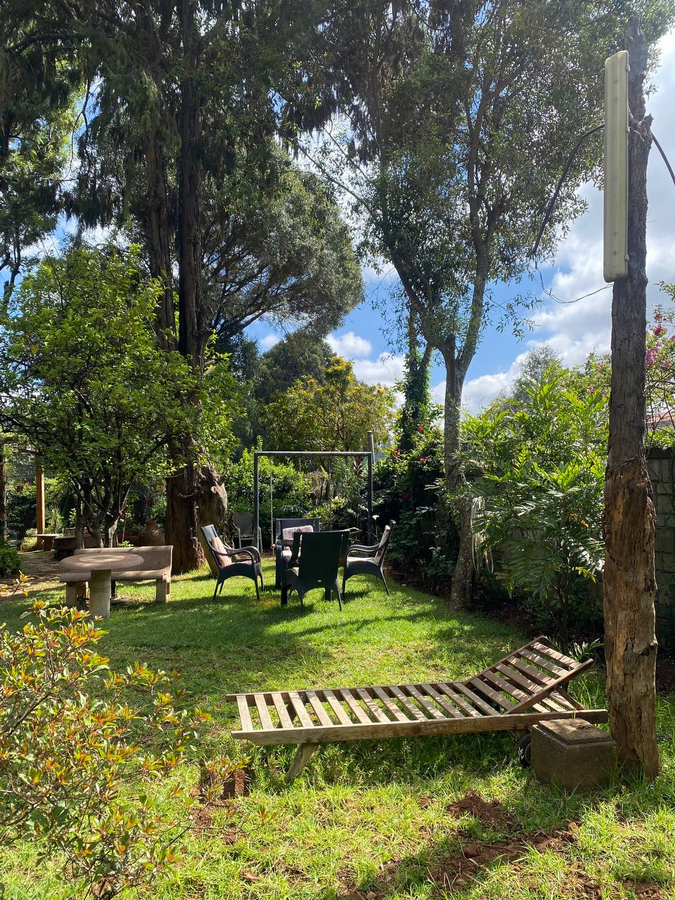
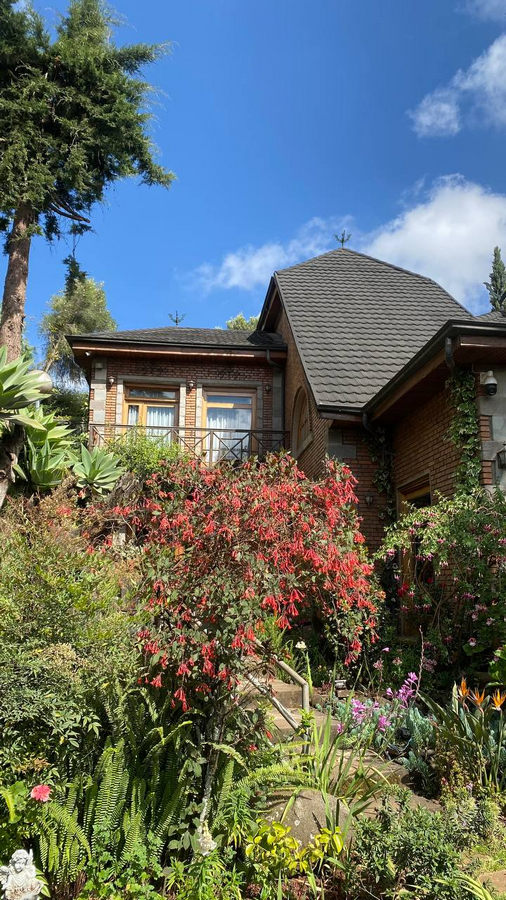
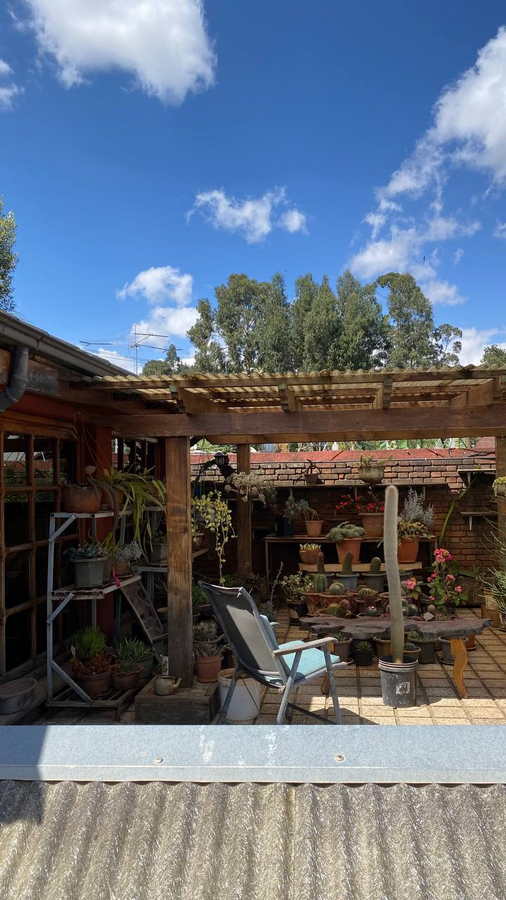
After a decade of construction, this house, which taught a big lesson, is gradually transitioning into a museum. It houses an extensive collection of books, music records, art paintings, artifacts, antique Ethiopian furniture, photographs, historical documents, journals, and letters. The compound holds more than 700 species of plants in a single compound. What began as a private residence has evolved into a social and intellectual space supporting artistic dialogue, heritage preservation, and access for researchers amid rapid urban development.
It also enables us to see heritage in a new dimension and create something new with the remains. Some of the houses were meant to be preserved, but it was a missed opportunity. Such a project gives an opportunity to carefully use resources wisely. And this benefits the universe also by minimizing waste from construction material production and the energy related to it.
References:
- Tola, A.T. (2023). Addis Ababa’s Sefer, Iddir, and Gebbi: Nuanced reading of complex urban forms [Dissertation (TU Delft), Delft University of Technology]. A+BE Architecture and the Built Environment., https://doi.org/10.7480/abe.2023.14
- Girma Yifrashewa,1990, Luce, F. (1996). Delicious. [CD Recording]. Nottingham: Delectable Music [The Shepherd with the Flute]