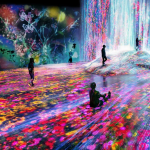
Architecture creates spaces, walls, and a roof for inhabitation. The story does not end there. Once humans realised that they could construct streets, shelters, and settlements for habitation, their thoughts evolved into creating public spaces. The notion moved beyond home into the creation of lifestyle, social spaces, offices, schools, and more. It was implied that the intention of these spaces was to interact and experience when one steps out of their house. Suddenly, many functional spaces had a roof on top. This article explores how innovative design strategies engage the body in spatial progression through examples of different interactive and multi-sensory spaces.
Visitor’s Experience
With several alternatives available, visitors look for a jaw-dropper when they visit a place. Authors, researchers, and practitioners are investigating how technology can be integrated into design, particularly in museums, to improve user interaction (Kaplun et al., 2023). In the sharing economy, consumers value experience more than ownership and permanence (Robertson et al., 2018). Visitors seek spaces that connect with them and are centred on their spatial experience. Interior spaces can influence the emotional and social experience (Lee, 2022).
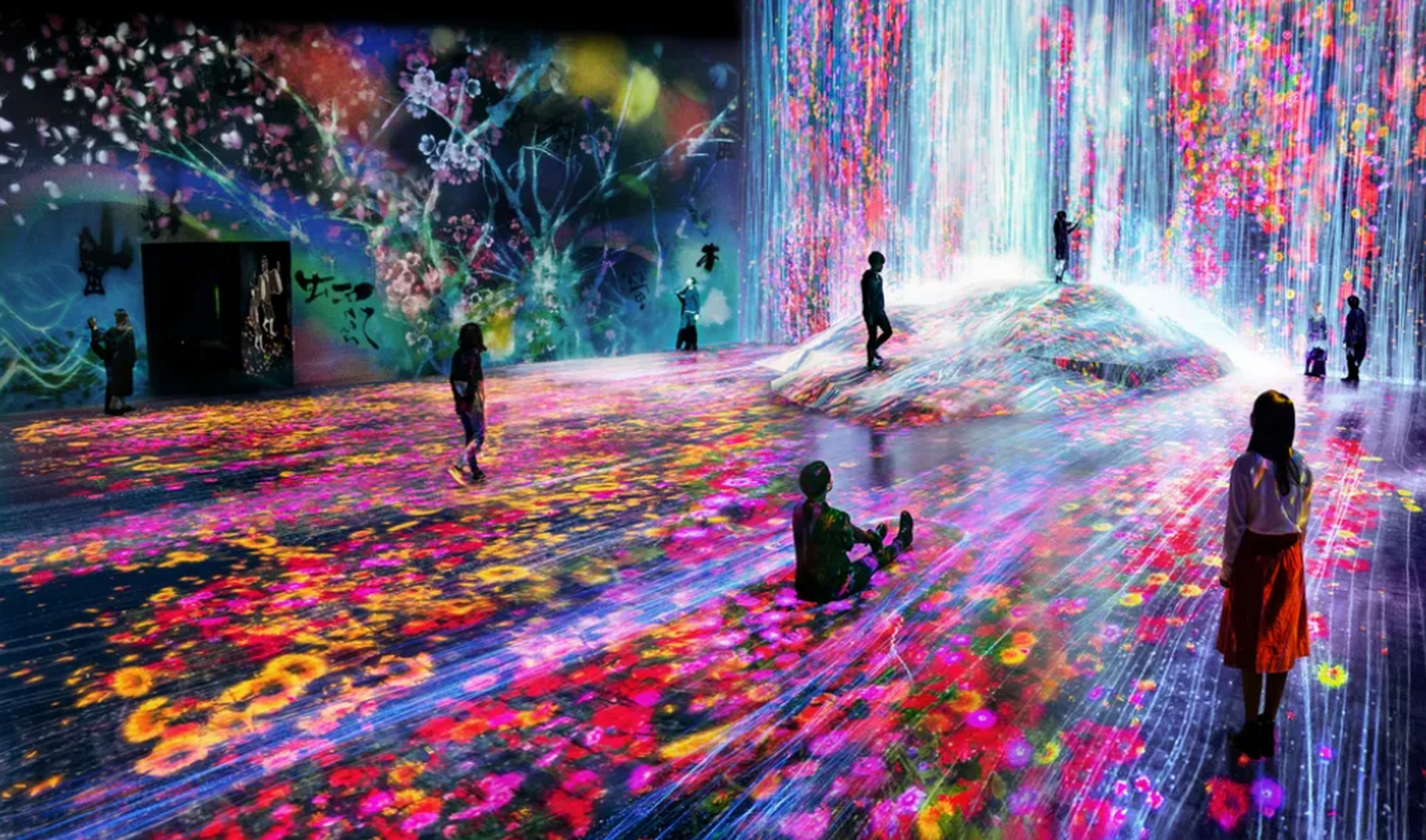
For public spaces, such as museums and retail, patrons desire engagement, interaction, attention, and experience. Exhibitions such as the Color Factory are site-specific, often as an escape from reality for visitors (Zeitlin Wu, 2020). In an exhibition, guests feel more engaged when they can interact rather than observe (Ahmed and Khan, 2021). The outer façade of the building may synthesise with the streetscape, but inside the shell, visitors are looking for an unparalleled experience.
Engaging With Design
The human body engages with physical surroundings continuously. Scale, proportion, circulation, material, and colour are all attributes of bodily experiences in a space. When a design professional conceptualises a space, they regard the narrative of the target audience. The footing of interactive design focuses on the cognitive capabilities of the visitor (Ahmed and Khan, 2021). For interaction to occur, the space must be capable of delivering. The space should be consistent, perceivable, learnable, predictable, and open to feedback (Ahmed and Khan, 2021).
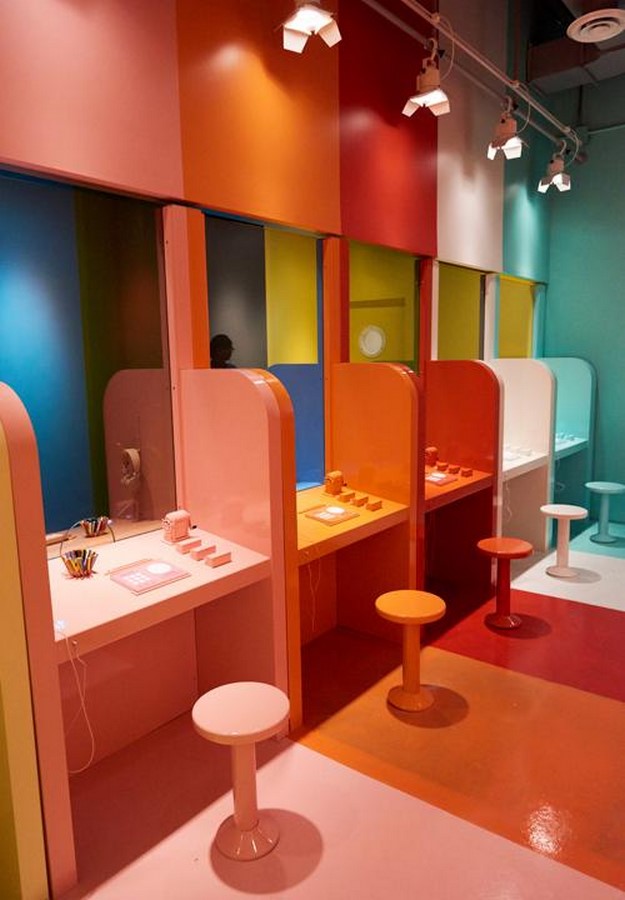
The pop-up stores combine ephemerality with experience, unlike permanent or seasonal themed stores (Robertson et al., 2018). They include novelty, surprise, aesthetics, and unusual locations to draw the customers (Robertson et al., 2018). The phenomenological approach to interior seeks to connect the body and environment, enabling emotional engagement (Lee, 2022). In the color factory, visitors engage with colourful installations and are captured by automated cameras at various locations (Sadiku, Adekunte, and Sadiku, 2025). This approach is distinct from the traditional museum experience as the visitor receives a souvenir from the visit. While engaging with the design, the experience is captured, and the provision is an integral part of the design.
Sensory Experience
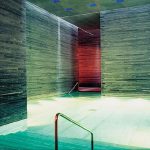
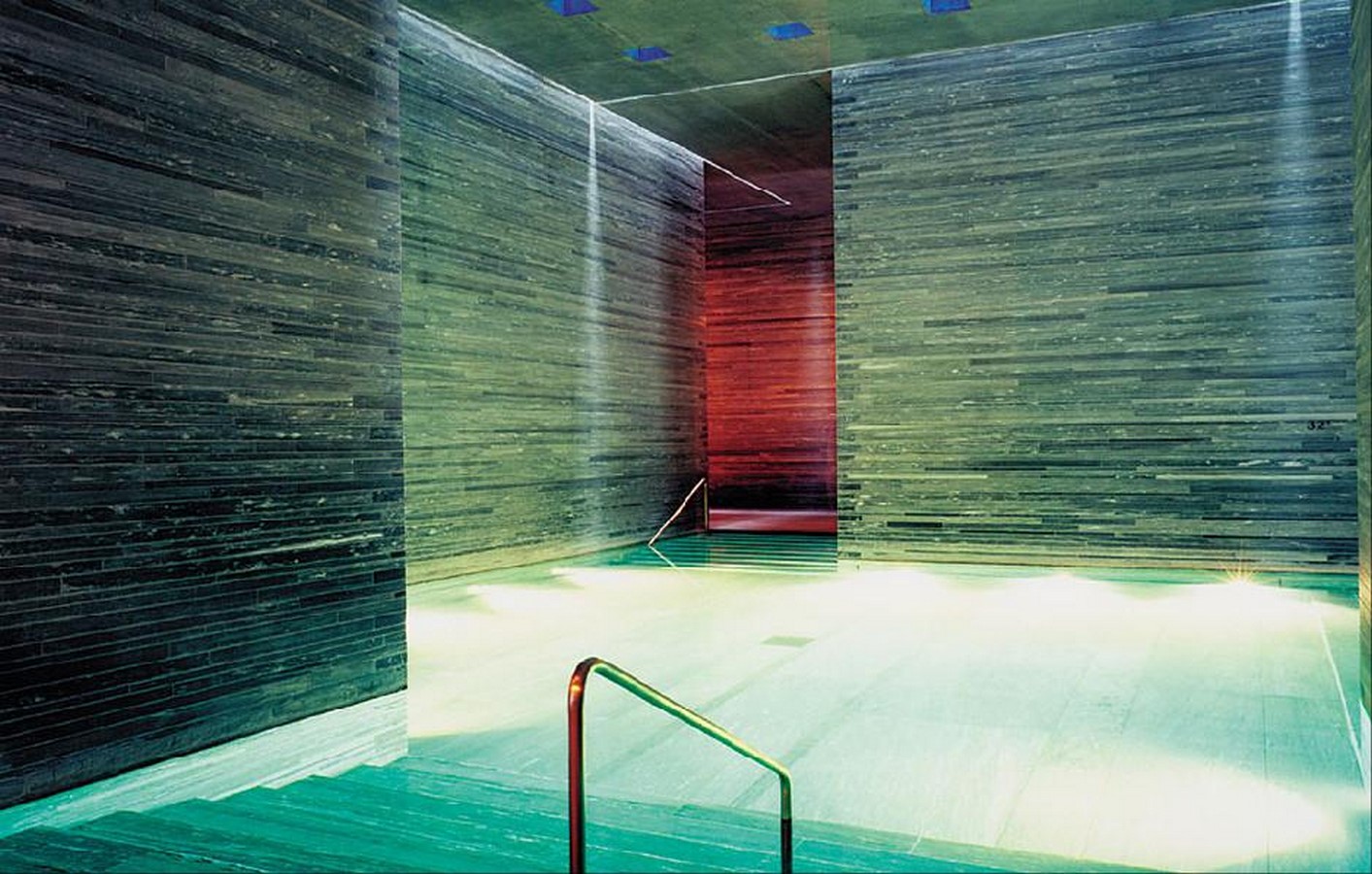
In public spaces such as museums and retail outlets, experience and emotional connection are the basis of design. The purpose of these spaces is to keep the customers (or visitors) engaged and happy. Juhani Pallasmaa and Peter Zumthor stress that architecture needs to be experienced by the whole body, not just by vision (Lee, 2022). Therme Vals by Zumthor and Mediated Motion by Olafur emphasize multi-sensory architecture that has gained attention over recent decades (Lee, 2022). The purpose is to involve all the senses while exploring the space. The thought of materiality must go beyond material specifications and include sensory qualities such as light, texture, sound, smell, temperature, and proportion (Lee, 2022). Materials brought together can create an immersive experience with their individual qualities.
Color Factory
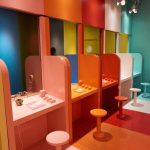
Ever imagined that colours which shape the world and make things visible can be interactive when brought together in a space? Color Factory is an interactive exhibit that celebrates colours through playful, multi-sensory installations (Zeitlin Wu, 2020). Some exhibits connect smell and taste to colours through scents and flavours (Zeitlin Wu, 2020). These exhibitions are in large warehouse-type spaces that are then fully covered in bright, saturated colours and graphical patterns (Zeitlin Wu, 2020). Each location concludes in a huge ball pit to evoke an immersive, often tailored to the local context (Zeitlin Wu, 2020). The experience surpasses the limits of imagination.
Future of Bodily Engagement
Smartphones are among the contributors to advancing the interactive experience. Immersive technology, such as augmented reality (AR) and virtual reality (VR), can be used to enhance the preservation of cultural heritage in museums (Kaplun et al., 2023). In museums, mobile devices can be utilised to identify the exhibit, provide interactive information, details, and descriptions (Kaplun et al., 2023). Visitors can explore the museums and exhibits at their fingertips.
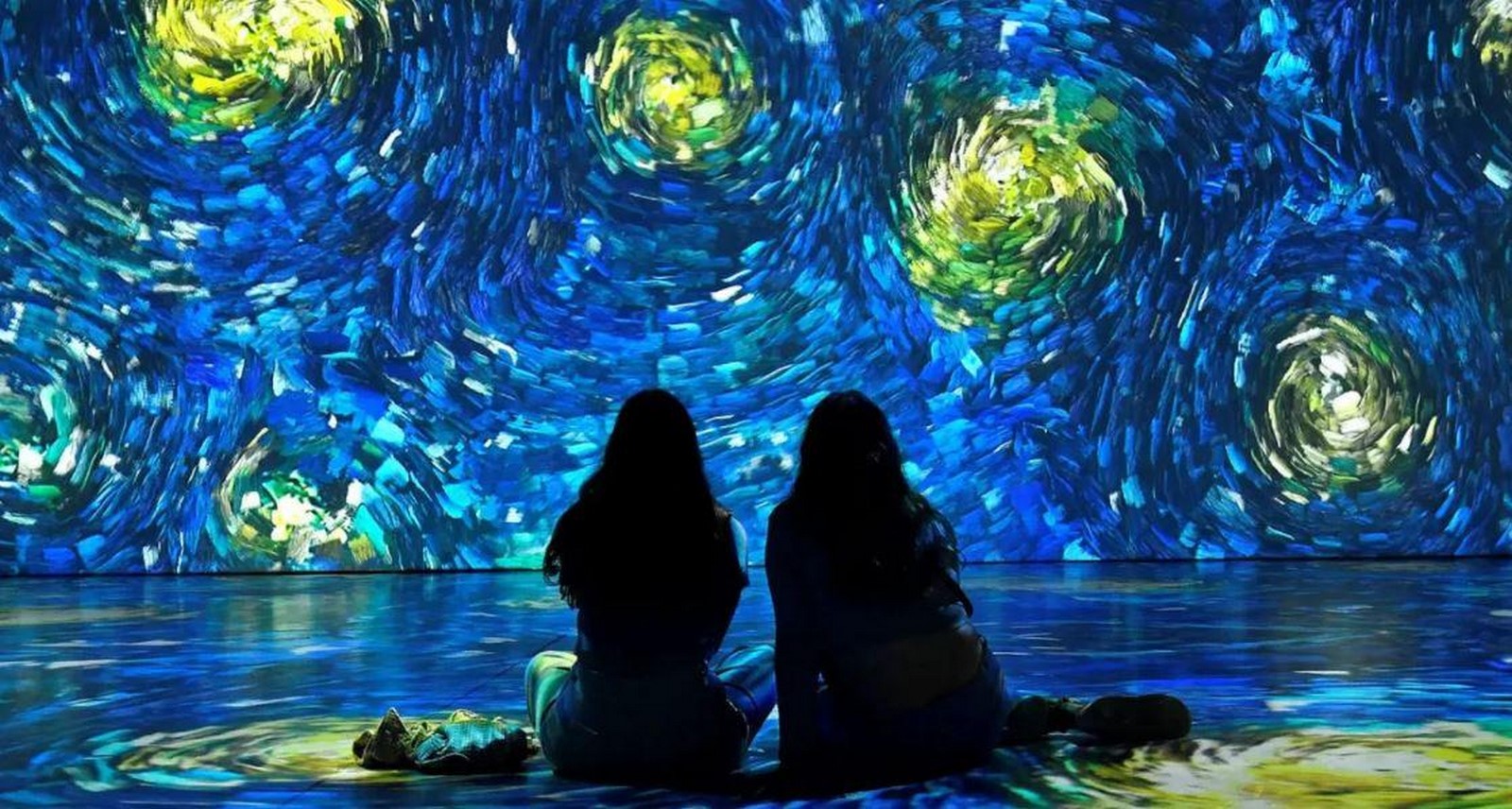
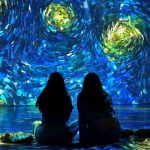
Immersive architecture comprises a combination of technology. The concept imagines architecture beyond static drawings (Sadiku, Adekunte and Sadiku, 2025). In terms of immersive technology, there are options of virtual reality, augmented reality, mixed reality, extended reality, and assisted reality (Sadiku, Adekunte and Sadiku, 2025). These options can transform a large empty space into an experiential exhibition. The Immersive van Gogh exhibit is a digital art show which portrays the artist’s masterpieces (Van Gogh Exhibition: The Immersive Experience, 2025). Technology has assisted designers to develop moving architecture.
Completion of a building does not signify the end of its architectural journey. The space within the building must conform to its purpose and leave an eternal impression on the visitor. Experiential spaces designed around the world provide an imaginative experience and an escape from everyday life. These spaces connect the body with its surroundings. How can everyday spaces be reimagined to be experiential?
- Ahmed, S. and Khan, M. (2021) ‘Interactive Design in Enhancing User Experience in Museum’, International Journal of Interactive Design and Technology, 6(4), pp. 56-68. Available at: https://www.researchgate.net/publication/354864902_Interactive_Design_in_Enhancing_User_Experience_in_Museum (Accessed: 22 December 2025).
- Kaplun, D., Romanov, S., Ipalakova, M., Daineko, Y., Bolatov, Z. and Tsoy, D. (2023) ‘Application of immersive technology in a museum’, The International Workshop on Digital Society: In the Eve of the 6th Information Revolution (DS 2023), 7-9 November 2023, Almaty, Kazakhstan.
- Lee, K., 2022. Phenomenological understanding of interior space and emotional connection: A case study analysis of Peter Zumthor and Kengo Kuma’s architectural works. Buildings, 12(3), p. 326. Available at: https://www.mdpi.com/2075-5309/12/3/326 [Accessed 23 December 2025].
- Robertson, T.S., Gatignon, H. and Cesareo, L., 2018. Pop-ups, ephemerality, and consumer experience: The centrality of buzz. Journal of the Association for Consumer Research, 3(3), pp.425–439. Available at: https://faculty.wharton.upenn.edu/wp-content/uploads/2019/08/Pop-Ups-Article-JACR-version-July-2018.pdf [Accessed 25 December 2025].
- Sadiku, M.N.O., Adekunte, P.A. and Sadiku, J.O., 2025. Immersive Technologies in Architecture. International Journal of Trend in Scientific Research and Development, 9(1), pp.473–483. Available at: https://www.ijtsrd.com/papers/ijtsrd74887.pdf [Accessed 25 December 2025].
- Taylor, L. (2018) ‘Extra, Extra: A Sprinkle of Defense of the Museum of Ice Cream’, Archinect. Available at: https://archinect.com/features/article/150129172/extra-extra-a-sprinkle-of-defense-of-the-museum-of-ice-cream (Accessed: 22 December 2025).
- Van Gogh Exhibition: The Immersive Experience (2025) VanGoghExpo.com. Available at: https://vangoghexpo.com/ (Accessed: 28 December 2025).
- Zeitlin Wu, L., 2020. Fabricating Images at the Color Factory. Frames Cinema Journal, Issue 17. Available at: https://www.researchgate.net/publication/342597119_Fabricating_Images_at_the_Color_Factory [Accessed 25 December 2025]
Image References:
- Smithsonian Magazine (2018) Borderless World [online image]. Available at: https://th-thumbnailer.cdn-si-edu.com/AXJxWOl-W-yA01QB8kv2sdRRg0M=/1026×684/filters:no_upscale()/https://tf-cmsv2-smithsonianmag-media.s3.amazonaws.com/filer/35/39/35399575-62c7-41cb-bda3-1b0a9f7cca8b/main_borderlesswaorl_takihana_2_3_high.jpg (Accessed: 28 December 2025).
- Zumthor, P. (2009) The Therme Vals. Photograph. ArchDaily, 11 February. Available at: https://images.adsttc.com/media/images/500f/2452/28ba/0d0c/c700/1d3d/slideshow/stringio.jpg?1417083257 (Accessed: 28 December 2025).
- Sherwin-Williams (n.d.) Stir Color Factory image A. Available at: https://images.sherwin-williams.com/content_images/sw-img-stir-color-factory-A.jpg (Accessed: 28 December 2025).
- Mehta, T. (2025) Van Gogh Immersive Experience is back in Delhi; here’s what you can expect, Architectural Digest India, 22 May. Available at: https://www.architecturaldigest.in/story/inside-delhis-immersive-art-installation-where-you-walk-through-van-goghs-starry-night-and-chat-with-the-mona-lisa/ (Accessed: 28 December 2025).