Historical Background
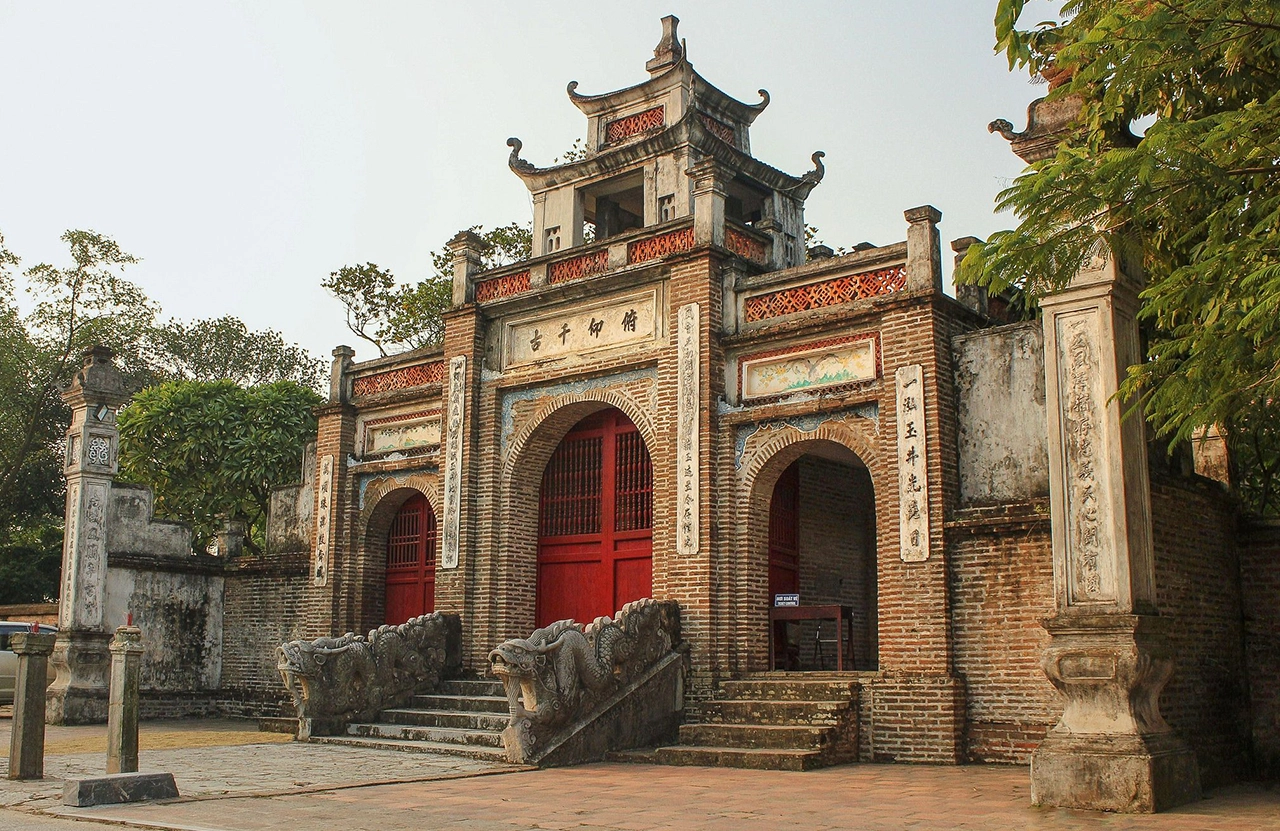
Co Loa Citadel, situated in the Dong Anh District of Hanoi, is one of the oldest relic sites in Vietnam, dating back to the 3rd century BC. It is associated with the legendary King An Duong Vuong and the establishment of the ancient kingdom of Au Lac. It later became the capital of Van Xuan, an independent kingdom during the Chinese dominance of Vietnam.
There is a myth about the construction of the citadel. According to the legend, all the work done during the day was mysteriously destroyed at night. The king offered a sacrifice to the gods, and in one night, a golden turtle appeared to him in a dream, telling him that the citadel was built on the turtle’s carapace. The king was instructed to build the city in a new location, which is the present-day Co Loa. Following its legendary foundation, Co Loa Citadel developed through several key historical phases, reflecting the political transformations of early Vietnam.
- 3rd Century BC: Co Loa was established as the capital of the Au Lac kingdom under King An Duong Vuong. It was a military stronghold and commercial hub, making it the most ancient urban site in Vietnam.
- 2nd Century BC: From a thriving center of an independent state, Co Loa became an administrative district under the Chinese dynasties.
- 6th Century CE: Co Loa was the capital of the independent kingdom of Von Xuan during Ly Nam Do’s rule, signifying resistance and the reassertion of local sovereignty.
- 11th to 18th Century: As Co Loa Citadel lost its status as the country’s political center, it transformed into a rural area, evolving into a network of new villages.
- 19th Century to present: Being one of the first fortified cities in Southeast Asia, it is regarded as a National special relic in modern-day Vietnam.
Architectural Planning and Construction Techniques
The architectural design of Co Loa Citadel reflects one of the earliest and most complex fortified urban layouts in Southeast Asia. The name Co Loa, which literally means ancient spiral, reflects its general concentric and spiral-like appearance, which resembles a snail shell. According to the records, the citadel had a total of 9 spiral circles, shaped like a snail, reflecting the citadel’s multi-layered structure with concentric ramparts and moats. Due to the ravages of time and war, the citadel currently has only 3 walls left.
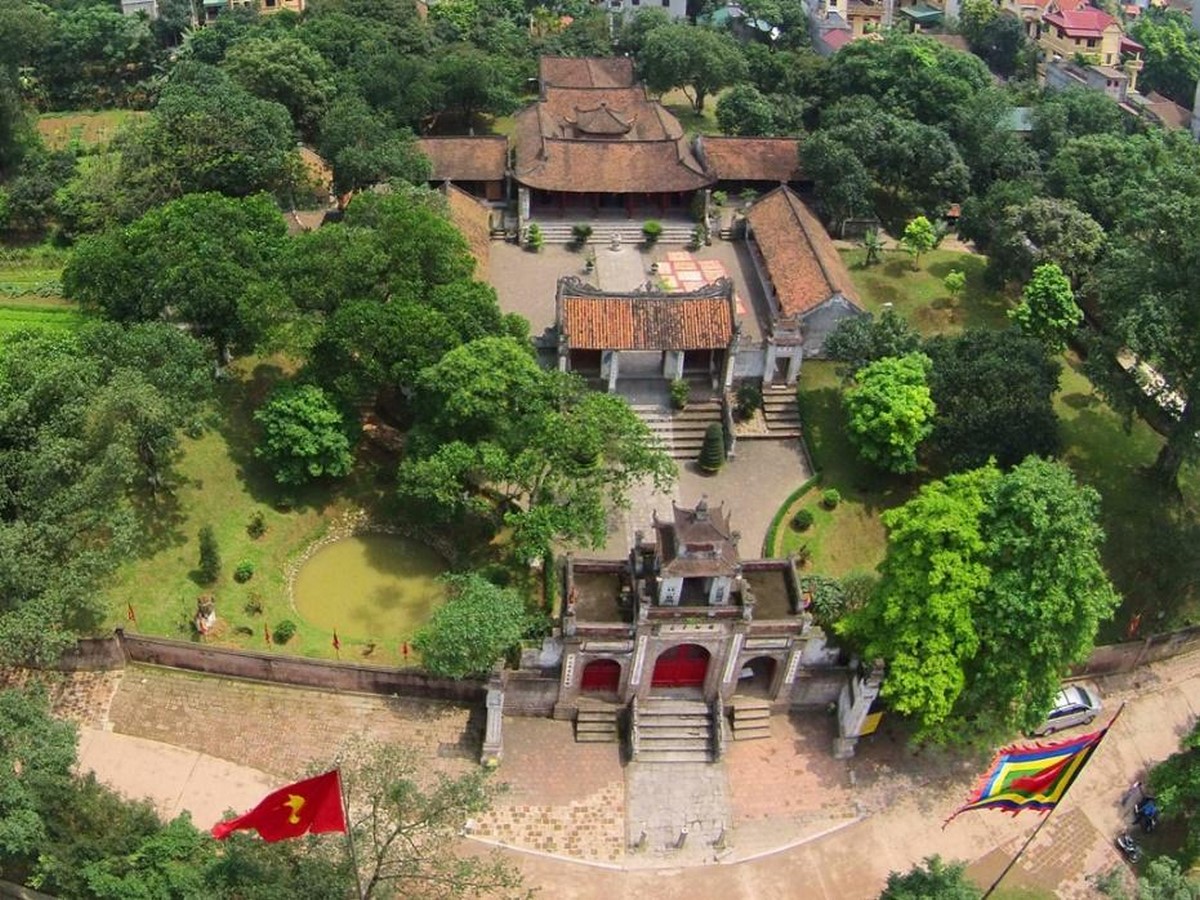
With several distinctive architectural features, the citadel construction is split into 3 sections:
- The Outer Walls
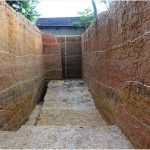
The outer walls span 8 kilometers, averaging 3-4 meters in height, with some sections of 8 meters tall. The citadel was constructed using a unique method: the walls were constructed simultaneously with the creation of the moats and the excavation of the ground. Because of their gently sloping inner faces and steep outer faces, the ramparts are simpler to defend from the inside and more resilient to outside attackers. The ramparts are 20 to 30 meters broad at the base and 6 to 12 meters wide at the summit.
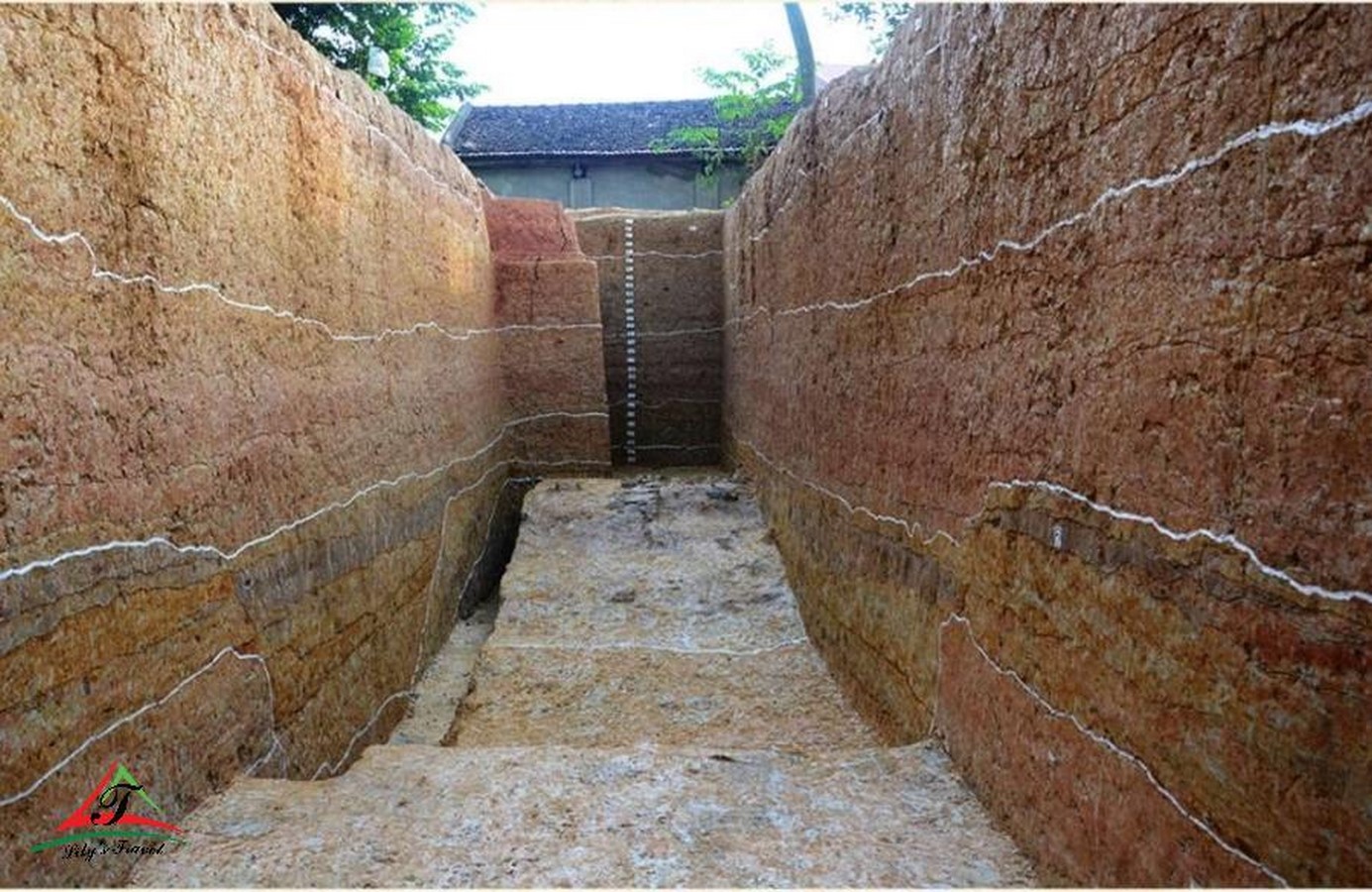
The middle walls feature an irregular shape with a perimeter of 6500 meters and reach a height of up to 10 meters. Its walls are about 10 meters wide on average. There are five gates positioned to the east, south, north, northwest, and southwest. The eastern gate connects to the Hoang River.
- The Inner Citadel
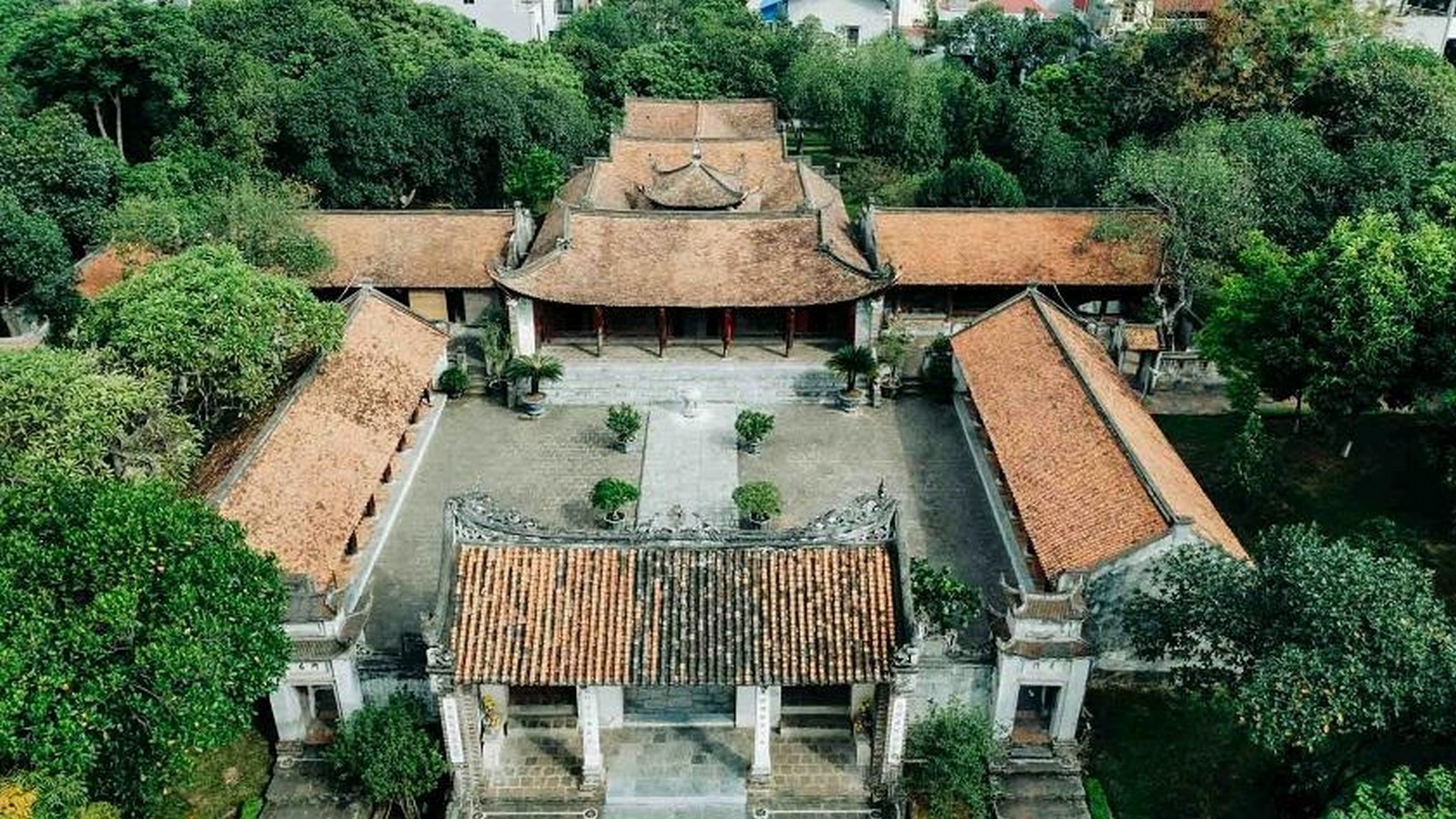
The inner citadel, a rectangular fortification, features walls oriented to the south, north, west, and east, with only a gate on the southern side. Surrounding it are 12 symmetrical earthworks known as “Firebacks.” The inner citadel covers a perimeter of 1730 meters, about 5 m high. It includes communal houses, temples, shrines, and altars, reflecting the rich cultural heritage of Vietnam.
Additionally, there are defensive emplacements in addition to the earthen ramparts. Moats beyond the city rings connected to the Hoang Giang River, making it easy for people to travel and trade both inside the rampart and farther to the Red River.
Cultural Significance
Beyond its function as an ancient fortified city, Co Loa Citadel has a profound cultural and symbolic significance for Vietnam. It represents the early development of Vietnamese culture and sovereignty and is considered by many to be one of the nation’s most significant and historical sites. The significance of Co Loa is also represented in yearly cultural celebrations and ceremonies. The Co Loa festival honors King An Duong Vuong and commemorates the citadel’s founding every year on the 5th and 6th days of the first lunar month. It includes traditional rites, processions, folk sports, and performances that sustain cultural continuity and collective memory.

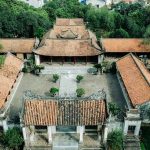
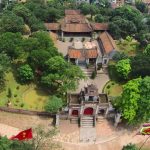
Co Loa also contains many cultural and spiritual elements through typical structures, such as the Upper Temple (dedicated to King An Duong Vuong), the Jade Well associated with the legend of My Chau and Trong Thuy, and the cluster of communal houses, hermitages, and pagodas inside the citadel. The Jade Well is not only an attractive tourist spot but also a symbol of purification, forgiveness, and profound historical lessons.
Co Loa Citadel serves as a remarkable testament to the early emergence of Vietnamese civilization, blending history, architecture, and cultural belief into a unified walled environment. From its mythical origin and function as the capital of ancient kingdoms to its clever spiral design and earth-based building construction, the citadel exhibits an advanced grasp of defense, urban organization, and environmental adaptability. Beyond its physical form, Co Loa continues to exist via temples, festivals, and collective memory, symbolizing the spiritual and cultural character of Vietnam.
Reference:
Local-insider.com. (2022). Local guide to Co Loa Citadel Hanoi. Available at: https://local-insider.com/post/an-ultimate-guide-to-co-loa-citadel-hanoi/633ab574e17e8261c0f6672a
HanoiTimes (2020). The relics of Co Loa, Hanoi’s special cultural destination. [online] Hanoitimes. Available at: https://hanoitimes.vn/the-relics-of-co-loa-hanois-special-cultural-destination.581694.html
Wikipedia Contributors (2025). Cổ Loa Citadel. Wikipedia.
Vinpearl. (2024). Co Loa Citadel in Hanoi: History, architecture and more. Available at:https://vinpearl.com/en/co-loa-citadel-hanoi