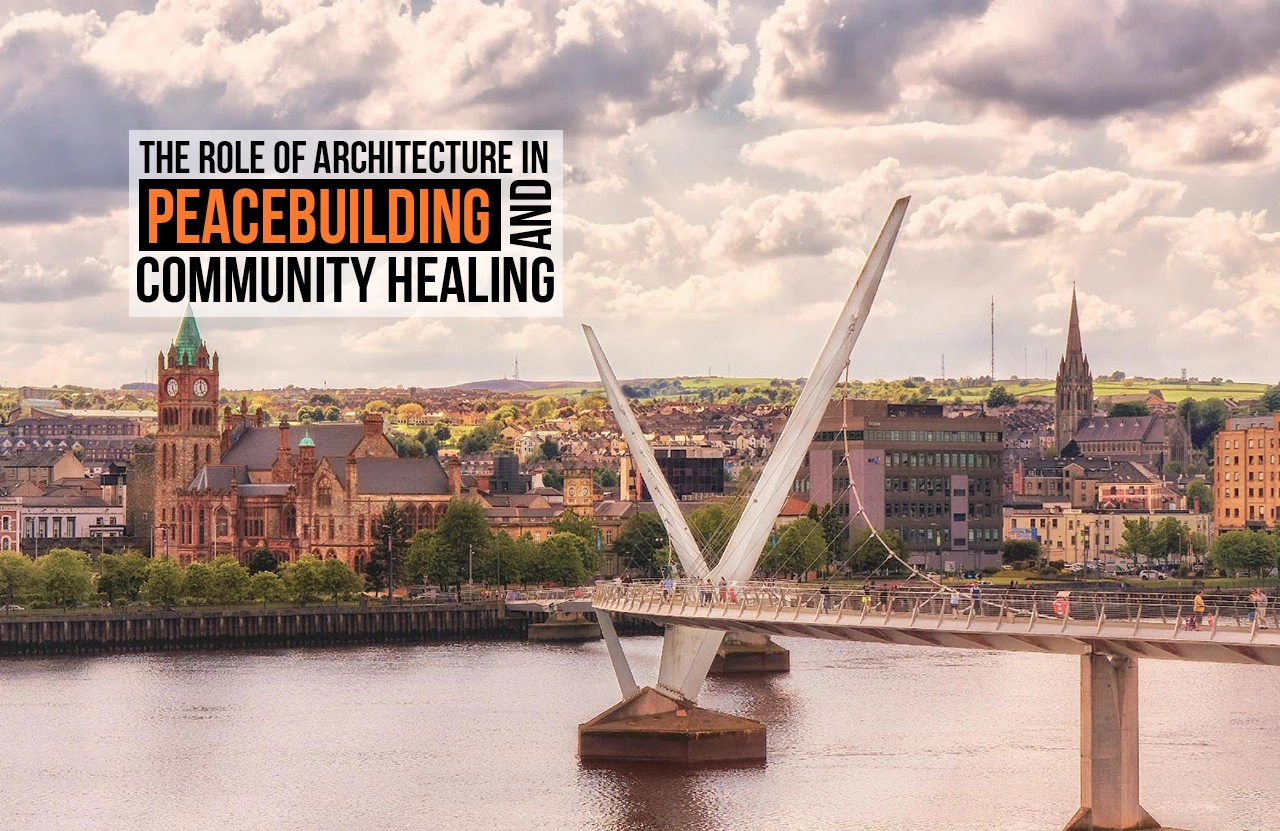
Architecture has the power to influence emotions, create safe spaces, and ultimately shape human connections. Therefore, when practised wisely with strategic focus on uniting communities, the built environment can reshape the lived world and become a form of peacebuilding. In conflict zones where warfare and hostility have restructured or completely demolished buildings of importance, rebuilding structures that adapt to the changing power dynamics and provide space for healing for all affected parties requires nuanced solutions.
As a starting point, architects must have a precise grasp on what factors caused the divide in the first place and how those evolved. Considering that, from political tensions to ethnic and religious differences, many years of mistrust are reflected in the environment. Walls, empty borders, disconnected neighbourhoods, neglected or damaged public spaces become everyday reminders of that very division. It is also crucial to consider that after experiencing violence of varying degrees, these post-conflict situations may turn into pre-conflict situations, as it very often plays out. With that in mind, how does peacebuilding architecture enable unity and community healing in the long run?
Reconstruction as Part of Community Healing
Structures may be commissioned and rebuilt within certain timeframes, but restoring a sense of safety and everyday normality is not so straightforward. From the perspective of vulnerable communities, the surrounding environment continues to tell the story of a hostile past and, in many cases, present. Such physical traces can reinforce further conflict and trauma if they remain unaddressed; hence, reconstruction efforts should consider these sensitive emotional states just as much as functionality. Especially, as early interventions focus on essential services, such as primary health clinics or schools, reintroducing protective and unifying measures to these familiar environments can help bring back normality into the lives of communities.
Other priorities include transportation-related improvements, from reopening blocked footpaths, adding lighting to streets and alleys, or repairing roads and bridges between neighbourhoods, thereby encouraging residents to reclaim public spaces without fear. Local markets, vendor stalls, and shaded courtyards also offer chances for gentle, neutral interaction, in addition to parks, gardens, playgrounds, and community halls. While monumental designs can serve as a powerful tool in peacebuilding architecture, these modest but strategically planned settings can gradually guide communities into stability.
Community Participation in Peacebuilding Architecture
Adding another layer of complexity – the question of who would carry out the planning and construction of new structures. It goes without saying that the communities occupying and utilising those spaces would have the most informative insights on how new structures can serve them effectively. For this reason, inviting residents to take a central role in the decision-making and execution creates a shared purpose and belonging; not to mention that the results will be a genuine reflection of the soul of the community, rather than a symbol of imposed authority. The goal is to build trust between once opposing groups by levelling the playing field through mutual collaboration.
Such an approach can also prevent outdated ideas that no longer contribute to peaceful coexistence from being replicated. In that sense, adaptable design is key, as the needs of post-conflict communities may evolve rapidly; it helps ensure that no single group dominates or defines these co-built spaces. This can be achieved through flexible layouts, shared public programmes, and multi-use structures. For instance, a community hall could function as a cultural venue, a childcare centre, a gathering point, or any other purpose that avoids locking a single narrative into its walls.
Having said that, while peacebuilding architecture should avoid reaffirming the traumatic past, it shouldn’t erase it either. Engaging residents helps identify those subtle commemorative aspects and materials that acknowledge a collective history (even if a hostile one) in a forward-moving manner. As an extension, discussing and evaluating design decisions is an effective way to foster dialogue between different groups, ensuring a greater understanding of one another’s cultural or religious preferences. Over time, renegotiating these spaces should lead to a more respectful and unified environment for all.
Case Studies
The Peace Bridge, Derry/Londonderry
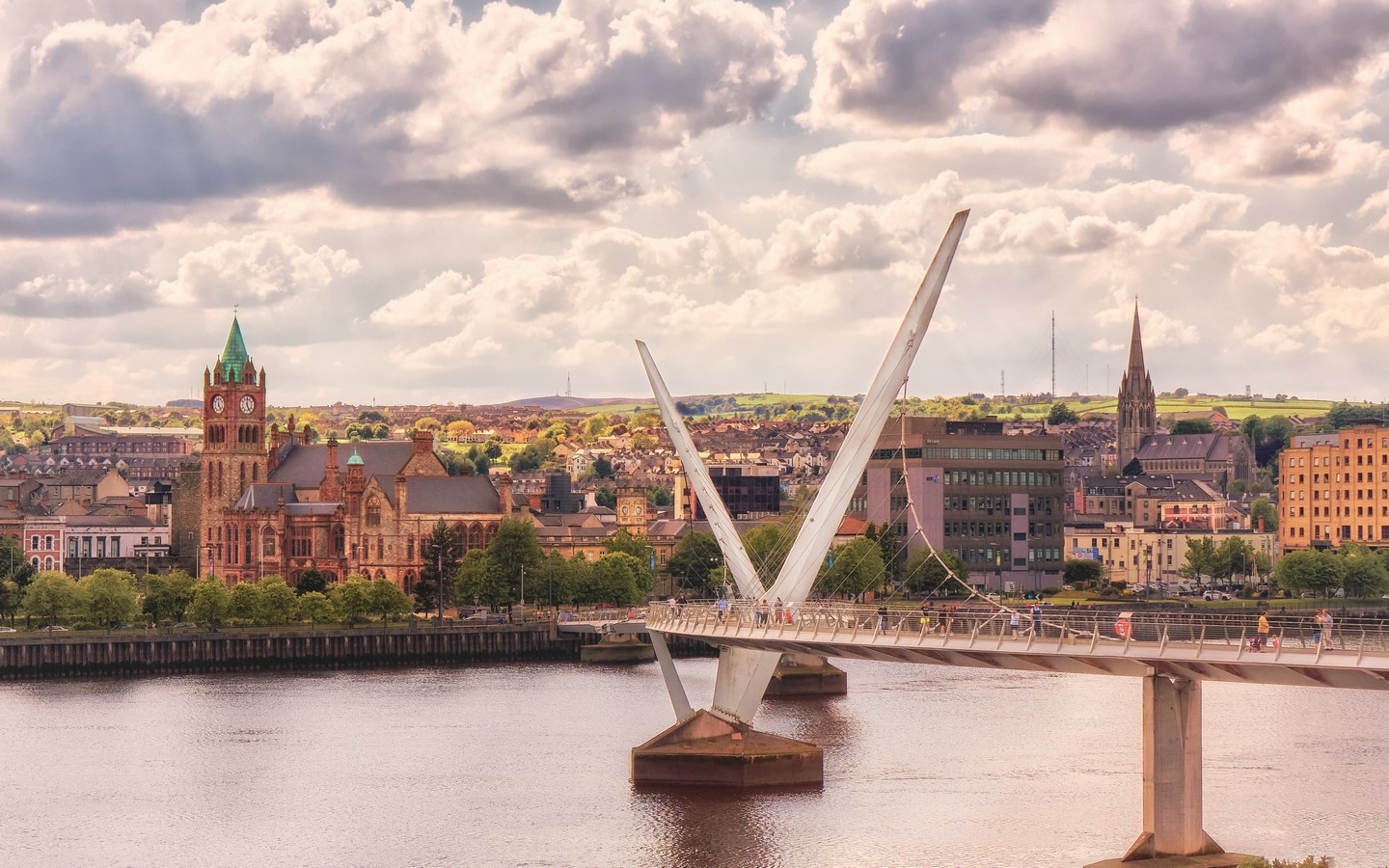
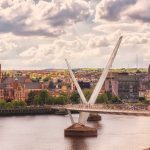
Connecting communities that were divided through generations, The Peace Bridge, designed by Wilkinson Eyre, has been linking the once predominantly Protestant east bank with the mostly Catholic west since 2011. With its 235 metres stretched across the River Foyle, the bridge was designed with two tall masts connected by overlapping cables to form a unique curved structure often described as a ‘structural handshake’. As a prime example of peacebuilding architecture, the structure quickly became an influential civic symbol. Over the years, it served as a stage for various significant events, including being walked by the Dalai Lama, visited by former US president Bill Clinton, and continuously featured as part of the city’s cultural celebrations.
Beyond this ceremonial role, the bridge affected the movement of residents, encouraging a safe, short walk to the opposite side of the bank. The transformation of the former military barracks of Ebrington to a commercial and hospitality space further reassured community interactions on the riverside. And as it stands, the bridge’s monumental purpose became intertwined with an area for walking, cycling, gathering, and celebration; a practical mode of transportation as well as a symbol of peace and unity, if you will.
Favela-Bairro Project, Rio de Janeiro
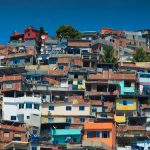
Launched in the mid-1990s under the leadership of architect Jorge Mario Jáuregui, the initiative marked a turning point in how Rio de Janeiro approached its informal settlements, the favelas. These neighbourhoods often experienced gang violence and territorial conflict between armed groups, but instead of viewing them as unruly or unworthy of development, the project also recognised the favelas as complex urban networks of social belonging. And the goal became clear: to transform these areas into functioning residential spaces for the communities inhabiting them. This began with fundamental upgrades, including setting up paved streets, drainage and sanitation systems, and improved connections to the surrounding city.
From day one, local decision makers and residents were involved in the development process to ensure that all priorities are aligned with the needs of the community. Hence, each intervention was tailored to the specific favela, with design decisions shaped by how residents actually lived and moved in the neighbourhoods. Public amenities such as daycare, sports, and social centres helped blur the boundaries between the favela and formal settlements, benefitting nearly half a million locals over the decades.
Butaro District Hospital, Rwanda
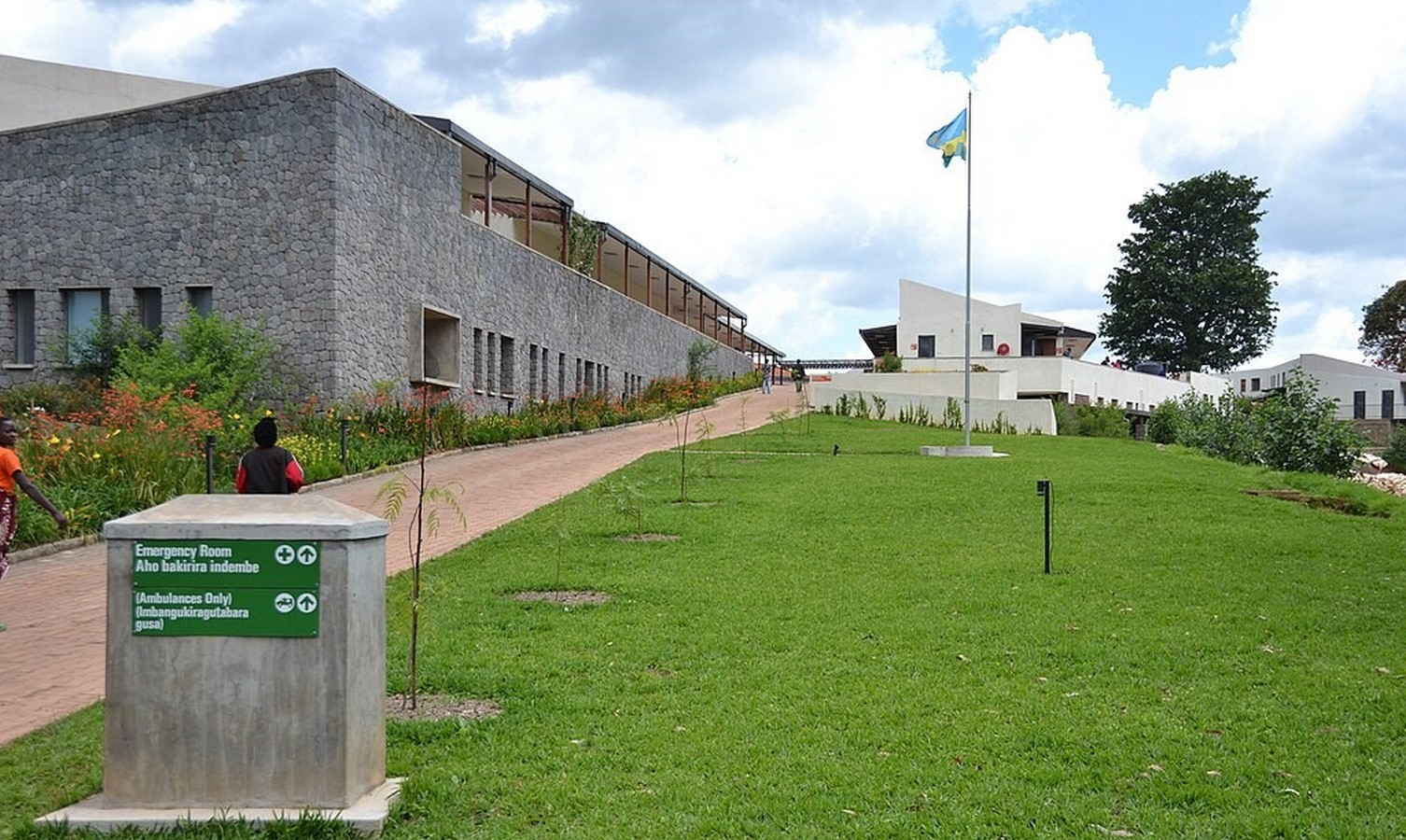
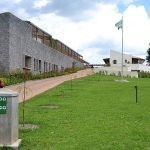
Within a landscape marked by historical trauma, the Butaro District Hospital was commissioned, not solely to rebuild the healthcare infrastructure of the region but as a form of peacebuilding architecture. Due to long years of tension between the Hutu and Tutsi communities culminated in the 1994 genocide against the Tutsi, the country’s health system and social structure were torn apart. In the path to recovery, Partners In Health, in collaboration with the Rwandan government, established new facilities in the country’s Burera District, with Butaro Hospital offering emergency services, cancer care, maternal and neonatal units, as well as medical training programmes.
The plans were created by the MASS Design Group to address both the communities’ medical needs and repair human connections. The hospital buildings were built reimagining traditional layouts with a focus on healing the soul as much as the body. Instead of closed off spaces and artificial lighting that come to mind when picturing a regular hospital, Butaro incorporates terraces, outdoor corridors and large operable windows that bring in natural ventilation, daylight, and the natural beauty of the Rwandan landscape. Besides the clear benefit of reducing the transmission of infections, the environment is open and relaxing for patients and staff alike. Ensuring the community-building aspect of the initiative, MASS involved Rwandan craftsmen of all backgrounds, strengthening community skills, in addition to prioritising local materials such as volcanic stone. This approach reduced environmental impact, created jobs, but most crucially, gave people from different communities the pride of building something meaningful together.
Unification through the Built Environment
The widely recognised success of the above initiatives demonstrates that peacebuilding architecture can be achieved through various methods and environments, as long as the needs and well-being of the communities they are built for are prioritised. There are, however, some key considerations for architects to serve post-conflict populations, including ensuring safety, openness, places for collaboration and the involvement of locals in the development process. As the structure of these residential and communal spaces carries echoes of division, reimagining them directly correlates to uniting and healing vulnerable communities, even if the path to social recovery is a gradual and often turbulent path to walk on.
References:
Lepere, S. (n.d.) The Contributions of Architects to Post-Conflict (Re)Construction: Social Processes Towards Building Peace. Available at: https://www.scribd.com/document/554899456/Architects-to-PostConflict-reConstruction (Accessed: 15 November 2025).
Junne, G. (n.d.) Designing Peace: Bricks and Mortar of Reconciliation. Available at: https://www.researchgate.net/publication/239855012_Designing_peace_bricks_and_mortar_of_reconciliation (Accessed: 15 November 2025).
WilkinsonEyre (n.d.) The Peace Bridge. Available at: https://wilkinsoneyre.com/projects/the-peace-bridge (Accessed: 17 November 2025).
Harvard University Graduate School of Design – UDC/SA Project Archive (n.d.) Favela-Bairro Project. Available at: https://udcsa.gsd.harvard.edu/projects/7 (Accessed: 15 November 2025).
MASS Design Group (n.d.) Butaro District Hospital. Available at: https://massdesigngroup.org/projects/butaro-district-hospital (Accessed: 16 November 2025).
BBC News (2021) Peace Bridge: Derry-Londonderry landmark marks 10 years. Available at: https://www.bbc.co.uk/news/uk-northern-ireland-foyle-west-57607699 (Accessed: 16 November 2025).