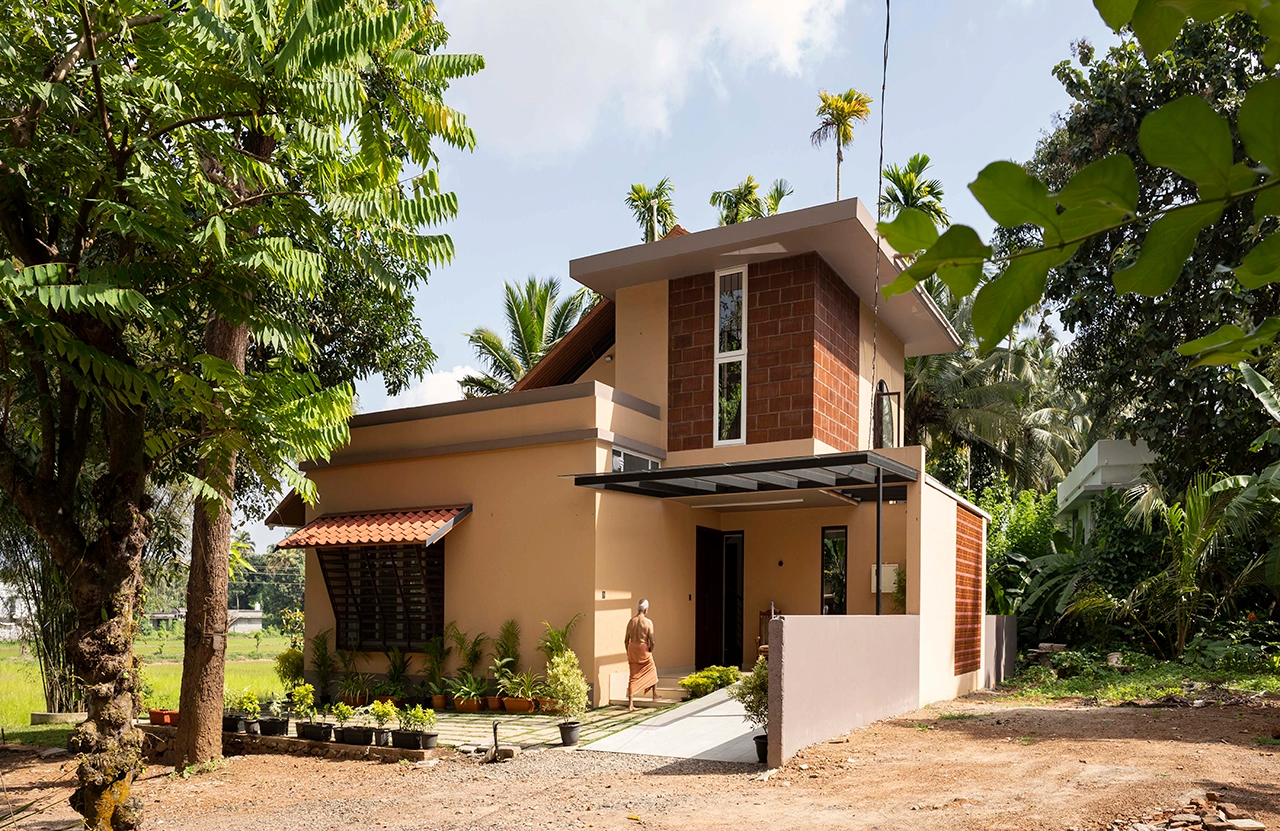
Set against the quiet expanse of paddy fields in Viyyur, Thrissur, this house stands as a
poetic reflection of memory, landscape, and comfort. Conceived by a young NRI couple as a
home for their parents, it is not merely a building but an emotional vessel that bridges
generations and geographies.
Project Name: AKSHI
Studio Name: Jaid Architects
Location: Viyyur, Thrissur, Kerala
Completed: October 2022
Built-up Area: 1775 sq.ft
The design evokes nostalgia while embracing the rhythms of contemporary life, creating a dialogue between the past and the present, between the stillness of the fields and the gentle movement of air through open volumes.
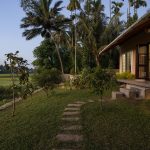
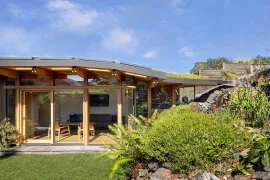
The residence occupies a modest ten-cent plot that dissolves seamlessly into the paddy fields beyond its boundary. The design celebrates this natural adjacency, treating the horizon as an extension of the architecture. From the living spaces, the view stretches unbroken, borrowing the landscape into the domestic realm. The site’s rural context, with its lushness, humidity, and seasonal monsoon, called for a design rooted in climatic sensitivity. In response, the architects adopted a palette of porous materials, shaded volumes, and generous openings that allow light, wind, and rain to become part of the home’s daily rhythm.
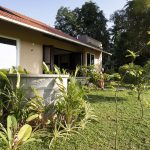
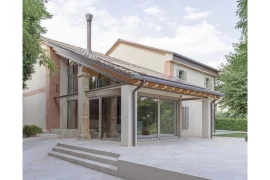
The architectural form is composed of simple volumes held under a gently sloping tiled roof. The roofline, inclined at about thirty degrees, defines the character of the house while deep overhangs and a floating soffit protect the interiors from harsh sunlight and monsoon rains. The soffit, detailed with mosquito mesh, allows the structure to breathe and invites the breeze to circulate freely. The architects envisioned the home as an open vessel of air, where cross ventilation, shade, and intimacy coexist. Even during Kerala’s warm summers, the interiors remain naturally cool, a result of the thoughtful layering of air paths and materials.
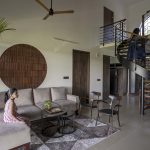
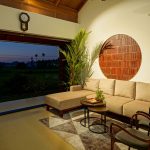
Inside, the plan unfolds as a sequence of interconnected spaces that blur the line between
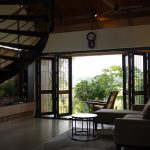
interior and exterior. The entrance verandah leads to a double height living area oriented
toward the paddy fields. A circular inset of exposed brick on the wall becomes both an
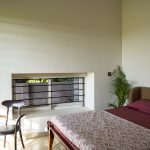
artistic gesture and a tactile reminder of local craft traditions. This simple detail anchors the space in warmth and memory while contrasting the smooth surfaces around it. As evening falls, light from the fields filters through large sliding openings, casting shadows of swaying palms and distant trees onto the interior walls.
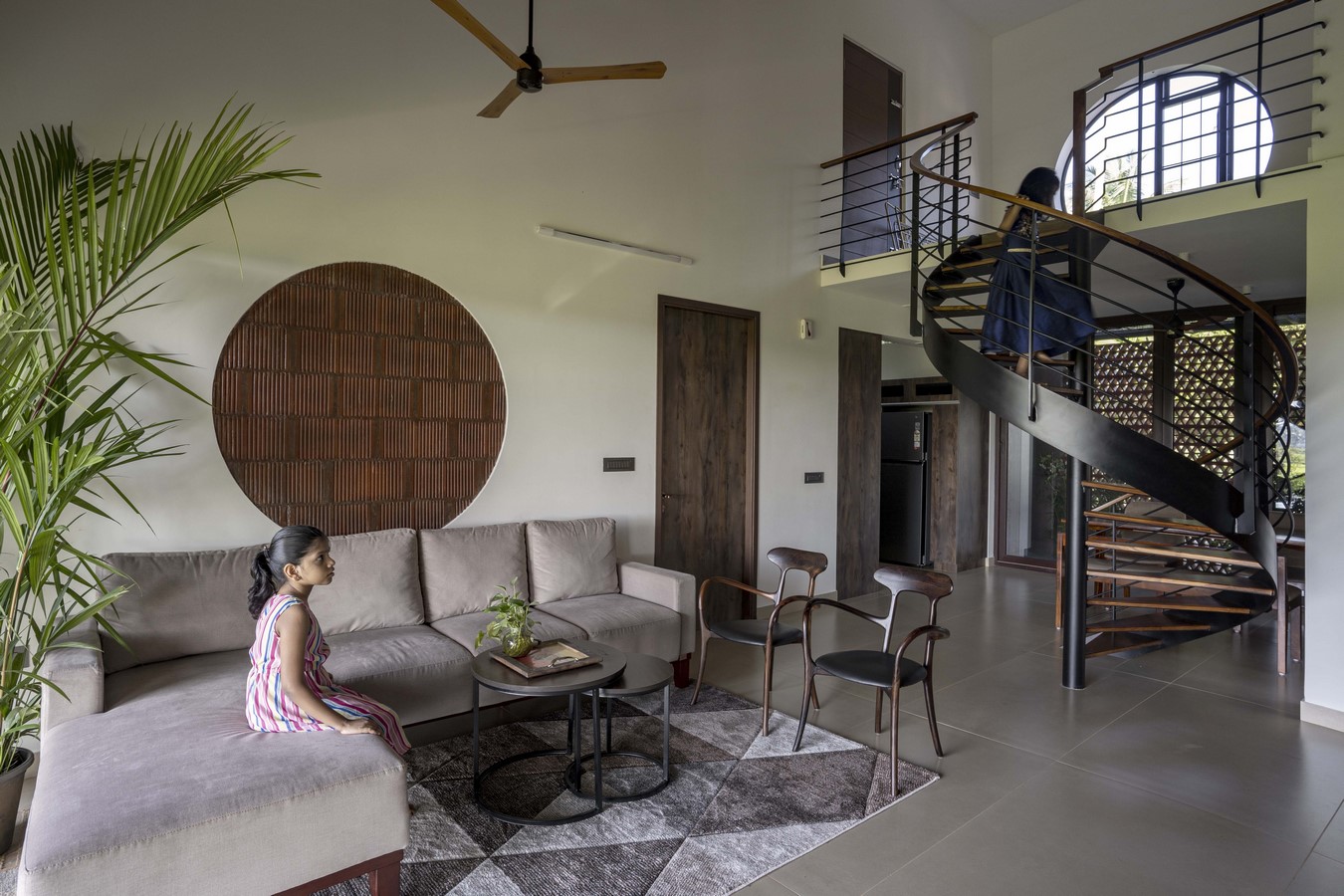
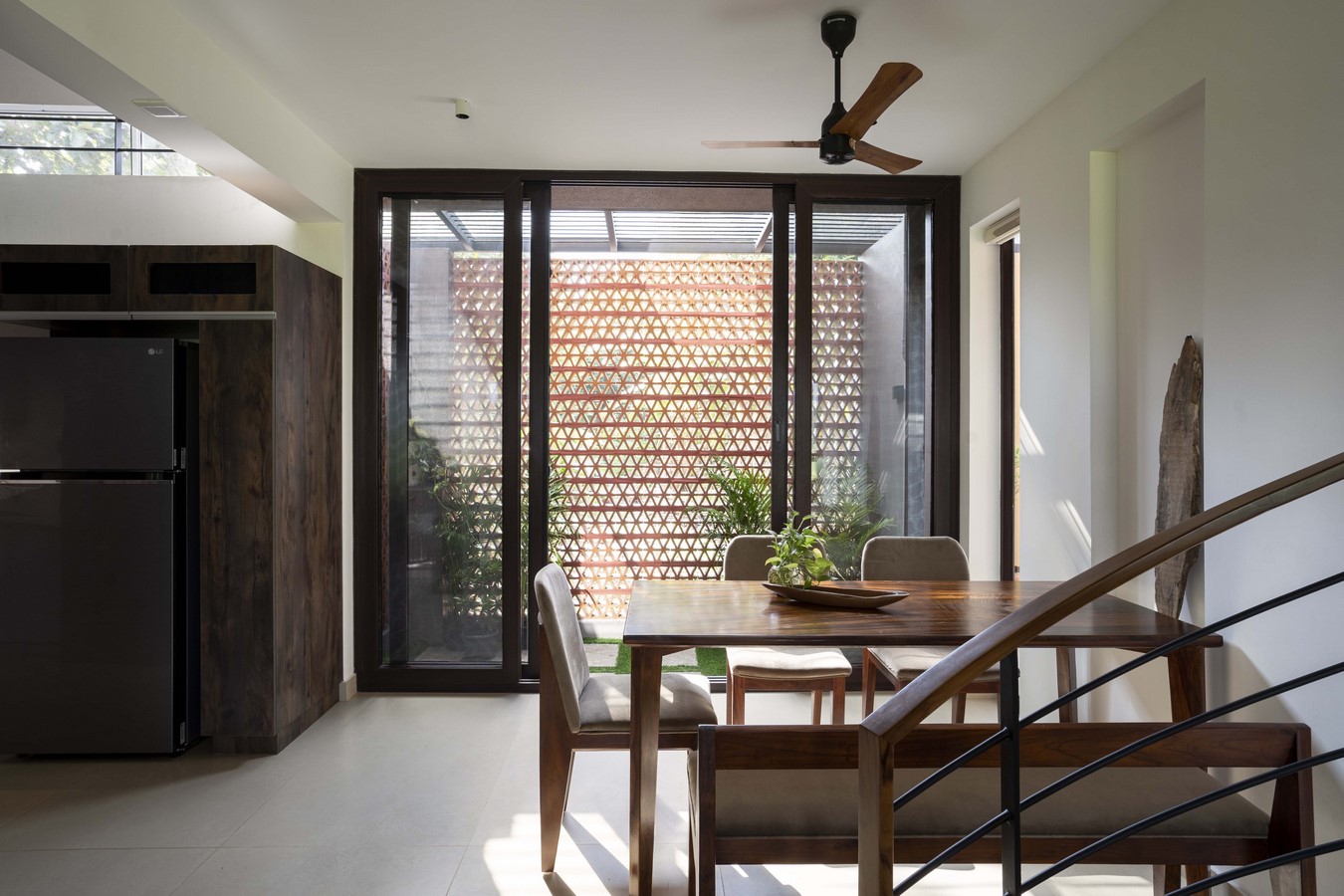
The layout follows an open plan that prioritizes visual connection and airflow. Large sliding
glass doors with low UV glazing create transparency without compromising thermal
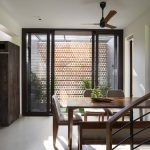
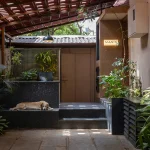
comfort. The living, dining, and kitchen areas flow into one another, yet each retains a sense of intimacy through subtle level changes and variations in texture. The dining area opens to a small courtyard that acts as a light well and ventilation core, bringing greenery into the heart of the home. The kitchen and service zones form a private edge along the southern side, maintaining both efficiency and discretion.
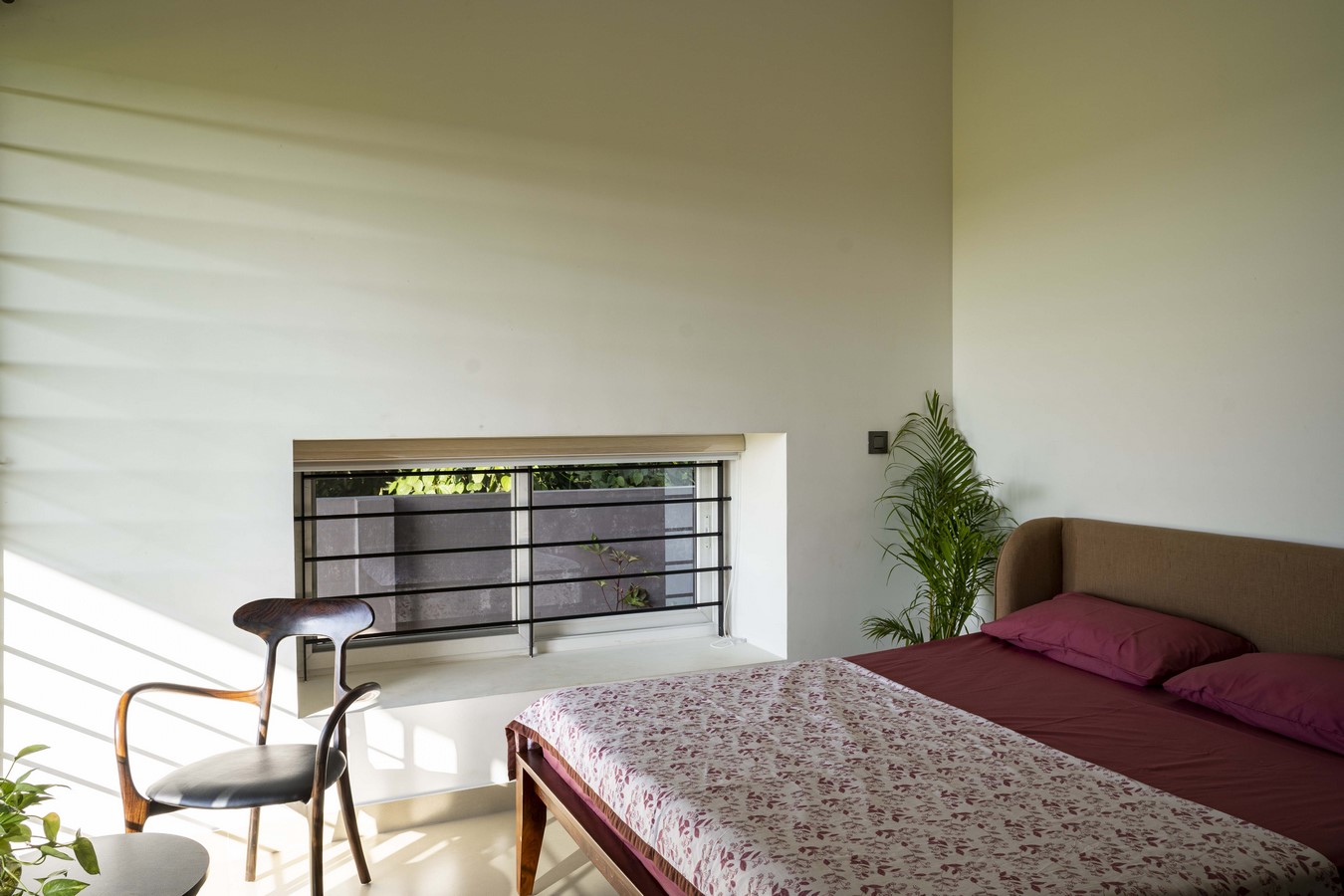
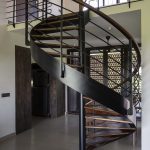
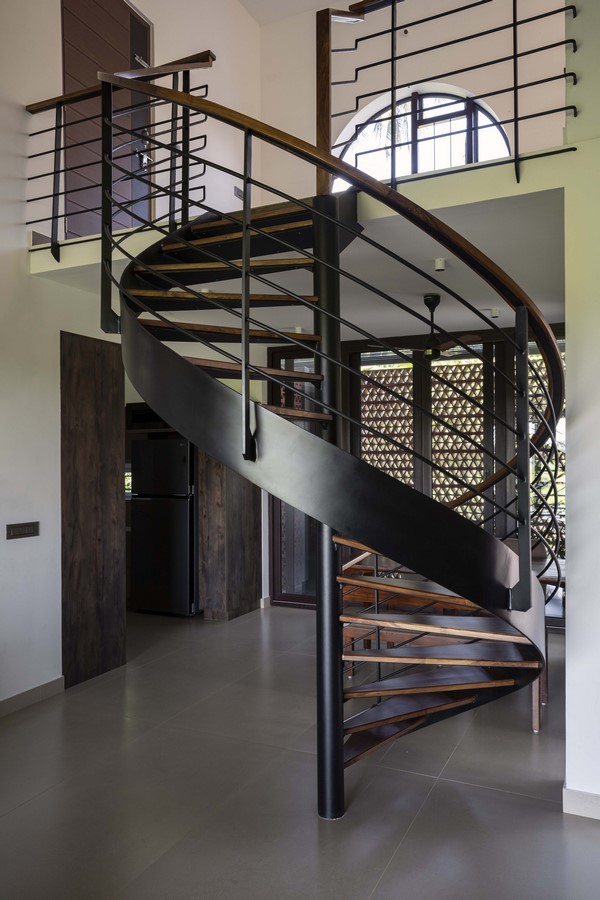
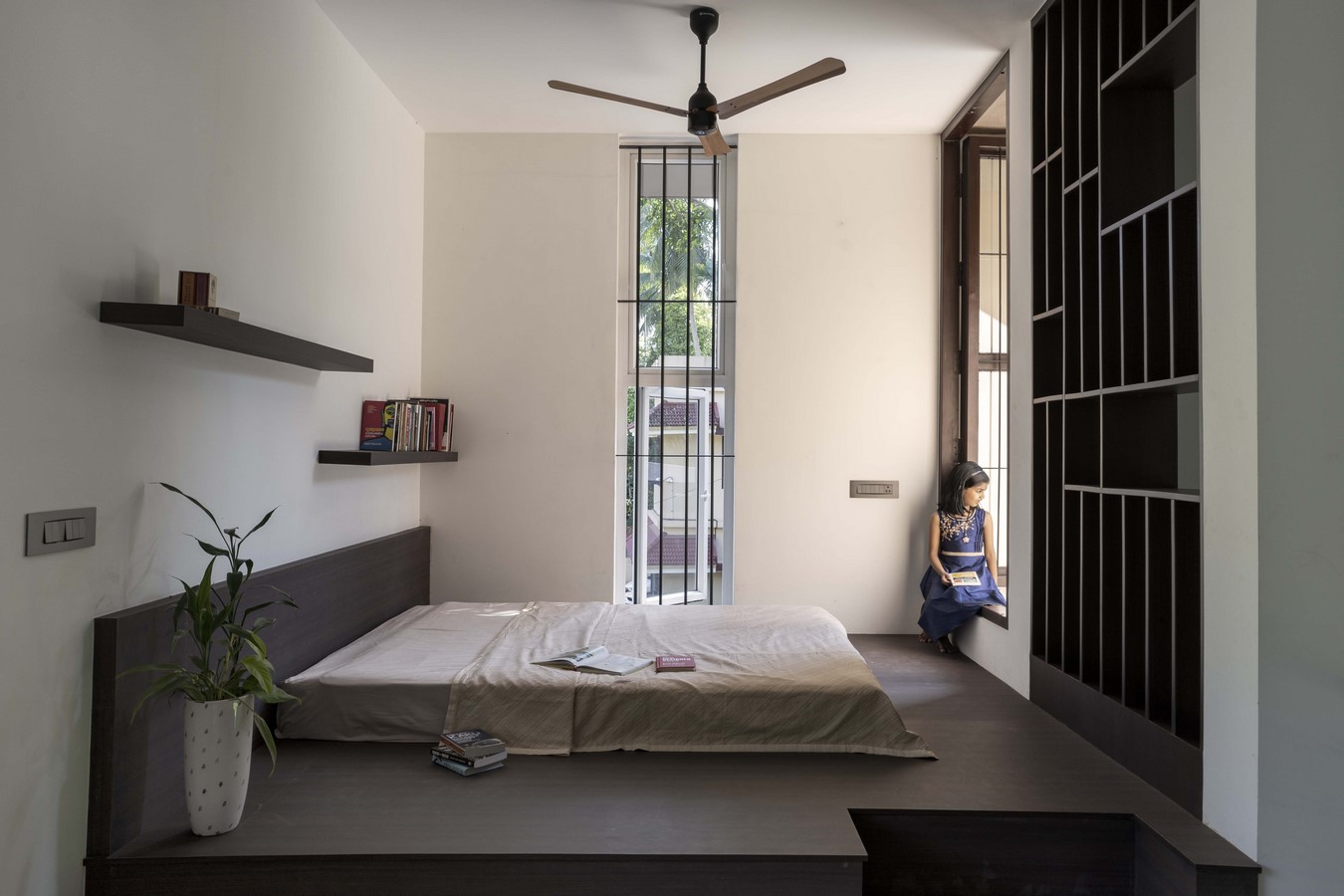
Above the main living space, a small mezzanine overlooks the double height volume. This
suspended platform serves as a playful nook for children or a quiet retreat for reading.
Accessed through a sculptural spiral staircase, the mezzanine captures the essence of the
design’s dual nature: lightness and structure, privacy and openness. From here, one can look across the void to the fields beyond or gaze upward to the sky through clerestory openings that draw in daylight and vent out warm air.
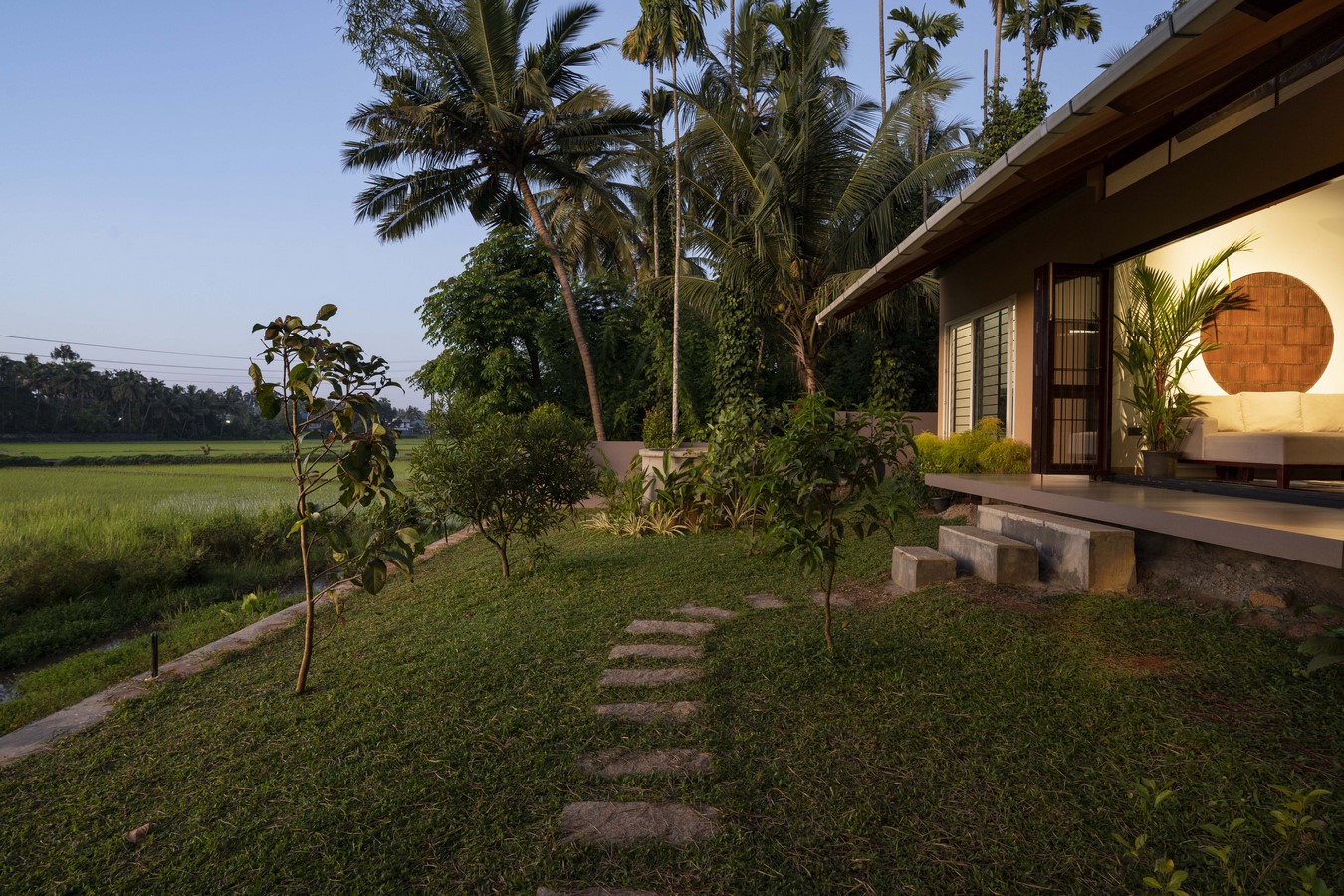
Materiality anchors the project in its context. The walls are built using Porotherm blocks,
chosen for their thermal performance and tactile quality. The roof combines clay tiles with
exposed timber and steel elements, referencing traditional Kerala construction while
maintaining a contemporary clarity. Inside, muted tones and natural textures define the
atmosphere, creating a sense of calm and permanence. The material palette is simple but
expressive, celebrating craft and comfort rather than ornamentation.
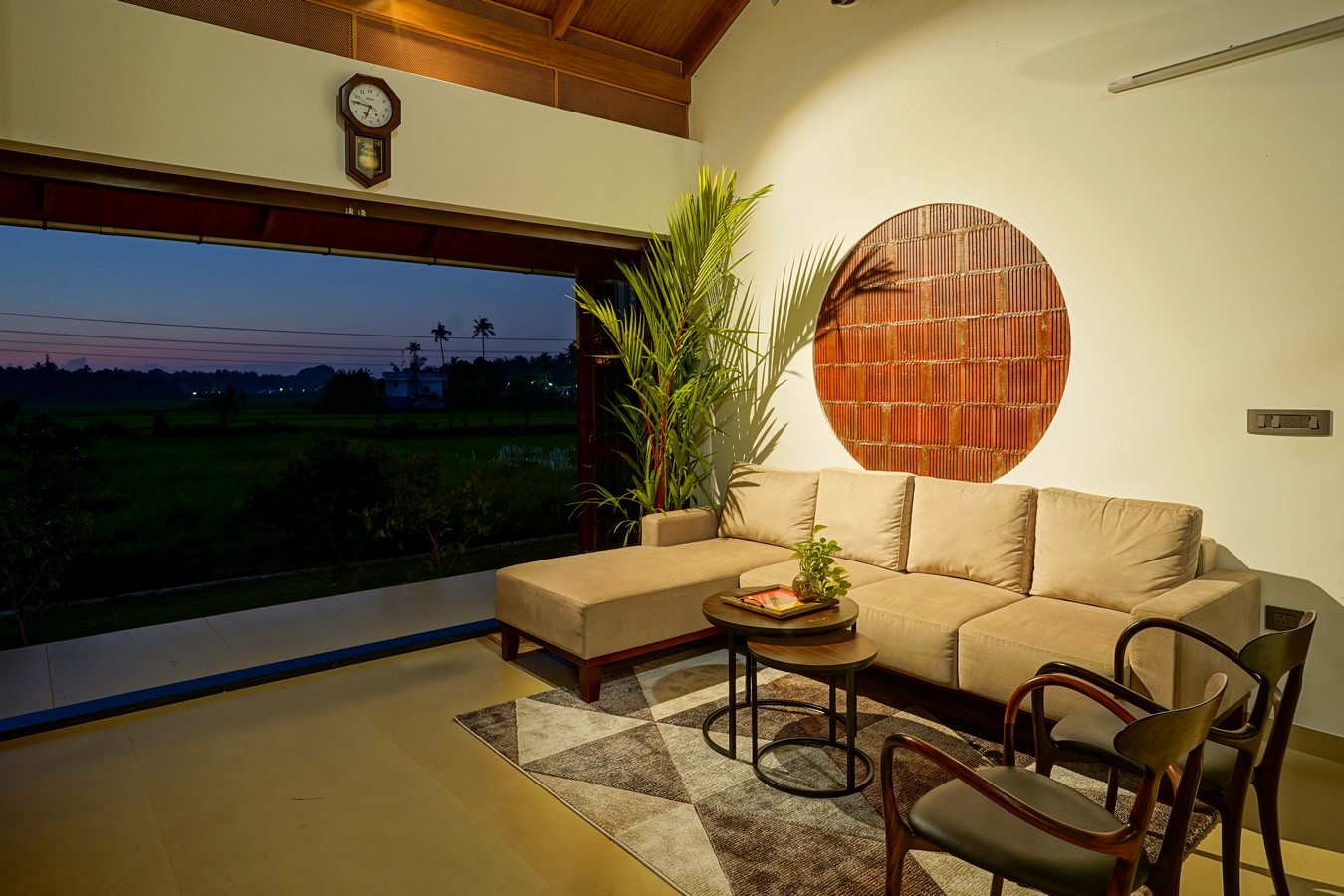
The approach to climate and comfort is both pragmatic and poetic. The structure functions
as a breathing organism, allowing air to enter through shaded verandahs, flow across double height voids, and escape through vents in the roof. This constant movement of air creates a pleasant microclimate inside. Every space maintains a visual relationship with the landscape, reinforcing the idea that architecture here is an extension of the earth.