Imphal: Where Architecture Learns to Listen
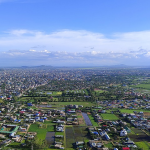
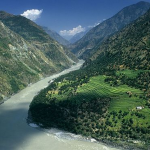
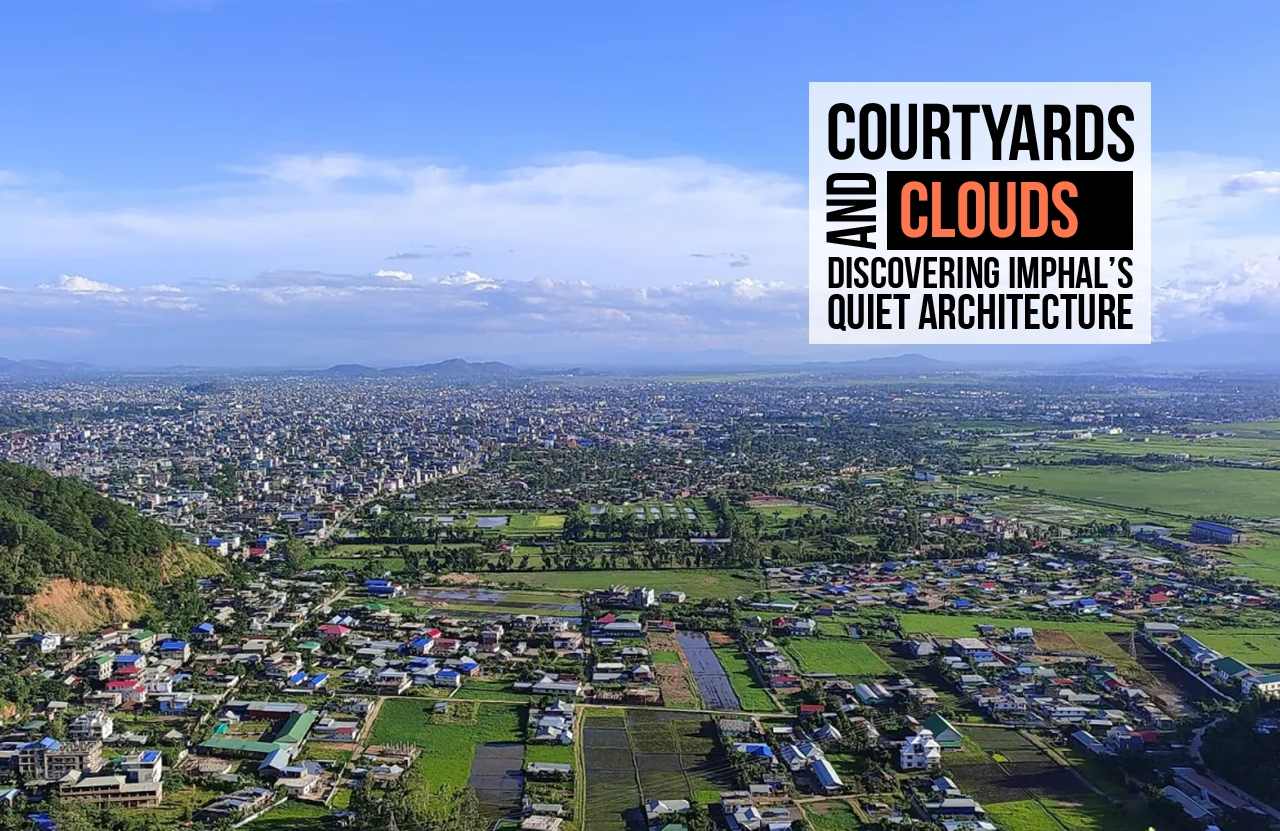
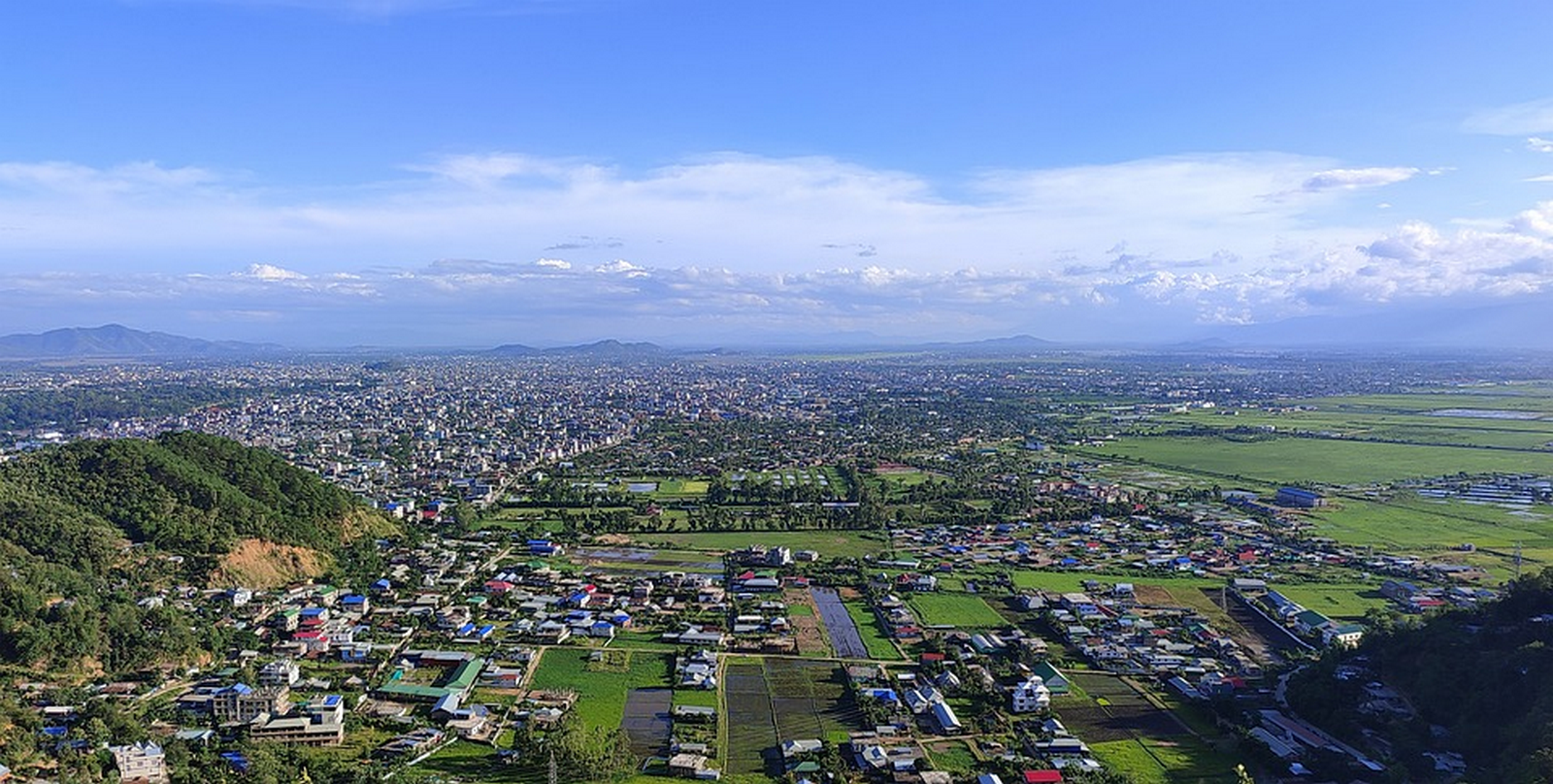
The first thing that strikes you about Imphal is not its skyline or its monuments. It is stillness. A kind of silence that seeps into you before you even realise it. The city sits quietly in the heart of Manipur, nestled in a vast green valley surrounded by misty blue hills. The clouds hang low here, brushing against rooftops as if trying to listen. The air smells of rain and wood smoke. There is a rhythm to the city that feels slower than time itself.
Imphal does not call for your attention. It whispers. You hear it in the sound of bamboo swaying against windows, in the soft creak of wooden shutters, in the earthy scent that rises after rain. Its architecture is not something to look at, but something to feel. The streets tell their stories quietly, through textures and shadows, through the ways people live.
This is not a list of places to visit. It is a walk, a slow one, through homes, temples, markets and memories. Through a city where architecture feels alive, built not for display but for belonging.
The Vernacular Core: Courtyards, Canes, and Context
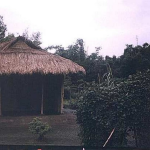
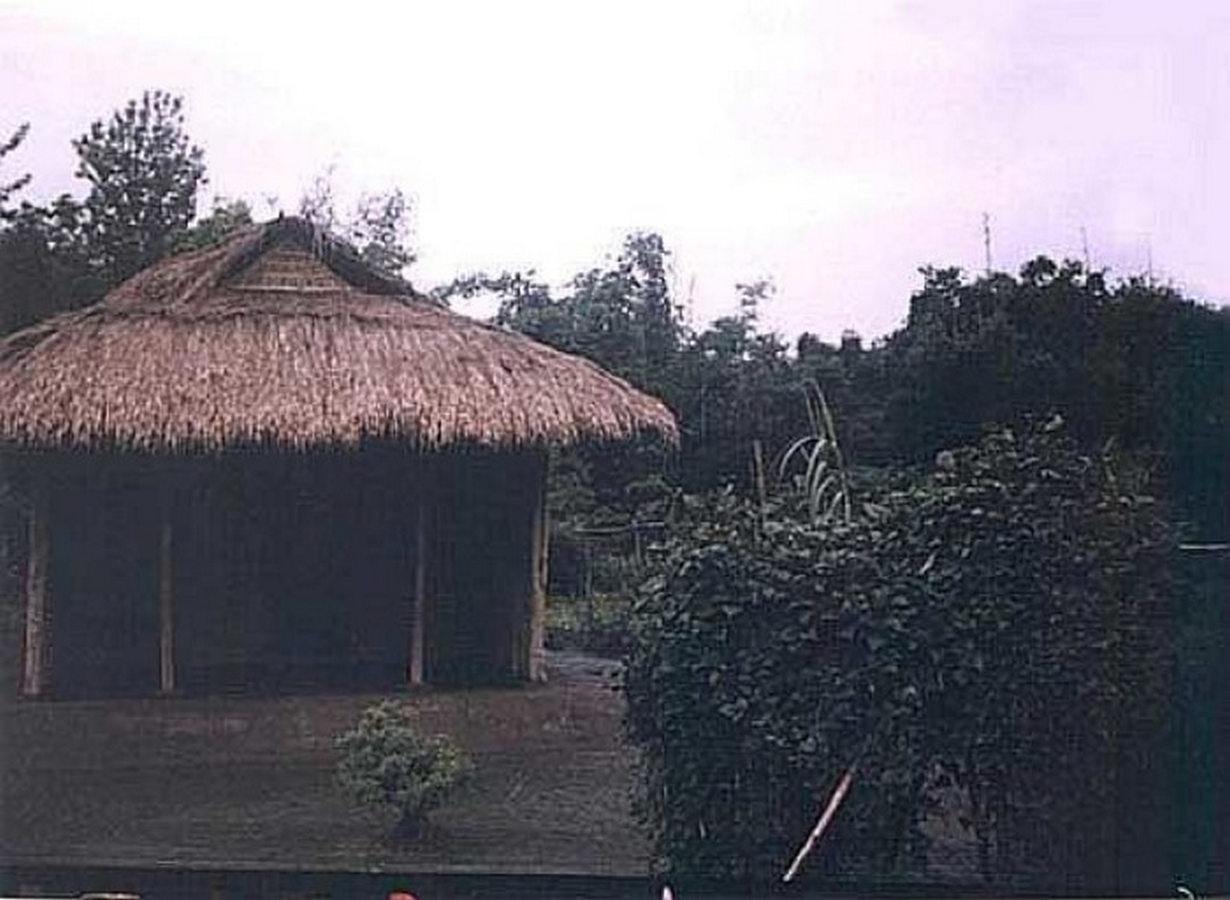
Step away from the main road and the world changes. The noise fades, replaced by the sound of rain falling softly on tin roofs. The houses are low and modest, shaped by hand and weather. Roofs dip gently as if bowing to the wind. Walls breathe through woven bamboo panels and are patched with clay that still smells faintly of the earth. Some homes have thatched extensions, others wooden verandas that look out over small gardens of hibiscus and lemongrass.
These homes were not built to impress. They were built to survive, to stay cool in summer and dry in the floods. They have been made the same way for generations, not because people refused change but because they understood the land better than any plan could (Pandey, 2024).
At the centre of each house is the sangoi, the courtyard. It is where children play barefoot, where elders rest in the afternoon light, where chillies dry in baskets under the sun. The hearth, called the phunga, burns quietly even when the family sleeps. It is not just the heart of the house. It is its memory.
Every part of the Meitei home responds to the world around it. Roofs slope to carry away the monsoon. Floors are raised just enough to keep out floodwater. Bamboo bends instead of breaking. In Imphal, sustainability is not a fashionable word. It is a way of life that never needed to be named.
The Sacred Landscape: Temples and the Geometry of Faith
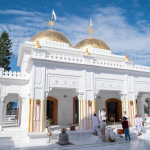
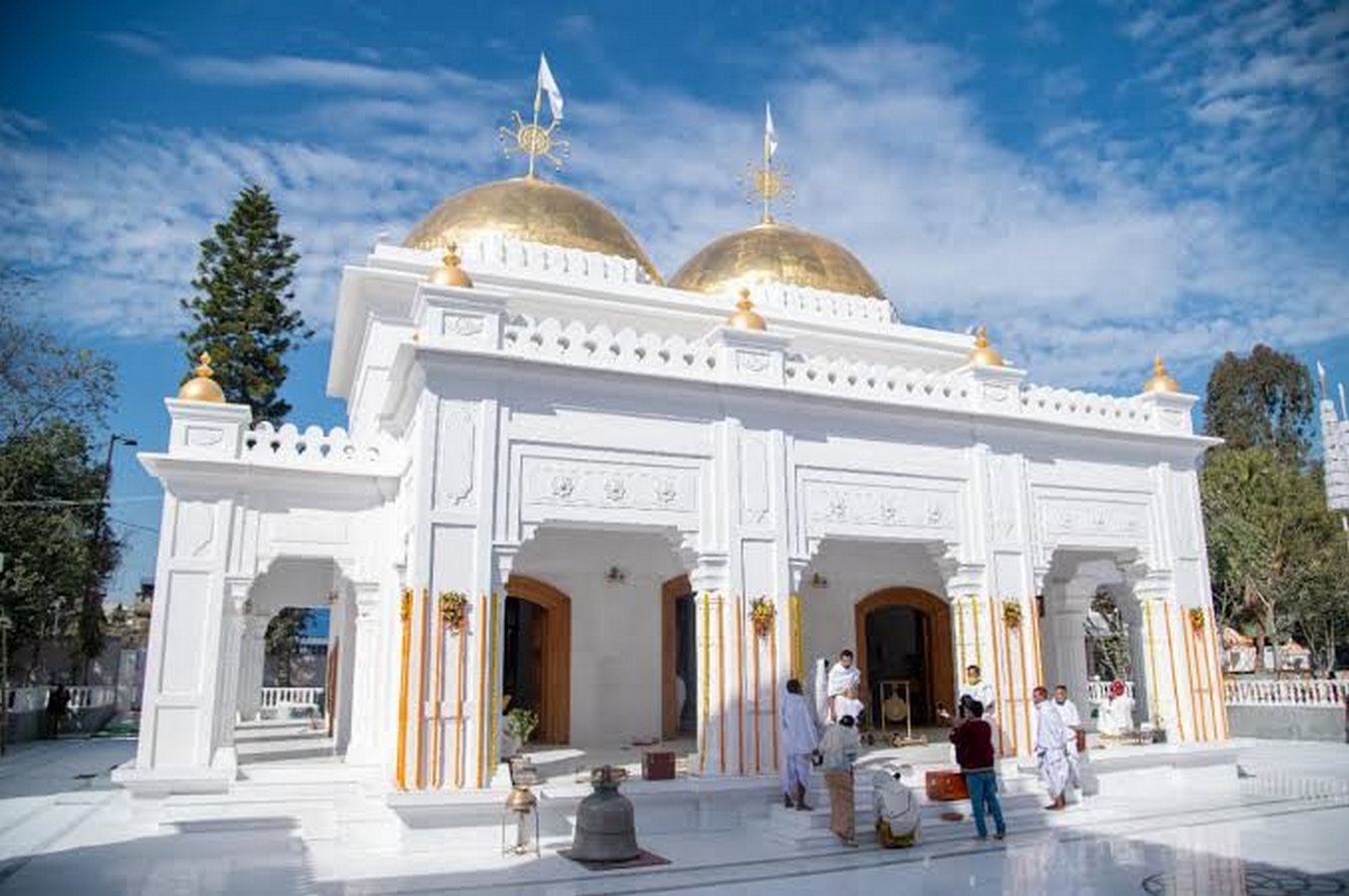
Follow the sound of conch shells, and you reach the Shree Govindajee Temple. Its golden domes gleam softly against a grey sky, like light breaking through rain. Built in the 19th century under King Chandrakirti Singh, the temple is one of Imphal’s oldest Vaishnavite shrines (Govindajee Temple, 2025). Inside, women sit cross-legged on cool marble floors, their voices low and rhythmic, carrying through whitewashed halls. The walls do not echo. They absorb the sound like a lullaby.
The temple feels alive, but calm. There is no grandeur meant to overwhelm, only a warmth that invites you to stay. The geometry is simple and balanced, as if designed by devotion itself.
Not far from here, Kangla Fort stands like a memory half reclaimed by the land. Once the seat of Manipur’s kings, it is now a blend of ruin and restoration. Red bricks glow faintly under moss, and stone gateways open onto still ponds where the sky seems to pause. You can touch the walls and feel the layers of rain, wind, and reverence pressed into them (TateNeu, 2025).
What makes these sacred spaces remarkable is not their scale but their silence. They carry faith without needing to declare it. Architecture here does not command worship; it simply makes room for it.
The Colonial and Post-Colonial Layer
Walk a little further and the city’s rhythm changes again. Pitched roofs and wide verandas appear, and suddenly you are standing before old British bungalows. Their proportions are symmetrical and their forms restrained. They belong to another time. After the Anglo-Manipur War of 1891, the British rebuilt parts of Imphal with brick and order, layering their ideals over an already living city.
These bungalows still stand, softened by age and adaptation. The verandas have become social spaces where families gather in the evenings. Red bricks are stained with moss, and iron railings are wrapped in creepers. The foreign has become familiar, absorbed quietly into the local fabric.
But Imphal’s story did not stop there. Today, concrete apartments and public buildings rise between these colonial relics. Their presence is abrupt, sometimes hopeful, sometimes harsh. Together, they form a landscape of contrasts, a city balancing its inheritance with its aspirations. Walking here, you can sense both pride and unease. Pride in progress, unease at forgetting. Imphal is still learning how to grow without losing its gentleness.
Street Life and Spatial Choreography
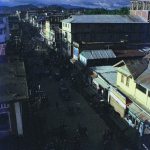
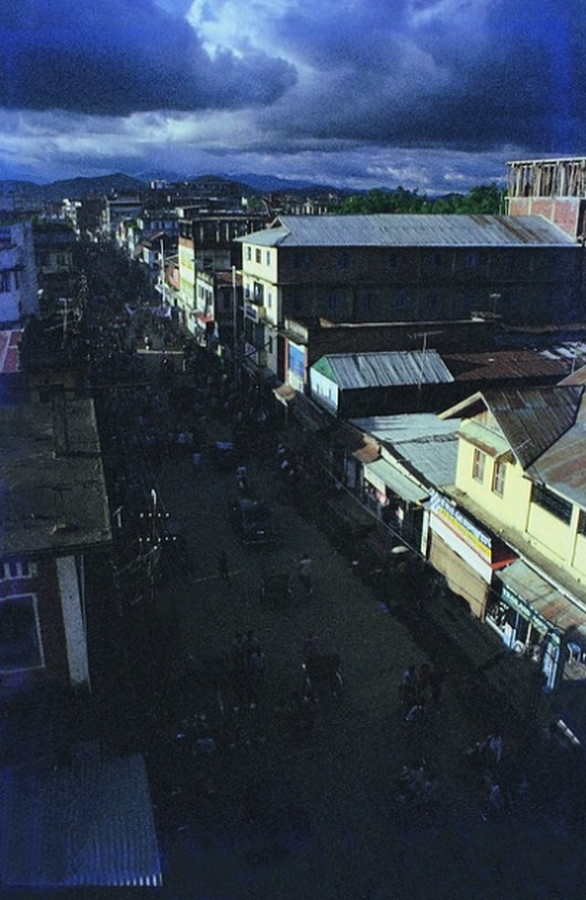
If the temples give Imphal its soul, its bazaars give it life. Paona Bazaar and Thangal Bazaar are the city’s living heartbeat. From dawn, the streets stir with movement. The smell of frying fritters fills the air, mingling with incense and rain. Shops spill colour into the streets, with woven shawls, bamboo baskets, brass lamps and hand-stitched bags.
The architecture here is improvised and endlessly inventive. Wooden shutters fold out into awnings. Corrugated sheets catch the rain. Bamboo poles hold up signboards painted by hand. A colonial archway stands beside a tiled storefront. A mud wall opens into a new concrete extension. Nothing matches, and yet everything belongs.
By sunset, the streets glow in warm gold. Beams of light fall through gaps between roofs. Children run through puddles, scooters weave past, and vendors call out prices that fade into laughter. The city feels choreographed without anyone directing it. Architecture and life move together, each responding to the other in rhythm.
The River and the Ring: Nature’s Blueprint
The Imphal River flows quietly through the heart of the city. It is not wide, but it is constant. Its surface reflects the changing light, carrying whispers of the hills around it. Houses lean toward it, listening. Trees follow their edge like sentinels.
Encircling all of these are the low blue hills that define Manipur’s valley. They form both boundaries and protection, keeping the city close to itself. Geography is destiny here. The slopes guide the winds. The rains decide the architecture. Courtyards drain toward the earth, roofs tilt to greet the sky.
Imphal grows slowly, as if afraid to lose touch with its centre. While other cities stretch endlessly outward, this one folds inward. It remains compact, reflective and deeply human. Even its expansion carries restraint, as though the valley itself insists on staying intimate.
Memory in Motion
As dusk settles, a soft orange light spreads across the city. Smoke curls from kitchen fires, and temple bells ring somewhere in the distance. The day exhales. You realise then that Imphal’s beauty is not loud. It is in the way everything feels lived in. In how houses lean slightly with age but never collapse. In how the smell of rice cooking drifts through open courtyards.
This is not a city of monuments. It is a city of memories. Every wall, every lane, every sound carries a story of resilience. Imphal has faced wars, earthquakes and floods, yet its architecture remains gentle. It survives not through strength but through flexibility.
For architects, it is a quiet lesson. Resilience does not always mean steel and concrete. Sometimes it is bamboo bending with the wind. Sometimes it is a courtyard full of laughter after a storm. Imphal does not demand to be admired. It simply asks to be understood. And if you walk its streets long enough, you begin to see what it has known all along, that architecture, at its core, is an act of listening.
References:
Govindajee Temple (2025) Shree Govindajee Temple. Inheritage Foundation. Available at: https://www.inheritage.foundation/heritage/shree-govindajee-temple
Pandey, A. (2024). Architecture of Manipur. TheAnamikaPandey.com. Available at: https://theanamikapandey.com/architecture-of-manipur/
TateNeu (2025) FAQs about Imphal Kangla Fort: History and Architecture. Available at: https://www.tataneu.com/pages/travel/flights/faqs-about-imphal-kangla-fort-history-and-architecture