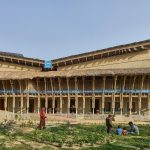
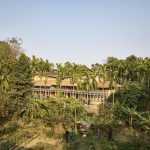
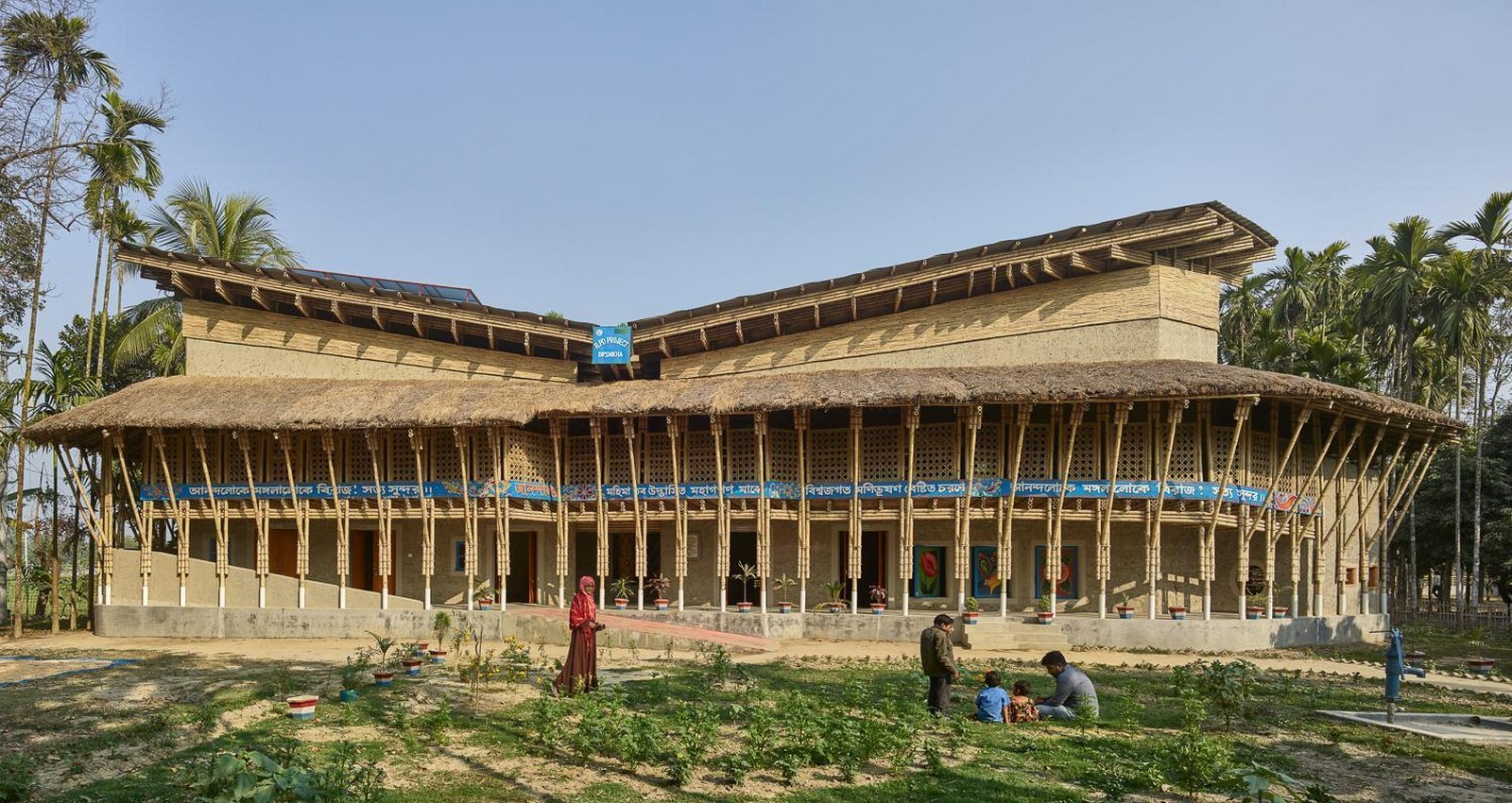
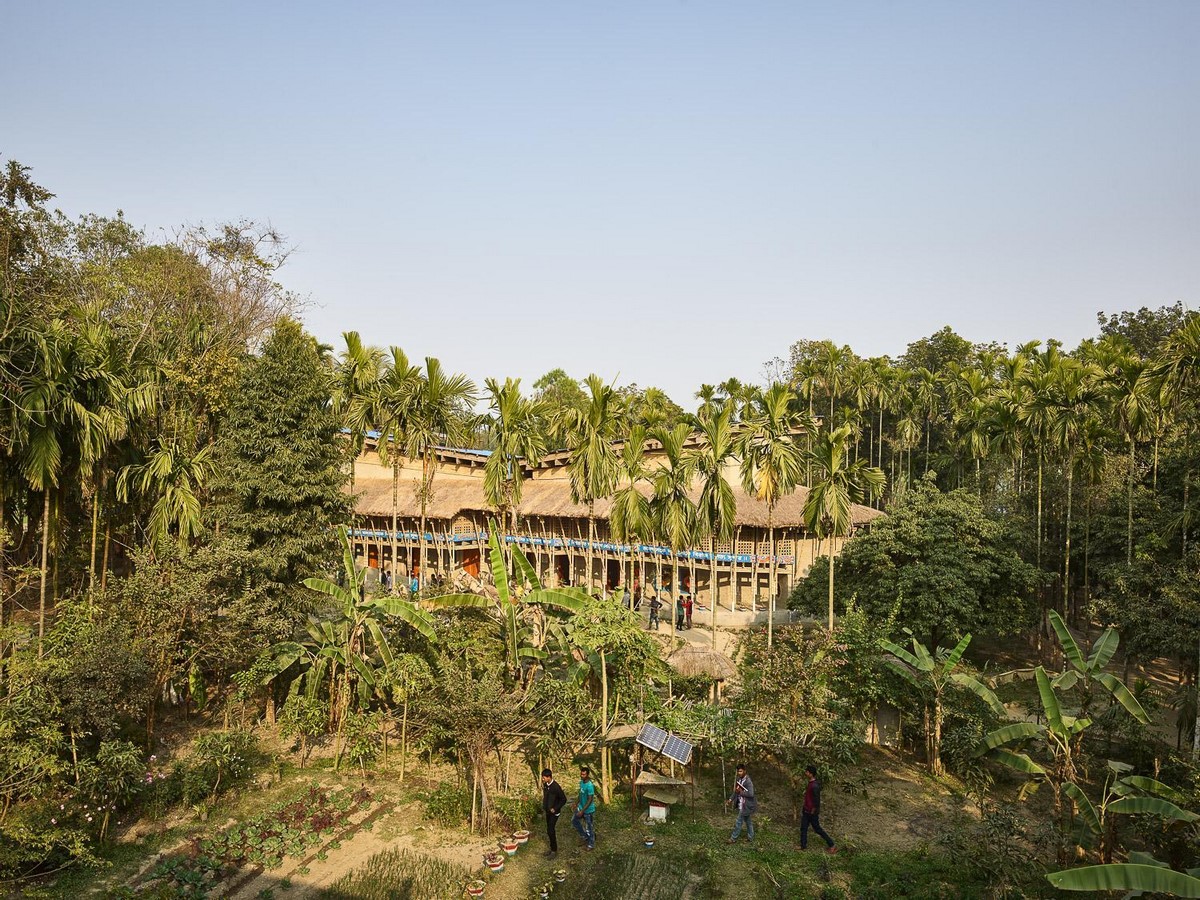
Anandaloy, located in Rudrapur, Dinajpur District, Bangladesh, is a striking example of how inclusive design and sustainable innovation can drive social transformation. Designed by Anna Heringer in 2019, this disability therapy centre serves as a testament to architecture’s power to empower underserved communities. Using locally sourced materials and traditional construction techniques, Anandaloy not only provides essential services but also actively uplifts the local community with employment, skill development, and pride. (González, 2021). Recognised for its innovative use of local materials, Anandaloy illustrates how thoughtful design can redefine sustainable rural architecture. This essay will demonstrate how Anandaloy’s architecture advances social and environmental sustainability through its design philosophy, construction, and broad community impact.
Design of Anandaloy: Philosophy and Planning
The design philosophy of this structure revolves around celebrating non-conformity and diversity through architecture (Obel Award, 2024). As depicted in Anandaloy, architecture, local resources, and community participation have largely impacted the people of Rudrapur. This mud and bamboo therapy centre and tailor studio for females exemplifies an architectural paradigm that elevates the built environment and strengthens the neighbourhood.
Unlike the typical layouts of rural Bangladesh, the structure tends to break from rectangular layouts intentionally. Anandaloy is a structure of organic curves that extends across the landscape. This language of architecture acts as a powerful metaphor for inclusion and acceptance of human differences, radiating the message that “diversity is wonderful” (Dezeen, 2022).
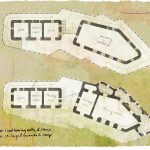
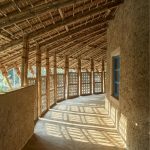
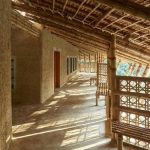
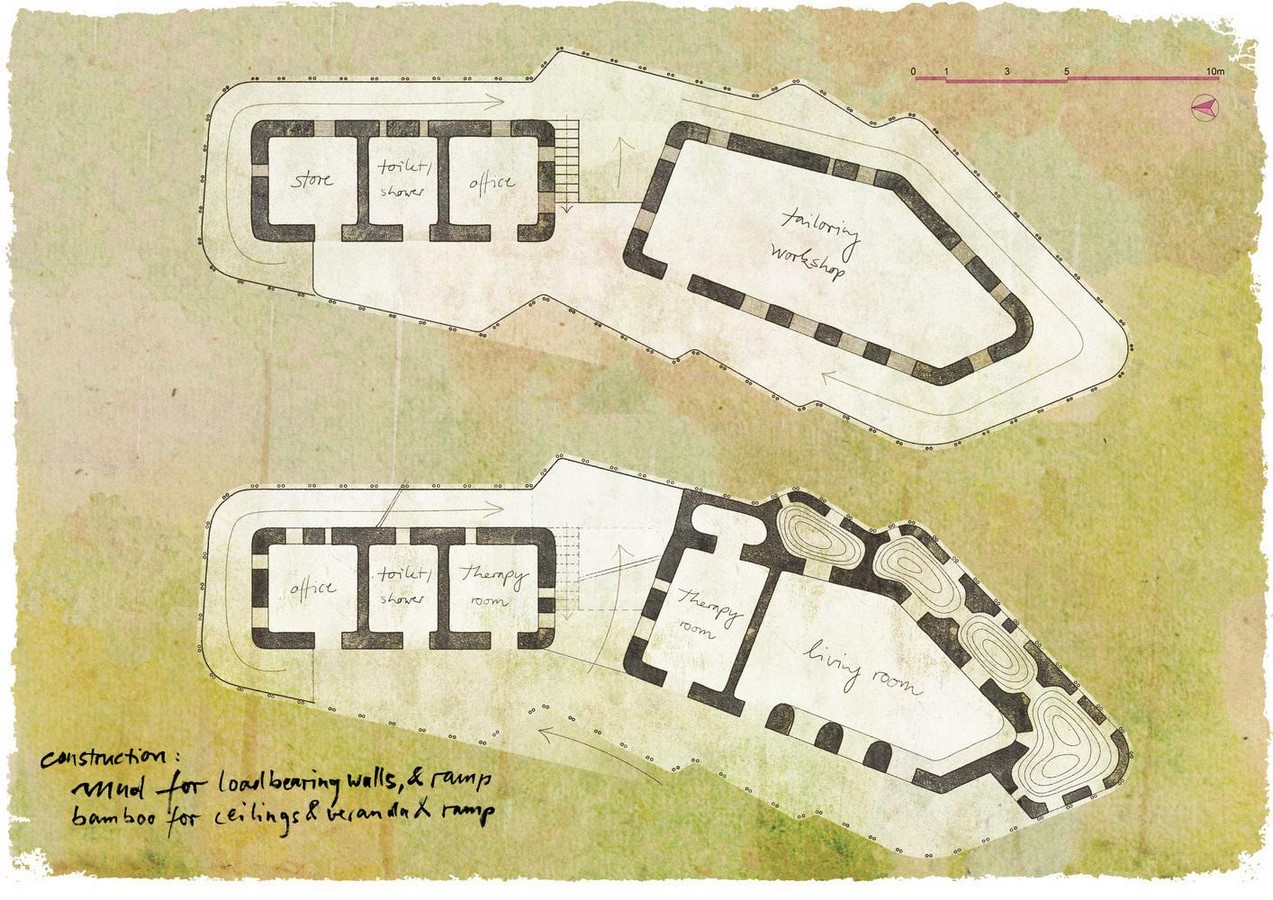
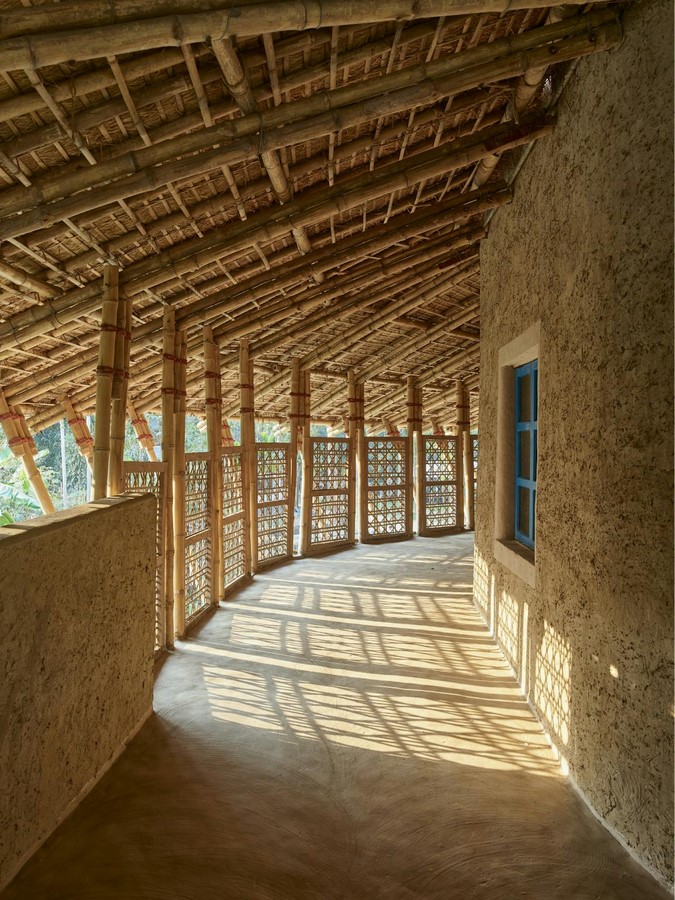
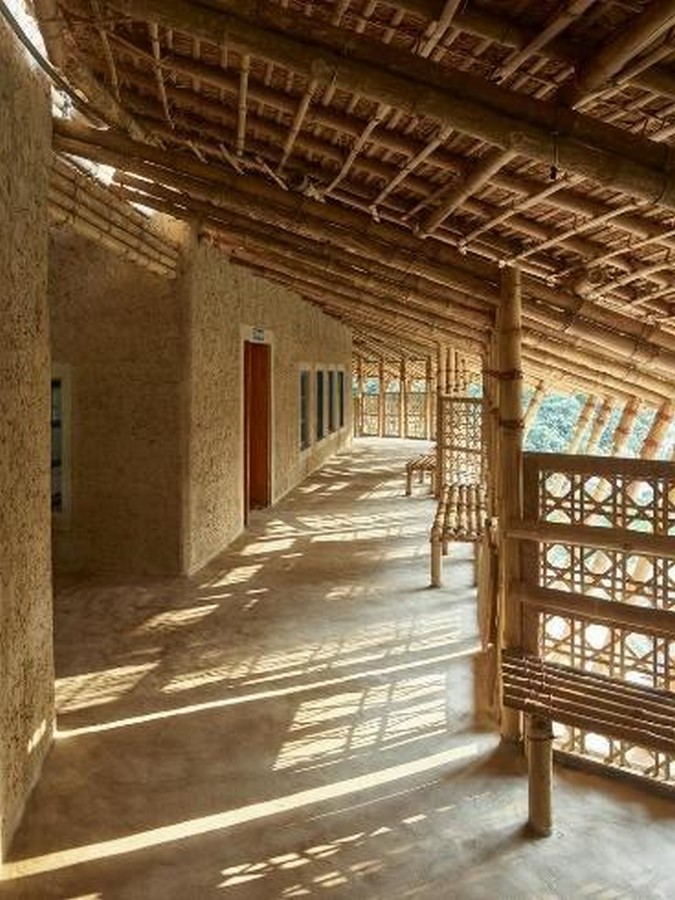
A therapy space featuring a grand ramp to the first floor is designed to maximise utility for the women’s tailoring studio. The ramp blends into the building’s curvature and defies convention, allowing accessibility for all users. It encourages discussions on improving the lives of disabled people and fostering community integration while also letting natural light into the interior and providing niches for seating along the ramp.
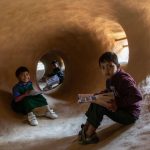
The design incorporates sheltered, cave-like areas beneath the main ramp that serve as peaceful retreats for both leisure and reflection (Obel Award, 2024). These cosy spaces offer users a place to find solitude when overwhelmed, highlighting careful attention to varying sensory requirements.
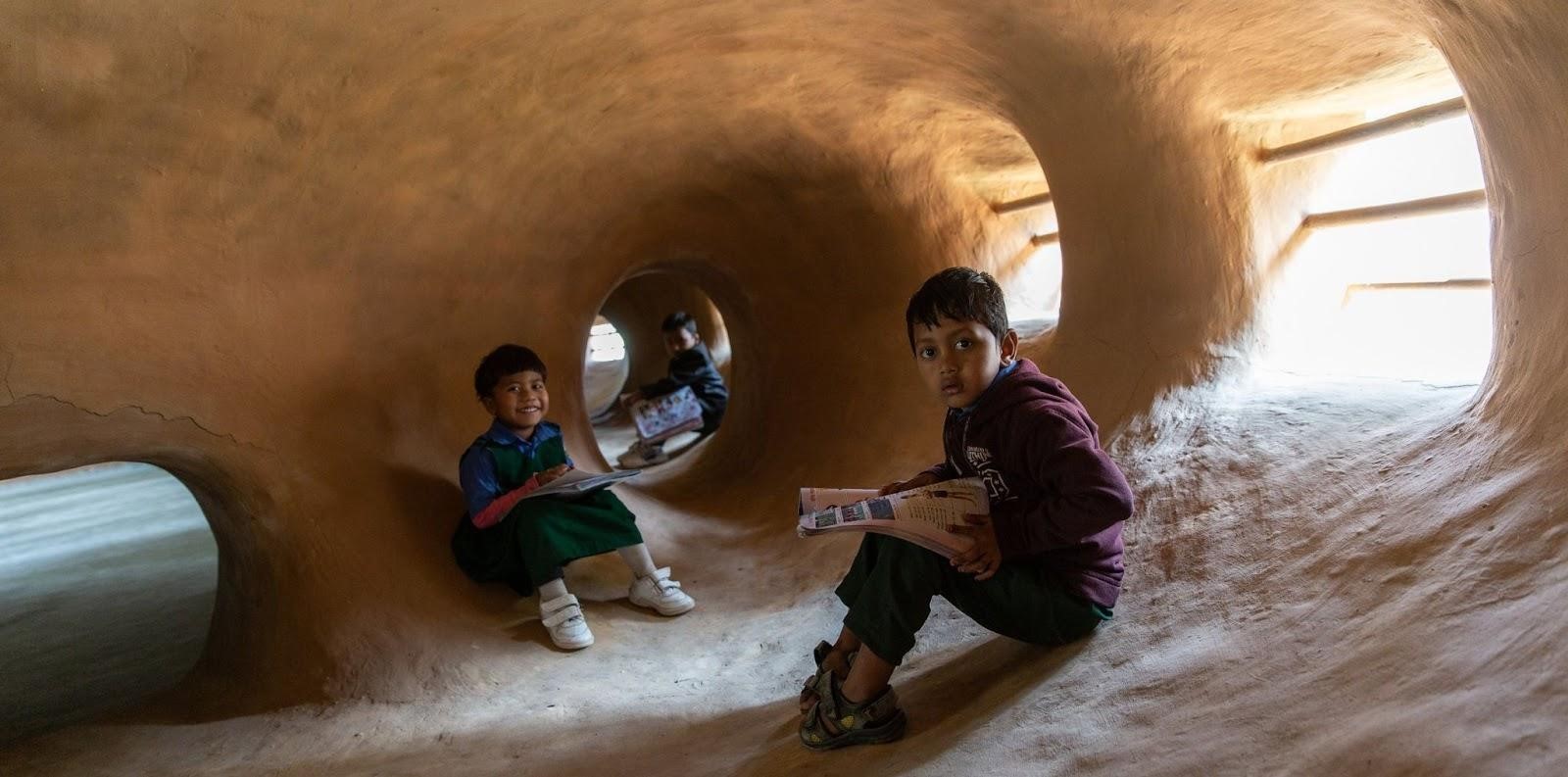
Small, confined therapy spaces are hidden in Bangladesh because disability is seen as a divine test or karma from a past life. Due to economic constraints, most adult family members work, isolating disabled people during the day (Heringer, 2021). The ramp provides a sense of inclusion that addresses the fact that disabled people in such regions are frequently left alone and are not viewed as assets to the community.
However, Anandaloy creates a new image of how the empowerment of such people affects the entire society for the better. Also, acknowledging these cultural beliefs and constraints, therapy spaces designed with greater openness and freedom prove to be more suitable. Such spaces nurture micro-communities within the building, enabling individuals with shared interests and experiences to interact, express themselves, and find solace.
Materials and Construction Techniques
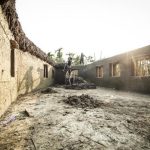
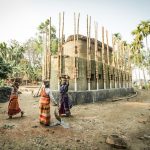
The projects covered about 253 square meters of floor area, along with the building footprint, to be the same size. A fired brick foundation was constructed to protect the mud walls from moisture damage. The innovative cob mud technique was employed for walls, which did not require any framework. The bamboo material for constructing Anandaloy was sourced from the local farmers.
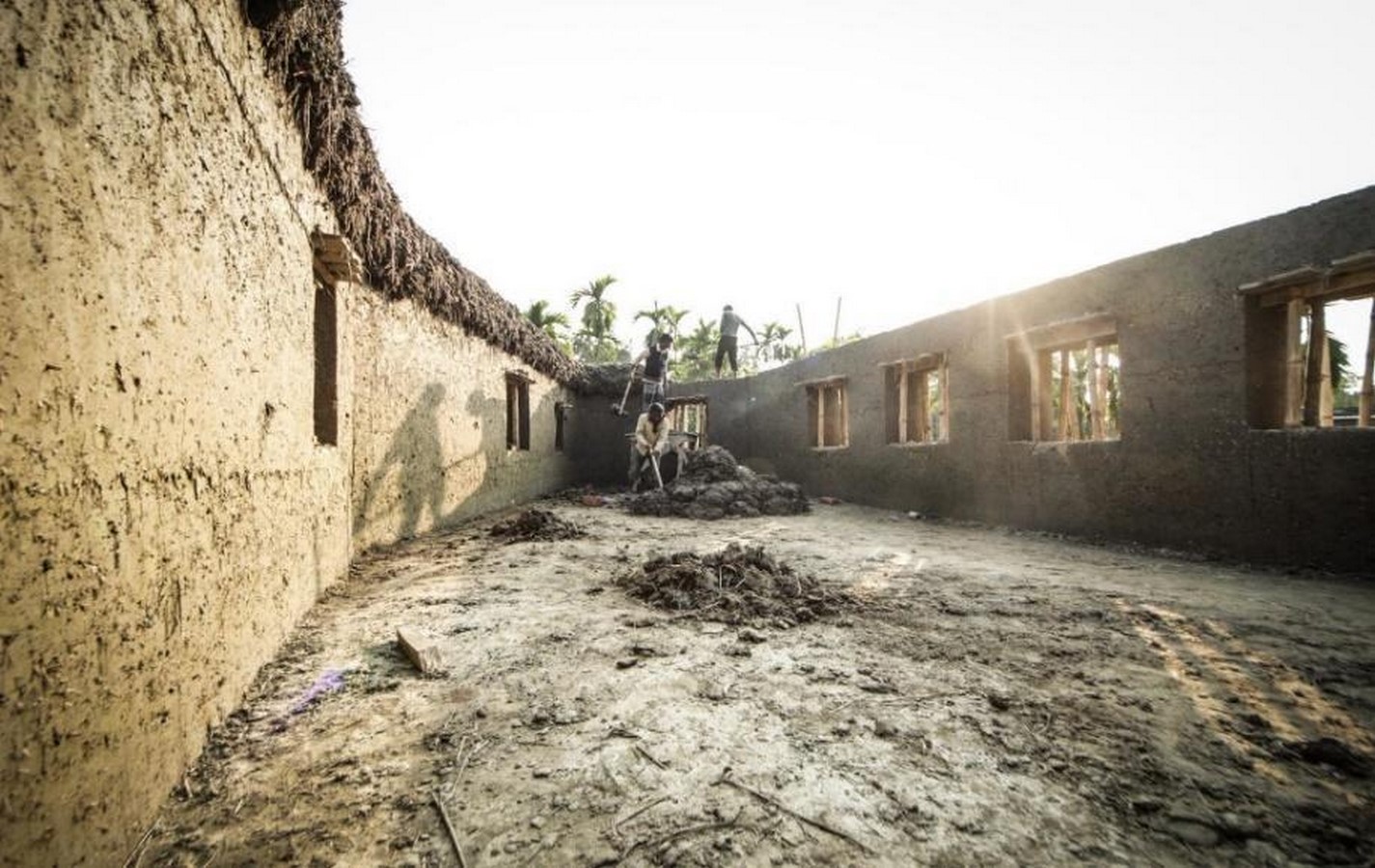
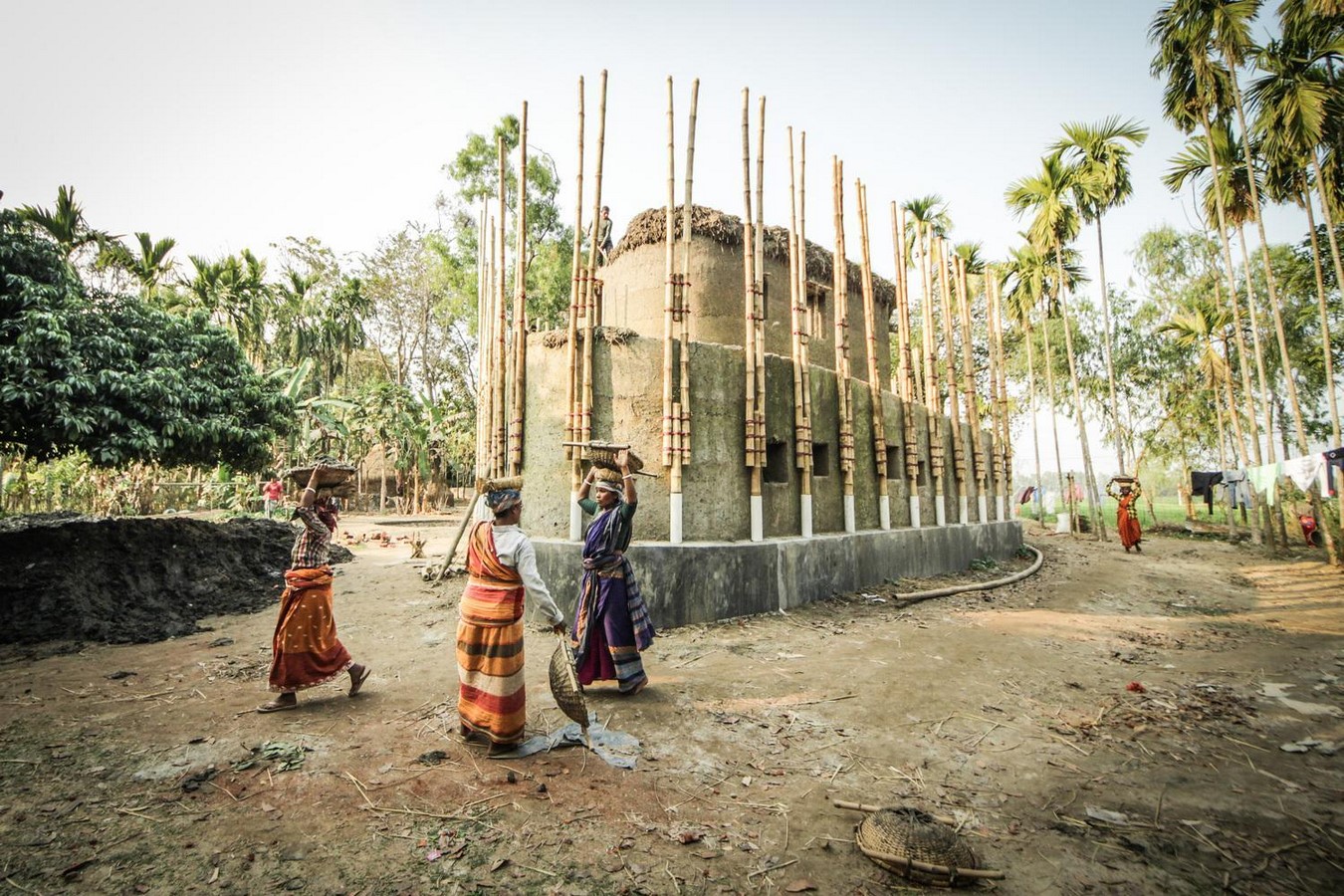
The cob mud technique approach streamlined the construction of Anandaloy and gave the community control over the building’s fate. This collaboration transformed the architecture into a symbol of empowerment and independence under the expert guidance of the local contractor, Montu Ram Shaw, and a dedicated team of mud and bamboo artisans, including disabled people (Heringer, 2021). He led a diverse team that included both male and female workers from surrounding villages. “Craftspeople and day laborers (male and female) came from the surrounding villages” and “standing in front of the finished building, knowing that it had been built out of the dirt underneath one’s feet, using nothing but one’s own hands, generates an incredible boost of confidence and team spirit for everyone involved in the construction” (Design for the Common Good, 2023). By utilising local resources and skills, creating programmatic spaces that address their needs, and involving locals in the planning and completion process, architects can increase the likelihood of community acceptance and connection, rather than viewing the project as parasitic.
The extraordinary malleability of mud underpins this architectural marvel. As Anna states, mud should be celebrated as a contemporary material, not just a cheaper alternative to bricks. This construction method allowed for natural-looking walls and a ramp without formwork. The bamboo ceiling, veranda, and ramp are the other essential materials that add fluidity and whimsy to the structure of Anandaloy.
Sustainability and Community Impact
The project of Anandaloy impacted the local community economically, as it prioritised the use of mud available from the site and sourcing bamboo from the locals (Heringer, 2021). Through this method, the process ensured that a large portion of the costing was a direct investment in local craftsmen and labourers, in turn making the building more than just a physical structure. Anandaloy became a catalyst for a larger local development. This process of employing natural resources and local workers led to a circular economy, which promotes sustainable economic growth that also benefits the community in various ways. (ArchDaily, 2021; Design for the Common Good, 2023).
Not just the source of materials and contribution for the local workers, Anandaloy’s construction process involved the transfer of knowledge to these workers, which helped them become independent to undertake construction projects in the future. For the architect, Anna Heringer, the greatest reward was witnessing the empowerment that comes when external experts are no longer needed, and the skills and techniques become embedded within the community itself (Stir World, 2020; Design for the Common Good, 2023).
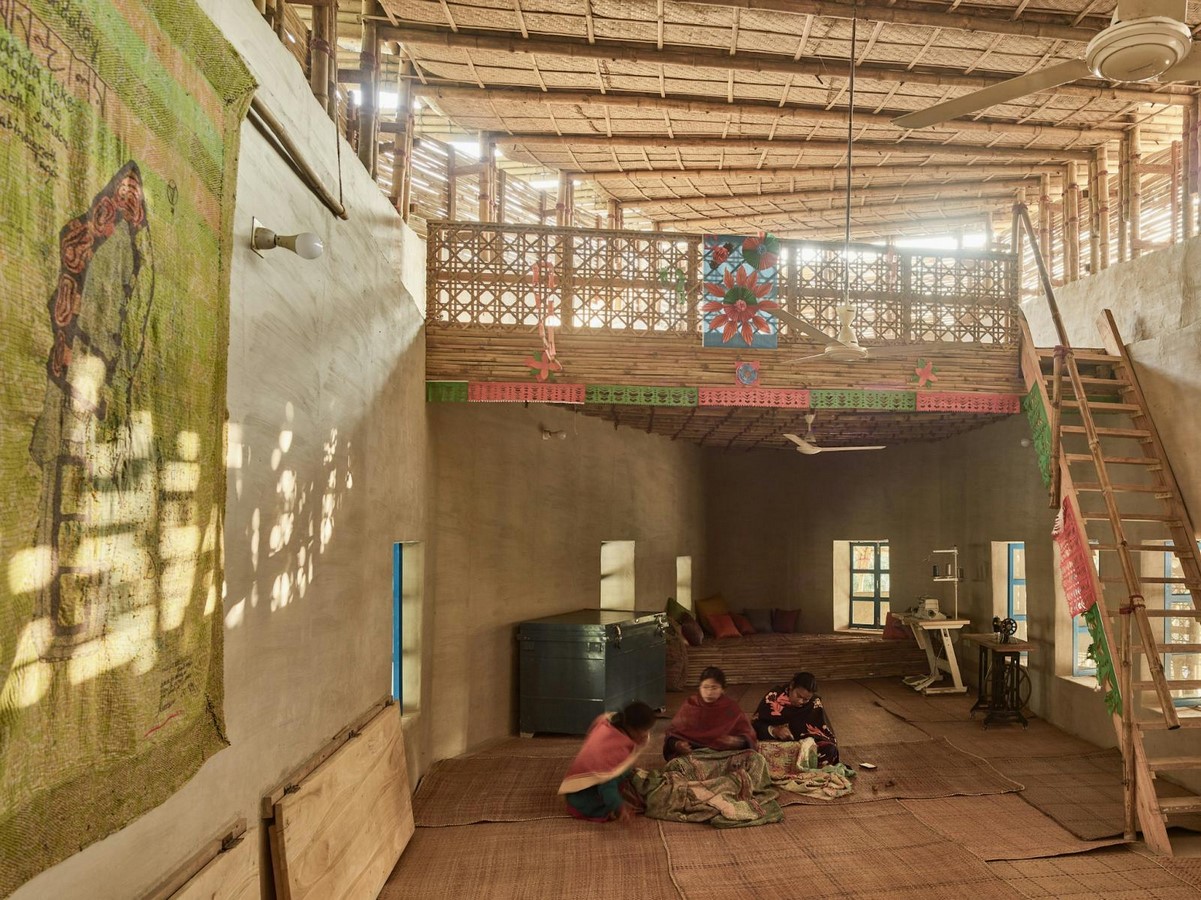
Women’s economic empowerment forms a core part of the project’s social impact through the Dipdii Textiles cooperative. Initiated by Heringer in collaboration with master tailor Veronika Lena Lang and the Bangladeshi NGO Dipshikha, this initiative targets the large number of women involved in textile production in Bangladesh. By decentralising textile manufacturing and situating it directly in the village, Dipdii empowers women to work from home, thus preserving their social connections and family ties rather than forcing migration to urban centres (Dipdii Textiles, 2017).
Environmentally, Anandaloy embraces sustainability by operating on solar energy and being designed for complete biodegradability. Heringer’s vision was to create buildings that one day could return fully to dust, avoiding any form of waste accumulation. The choice of materials and construction methods perfectly embody circular construction principles, ensuring that the building harmonises with nature throughout its life cycle (Azure Magazine, 2020; Stir World, 2020).
Lessons from Anandaloy
Anandaloy’s recognition with the 2020 Obel Award, accompanied by a €100,000 prize, further underscores its position as a model for integrating social initiatives with environmentally friendly construction. The main lesson from the Anandaloy case is that architecture can drive real social change and foster sustainability when it foregrounds local materials, community involvement, and support for marginalized groups, as highlighted by the award jury (Design Boom, 2020).
Anandaloy challenges entrenched perceptions about traditional materials like mud, showcasing their potential beyond vernacular construction towards modern, resilient, and spatially complex buildings (Dezeen, 2025). This innovative use of humble, locally abundant materials challenges the dominance of industrial building methods and icons a new way forward for eco-sensitive architecture built from what is readily at hand (Stir World, 2020).
Anandaloy’s success also offers a scalable and replicable model that prioritises building local capacity and autonomy over dependency on external sources (Design Boom, 2020). By harnessing indigenous knowledge and accessible resources, Anandaloy depicts how rural architecture can catalyse broader developmental shifts aligned with sustainability and social justice.
Moreover, its multifaceted impact on disability inclusion in Bangladesh, women’s economic opportunities, and environmental responsibility has lessons that resonate globally, too. Overall, Anandaloy demonstrates that architecture, when articulated through local contexts and challenges, serves as an indispensable tool for fostering community resilience and social equity (Obel Award, 2024).
Anandaloy is a futuristic vision in which architecture transcends its tangible form to serve as a means of influencing society and promoting environmental sustainability. Anna Heringer’s philosophy invites an ongoing dialogue on integrating cultural preservation with contemporary innovation, shaping a more equitable and sustainable built environment for generations to come (Obel Award, 2024).
References:
Azure Magazine. (2020). Anna Heringer’s Anandaloy Centre in Bangladesh Wins Obel Award. Available at: https://www.azuremagazine.com/article/anna-heringers-anandaloy-centre-in-bangladesh-wins-obel-award/ [Accessed 24 August 2025].
ArchDaily. (2021). Anandaloy Centre / Studio Anna Heringer. Available at: https://www.archdaily.com/950681/anandaloy-center-studio-anna-heringer [Accessed 24 August 2025].
Design Boom. (2020). Anna Heringer’s ‘Anandaloy’ is a community centre in Bangladesh. Available at: https://www.designboom.com/architecture/anna-heringer-anandaloy-mud-bamboo-community-center-bangladesh-10-21-2020/ [Accessed 24 August 2025].
Design for the Common Good. (2023). Anandaloy. Available at: https://designforthecommongood.net/dcg-exhibition/curated-works/anandaloy/ [Accessed 24 August 2025].
Dezeen. (2022). Five key buildings designed by German architect Anna Heringer. Available at: https://www.dezeen.com/2022/04/15/essential-beauty-anna-heringer-round-up/ [Accessed 24 August 2025].
Dezeen. (2025). Anna Heringer’s Anandaloy was the most significant building of 2020. Available at: https://www.dezeen.com/2025/01/26/anna-heringer-anandaloy-centre-21st-century-architecture/ [Accessed 24 August 2025].
Dipdii Textiles. (2017). The project. Available at: https://www.dipdiitextiles.org/about [Accessed 24 August 2025].
Obel Award. (2024). Mending. Available at: https://obelaward.org/winner/mending/ [Accessed 24 August 2025].
Stir World. (2020). Anna Heringer wins Obel Award 2020 for Anandaloy in Bangladesh. Available at: https://www.stirworld.com/see-news-anna-heringer-wins-obel-award-2020-for-anandaloy-in-bangladesh [Accessed 24 August 2025].
González, M. F. (2021) ‘Anandaloy Centre/studio Anna Heringer’, ArchDaily, 8 November. Available at: https://www.archdaily.com/950681/anandaloy-center-studio-anna-heringer (Accessed: 24 August 2025).
Heringer, A. (no date) Anandaloy: Centre for People with Disabilities + Dipii Textiles Studio. Available at: https://www.anna-heringer.com/projects/anandaloy/ (Accessed: 24 August 2025).
List of Images:
Image 1: Kurt Hoerbst (2021) The Anandaloy Building houses a disability centre and a small fair textiles studio. Available at: https://www.archdaily.com/950681/anandaloy-center-studio-anna-heringer/5fa07bbb63c01783950003d9-anandaloy-center-studio-anna-heringer-photo (Accessed: 24 August 2025).
Image 2: Kurt Hoerbst (2021) The Anandaloy Building amidst the rich landscape of Rudrapur. Available at: https://de51gn.com/anandaloy-community-project-by-studio-anna-heringer-announced-winner-of-obel-award-2020/ (Accessed: 24 August 2025).
Image 3: Kurt Hoerbst (2021) Small cave-like niches created below the ramp, which acts as a peaceful yet playful space. Available at: https://www.anna-heringer.com/projects/anandaloy/ (Accessed: 24 August 2025).
Image 4: Kurt Hoerbst (2021) Floor plans of Anandaloy. The building houses a textile studio on the first floor and a therapy centre on the ground floor. Available at: https://www.anna-heringer.com/projects/anandaloy/ (Accessed: 24 August 2025).
Image 5: Kurt Hoerbst (2021). Unique cob technique to create curved walls without formwork, involving skilled local labourers. Available at: https://www.anna-heringer.com/projects/anandaloy/ (Accessed: 24 August 2025).
Image 6: Kurt Hoerbst (2021) Cob mud technique eliminates the need for formwork, simplifying curved and straight wall construction. Available at: https://www.anna-heringer.com/projects/anandaloy/ (Accessed: 24 August 2025).
Image 7 & 8: Kurt Hoerbst (2021) Large accessibility ramp with seating pockets and bamboo details enhancing light quality. Available at: https://www.anna-heringer.com/projects/anandaloy/ (Accessed: 24 August 2025).
Image 9: Kurt Hoerbst (2021) Textile studio on first floor for local women’s employment, fostering rural economic development. Available at: https://www.anna-heringer.com/projects/anandaloy/ (Accessed: 24 August 2025).