Architecture is primarily created by and for humans. It always boils down to how areas are designed for cohabitation, employment, and sharing. In architecture, sustainability specifies choices that have a significant influence on people’s use and perception of the space in addition to energy and material usage. They also discuss the effects on government and society, albeit not all of these effects can be quantified. Nevertheless, over time, these effects increase the building’s and the company’s sustainability.

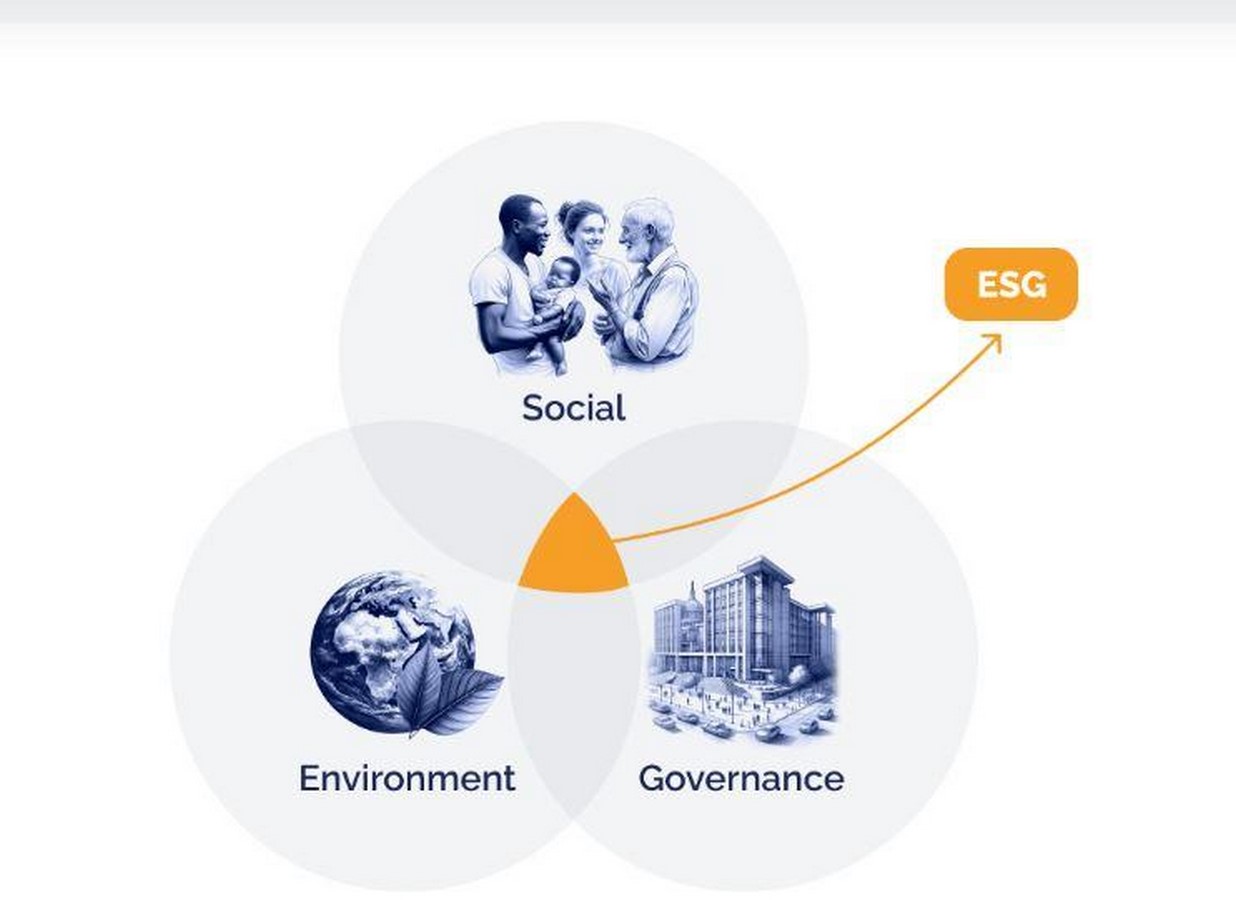
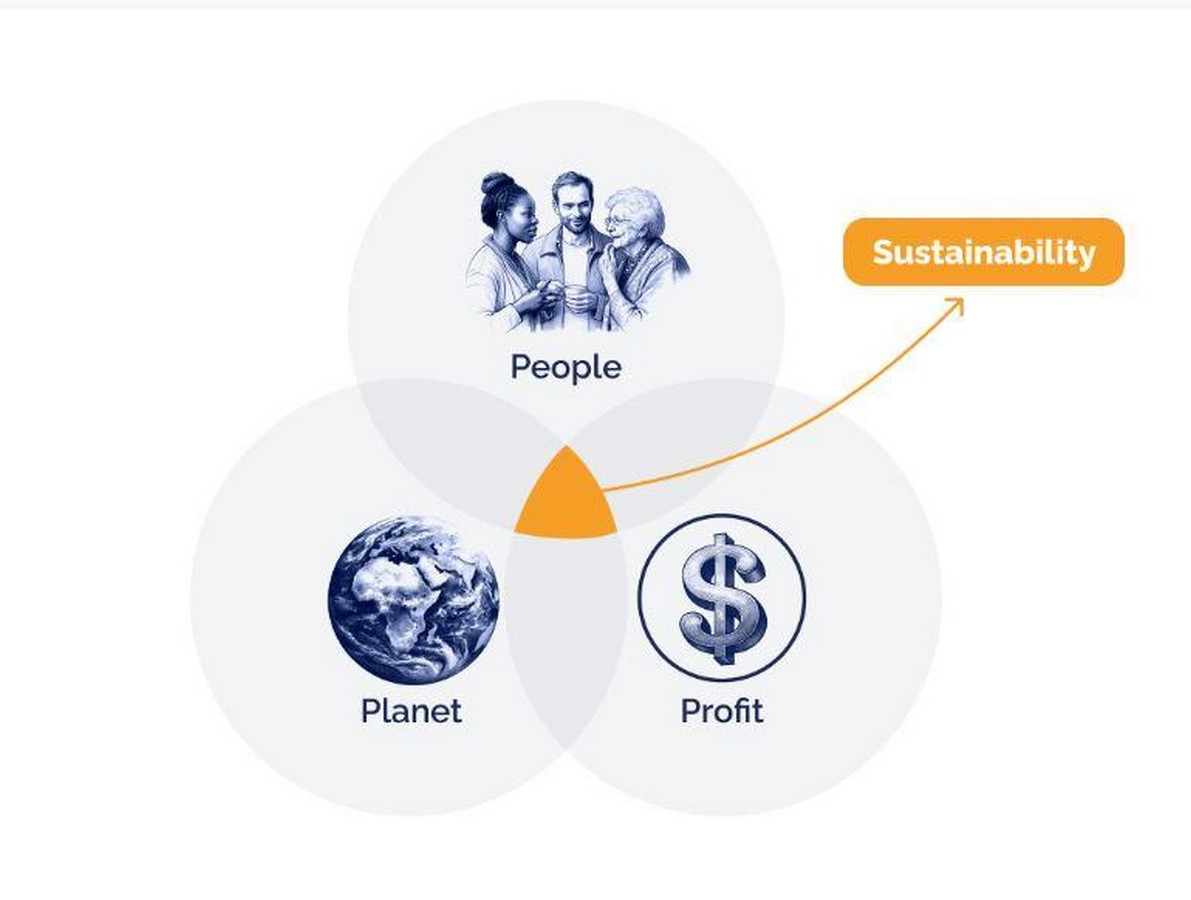
Difference between ESG and Sustainability_©https://www.green.earth/blog/the-triple-bottom-line-balancing-profit-people-and-the-planet-for-sustainable-successEnvironmental, Social, and Governance is what ESG stands for. ESG started out as a framework for businesses to embrace social and climate change responsibilities, but it is also slowly becoming more significant in the architectural field. ESG design is more than just energy efficiency or green certifications; it’s about how a building functions for people, how it’s managed responsibly, and how it changes over time. In design, accountability is more important than compliance.
What is E+S+G in Architecture ?
The idea of architectural ethics is broad and differs from project to project. However, it has lately been acknowledged that design may influence global climate change by emphasizing social and leadership objectives in addition to obtaining green construction certifications. (by, n.d.)
ESG, or environmental, social, and governance goals, are mainly meant to motivate global corporations to engage responsibly on social concerns and climate change, according to the UN. ESG in architecture refers to how companies use and invest in their spaces to sustainably operate while also benefiting society and the environment.

ESG establishes benchmarks for assessing the governance, social, and environmental performance of businesses. Giving investors and others a platform for evaluating a company’s governance procedures and social and environmental impact is its main objective. Institutional investors take into account ESG indicators and factors in addition to conventional financial measures when making ESG-related investment choices. HSBC (2024)
ESG continues throughout the project’s life cycle, not only after construction is over. ESG is now mostly thought of as something that happens after businesses have created and evaluated their effect. But if we take a different approach, ESG may guide the design process from the beginning. It may have an impact on the planning and conceptualization of places rather than only serving as a reporting tool. (Olson, Stacey, n.d.)
Because of this change, ESG is no longer only a mechanism to check boxes but is being utilized as a design tool to improve how places are constructed and inhabited.
How Does ESG Influence Design and Practice?
Corporate interiors make for easier architectural case studies because they are the most commonly used spaces. On average, an employee in Europe spends around 36 hours per week at the workplace (Eurostat, 2025), and these areas should suffice in terms of employee productivity.
“As ESG becomes increasingly embedded in architectural practice by 2025, firms must recognize this shift not as an additional layer of compliance but as a core component of responsible design.” (“The Future of ESG in Architecture: Transforming the Built Environment …”)
Existing standards like DGNB, BREEAM, and LEED were taken into consideration while reporting for ESG (Group, 2025). Due to the qualitative nature of some of the key indicators rather than their quantitative nature, ESG is mostly theoretical. ESG is being redefined by certain companies, like Gensler, who are taking a science-based approach that covers the whole design value chain. They illustrate how workplaces might lessen stress and anxiety. Today, wellness is more than just having a yoga studio or juice bar; it also involves valuing individuals as individuals and creating spaces where they feel supported and appreciated. (Stacey Olson, n.d.)

One example of ESG in action is the change in co-working spaces in India. For example, Bengaluru-based Urban Vault reported a 41% rise in rentals for ESG-certified buildings in FY24. Companies are already selecting locations based on whether they fulfill worldwide ESG standards, demonstrating that ESG investments are more than just a good cause; they also make financial sense. Other co-working chains, such as Incuspaze, The Executive Centre, and Awfis, are also focusing on ESG, demonstrating that socially and ecologically responsible design is becoming increasingly important in the market. (Chatterjee, 2024).
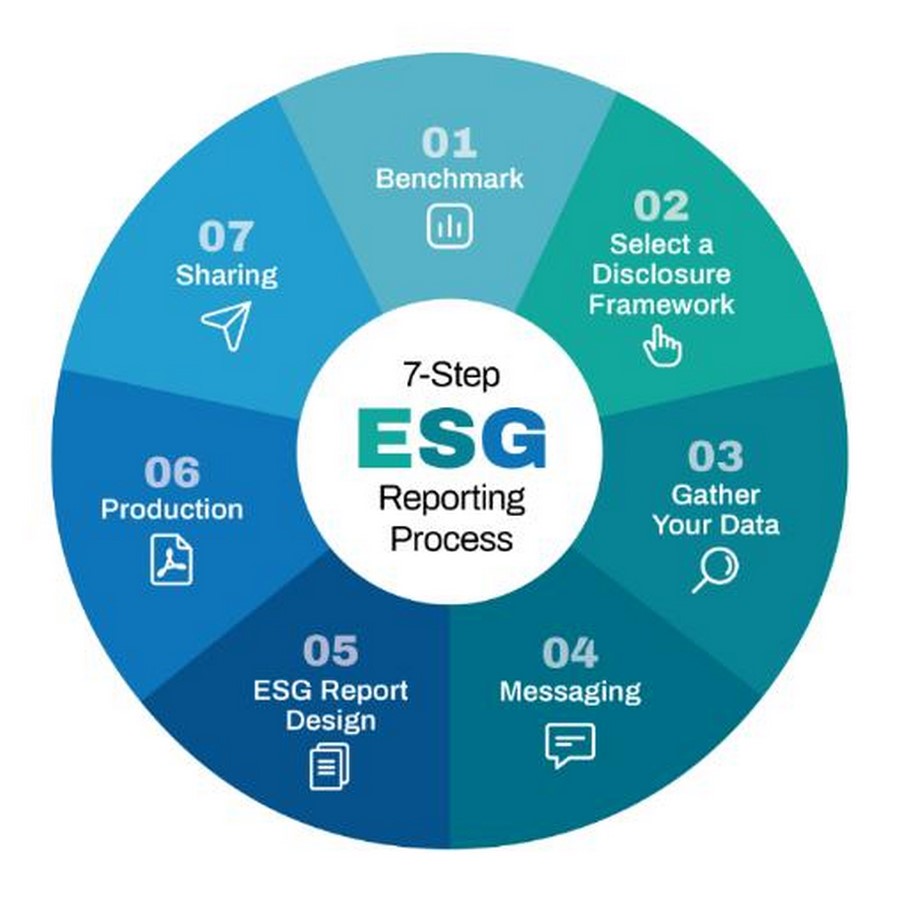
Why ESG Matters in Architecture
Major architecture firms are currently changing their sustainability development goals to take a more sustainable approach. (Impact, 2016). Environmental concerns have long been on the radar, but true sustainability extends beyond the environment. Social and governance issues are equally essential, if more difficult to quantify. ESG reporting is not a luxury; it is a need. (Waelbroeck, n.d.)
Everywhere in the globe, architects are in a unique position to promote ESG principles in the communities they work in because of their profession. They already have the correct base: design innovation, material expertise, and a dedication to sustainable practices. Demonstrating to companies and investors that these are not only ideals but also profitable long-term investments is what counts now. Credibility and visibility of that influence are enhanced by ESG reporting. Furthermore, using the same formula for every job is not necessary. Each structure, place, and environment is unique, giving architects the opportunity to design custom approaches to sustainability solutions that make sense in their context, have genuine significance, and bring about long-lasting change.
References:
Anon., n.d. [Online]
Available at: https://www.uni-stuttgart.de/en/university/news/all/A-century-of-lightness—the-legacy-of-Frei-Otto/
by, A. d., n.d. Architects design by. [Online]
Available at: http://www.esg-architects.it/
Chatterjee, A., 2024. Buisness standard. [Online]
Available at: https://www.business-standard.com/industry/news/co-working-spaces-up-investments-in-esg-for-rise-in-demand-higher-rentals-124070100714_1.html
Eurostat, 2025. Eurostat. [Online]
Available at: https://ec.europa.eu/eurostat/web/products-eurostat-news/w/ddn-20250514-1
Group, D., n.d. DGB Group. [Online]
Available at: https://www.green.earth/blog/the-triple-bottom-line-balancing-profit-people-and-the-planet-for-sustainable-success
HSBC, 2024. HSBC. [Online]
Available at: https://www.businessgo.hsbc.com/en/article/demystifying-sustainability-and-esg
Impact, D., 2016. Devex Impact. [Online]
Available at: https://www.sdgfund.org/role-architecture-can-play-development-agenda
media, m., 2019. Little black book. [Online]
Available at: https://lbbonline.com/news/mercedes-tells-the-story-of-bertha-benz-and-the-journey-that-changed-everything
PlanA, n.d. PlanA. [Online]
Available at: https://plana.earth/academy/6-key-steps-to-esg-reporting
Saka, A. Q., 2022. Trend Analysis of the Impact of ESG Practices on Corporate Risk Management and Financial Stability: Evidence from Developed and Developing Economies. [Online].
Stacey Olson, A. B. a. A. H., n.d. Gensler. [Online]
Available at: https://www.gensler.com/blog/measurable-impact-the-future-of-esg-in-architecture-design
Team, I., 2025. [Online]
Available at: https://isarch.org/esg-journal/the-future-of-esg-in-architecture-transforming-sustainable-design-in-2025/
Waelbroeck, N., n.d. Arcadis. [Online]
Available at: https://www.arcadis.com/en/insights/blog/united-states/nathalie-waelbroeck/2023/esg-is-more-than-investing-its-architecture-and-urbanism