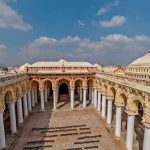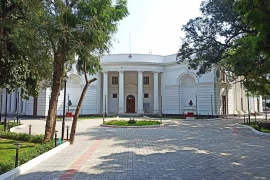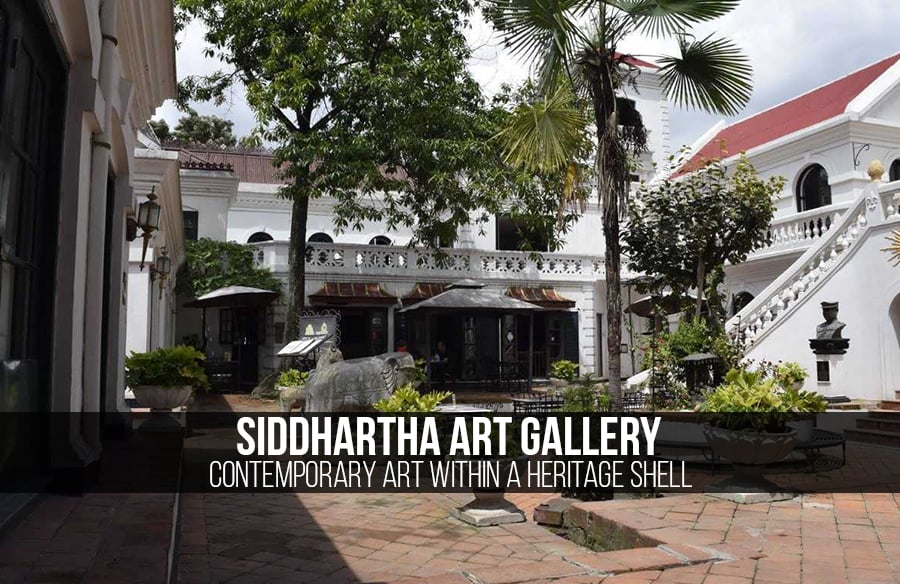
They say art breathes new life into old walls, and that can be seen in Siddhartha Art Gallery in Kathmandu. Tucked inside the grand Rana-era Baber Mahal Revisited complex, this gallery merges the sensibility of modern curation with the architectural echoes of Nepal’s colonial past. Since its inception in 1987, Siddhartha Art Gallery has evolved into more than a venue; it is an incubator for Nepali contemporary art and a vital cultural hub within a city that balances heritage and growth. Through the lens of architecture, this case explores how Siddhartha Art Gallery shows how its adaptive layout, smart detailing, and site-specific narrative strengthen the gallery’s role.
Design Philosophy & Spatial Planning
The gallery’s spatial narrative begins with its setting, Baber Mahal Revisited, a neoclassical courtyard complex that was once part of the prime minister’s residence. The adaptive reuse of this space reflects a broader architectural shift in Kathmandu, where historical buildings are being revitalised as cultural hubs. Siddhartha Art Gallery occupies one of the longer east-facing wings, its rooms following the linear flow of the building, structured by thick masonry walls and wooden beams that frame each section.
The planning responds to both the heritage character and the functional demands of a modern gallery. The layout features interconnected exhibition rooms, central courtyards, and verandas that allow flexible circulation. Visitors are free to meander across indoor and outdoor spaces, giving each art piece and installation breathing room. The preserved arches and columns guide movement while naturally framing artworks, creating an experience of discovery.
Flexible Design for Contemporary Display
Exhibition zones are not rigidly defined; instead, they encourage temporary and thematic adaptation. The blend of permanent masonry and movable partitioning facilitates a range of formats, from sculpture and painting to multi-media installations and performance art. Here, architectural design becomes an active participant in curating the encounters between the audience and the artwork.
What makes this planning unique is its rootedness in context. The structure’s heritage character is never overshadowed. Instead, it’s interpreted with restraint. Brick walls, arched windows, and tall ceilings maintain their original presence but are augmented with lighting and climate-sensitive solutions. The overall design does not erase the building’s past but harmonises it with the demands of contemporary art practice.
Materials and Construction Techniques
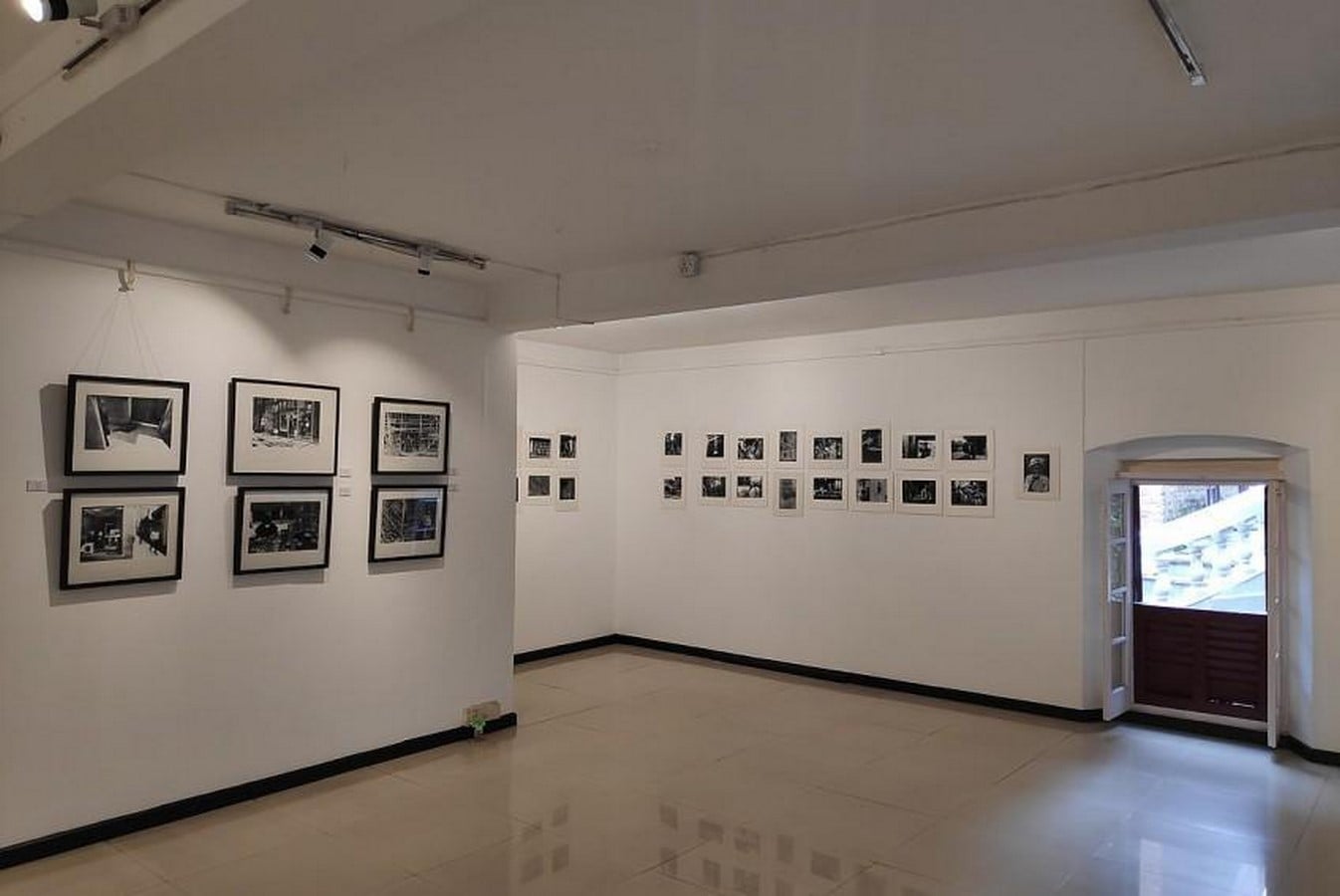
Much of the original building material has been retained, especially red bricks, terracotta tiles, and carved wooden fenestrations that are typical of Kathmandu Valley’s vernacular language. The gallery interiors retain these surfaces where possible, using lime plaster and timber beams to preserve historic character. The flooring features a mix of refurbished stone and tiled surfaces that ease maintenance while respecting the older palette.
One of the most effective interventions has been the sensitive installation of modern infrastructure. Lighting is designed with concealed fixtures, track systems, and adjustable panels to accommodate changing exhibits without damaging original surfaces. The walls have been strengthened in parts using seismic retrofitting, an important upgrade in Nepal’s earthquake-prone landscape. However, these interventions are discreet, ensuring that technological modernity doesn’t disrupt the visual calm of space.
The courtyard strategy in Baber Mahal is another key feature. These open-to-sky pockets cool down the interiors, reduce dependency on artificial lighting, and provide spillover zones for events or larger installations. They are landscaped minimally, adding greenery without overwhelming the architecture. The preservation of the gallery’s architectural skin, while enhancing the bones underneath, reflects a clear understanding of how to build with the past, not over it.
What results is a built environment that speaks softly but firmly. Visitors rarely comment on the infrastructure, and that’s success; it disappears into the background, letting the art and experience take center stage.
Cultural Relevance and Architectural Identity
While Siddhartha Art Gallery may not be categorised as a ‘heritage structure’ in the conventional sense, it exists in a unique space, where built heritage is given new life through cultural programming. Its relevance extends far beyond its physical boundaries. The gallery has hosted hundreds of exhibitions, from political commentary to environmental activism, women’s rights to indigenous identities, becoming a socio-political space as much as an artistic one.
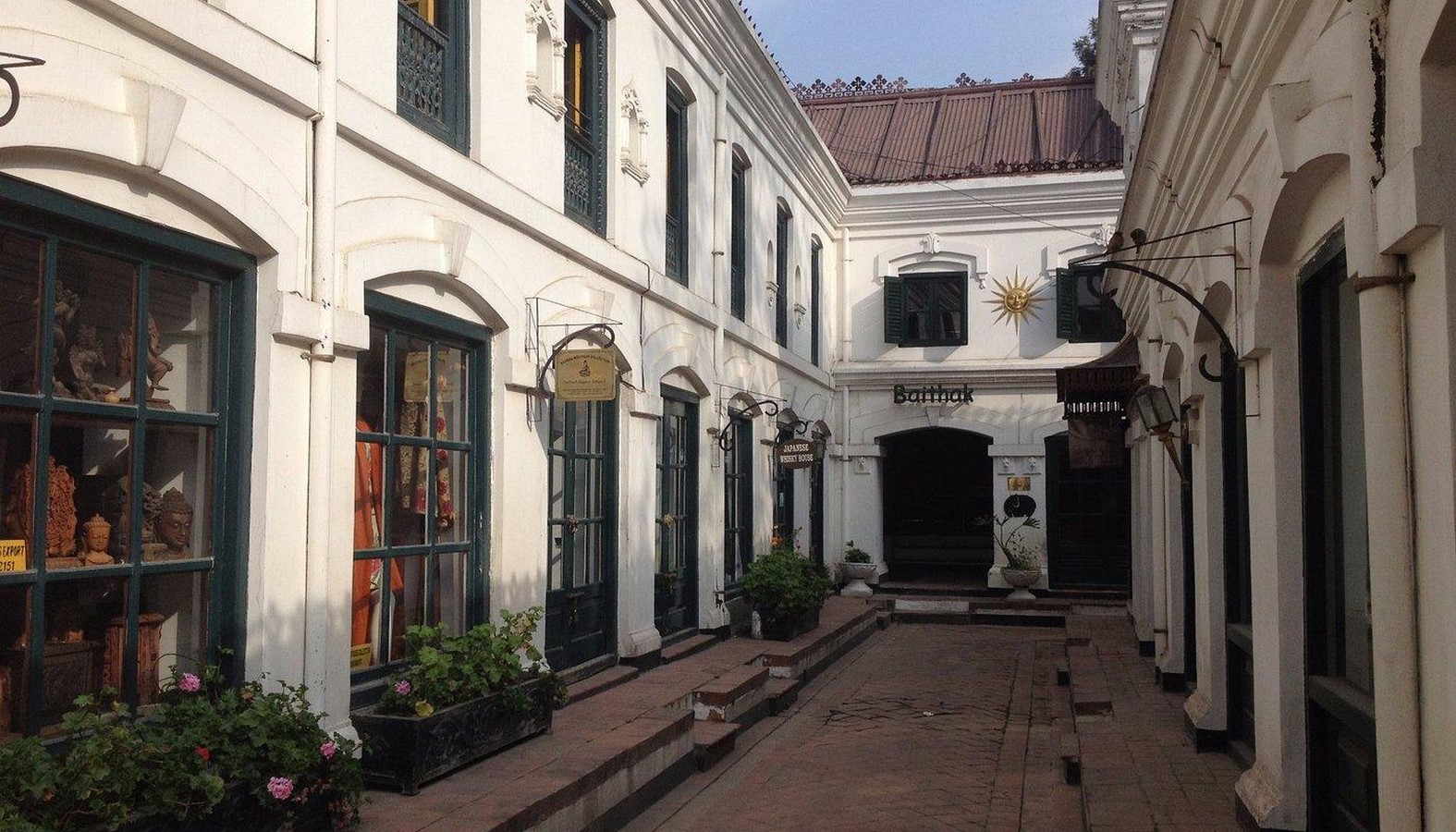
The identity of the structure, therefore, becomes tied to its role as a catalyst. Unlike many galleries that are isolated from their context, Siddhartha is embedded within a wider architectural ensemble, Baber Mahal Revisited, that itself is an urban experiment in adaptive reuse. Restaurants, boutiques, and creative studios all occupy once-abandoned palace wings, transforming a forgotten heritage complex into a thriving cultural quarter.
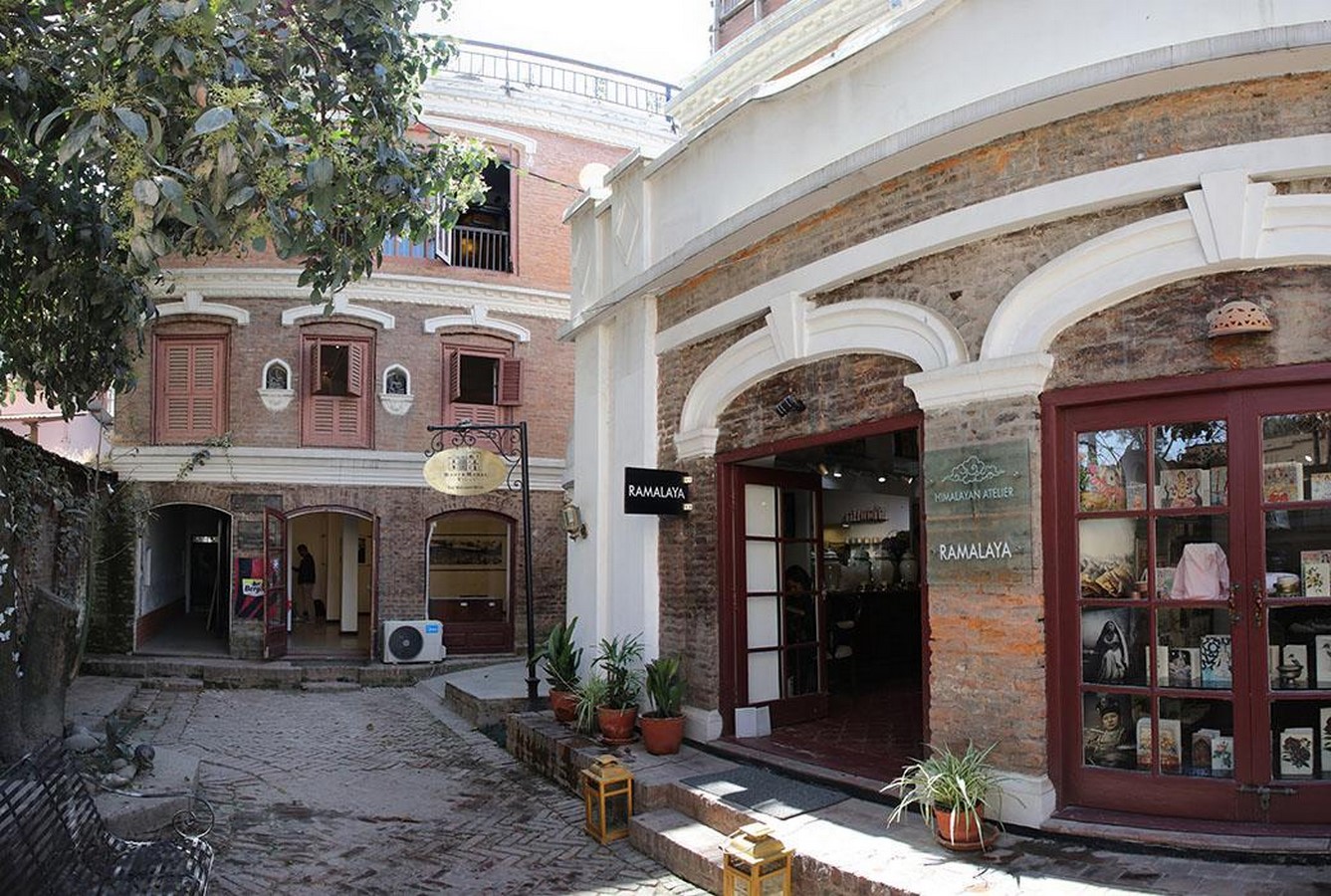
This approach to reuse is worth noting in the wider South Asian context, where conservation often leans toward freezing buildings in time. Siddhartha, instead, is an example of a living heritage site, where art is not displayed in spite of the old walls, but because of them. The building carries its age with dignity, lending gravity to every exhibition it houses.
It is also one of the few galleries in Nepal that consistently engages with architectural language in its programming. Exhibitions often extend into the courtyards, making use of natural light, shadow play, and texture. The spatiality of the gallery becomes part of the curatorial narrative, with artists tailoring their work to respond to the environment.
Through these elements, Siddhartha Art Gallery illustrates how architectural identity can adapt, evolve, and support a new purpose without losing its soul. It represents a case study in restraint, reuse, and resonance. In a rapidly modernising Kathmandu, where glass towers compete with temples for skyline dominance, Siddhartha stands as a quiet yet powerful reminder that good architecture isn’t always about making a statement. Sometimes, it’s about holding space.
References:
Kellert, S.R., Heerwagen, J.H. and Mador, M.L. eds., 2011. Biophilic Design: The Theory, Science and Practice of Bringing Buildings to Life. John Wiley & Sons.
Shrestha, C. (2017). Art Spaces in Kathmandu: A Spatial Analysis. Kathmandu Contemporary Journal, 3(2), pp.54–67.
RTF, 2021. Adaptive Reuse: The Role of Architecture in Cultural Continuity. [online] Available at: https://www.re-thinkingthefuture.com/case-studies/a1253-adaptive-reuse-in-kathmandu [Accessed 1 Aug 2025].
Siddhartha Art Gallery. (2024). About Us. [online] Available at: https://www.siddharthaartgallery.com/about