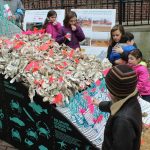
Architects play a crucial role in the built environment, and therefore, they must be ecologically and socially responsible when designing. Focusing particularly on this concept, the OBEL Award was founded in 2019. In 2023, Adaptation was chosen as the theme, and The Living Breakwaters from SCAPE was awarded the winner. Kate Orff is the leader of the landscape and urban design practice SCAPE. The Living Breakwaters began as a concept model for Rebuild by Design, a design competition that was created by the U.S. Department of Housing & Urban Development in response to the devastating effects of Superstorm Sandy. Living Breakwaters offers an innovative and forward-thinking alternative to conventional coastal defence strategies, which typically rely on hard structures such as seawalls, levees, and barriers to guard against both natural and human-induced climate threats.
Foundation
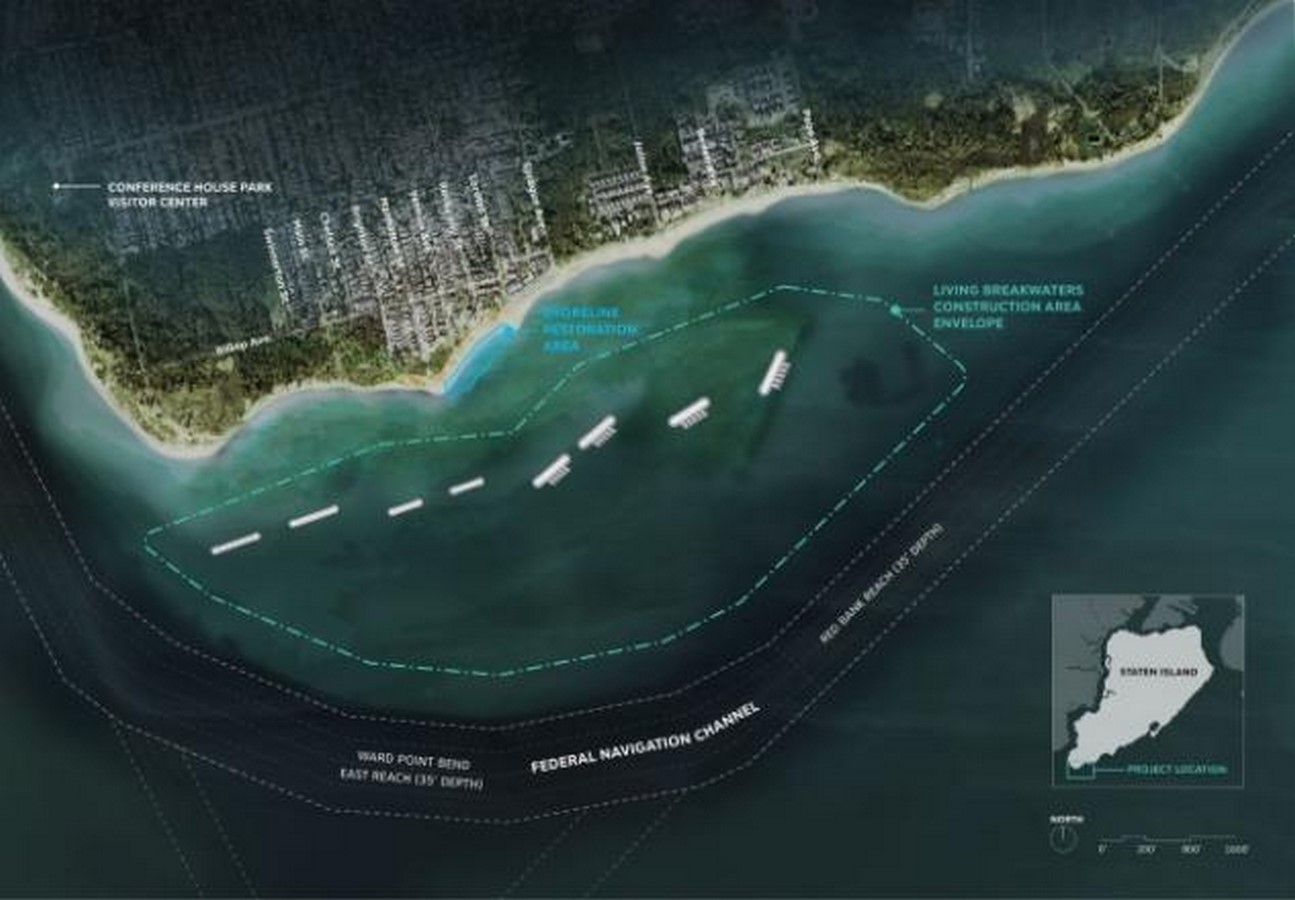
Superstorm Sandy was a profound turning point for the coastal communities and low-lying areas. It acted as a catalyst and an example of a disaster, exposing the limitations of the conventional methods of coastal protection, prompting a re-evaluation. Therefore, came the foundational philosophy of the Living Breakwaters, rather than relying on the hard infrastructure like concrete seawalls, Living Breakwaters employs a hybrid approach that combines modular breakwater units with ecological restoration; they will not be just structures but rather carefully engineered habitats, thereby providing a new definition to building with nature, for nature. It will not only reduce wave energy by up to 4 feet but also host marine life and foster biodiersity.
Detailed Design
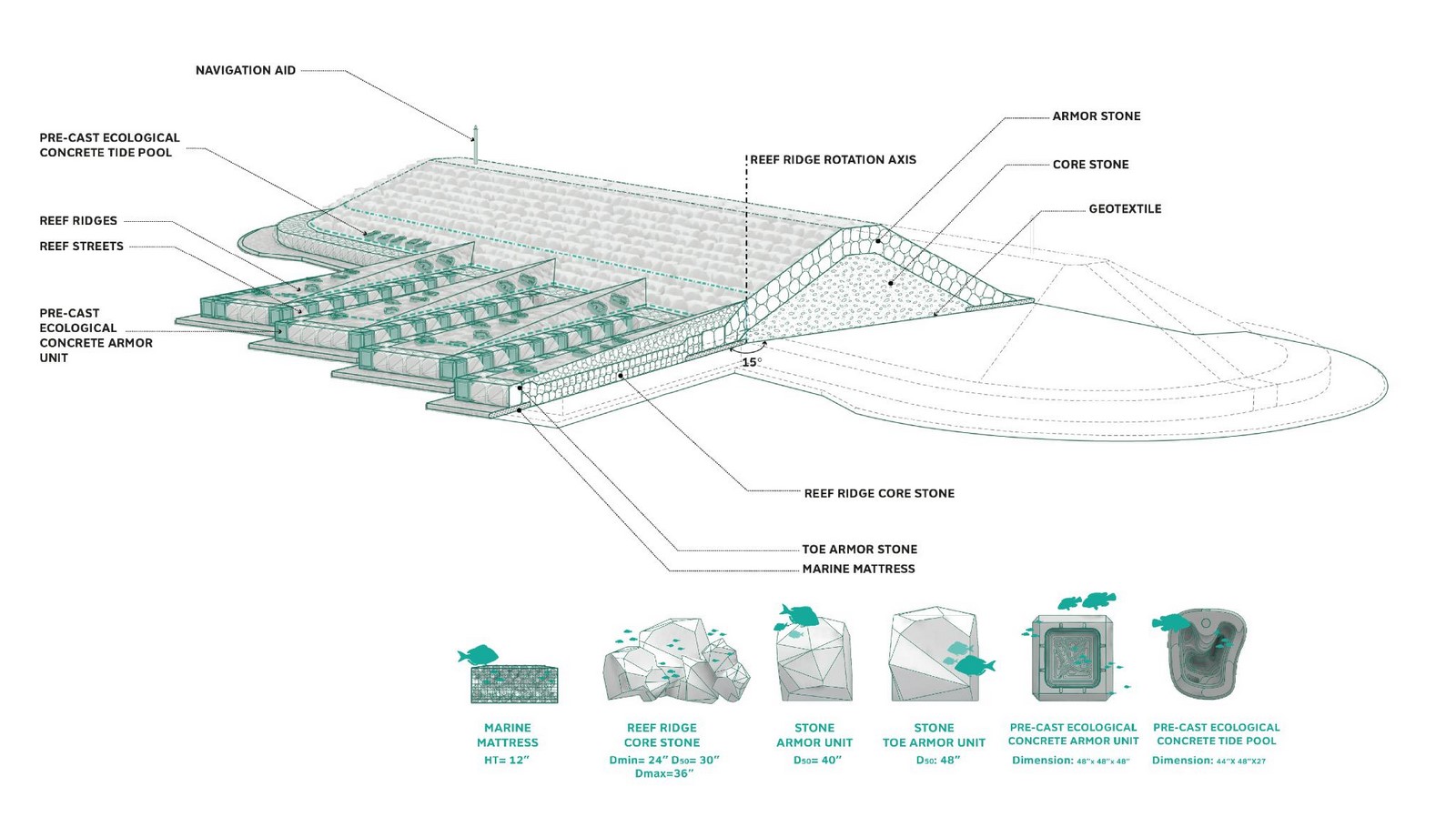
Living Breakwaters is not a building, but rather a form of landscape and an example of infrastructural architecture —a discipline that merges form, function, and site responsiveness.
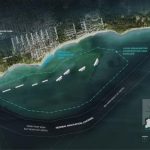
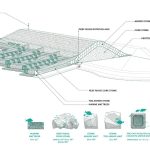
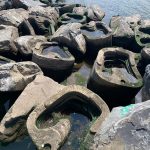
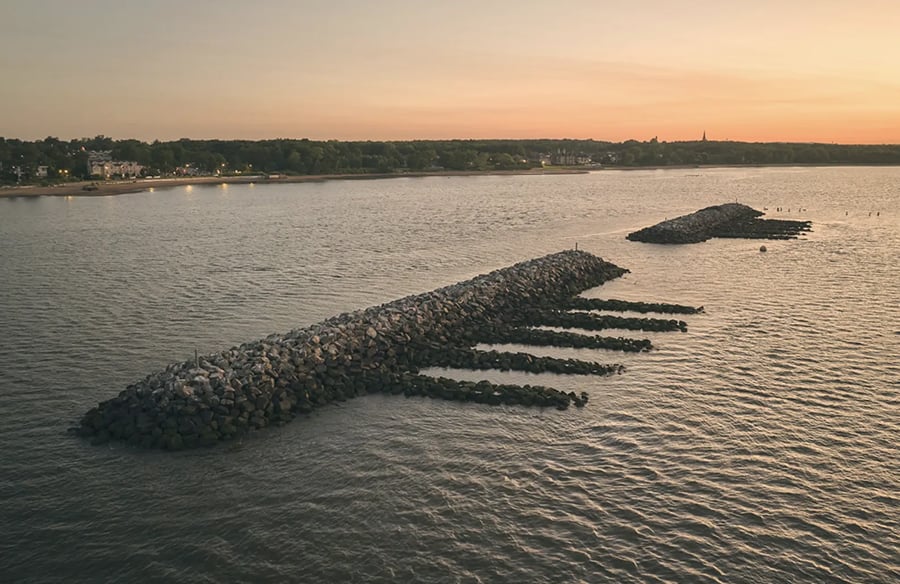
It is approximately a 2,400 linear foot stretch of stone & concrete structures in Staten Island. These structures are modular and act as a living design system serving both ecological and civic functions, not just as a physical barrier. As mentioned earlier, the Living Breakwaters provide a new definition to building with nature, for nature, it is visible through their softening approach, by mimicking and enhancing natural storm-mitigation elements such as oyster reefs, ridges, pools, and coastal vegetation. The Living Breakwaters are constructed with reef ridges, which are rock protrusions on the ocean-facing side, and reef streets, which are narrow spaces between these ridges. These structures are built using marine stone and eco-concrete. The closely spaced reef streets add habitat complexity and dramatically increase the surface area of productive intertidal and subtidal habitat provided by the backwaters.
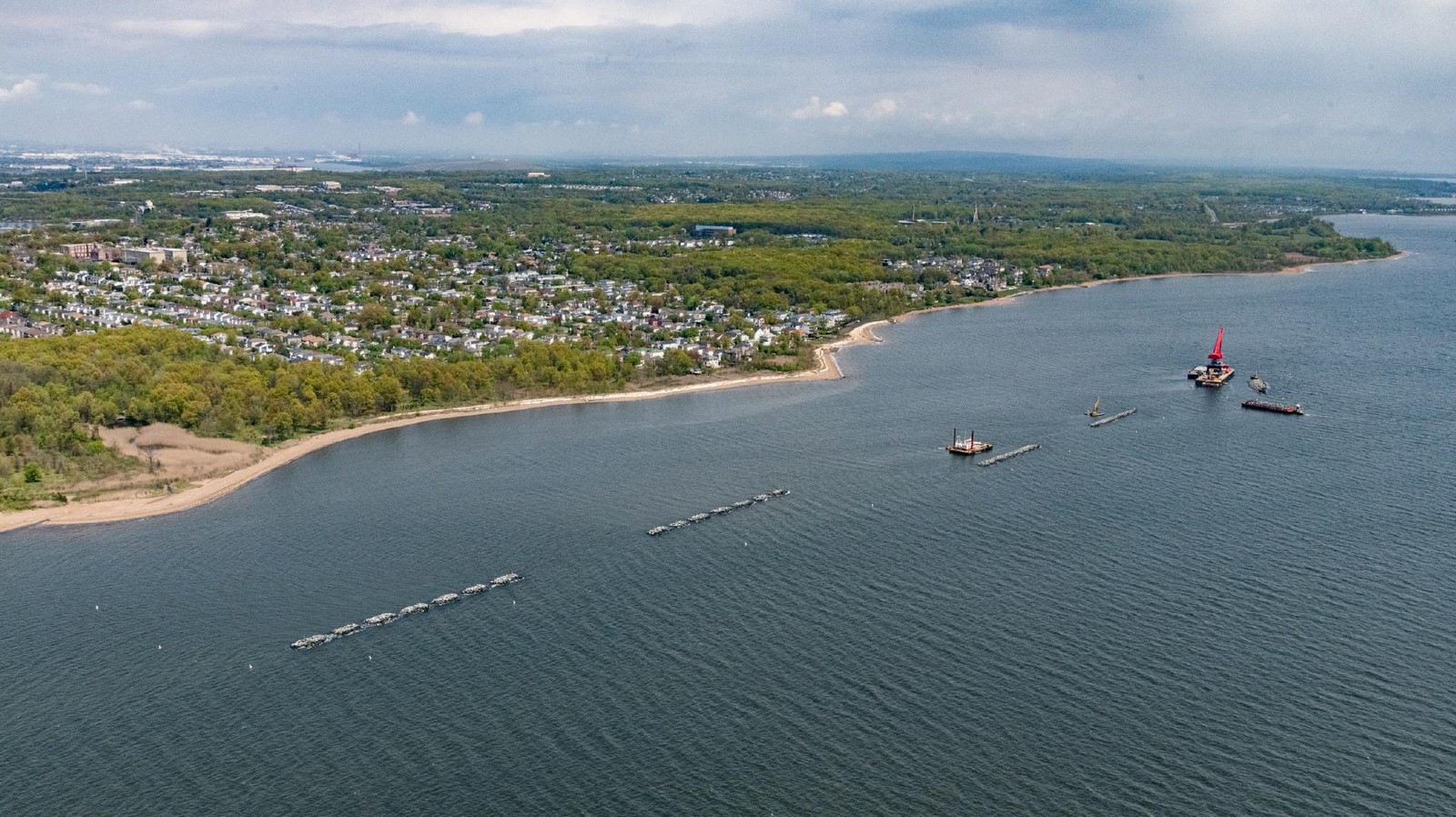
A layered approach has been taken to meticulously design the Living Breakwaters, while embracing the dynamic nature of water. They consist of a series of eight ecologically enhanced breakwater segments, each of which has been individually designed to contribute to the overall system and achieve the desired performance. In addition to these breakwaters, the design includes a limited strategic one-time placement of shoreline restoration that will add the needed sediment to the system and provide initial protection to the most vulnerable stretch of beach.
Additionally, oysters could also be considered a part of the design. As they are significant players when it comes to artificial reef design. With their rapid population growth, they help by making the breakwaters denser, which further offers increased shoreline protection.
Design Materials & Study
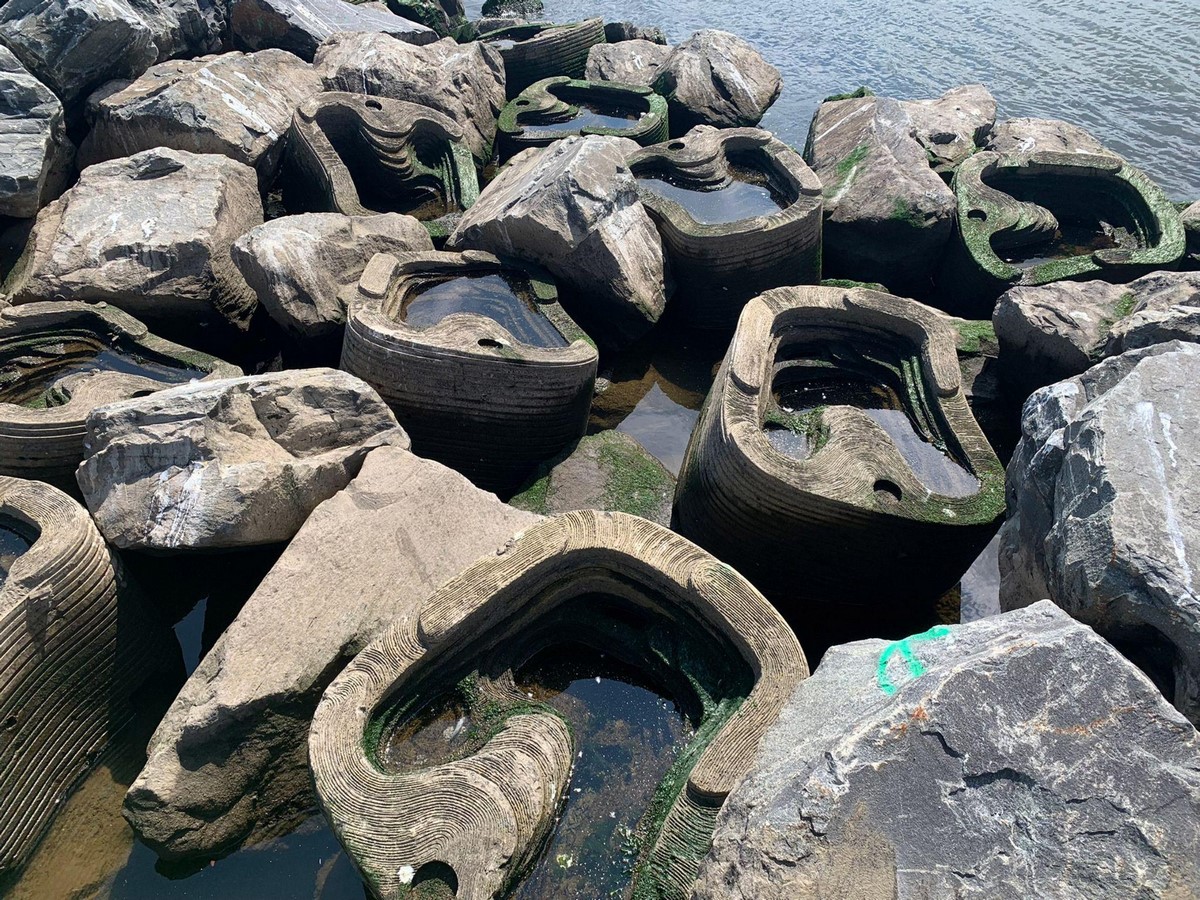
The Living Breakwaters project is widely recognized as a leading model for climate-adaptive nature-based infrastructure. The structures are built using marine stone and Eco-concrete.
Eco-Concrete is a low-carbon, bio-enhancing concrete material that supports marine growth while actively reducing the embodied carbon by up to 92% as compared to conventional concrete. In addition, the surface texture mimics natural marine substrates, further encouraging colonisation by oysters, algae, and barnacles.
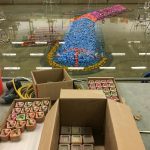
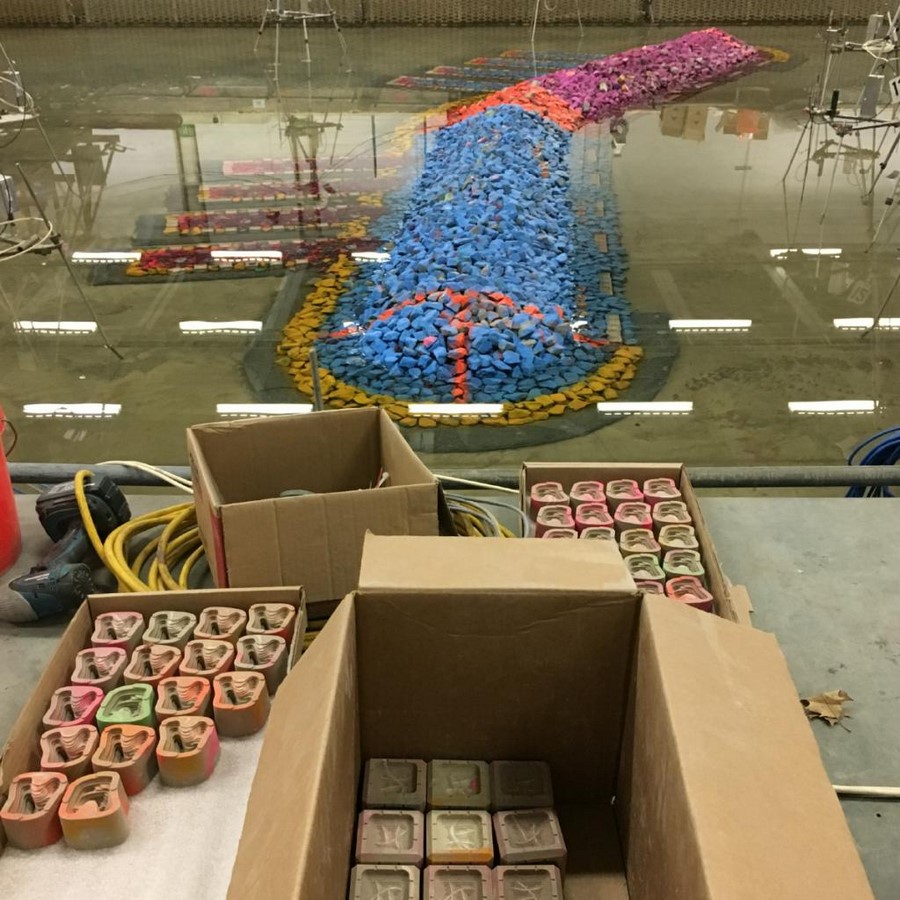
It is worth noting that extensive research, design, and modelling prototypes went into reaching the design solution, which is the Living Breakwaters as seen today. Various scenarios were iterated, developed, and modeled to evaluate impacts on shoreline change and stormwave attenuation, and the results were analyzed. These studies helped with the design refinement and optimized the design to reduce or reverse erosion (grow beach) & reduce coastal storm risk through wave attenuation.
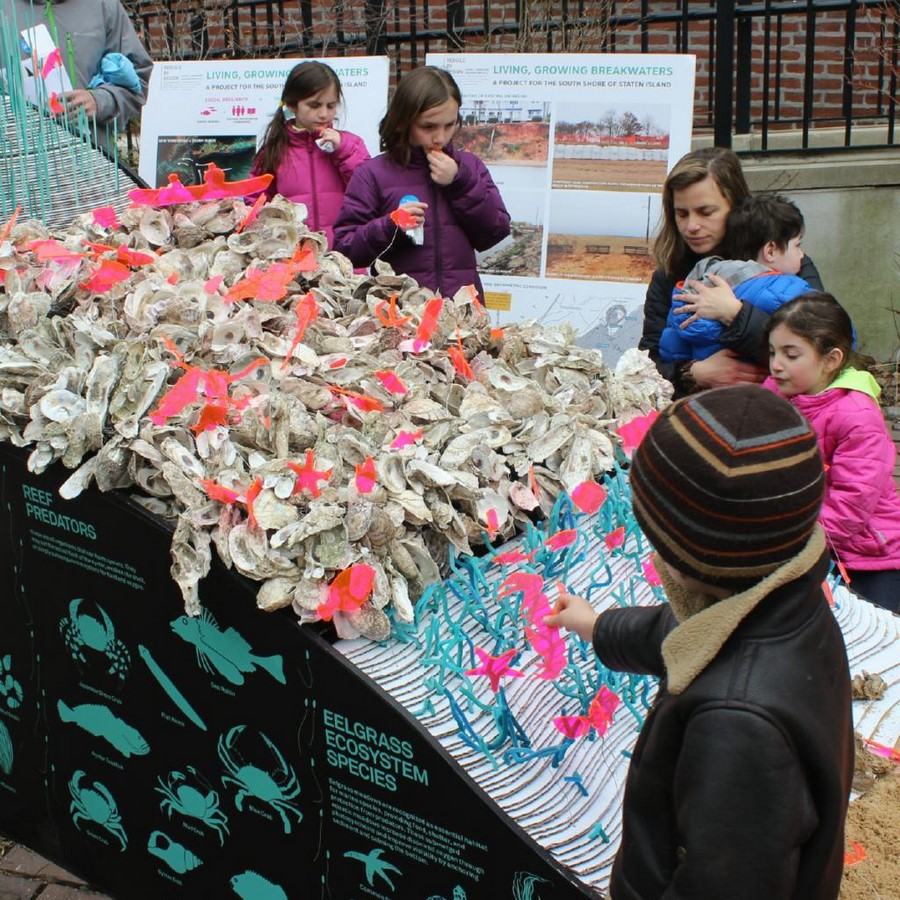
Living Breakwaters is considered a model and the first of its kind in the world, which further highlights its significance. With the increasing global warming levels and climate change, the risk to coastal areas has risen significantly, and Living Breakwaters provides more than just a local solution. It is a global blueprint for how cities can carefully plan to adapt to climate change in a regenerative way.
Beyond this physical structure, the project aims to collaborate with the Billion Oyster project, thereby reviving the once thriving oyster reefs of New York Harbor, enhancing biodiversity, and improving water quality. It also incorporates educational and community-driven programmes supporting a SEM curriculum for the local middle schools, training the next generation in marine science and climate resilience.
References List:
SCAPE Studio (n.d.). Living Breakwaters: Design and Implementation. [online] SCAPE. Available at: https://www.scapestudio.com/projects/living-breakwaters/.
Billion Oyster Project (2025). Billion Oyster Project. [online] Billion Oyster Project. Available at: https://www.billionoysterproject.org/blog/the-living-breakwaters-a-model-for-nature-based-infrastructure [Accessed 26 Jul. 2025].
Informedinfrastructure.com. (2019). Living Breakwaters Support Staten Island’s Shoreline Resilience | Informed Infrastructure. [online] Available at: https://informedinfrastructure.com/76915/living-breakwaters-support-staten-islands-shoreline-resilience/ [Accessed 26 Jul. 2025].
Homes and Community Renewal. (n.d.). Living Breakwaters: Project Home. [online] Available at: https://hcr.ny.gov/living-breakwaters-project-home.
Christele Harrouk (2023). ‘Living Breakwaters’ by SCAPE Landscape Architecture Wins the 2023 Obel Award. [online] ArchDaily. Available at: https://www.archdaily.com/1006533/living-breakwaters-by-scape-landscape-architecture-wins-the-2023-obel-award0 [Accessed 26 Jul. 2025].
Crook, L. (2023). Living Breakwaters coastal defence system wins Obel Award 2023. [online] Dezeen. Available at: https://www.dezeen.com/2023/09/14/living-breakwaters-scape-obel-award-2023/.
https://architizer.com/firms/scape-landscape-architecture-pllc (2025). Living Breakwaters by SCAPE LANDSCAPE ARCHITECTURE DPC. [online] Architizer. Available at: https://architizer.com/projects/living-breakwaters/ [Accessed 26 Jul. 2025].
nrcsolutions.org. (n.d.). Living Breakwaters – Naturally Resilient Communities. [online] Available at: https://nrcsolutions.org/living-breakwaters/.
Governor Kathy Hochul. (2024). Governor Hochul Announces Completion of $111 Million Coastal Resiliency Project on Staten Island. [online] Available at: https://www.governor.ny.gov/news/governor-hochul-announces-completion-111-million-coastal-resiliency-project-staten-island.