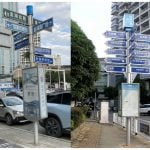
The process of wayfinding is to direct people and assist them in navigating from place to place. It’s the fundamental part of urban design and architecture. A well-designed smart wayfinding reduces the stress, confusion, anxiety and improves accessibility, awareness and user experience. Providing a landmark is the most effective strategy in wayfinding. Some tangible reference points provide an identity that is unique and memorable. It provides a sense of place, which assists not only in guiding but also in having a stronger bond with people and the place.
Understanding Architectural wayfinding through spatial cognition
Wayfinding is an essential spatial experience that can be sensed through built forms, visual design or some natural elements. As people move around, they rely on the physical elements to orient, navigate and make decisions. Kevin Lynch’s theory of the “imageability” of cities focuses on the experiential elements, such as pathways and landmarks, to form a mental map to direct them. The landmarks act as the anchor points for reference. These could be any prominent building of any shape or form, an art installation or an element which visually stands out to guide the commuter through an area.
Effective architecture design in landmarks
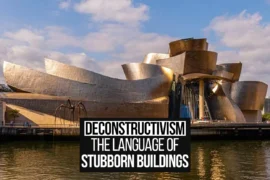
They have several features such as a standout geometry shape, materials or detailing. An architectural element that contrasts with its surroundings through colour, shape and design, which becomes memorable.
Landmarks are usually designed at key decision points, which are strategically designed, such as a roundabout, plaza or an intersection. They assist in breaking the visual monotone or repetitive typology, and the user can navigate through it easily. Symbolism is also another effective method used to provide landmarks, such as a historically or civic important or cultural building, which the commuter can relate to and navigate themselves. Multisensory also plays an important role in wayfinding, such as sound, texture or scent, the commuters can relate and form an emotional engagement through it.
Creating uniqueness in the urban built environment
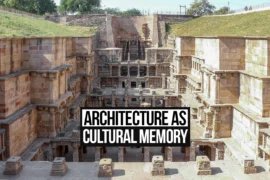
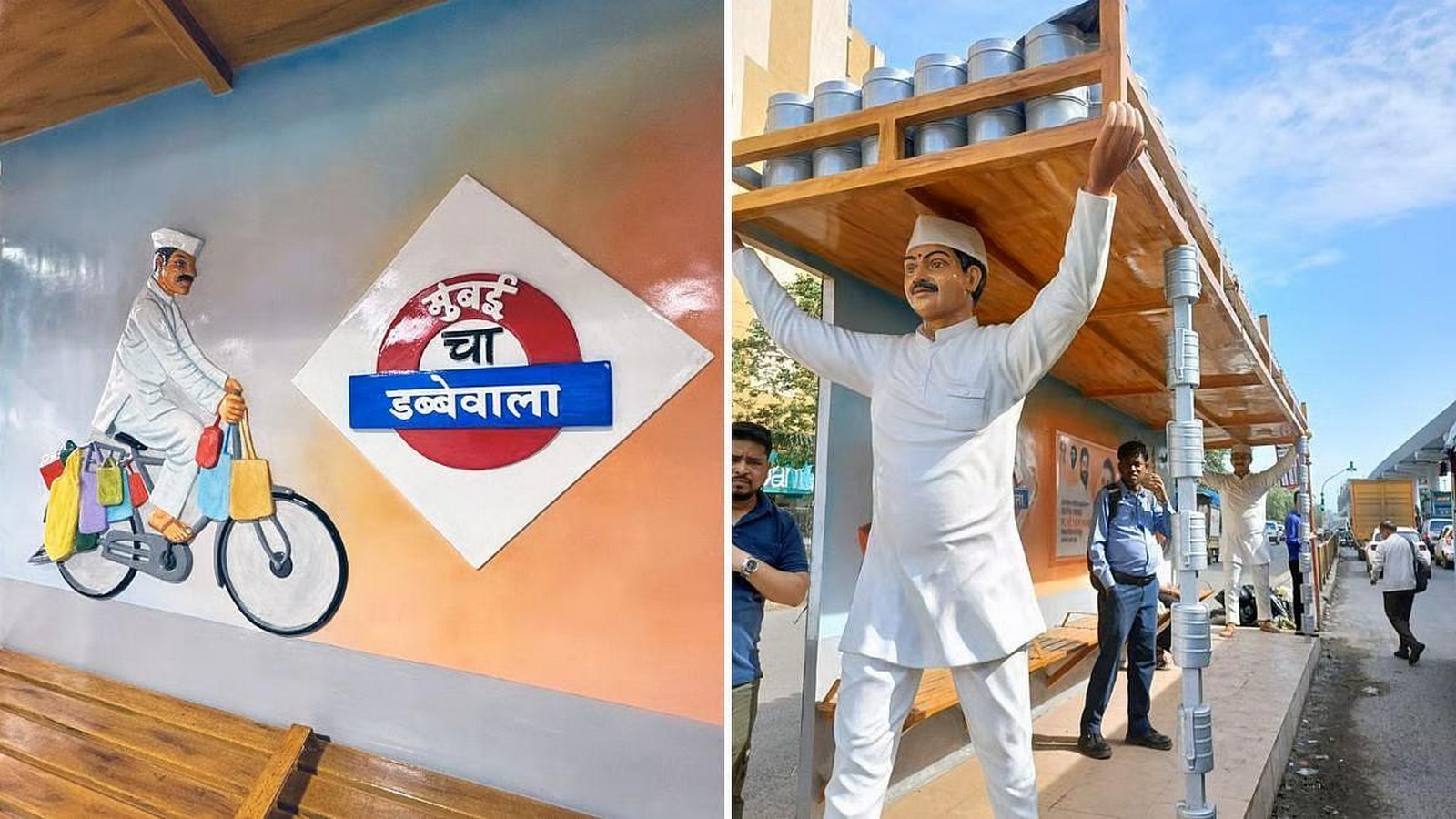
A unique architectural identity is built through a smart design choice, such use of regional materials, locally crafted sculpture with vernacular forms or local culture-inspired. Landmark visually anchors, but its identity is established through its relationship with its surroundings.
Through a certain colour palette, font style, landscape treatment and street furniture design, a commuter can recognise the zone and its use. Spatial hierarchy also plays an important role in establishing identity. A clear demarcated space of public, private and for commute can be achieved through architectural transition spaces such as a courtyard, an atrium or gateway or shaded spaces. It helps the users to navigate through a space. Another strategy used is a narrative-based design, where the design or the pattern tells a story or creates a historical reference or any symbolic form.
Multiple model-based wayfinding strategies
The iconic structure, building, museum or institutional building defined the skyline and acts as an anchor point in the neighbourhood. Through architecture, the wayfinding model should be strategised on multiple scales. Like in a campus, there are multiple anchor points such as amphitheatre, library, waterbody and a feature wall that can break a visual barrier and can guide in navigating around campus or in between buildings.
From a building context, an atrium or an open staircase or light wells can help users to navigate, and interior design also plays an important role, such as varied ceiling height, materials, texture, and lighting; all these elements create visual cues for movement and orientation.

Integrating modern technology with architectural clarity
The GPS and digital kiosks have become an integral part of modern wayfinding. Augmented reality is still in its initial stage, but these tools should complement the clarity of its use and user experience that can be provided through architecture. The design should cater to all individuals of society. The design or the elements should be legible, have a certain pattern, and can be with rhythmic lighting; all these will reduce cognitive stress and can cater to diverse groups.
Designing with purpose for the user to navigate effectively
Effective wayfinding is to create a spatial memory and have a sense of belonging for the users. It’s more than being efficient, especially in the complex urban environment of Indian cities. The density and diversity pose a major challenge in creating a user experience design, and architectural landmarks assist in creating an identity for the surrounding which the user can be able relate to.
Use of heritage structure, history of the surrounding, local material, public art and culturally inspired design, which is symbolic and functional, can be good strategies for wayfinding. A well-designed landmark tells a story about its place and people, in addition to assisting you in navigation.
Wayfinding is both a practical and expressive design strategy. The balance of cultural context with spatial planning and sensory richness. It creates an environment that is not only a landmark but also an identity. The goal is always to navigate but also to feel connected to the journey.
References:
- Golani, S. (2024) Mira-Bhayandar: Mira road’s bus shelter gets unique makeover inspired by Dabbawalas, Free Press Journal. Available at: https://www.freepressjournal.in/mumbai/mira-bhayandar-mira-roads-bus-shelter-gets-unique-makeover-inspired-by-dabbawalas (Accessed: 13 July 2025).
- Team, E. (2021) Wayfinding design: 6 principles for wayfinding in Architecture, Craig Gaulden Davis Architecture. Available at: https://cgdarch.com/wayfinding-in-architecture/ (Accessed: 13 July 2025).
- Wahl, D.C. (2017) Bioregionalism – living with a sense of place at the appropriate scale for self-reliance, Medium. Available at: https://medium.com/age-of-awareness/bioregionalism-living-with-a-sense-of-place-at-the-appropriate-scale-for-self-reliance-a8c9027ab85d (Accessed: 13 July 2025).
- Lynch, K. (no date) Kevin Lynch – the image of the city. Available at: https://www.miguelangelmartinez.net/IMG/pdf/1960_Kevin_Lynch_The_Image_of_The_City_book.pdf (Accessed: 13 July 2025).