More than two thousand years have witnessed the development of temple architecture in India, which is a reflection of local materials, devotional practices, and shifting kingdoms. Each style of architecture contains distinctive holy geometry, symbolism, and building technology, from the grand shikhara of the Nagara north to the massive gopurams of the Dravidian south and the hybrid Vesara forms of the Deccan. However, a richer story behind stylistic categorization discloses how these rock “texts” of religion were shaped by cosmic mandalas, celestial alignments, and shifting patronage. The concealed geometry, surprising technical innovations, and means by which shrines today maintain tradition and use materials of this era are among the lesser-known elements of Indian temple architecture discussed in this article.
Nagara Style: The Temples of the “Mountain Peak”
The Nagara type, the most prevalent north of the Vindhyas, is named for the Latin word montana, meaning “mountain,” and describes the rise of its curving shikhara (spire). Symbolism and Sacred Geometry
- Vastu Purusha Mandala: Nagara designs tend to have a square grid, 8 by 8 or 9 by 9, to symbolize the cosmic being (Purusha). Gods are contained in subsidiary cells that enclose the center cell (Brahmasthana), which represents the axis mundi.
- Mount Meru, the mythical axis of the world, is represented by the Shikhara Curvature, a gentle convex curve of the spire that resembles a mountain outline.
Technological Advancements
- Temple architecture in early Nagara temples like Udayagiri in the fifth century CE had interlocking ashlar masonry, which permitted intricate carving and seismic strength through the utilization of finely cut sandstone blocks with minimal mortar.
- Corbelled Domes: Preamble to the real arching technique, corbelling was soon adopted by the builders in spanning greater mandapas (halls).
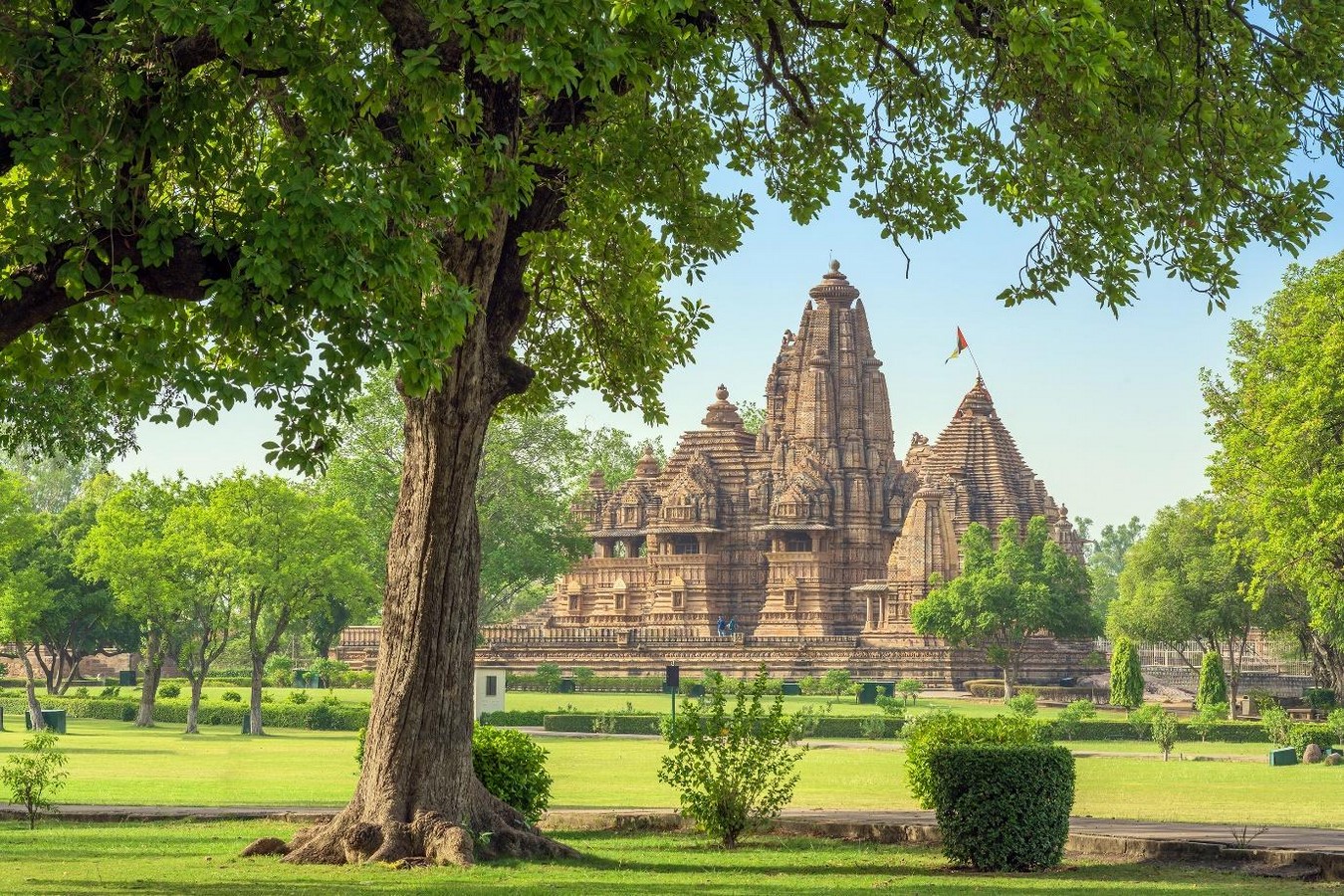
A classic example is Lakshmana Temple in Khajuraho, dated c. 930 CE.
It rises about 30 meters above the plinth, and while its clustered spires and lavish sexual sculpture are recognizable, underneath them is a rigorous solar alignment: the central lingam is lit by the first light that enters the garbhagriha (sanctum) on the spring equinox.
Dravidian Design: The “City of Towers”
Gigantic gateway towers called gopurams, which define concentric enclosures, are the core of the Dravidian idiom in South India.
Arrangement of Space
- Prakara Walls: Multiple encircling courtyards create step-by-step transitions between the sacred and the sensual.
- Gopuram Decoration: Unlike Nagara Shikara, which is smoother, the gopurams are covered with colorful stucco statues of gods, heroes, and mythological beasts that narrate Puranic legends.
The Holy Proportions
- System of Tala: With each story height adhering to a 1:½ ratio, Dravidian temples apply the tala (story) system, thus producing a pyramidal silhouette that appears to be stable yet loftily vertical.
A significant example of this style of temple architecture is the Brihadeeswarar Temple at Thanjavur (1010 CE).
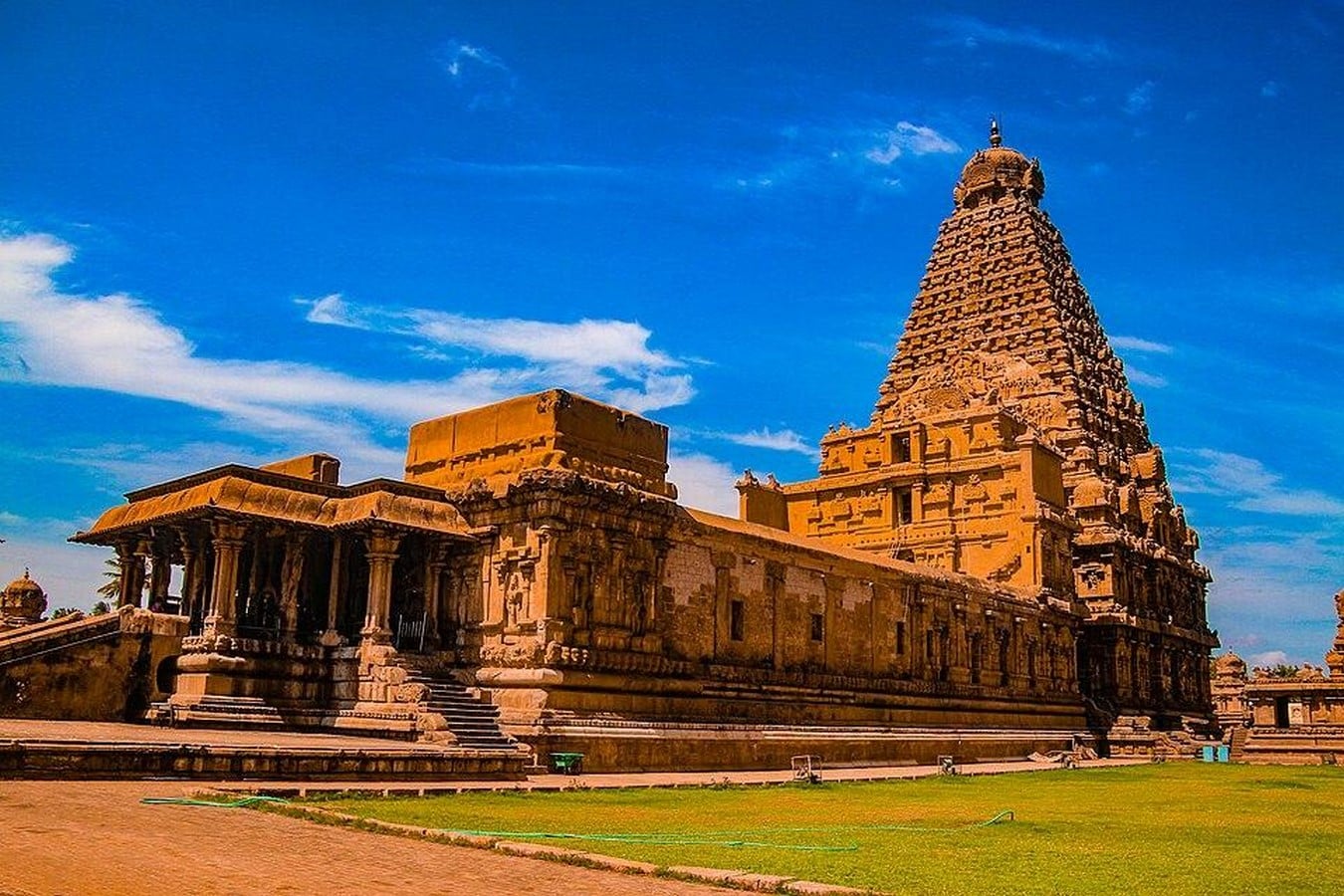
- Monolithic Capstone: A kilometer-long earthen ramp was employed to lift the 13-ton Shikhara capstone, something that is hardly found in medieval Europe in terms of labor organization.
- Granite Construction: Architects showed excellence in logistics by moving huge granite slabs more than 60 kilometers despite the absence of local quarries.
Vesara Style in Temple Architecture: The Deccan “Hybrid,” or Vesara, is a mix of Dravidian and Nagara features and is favored by the Chalukyas and Hoysalas.
Crucial Features
- Star-shaped Plans: With stellate platforms, Hoysala temples of the 12th century form many projections for the exhibition of sculptures.
- Pillars turned on a lathe: A revolutionary development that made for slender columns with fine fluting, interiors featuring ornamented, lathe-turned pillars.
One such example is Chennakesava Temple at Belur (1117 CE).
- Soapstone carving: The softness of the stone enabled the production of exquisite narrative reliefs of fighting scenes, court scenes, and heavenly beings unmatched in India.
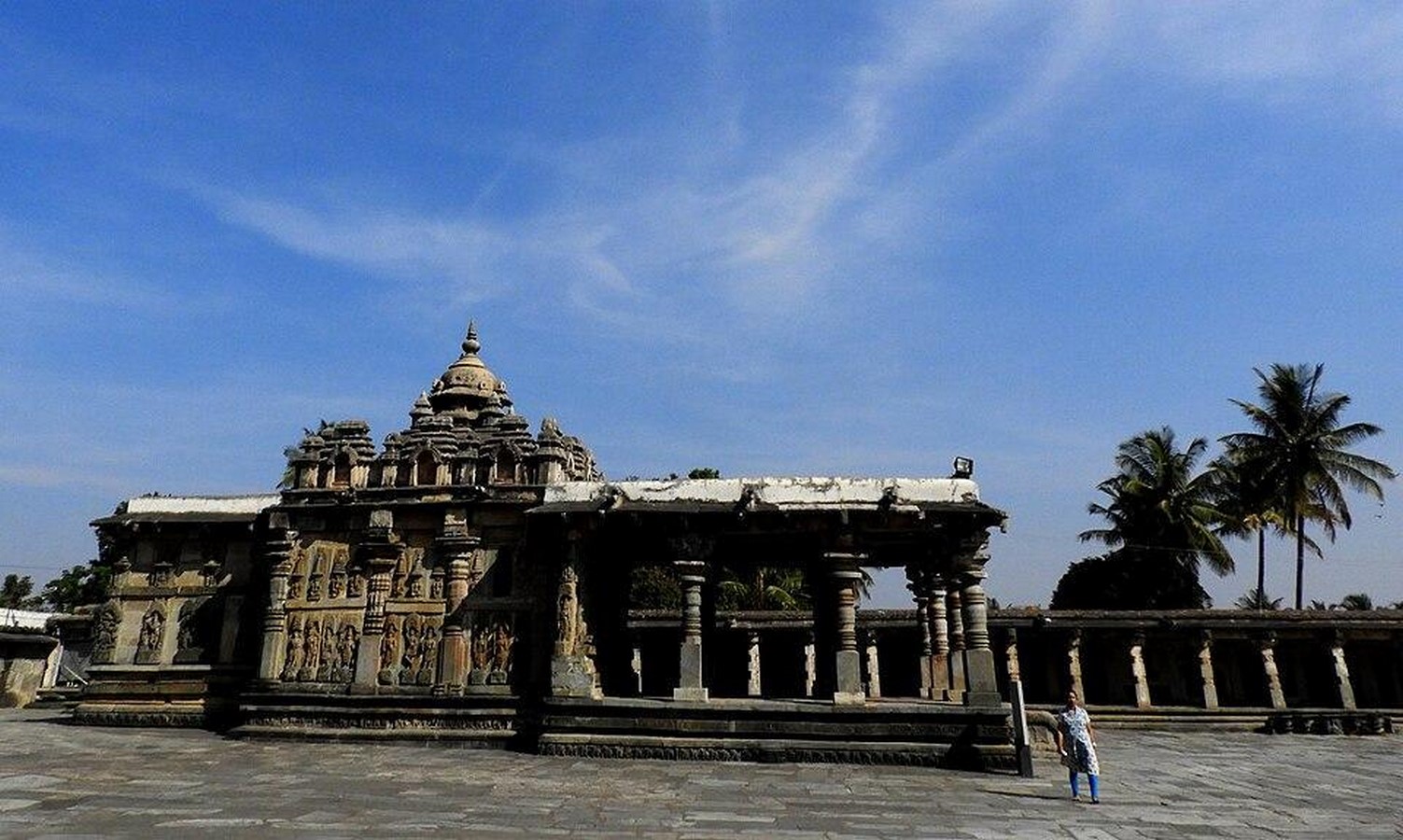
- Floating Ceiling: This optical illusion, based on accurate geometry, is created by interlocking bracket arms suspending ceilings that appear to “float.”
Significance and Sacred Dimensions in Temple Architecture
Several geometric and symbolic features are shared by all styles:
- Mandala Arrangements: A mystic diagram or yantra inscribed on stone is the reference for nearly every temple layout. The increase in the encircling secondary cells signifies the structure of the universe.
- Directional Protectors: Guards (Dikpalas) occupy the cardinal niches and integrate the active plan of Vastu Shastra into sculpture schemes.
- Axis Mundi: the soul’s trajectory from earth to heaven is depicted by the vertical axis, spanning garbhagriha through shikhara to kalasha.
Because values were seldom committed to treatises but rather handed down through guild practices and working training, they have survived despite customers changing.
Marvels of Temple Architecture: Case Studies
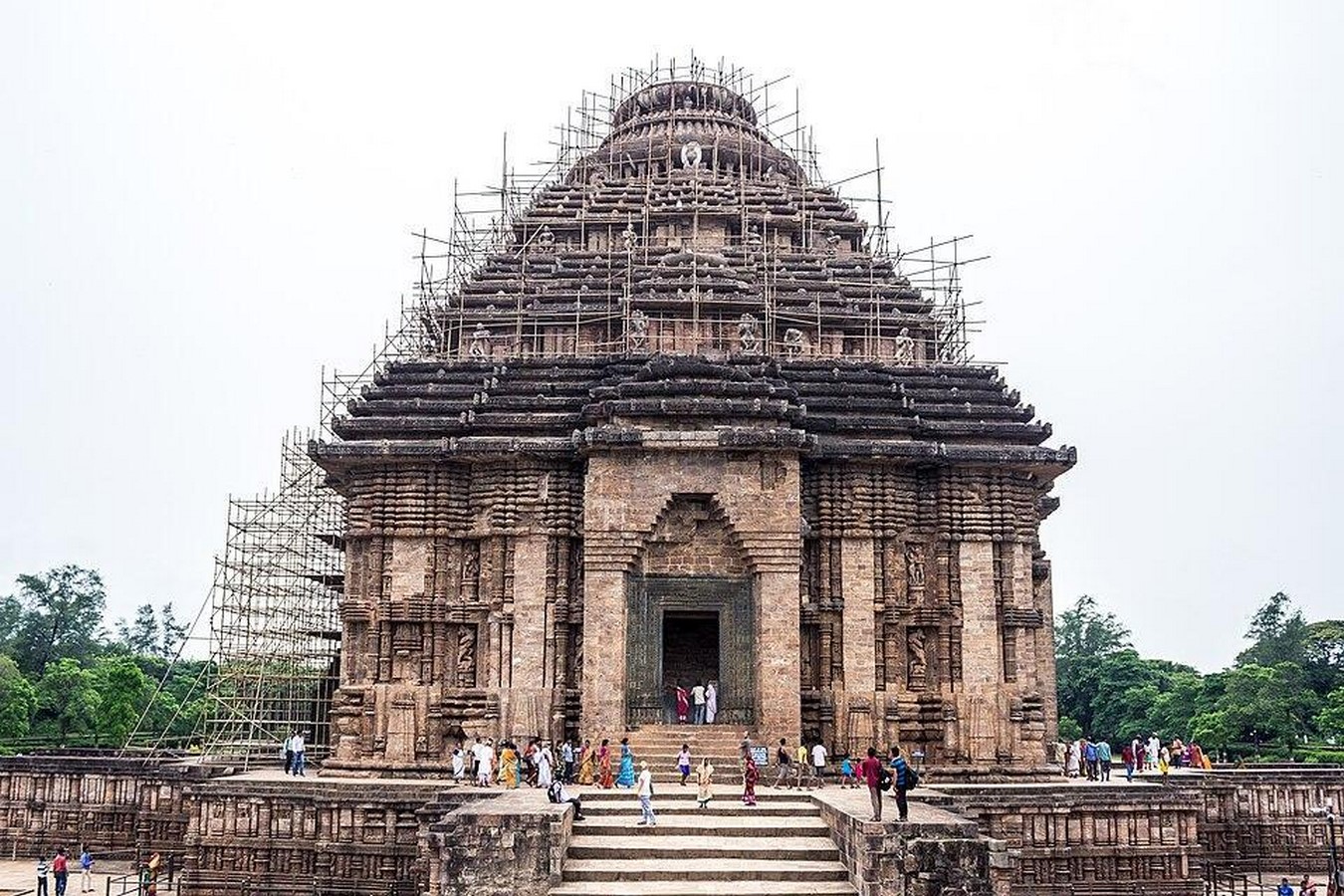
Sun Temple at Konark (13th century)
- Chariot Form: The temple is designed in imitation of Surya’s chariot, complete with seven horses and twenty-four stone wheels. Each of the wheels is a sundial that is precise to the minute.
- Living Temple: The ancient solar observatory is still visible despite being partly ruined, and its wheel-sundials continue to keep solar time.
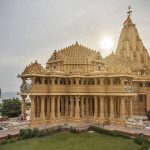
Temple of Somnath (rebuilt in 1950 CE)
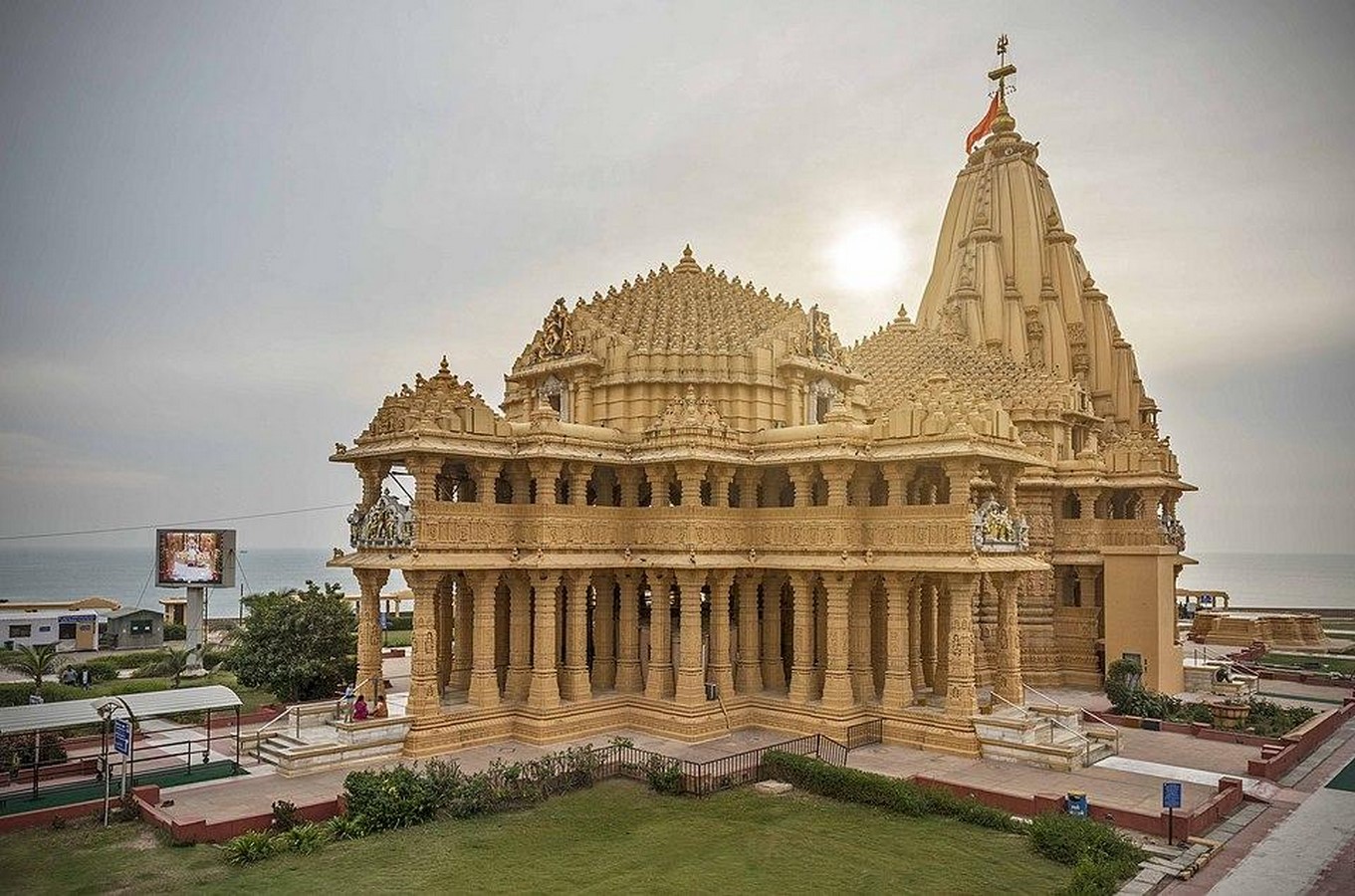
- Layers of Rebuilding: Its modern concrete core, destroyed and rebuilt six times in 1,500 years, is encased in sandstone in the Chalukyan manner, structurally sound while preserving continuity.
- Marine Foundation: A technical reinterpretation of ancient foundation knowledge, the Marine Foundation was built on land reclaimed near the Arabian Sea and employed deep stone “piles” to resist erosion.
Modern Temples: Tradition Meets Innovation
Greater congregations, seismic requirements, and novel materials are some of the necessities that contemporary shrines need to reconcile with their ancient heritage.
Materials and Methods
- Reinforced concrete frames: Precast panels or stone are employed on external façades to retain visual integrity, while internal RCC frames allow for large halls free from columns.
- Steel and glass accents: Skylights and steel-trussed ceilings are elements found in some modern mandapas that replicate the form of traditional corbelled ceilings while providing natural light.
Sustainable Methods in temple architecture
- Rainwater Harvesting: Most new temples include hidden underground tanks and recharging wells at the northeast corner, as per Vastu’s water-element concepts.
- Solar Integration: Solar panels on rooftops, which integrate energy self-sufficiency with a sacred look, are often hidden behind parapets.
Akshardham Temple in Delhi, for example (2005 CE)
- It is supported by a steel core and built with pink sandstone and white marble. Despite making use of solar plants and ground-water cooling, its outside shape—that contains masses of shikhara and motifs of the lotus—retains a firmly classical feel.

Preserving Cultural Heritage
Temple architecture is an evolving legacy that keeps populations alive and exceeds mere aesthetic form.
- Transmission of Skills: To ensure the survival of endangered skills, traditional guilds (chapatis) continue to instruct apprentices in the art of stone carving.
- Digital Documentation: Three-dimensional laser surveying of monuments like Ellora and Hampi creates precise archives for repair and virtual pilgrimage.
- Adaptive Reuse: Several ruined temples have been repurposed as museums or cultural centers, preserving their architectural character in service of a new public function.
India safeguards these buildings as living sites of ritual, memory, and identity through the balance of adaptive innovation and conservation.
An endless story of religion, geometry, and engineering is revealed through the temple architecture of India, ranging from the mandalic grids of early Nagara temples to the sky-piercing gopurams of Dravidian temples and the intricate star-formed Vesara monuments. Sacred proportions are upheld even while using concrete, steel, and solar cells in modern temples, carrying on this tradition. Indian architecture’s future will continue to center around temples, which are living laboratories of spatial psychology and cultural memory. Even though their stones will eventually crumble, the cosmic mandalas they carve on them serve as a reference point for ancient and modern builders alike, guiding them toward harmony between heaven, earth, and human aspiration.