Dearest Fellow Rulers,
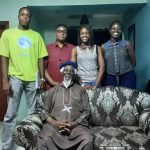
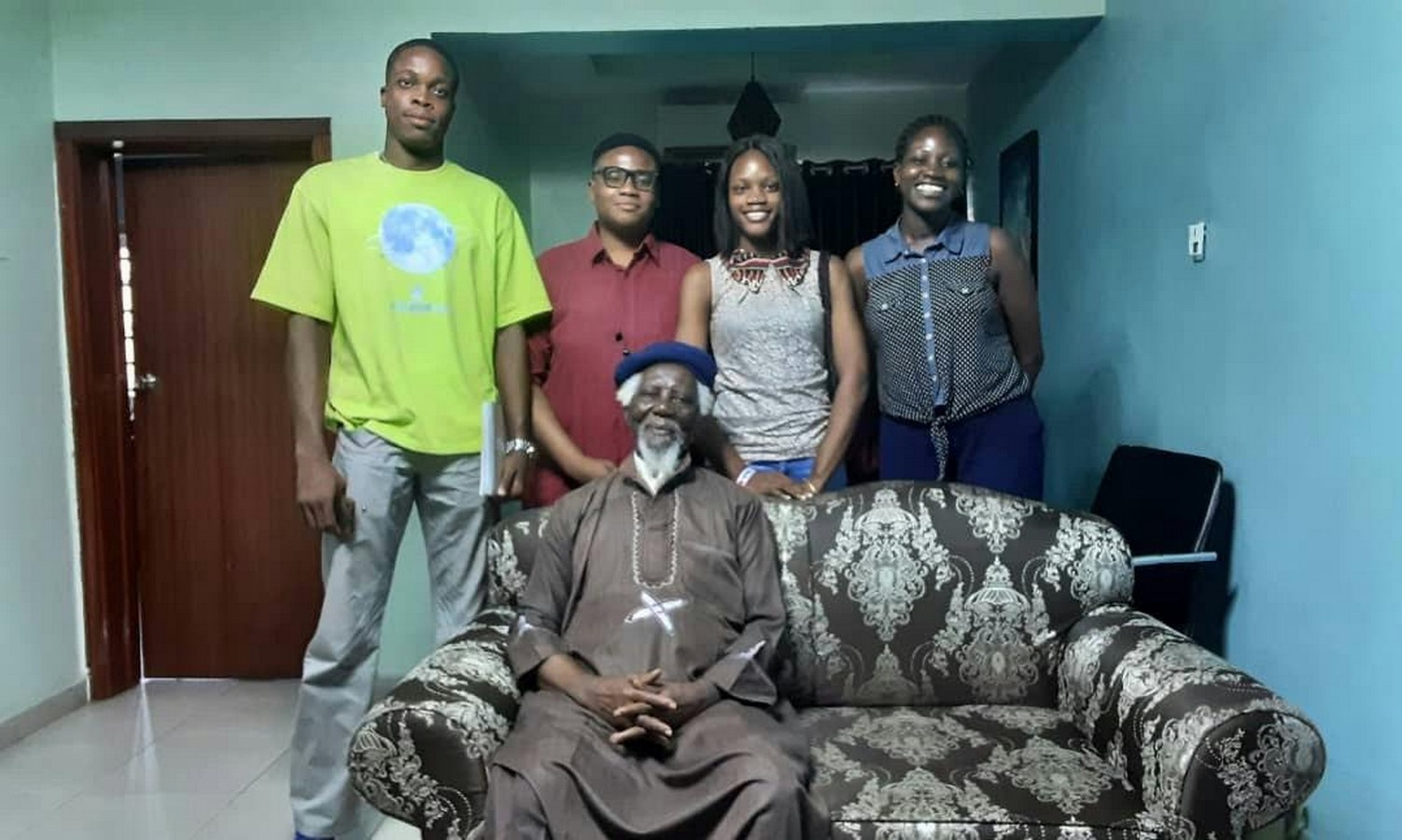
It was on December 8th, 2023. At around 1:00 PM in the afternoon. We had just visited the Dominican Chapel that Thursday morning and now we were before the legend behind the Chapel, Demas Nwoko. My group and I were conducting our qualitative research on our dissertation topic, Africanfuturism in Architecture and its Impact on the African’s Health and Wellness. We were visiting structures that could help us understand African architecture in the Yoruba tribe — why they were built, how they were built, and what they were built with. So being able to visit and experience this Spatial construct was surreal. And to top it up, we had the opportunity to hear the Creator’s Account on the story behind this place — raw and unfiltered. So I ask that you take your cup of tea, coffee or beverage and join me on the telling of this beautiful journey.
A little Story
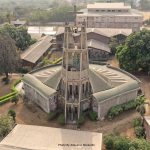
When the Dominican priests came from Europe to Ibadan, they wanted to build a Chapel that was integrated in and celebrated the local culture. Demas Nwoko had just completed one of his few jobs. He wasn’t currently studying architecture at that time, but theatre arts. He was also heavily into arts and crafts, so he was first invited to craft an altar that would showcase the Yoruba culture. After conversations with the Dominicans, he suggested designing the Chapel in its entirety to also pay homage to Yoruba culture. This resonated with his clients, thus the vision of the Dominican Chapel began.
Before continuing, it is important to note a question Sir Demas Nwoko was once asked during one of his award ceremonies in Europe. He was asked, “So what do you design? It’s vernacular, right?” And he replied, “Why not? What else is there to design? What else is there to call it? Vernacular is the language of your client. To speak your vernacular is to speak your mother’s tongue, right? So to design vernacular is to design truly” (Nwoko, 2023).
It is also important to note that this was the design philosophy that guided the design of the Dominican Chapel.
Spatial construct.
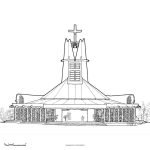
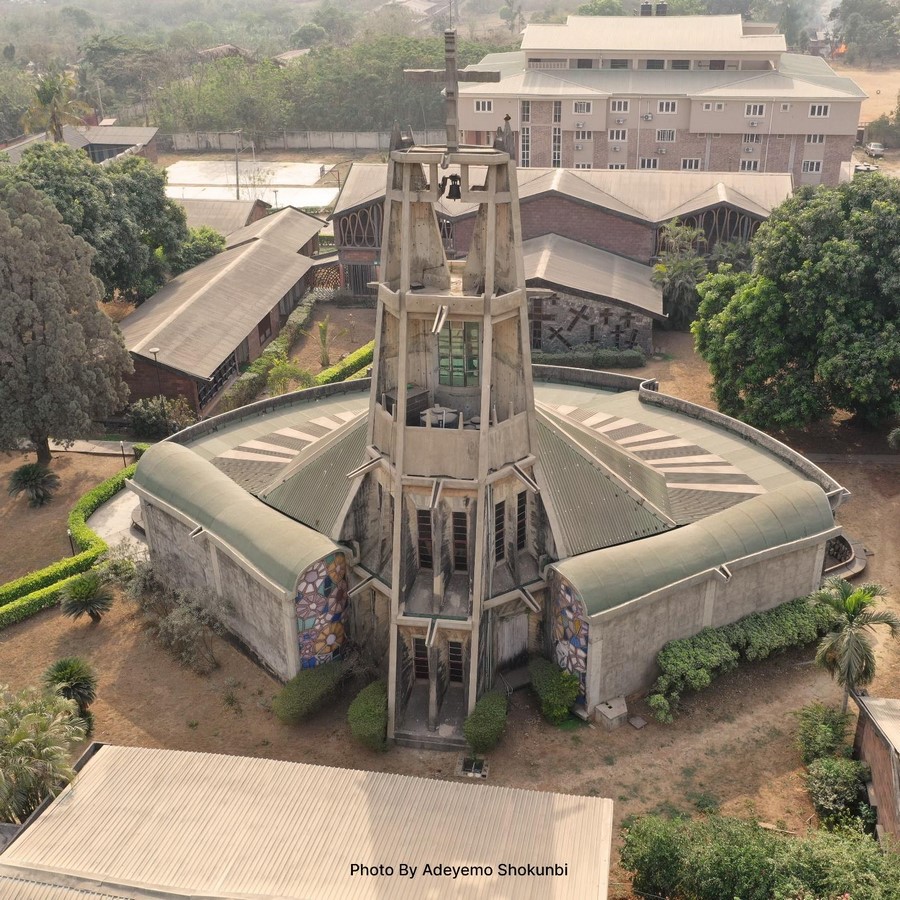
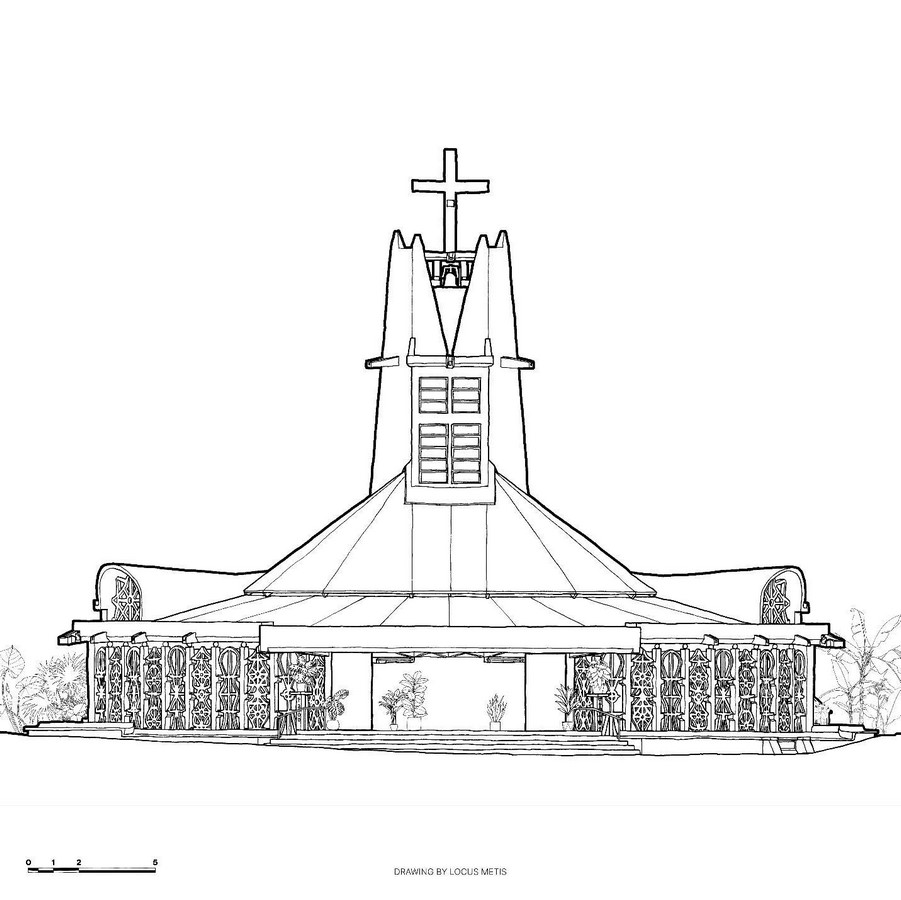
He conceptualized the form of the Chapel after the Yoruba ‘hut’ but it wasn’t just to honor the local roots. He readapted the ‘hut’ into an ethereal form. He integrated light wells at the top of the roof to allow sunlight to filter down the altar, giving it a halo-like presence. He understood that the African’s root is deeply connected to his spirituality (African Futurist Collective, 2024).
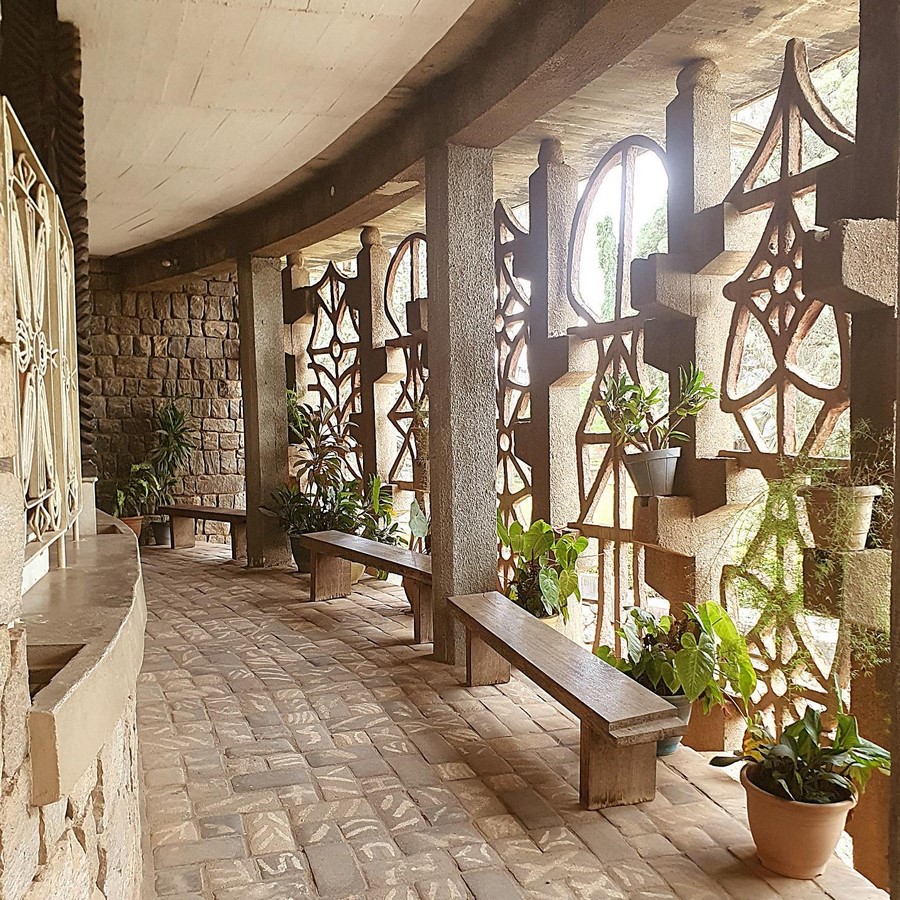
He dug deep into the Yoruba style of design to craft every part of the structure. For the columns, he carved them from wood and made low-relief inscriptions of Yoruba cultural symbols on the surface. He used his patent cement-laterite blocks for the load-bearing walls. The stones and earth materials were sourced right from the site, fostering circularity and sustainability (Olotuah, 2015).
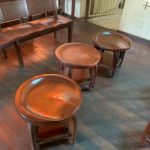
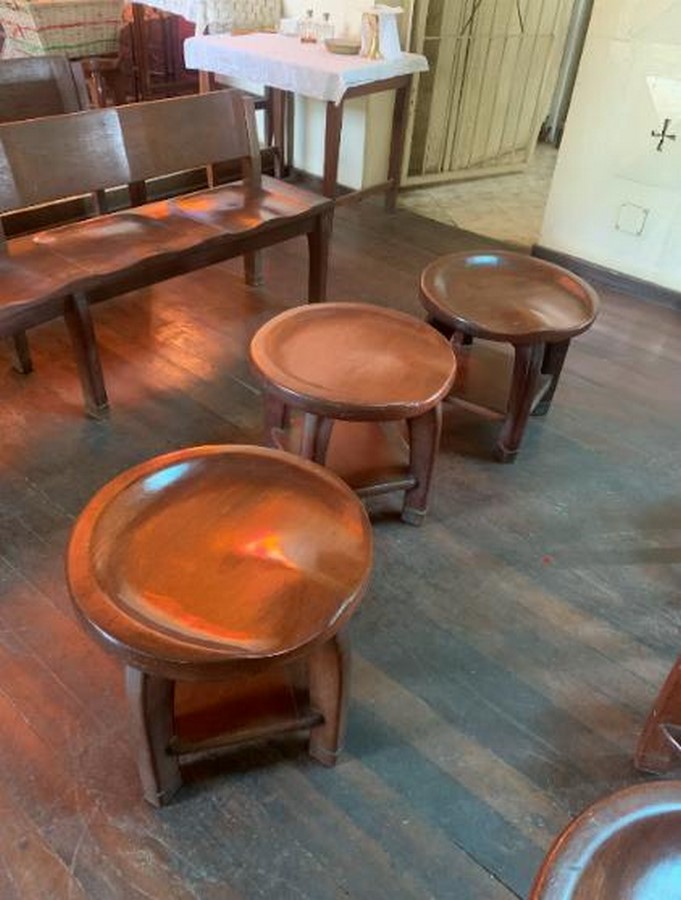
The acoustics of the place was designed to reduce the need for sound systems. The stools and chairs were designed in the shape of the human posterior to give comfort to the users who would sit long during services.
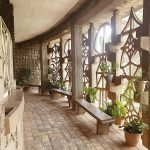
The structure was crafted with and through nature. It was designed as a response to the environment. Traditional elements like overhangs, foyers, and screen walls were integrated to protect the interior from climate elements while admitting natural ventilation, reducing the need for artificial ventilation.
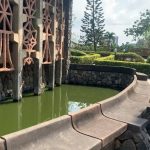
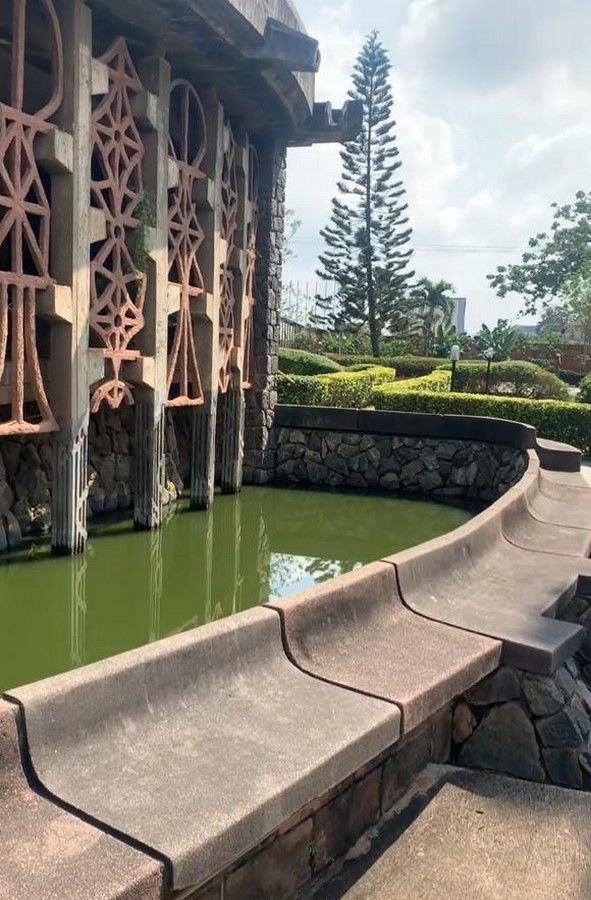
He integrated biophilic systems such as ponds, which had multifunctional purposes as a natural coolant system, an acoustic regulator, and a rain collector. Locally sourced planters and vegetation were added to accentuate the building’s biophilic system. The design and construction process was done in collaboration with local artists and craftsmen.
Designing for Social Impact
It is to be noted that he also designed the entire expansive Dominican Campus and the majority of all the original buildings on the Dominican campus, Ibadan.
For the landscape, he preserved the ecological identity of the place by incorporating the hilly terrain, original trees, and local materials, giving the users a surreal natural landscape.
The secretary receptionist that we interviewed on site said that he had been working there for over 25 years, yet not once had he ever felt stress. “Imagine waking up to nature, working in nature and going back to sleep in nature during the holidays. I am not eager to go home. And I have never been sick since my time here. This place is indeed like heaven on earth” (Field Interview, 2023).
The bridge between the past and the present.
As young architecture students investigating African Futurism as a journey and not as a delineated construct in time, we needed to see what was before and understand what is, in order to properly envision what will be.
This structure was like a place frozen in time. Sir Demas was able to draw from the local root and envision a space that was futuristic in every sense.
We hypothesize in African Futurism — a term developed in our dissertation research (Africanfuturist Collective, 2024) — that within the design and architectural context, there are four principles that, when applied, create solutions that draw out the local identity of that place while creating spaces, context solutions, and systems that are designed for the man, his spirit, and his environment. These principles are:
- an individual-communal process
- cultural resilience
- interconnectedness with nature
- an inclusionary design approach
We knew that African architecture is a collection of multiplicities of diverse and unique cultures and identities that have had major influences that shaped them over the centuries. These cultures have similarities that draw us together as a people.
And what is this? “The early African man designed ‘an adaptation to your rotation’” (Aradeon, 2024).
Thus, our principles will not generate a singular culture, but will project the local culture of the site.
The Dominican Chapel, Ibadan, was a budding description of that. It was built in the 1970s when European colonialist architecture was thriving and indigenous architects were advocating tropical architecture to solve subpar housing issues.
This structure was designed using local traditions and principles but applied in a futuristic manner that made it a bridge between the past, present, and future.
Today it stands as a timeless construct that did not just explore traditional African architecture but also the African’s roots in spirituality.
Lessons learned and the legacy left behind.
Architecture is designing for the man, his spirit, and his environment. The process behind the Dominican Chapel shows the intentionality to put the man, his spirit, and his environment first (African Futurist Collective, 2024). There also needed to be a rootedness in God-creativity. Despite what was the norm at that time, because Demas Nwoko was able to design these processes using these principles for himself, he was able to not just craft a masterpiece but a transgenerational legacy.
As architects, we are not just called to design spaces, we are called to craft legacies by designing solutions for the man, his spirit, and his environment — in whatever field we operate in (Spatial design, industrial design, art, product design, fashion design, etc.). Specialization should not be an excuse for laziness, but an opportunity to elevate our individual unique approach by creating a transplanar influence through our designs. I invite you to visit this place and see for yourself. It remains a budding light and a place of pride not just for the clients or the community but for all of us — as architects, as Africans, and as humans.
It shows that this standard, this wisdom exists and is still very much present. It is possible to apply this standard, the lessons learned here, in creating whatever you do.
Till next time. Cheers.
References:
- Africanfuturist Collective. (2024). Africanfuturism in Architecture and Its Impact on the African’s Health and Wellness [Unpublished undergraduate dissertation]. Covenant University.
- Aradeon, D. (2024). Interview on African Architecture. Africanfuturist Collective Field Research, April 2024.
- Field Interview. (2023). Africanfuturist Collective Site Visit, Dominican Campus.
- Nwoko, D. (2023). Vernacular Design Principles. Interview Session, December 8th, 2023.
- Olotuah, A. O. (2015). Housing development and environmental sustainability in Nigeria. International Journal of Research in Earth and Environmental Sciences, 2(5), 1–6.