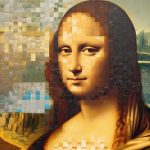
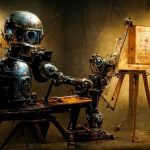
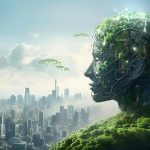
The intersection of artificial intelligence (AI) and art is revolutionizing creative processes, redefining the artist’s role, and shaping the development of art styles. From generative adversarial networks (GANs) to neural style transfer algorithms, AI is now a co-creator of visual culture. This article examines the impact of AI on classical and modern art forms, the philosophical consequences of machine creativity, and how institutions and audiences are reacting. Through case studies and recent developments, the article analyzes how AI reshapes authorship, aesthetics, and the art market dynamics.

Art has always changed through cultural, technological, and ideological transformations. The arrival of artificial intelligence is one of the greatest disruptions to artistic history. To be sure, tools have always been part of art—whether the brush, camera, or digital tablet—but AI brings not only a tool but a creator. No longer is the question merely what is created, but who or what creates. With the advent of AI art, we have to wonder: how are art styles being expanded, redefined, or reimagined in this new medium?
Understanding Art Styles in Context
Art styles are the unique visual forms, methods, and customs that define the art of a specific artist, a period, or a movement. They change as they react to social, political, technological, and emotional contexts. Classical styles like realism, impressionism, cubism, surrealism, and abstract expressionism each reacted to their respective zeitgeist.
AI, though, doesn’t develop in the same organic or socio-political manner as human-initiated movements. Its impact on artistic styles is due to its training data, algorithms, and intentions of its human creators. This adds a new level of mediation between the creator and the creator.
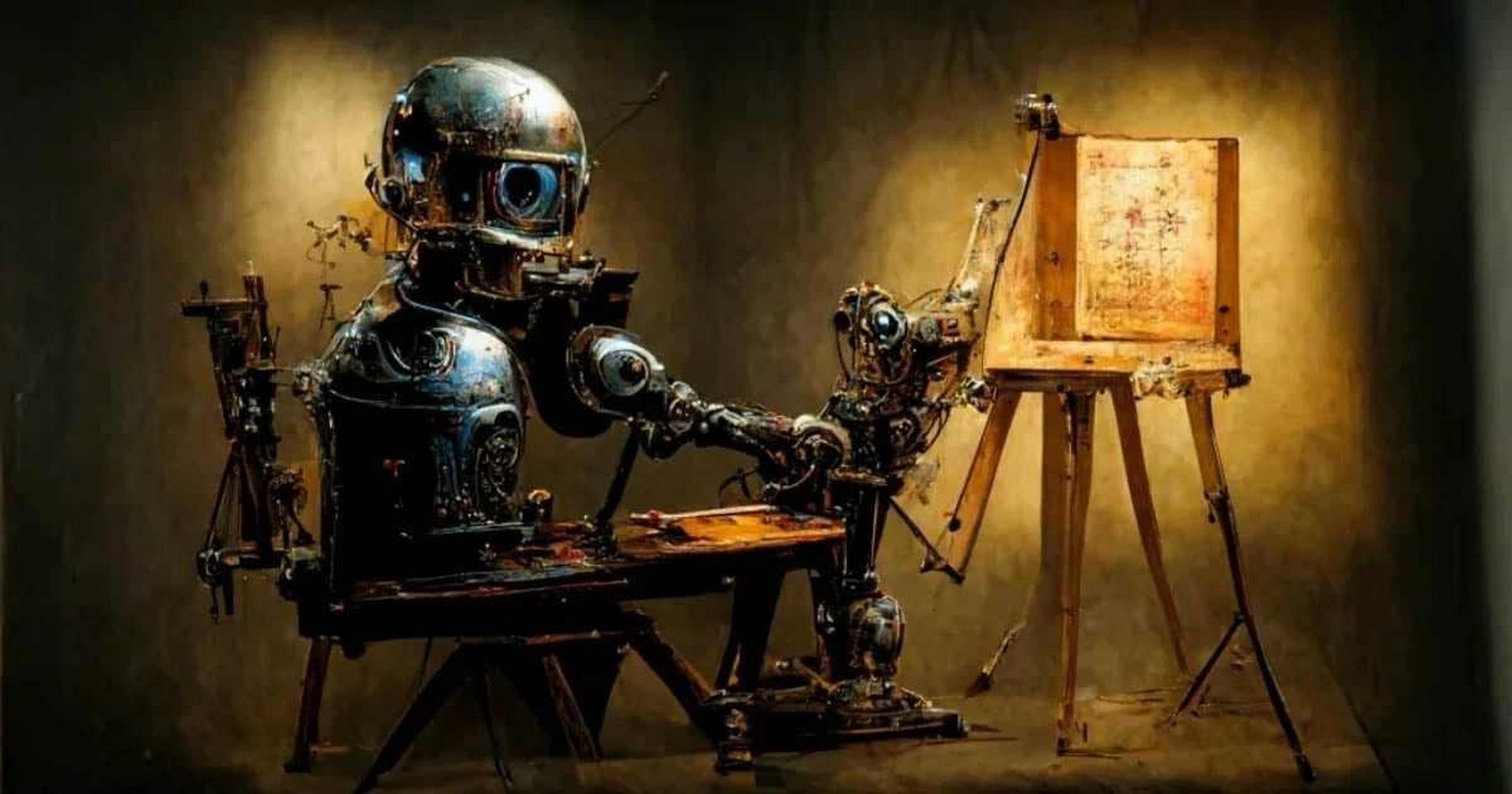
AI as a Creator: Generative Art and Neural Networks
The biggest advance in AI art happened with Generative Adversarial Networks (GANs) created by Ian Goodfellow and team in 2014. GANs are two neural nets—a generator and a discriminator—engaged in a competitive form of art-making to create realistic images (Goodfellow et al., 2014).
In 2018, Portrait of Edmond de Belamy, produced with GANs by the French art collective Obvious, was sold at Christie’s for $432,500, generating public interest and unease regarding machine-made art (Christie’s, 2018). The work replicated the style of portraiture in classical European paintings but was produced by inputting thousands of such paintings into an AI system.
Likewise, style transfer programs allow computers to duplicate the brushstrokes and aesthetics of famous painters. DeepArt and Google’s DeepDream leverage convolutional neural networks (CNNs) to transfer the style of one image onto the content of another, creating hybrid versions (Gatys, Ecker & Bethge, 2016).
These technologies do not copy styles—they remix, blend, and even create them, neutralizing boundaries between genres.
The Hybridization of Styles: AI’s Influence on Aesthetic Categories
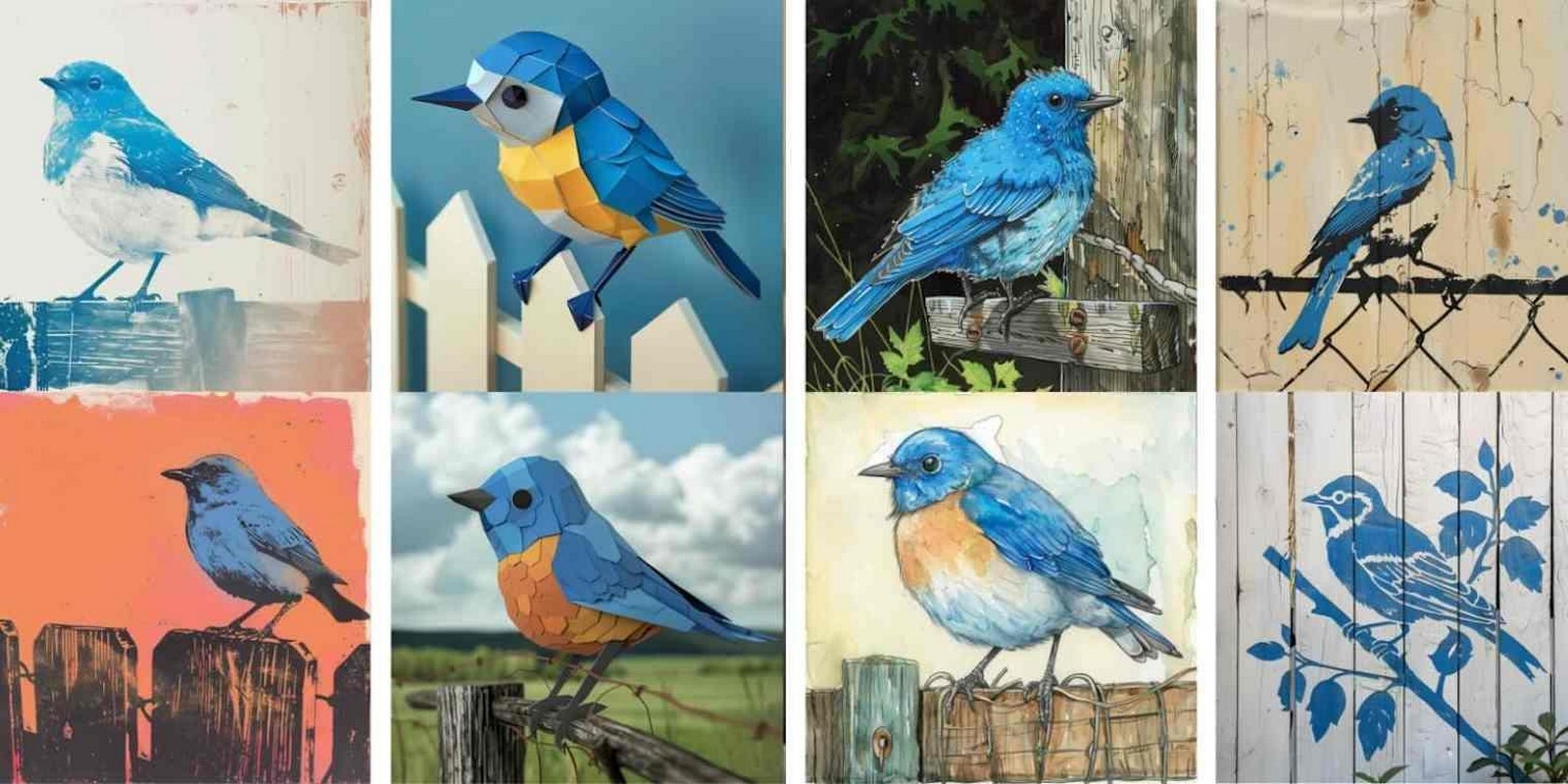
AI possesses the singular capability of synthesizing styles. An artist can train an AI on impressionist and cubist data and end up with a style that blends the light of Monet with the geometry of Picasso. The ability to blend opposing styles of art and create an endless number of variations has resulted in what some researchers refer to as “meta-stylistics”—style-making around styles (Elgammal et al., 2017).
Additionally, sites such as Artbreeder enable people to “breed” pieces of art, interactively combining styles. The outcome is not so much pastiche but a whole new aesthetic experience, redefining what we mean by originality and authorship.
Traditional vs AI-Aided Art: Evolution or Erosion?
Critics claim that AI-generated art is devoid of “intentionality”—conscientious thought behind creative endeavours. Philosopher Margaret Boden (2010) claims that creativity is tied to novelty, value, and surprise. Although AI can create novelty and even surprise, value is an argumentative point when there is no sentient intention.
However, most modern artists welcome AI not as an adversary but as a collaborator. Artists such as Mario Klingemann, Refik Anadol, and Anna Ridler investigate how AI broadens the frontiers of visual language, and often, the results are pieces that subvert conventional artistic expectations. Anadol, for example, employs AI to develop immersive data sculptures and generative architecture that redefine space and perception (Anadol, 2021).
The issue is not whether AI will “replace” artists, but whether the definition of art—and art styles—might no longer be beholden to human agency.
The Democratization and Commercialization of Styles
AI software is becoming more widely available. Smartphone applications such as Prisma or DALL·E mini allows people to try out proven art styles, reducing entry barriers. This has caused an explosion of style mixing and mashup genres on social media platforms.
But this also creates problems of style commodification. AI-created Van Gogh-style paintings inundate marketplaces, cheapening the aesthetic through repetition. Just as pop culture reduced surrealism to fashion trends, AI could water down stylistic originality by mechanizing its reproduction.
Additionally, copyright and authorship issues surround this. Can an artist own a style created by an algorithm that has been trained on copyrighted works? These legal and ethical questions are still unresolved (Samuelson, 2020).
Case Studies: AI Defining New Visual Stories
Refik Anadol: Machine Hallucinations
Anadol’s installations combine architectural visualization with abstractions created through AI. His “Machine Hallucinations” series inputs millions of images into the GANs, creating dynamic visual experiences combining data and imagination. His works are a futuristic, tech-synesthetic aesthetic not achievable without AI (Anadol, 2021).
Anna Ridler: Data as Narrative
Ridler investigates the poetics of data. In “Mosaic Virus” (2018), she employed hand-labelled tulip photographs to train an AI, remarking on economic speculation and beauty ideals. Her work combines conceptual art with machine learning, based on both human work and machine creation (Ridler, 2018).
Botto: The Autonomous Artist
Botto is a digital art AI that suggests artworks every week, led by community decisions through blockchain. Over time, it develops its style based on the feedback of users—a participatory evolution of style. Its artworks include digital surrealism, sci-fi abstraction, and post-human minimalism (Botto Project, 2022).
Cultural and Philosophical Dimensions
The AI’s impact on styles of art encourages wider cultural contemplation. Does style development under machine guidance reflect our age of algorithms—where everything is hybrid, generative, and perpetually in transition? Philosopher Byung-Chul Han (2017) writes of the “aestheticization of the digital,” whereby aesthetics turn into surface-level and hyperproductive, echoing capitalism’s requirements.
AI’s style of remixing aligns with postmodern sensibilities—favouring irony, repetition, and simulation. But unlike Warhol’s pop reproductions, AI reproduces without emotion or critique. This raises ontological questions: Is the style meaningful if the creator doesn’t feel it?
Future Directions: Style Prediction and New Movements
As the AI becomes increasingly advanced, it will not only re-mix but be able to forecast upcoming styles. Some scientists testing models foresee changes in visual culture using patterns in data (Elgammal et al., 2017). We will probably see the emergence of fully AI-borne movements—styles that were never seen before, free from the shackles of human history.
In addition, AI will affect art education, educating next-generation artists in hybrid, cross-genre techniques. The style will be less about static categories and more about liquid interfaces between humans and machines.
AI has not displaced the artist but has certainly reshaped the terrain of art styles. By creating, evolving, and cross-breeding styles at unprecedented speed and scope, AI pushes against classical conceptions of authorship, intention, and value. Art no longer is tied to singular genius but is influenced by networks of algorithms, datasets, and communal critique.
Instead of viewing this as a loss of human centrality, we could welcome it as a new era—one in which human creativity works with artificial processes to redefine the meaning and shape of art itself. The future of art forms is not in deciding between humans or machines, but rather in dreaming up what they can do together.

References:
Anadol, R. (2021). Machine Hallucinations. Retrieved from https://refikanadol.com/
Boden, M. A. (2010). Creativity and art: Three roads to surprise. Oxford University Press.
Botto Project. (2022). The autonomous decentralized artist. Retrieved from https://www.botto.com/
Christie’s. (2018). Is artificial intelligence set to become art’s next medium? Retrieved from https://www.christies.com/features/A-collaboration-between-two-artists-one-human-one-a-machine-9332-1.aspx
Elgammal, A., Liu, B., Elhoseiny, M., & Mazzone, M. (2017). CAN: Creative Adversarial Networks, Generating “Art” by Learning About Styles and Deviating from Style Norms. arXiv preprint arXiv:1706.07068.
Gatys, L. A., Ecker, A. S., & Bethge, M. (2016). Image style transfer using convolutional neural networks. In Proceedings of the IEEE conference on computer vision and pattern recognition (pp. 2414-2423).
Goodfellow, I., Pouget-Abadie, J., Mirza, M., Xu, B., Warde-Farley, D., Ozair, S.,. & Bengio, Y. (2014). Generative adversarial nets. In Advances in neural information processing systems (pp. 2672–2680).
Han, B. C. (2017). Psychopolitics: Neoliberalism and new technologies of power. Verso Books.
Ridler, A. (2018). Mosaic Virus. Retrieved from https://annaridler.com/mosaic-virus
Samuelson, P. (2020). Can AI Create Copyrightable Art? Communications of the ACM, 63(7), 24-26. https://doi.org/10.1145/33884861. Introduction
Hodgkins, S. (2023, May 12). From pixels to paintings: The impact of Generative AI on the art world. https://www.linkedin.com/pulse/from-pixels-paintings-impact-generative-ai-art-world-simon-hodgkins/
Rosenow, A. (2024, July 27). The Positive Social Impact of AI. www.3blmedia.com. https://www.3blmedia.com/news/positive-social-impact-ai
Wall, S. (n.d.). Artificial intelligence and art: How will AI impact artists? CG Spectrum. https://www.cgspectrum.com/blog/what-is-ai-art-how-will-it-impact-artists
Brownell, B. (2024, June 3). 70+ AI art styles to use in your AI prompts. Zapier. https://zapier.com/blog/ai-art-styles/