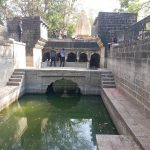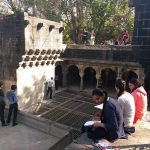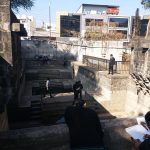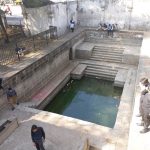
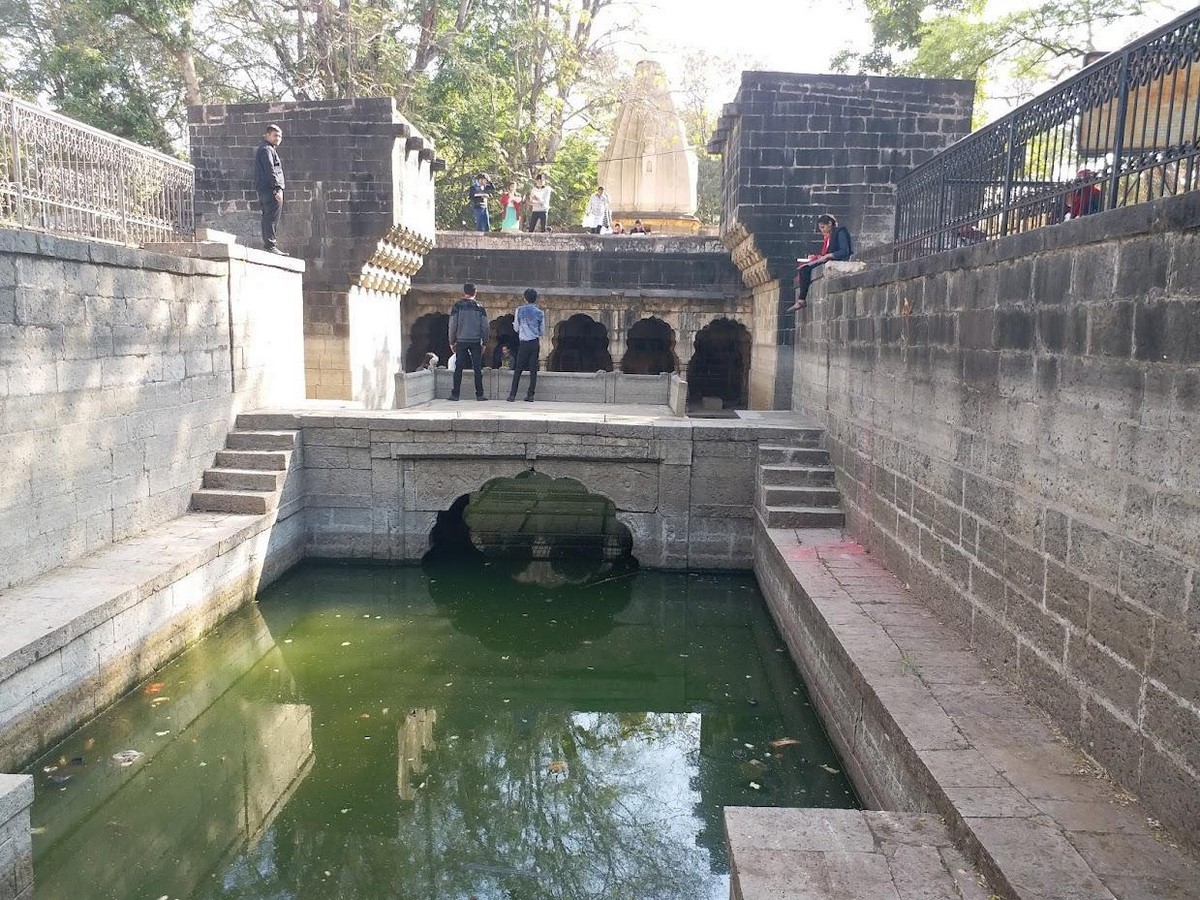
Campa Baodi, a historic stepwell in Indore, is a fine example of Indian traditional water conservation methods. Although less popular compared to other step wells, it is of tremendous historical and architectural importance. The paper discusses the architectural elements, use of materials, and the function of Campa Baodi in Indore’s historic water management systems. The case study is intended to study the structure with the eyes of design philosophy, construction methods, and sustainability against the socio-cultural and historical backdrop of Indore (Brown, 2017; Chattopadhyay, 2019).
Introduction
Stepwells have been pivotal in India’s water conservation and architectural history. Campa Baodi is a good example of one in Indore, giving insight into water management in the past. This paper gives an extensive study of the planning, design solutions, material use, and sustainability of the Baodi, showing its significance in urban planning (Davies, 2018; Jain, 2020).
Design and Planning
Historical Background
Campa Baodi is centuries old and constructed as part of Indore’s sophisticated water harvesting network. Rajput and Mughal architectural influences have been exerted on Madhya Pradesh’s step-wells, and Campa Baodi is no different. It was not just a water conservation device but also a social and cultural hub where communities congregated (Mehta, 2016).
Architectural Layout
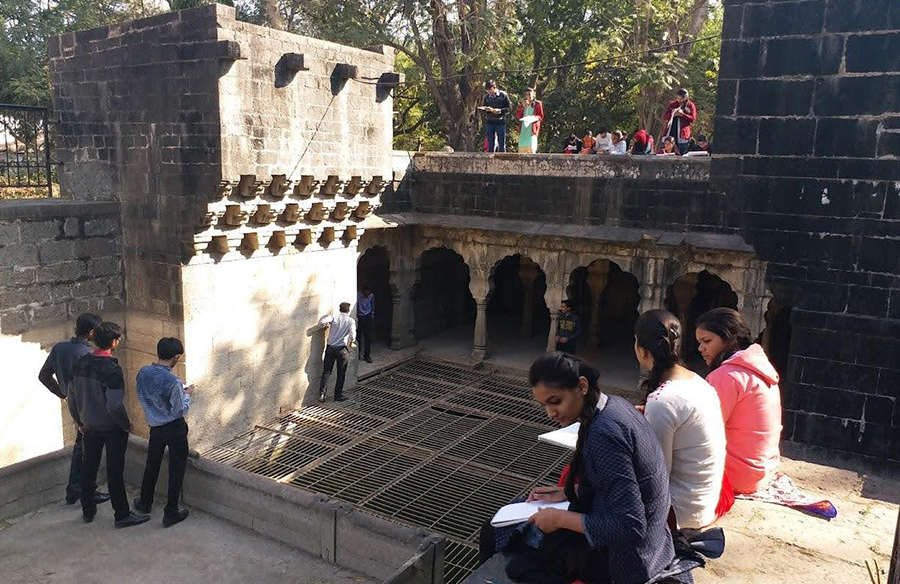
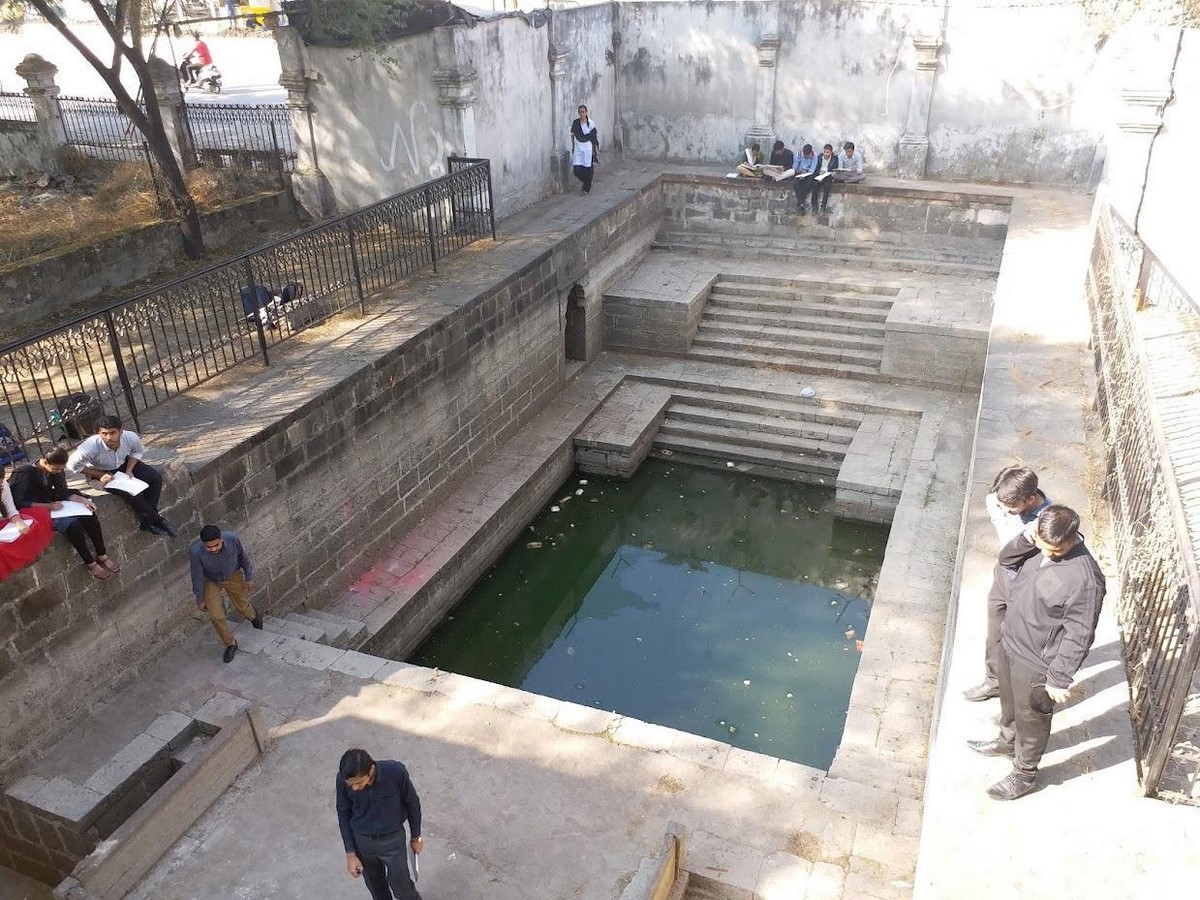
Campa Baodi has a rectangular or square plan, which is common with step-wells across the region. It has a step-down system of steps culminating at the main water reservoir. The baodi is made up of several levels, and intricately carved pillars of stones hold them up. Spatial planning provides access to water at various depths based on seasonal fluctuations (Patel & Desai, 2021).
Design Philosophy
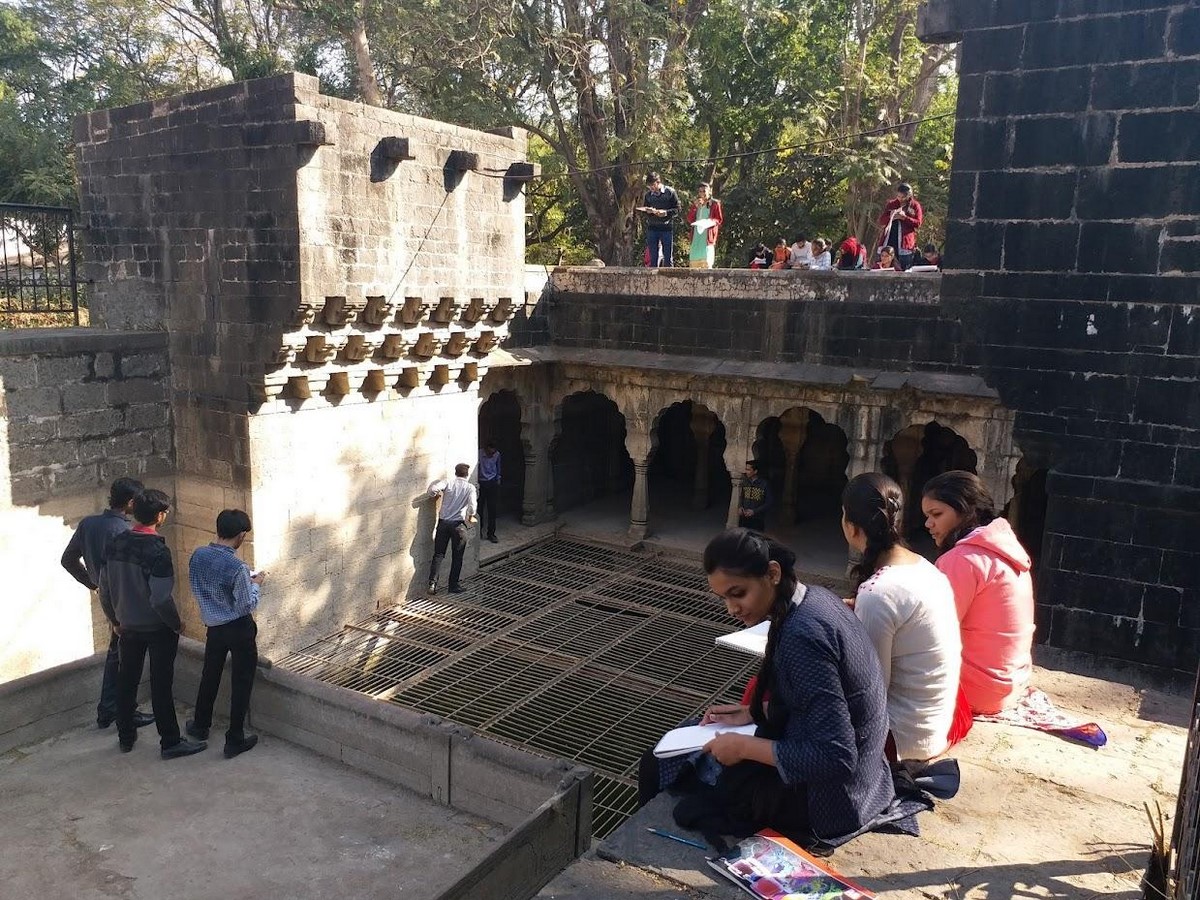
The architecture is a combination of functionality and beauty, both a water conservation facility and a public area. The symmetry of the stepwell and the accuracy in its geometric shapes give the impression of excellent comprehension of the principles of structural engineering. The baodi was naturally ventilated, meaning that the water stayed cold even during the hottest summer months (Rapoport, 1969).
Architectural Significance and Urban Fabric
Campa Baodi is situated advantageously close to Lal Bagh Palace, a very important Indore heritage building, and an adjacent temple, thereby being part of the larger historic fabric. The stepwell, palace, and temple combine to create a cohesive heritage setting that adds value to the cultural and architectural texture of Indore (Singh, 2018). The fact that these heritage buildings are located close to each other indicates that the baodi was not only a functional building but also a representation of the social and religious awareness of the period.
The design of the stepwell features carved stone railings, intricately carved niches, and arched entrances, reflecting the stylistic influences of the era. Its construction reveals a sophisticated hydro-engineering knowledge and aesthetic balance, and as such, it is an essential part of Indore’s architectural history. The orientation of the baodi was also probably based on Vastu principles, as with other important heritage items in the vicinity (Srivastava, 2020).
Materials and Construction
Materials Used
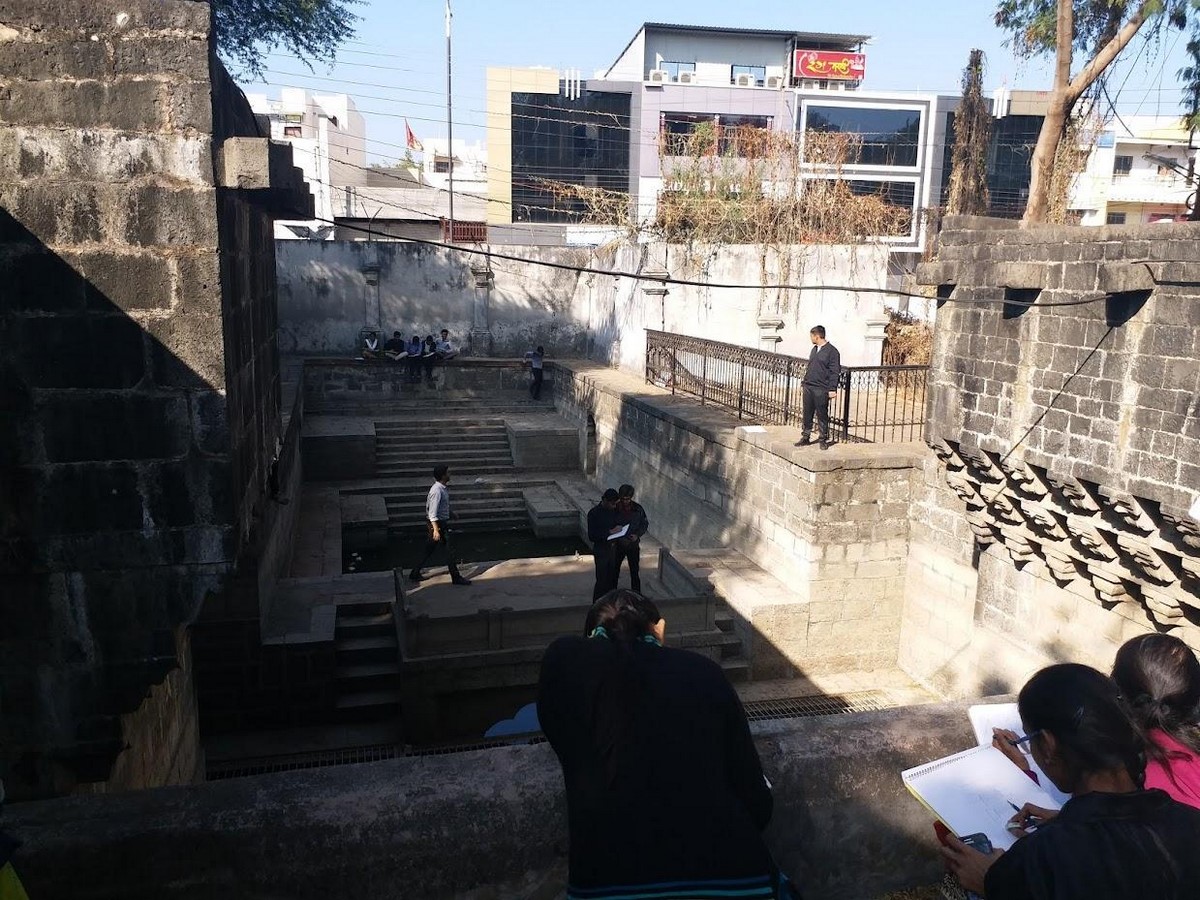
Campa Baodi was built from the locally sourced materials available, mainly sandstone, which is strong and weather-resistant. The materials selection was strategic in that sandstone provides natural water percolation, which prevents stagnation and supports groundwater recharge (Thakur, 2017).
Construction Techniques
The stepwell uses a load-bearing masonry system supported by intricately designed pillars. Dry masonry techniques were used in the construction, where stone blocks were carefully cut and laid on top of each other without mortar. This provided flexibility in the structure so that it could support seismic activity (Jain, 2020).
Innovative Elements
Drainage System: The stepwell features a system of channels guiding excess rainwater into the reservoir.
Cooling Effect: The stepped structure controls temperature, keeping the water cool all year round.
Multiple Entry Points: Various levels provide entry points, allowing water to be accessed even during drought (Mehta, 2016).
Sustainability and Environmental Impact
Role in Water Conservation
Campa Baodi was a significant component of Indore’s traditional water system, serving as a rainwater harvesting structure. It stored monsoon rains and retained water for consumption during dry seasons. Its location close to habitations facilitated ready access to water (Brown, 2017).
Groundwater Recharge
The permeable quality of sandstone enables slow percolation, with groundwater levels refilling over some time. This practice remains applicable in current urban planning initiatives to fight water scarcity (Patel & Desai, 2021).
Climate Adaptation
The stepwell is a prime example of passive cooling architecture. The recessed reservoir inhibits evaporation and thus constitutes an efficient model of modern water storage. Such practices can be reintroduced in future urban water-saving schemes (Srivastava, 2020).
Cultural and Social Impact
Campa Baodi was not merely a water reservoir but also a gathering place for people, particularly women who came to fetch water. It was a religious and ceremonial place. The interaction among the baodi, the temple, and the Lal Bagh Palace indicates a period in which architecture elegantly merged civic, religious, and recreational activities (Singh, 2018).
Despite being left in neglectful condition as of now, it is a key cultural symbol of Indore’s heritage. Restoration would work towards reviving the building as a cultural and educational centre that underscores its history (Thakur, 2017).
Relevance to Contemporary Urban Design
The application of step-wells such as Campa Baodi in current urban design is also valid. Their compact design concepts are translatable into present-day water-saving techniques. Restoring the kind of building is beneficial towards making city planning sustainable through inclusion into contemporary rainwater collection schemes (Davies, 2018).
Adaptive Reuse Strategies
Tourism Development: Restored, Campa Baodi may form a heritage tourist destination.
Educational Programs: Increasing knowledge concerning the ancient practice of water saving via exhibitions.
Integration into City Infrastructure: Redevelopment of existing historical step-wells as neighbourhood spaces in new developments (Jain, 2020).
Campa Baodi is a testament to India’s ancient water conservation wisdom and architectural prowess. Though overshadowed by more celebrated step-wells, it is an essential component of Indore’s built heritage. The research on Campa Baodi not only draws attention to its environmental and architectural importance but also emphasizes the importance of conservation to safeguard such buildings for generations to come (Chattopadhyay, 2019).
References:
Brown, L. (2017). Stepwells of India: Architecture and Conservation of Water. Oxford University Press.
Chattopadhyay, S. (2019). Water Architecture in South Asia: A Study of Stepwells in India and Pakistan. Routledge.
Davies, P. (2018). The Encyclopaedia of Indian Architecture: Water and Urbanism. Thames & Hudson.
Jain, S. (2020). “The Role of Stepwells in Traditional Water Conservation Systems in India.” Journal of Architectural Heritage, 15(2), 120-138.
Mehta, R. (2016). “Stepwells of Madhya Pradesh: An Architectural Analysis.” Indian Journal of Architectural Research, 10(3), 55-72.
Patel, R. & Desai, M. (2021). “The Urban Morphology of Indore: Heritage Structures and Their Role in the City’s Development.” International Journal of Urban Studies, 12(1), 80-95.
Rapoport, A. (1969). House Form and Culture. Prentice-Hall.
Singh, A. (2018). Stepwells of Western India: A Forgotten Legacy. Niyogi Books.
Srivastava, P. (2020). “Sustainability Lessons from Traditional Stepwells in India.” Sustainable Built Environment Journal, 5(1), 34-50.
Thakur, J. (2017). “Hydro-Engineering in Historic India: A Case Study of Stepwells.” Asian Journal of Architectural Science, 14(2), 99-112.1. Introduction