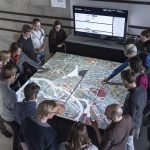
The primary stakeholders of any urban planning project should be the citizens as they are directly affected. Community involvement in urban planning could result in better communal spaces, connectivity and the day-to-day lives of the citizens. As a result, the concept of participatory design is getting more consideration nowadays but it comes with its own set of challenges.
The involvement of people has led to more responsive designs which comply with the actual needs of the people, which sometimes might not align completely with the plan otherwise. There still can be a gap in the research about the user and usability of different elements. And this gap can be filled by community involvement.

Vaughan district of Germany
An example of the Vaughan district of Germany is proof of how community involvement can lead to a better lifestyle for its citizens and, hence better cities. In this case, a competition was announced for the master plan of this district, highlighting the need for sustainable measures like pedestrian routes or automobiles, preserving existing trees, etc (Coates, 2013). After selecting the basic plan for the district, the citizens were invited through a local organisation (Coates, 2013).
Although intended as a positive initiative, it also sparked conflicts between the government’s vision for the district and the citizens’ desires. The preferred way of citizens would not have surfaced otherwise and that’s why the community has to be involved in some way. The citizens put forward their demands of making it a self-administrative district, need for community space in the centre instead of a town hall and majorly a car-free district (Coates, 2013). Most of these demands needed the city to resolve a lot of rules and regulation standards but they were able to consider them (Coates, 2013).
As a result, they designed the city to be approximately 60% car-free (Coates, 2013), and the citizens were pleased with the new policies. The planners fostered a sense of belonging and ownership over their surroundings by designing around the needs of the people.
Levels of Involvement by the Community
Community involvement is possible at various levels – Informative, preparatory or planning majorly. Involving a larger group of people in such a big-scale project can be a very daunting task and things can go out of hand very easily. When community involvement is talked about, it doesn’t mean they have to be given decision-making power but involve them in the step-by-step process.
Informative or preparatory levels are where the participation of the community is most needed. Usually done directly through hosting public meetings or indirectly through online surveys. Engaging people in the process requires a constant effort to communicate how the information is collected and used to address their needs. The aim should be to keep the public well informed of what is happening rather than announcing the decision.
Communication is an essential and easiest way to make the user group a part of the entire process. Understanding people’s needs, requirements, and expectations along with their ideas on how they envision their surroundings—can greatly improve designs, making them more aligned with the community.
Trial and testing through workshops in public spaces can also be a useful research tool for collecting feedback through community involvement instead of relying on the data (Phil Myrick LLC, 2024). The prototypes of elements or systems of connectivity could help in the improvement of the usability of the planning or system.

Super Block in Sant Antoni, Barcelona
The municipal team adopted the use of participatory workshops along with regular meetings with the people who were most affected by this project (Muzzini and Torres,2023). They discussed the proposals for various interventions in their neighbourhood to reduce pollution, make communal spaces and open green spaces.
They initially started by blocking some streets to redirect the traffic and prioritizing pedestrian routes (Muzzini and Torres,2023). This implementation along with information sessions helped people understand the benefits of these interventions. Further, community involvement helped in deciding the area and types of interventions needed. They also decided on the degree of restriction to vehicular movement and the reorganisation of traffic (Muzzini and Torres,2023).
Beyond Better Designs: Positive Outcomes of Community Involvement
People’s involvement is also necessary for them to understand why certain implementations are done and how to maintain the spaces. It is a medium to build trust and gain support from the public for new initiatives or practices. It enables the designers to acknowledge the firsthand problems faced by different parts of the city, like women, differently abled people, or senior citizens (Muzzini and Torres,2023).
McKinley Park, Pittsburgh, USA
During the redevelopment of this park, the Pittsburgh Parks Conservancy did a lot of public meetings which included people from all the age groups to ensure that everybody’s expectations and needs from this park are met (Park -Baltimore). Community involvement was very enthusiastic, they made sure to show up for meetings and be open to discussing with the authorities.
Another important dimension to this project was they were trying to also generate employment through these projects, so they gave parts of the project to local contractors instead of the bigger companies (Park -Baltimore). They emphasized the local people to develop soft skills and do certification programs to make them ready for long-term employment roles (Park -Baltimore).
Challenges in the Execution
Though this process is necessary, it can be difficult to achieve a smooth process especially when involving a community on this scale of project. It can also be difficult to encourage people to participate in the process in the first place. It makes the process longer, and conflicts and discussions can also lead to delays. Hence, It is extremely important to come up with a proper system for community involvement otherwise it could do more harm than good.
Once the community has been involved, communication becomes the key factor to the successful execution of the project. Very transparent and direct communication is needed to avoid any confusion or spread of any misinformation (Phil Myrick LLC, 2024). This can also lead to protests which can be very difficult to manage and often result in losing the point of the project altogether. More often than not it can lead to the community losing trust in the project, and can even result in non – cooperation (Phil Myrick LLC, 2024). Sometimes, miscommunication might also result in citizens feeling that very little has been given consideration, even after their involvement.
Sometimes, marginalized or minority groups are not given enough importance or a seat at the table, which hinders the very purpose of creating a community (Phil Myrick LLC, 2024). It will have a negative impact and might reinforce the boundaries.
Community involvement should be a part of urban planning but this is a responsible task that needs to be planned meticulously. This might call for creating a separate team that works with the local body or organisations on the ground level. For a successful urban project, it has to ensure that it is inclusive of different parts of the community and makes them a part of the entire process. It can go a long way in creating better communities and improving the well-being of its citizens.
References –
- Coates, G.J. (2013). The sustainable urban district of vauban in freiburg, germany. International Journal of Design & Nature and Ecodynamics, [online] 8(4), pp.265–286. doi:https://doi.org/10.2495/dne-v8-n4-265-286 [Accessed 23 Feb. 2025].
- Muzzini, E. and Torres, S. (2023). “Resilience in Action: Barcelona’s Superblock Programme”. Thematic Review Series: Council of Europe Development Bank, Paris.
- Park -Baltimore, Ambrose. McKinley Park -Pittsburgh Pittsburgh Parks Conservancy Hosted Multiple Public Meet. Available at: https://planning-org-uploaded-media.s3.amazonaws.com/document/GUP-Case-Study-Engagement.pdf?utm_source=chatgpt.com [Accessed 27 Feb. 2025].
- Phil Myrick LLC. (2024). 15 Community Engagement Strategies for Urban Planning. [online] Available at: https://www.philmyrick.com/sb/community-engagement-strategies/ [Accessed 23 Feb. 2025].
- www.allthingsurban.net. (n.d.). All Things Urban – What is Community Engagement and Why is It Crucial for Urban Planning? [online] Available at: https://www.allthingsurban.net/blog/What-is-Community-Engagement-and-Why-is-It-Crucial-for-Urban-Planning [Accessed 23 Feb. 2025].
Image References –
- City of Hamburg Uses Map-Based Tools to Encourage Citizen Participation in Urban Planning. geospatialworld.net/blogs/city-of-hamburg-uses-map-based-tools-to-encourage-citizen-participation-in-urban-planning/.[Accessed 28 Feb. 2025].
- Urban Planning Partners. www.up-partners.com/. Accessed 28 Feb. 2025.