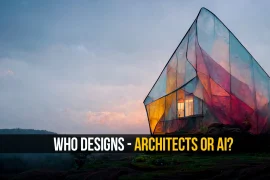
Grasping Experimental Architecture:
Experimental architecture is a progressive field that pushes the boundaries of conventional architectural practices. The core objective is paralleled in seeking to reproduce architectural forms that have never existed, using unprecedented materials, design processes, and philosophies. Central to this art is the responsibility of breaking stereotypes to develop cleaner and healthier designs that are in harmony with nature. Promoting new forms of interaction between human beings and the built world tackles anthropogenic global issues – global climate change and urbanisation, as well as satisfying the needs of a population without prejudice to resources and allowing equity. The concept of experimental architecture was first conceived by the architect Peter Cook in his 1970 book “Experimental Architecture.”
It frequently capitalises on techniques from digital fabrication, biotechnology, and ecological design towards a new vision of occupying space. Experimental architects question the divide between function and form, designing ways that are visually exciting and ecologically responsible. Designing in this manner is not simply about creating beautiful and sensual forms, rather it is about altering the way architecture, humankind, and the surroundings relate to each other within the framework of evolving needs of the existing in societies today. This area of work needs to be taken seriously as it supports the advancement of the art of architecture, providing the new direction that will be needed to address the challenges posed by the future.

Speculating Futuristic Architecture:
Futuristic architecture, as its name suggests, attempts to imagine how architecture may evolve in design and structure in years to come, and more often than not includes modern technologies, speculative design, and consideration of the future social, economic, and environmental needs of humankind. In this way, it practises a more forward-thinking perspective, one that takes into account the needs of society and the environment that may change in the future when such developments are fully operational. This field of architecture embodies the characteristics of modern technology, green building techniques, and aesthetics and conceptualises the spaces not only for the current generations but also for the generations to come.
Futuristic architecture often incorporates advanced design and or materials of construction, giving architects the freedom to achieve unlikely contours and profiles. Smart technology such as automation and energy-suited devices provide an optimum degree of efficiency making these concepts workable and appealing to modern ever dynamic lifestyles. Additionally, this architectural style gives equal attention to how sustainable building practices are applied, aiming at achieving a balance in the construction of manmade structures and the environment.
speculative architecture which is futuristic, invites society to interrogate their values and even the levels of technology that they accept or inhabit. It, therefore, stimulates the residents to sit down and create a new way of living within the cities in terms of but not limited to, movement, public space, and ecology. Broadly, futuristic architecture serves as a canvas for creativity and innovation, shaping not just the physical landscape but also influencing cultural perceptions of what is possible in the built environment.

Is sustainability a core aspect of both experimental and futuristic architectural design?
Both Experimental architecture and Futuristic architecture share the same concern of sustainability and resilience owing to climate change. However, they differ in the methods employed and the timelines for their predictions.
Experimental Architecture often deals with problems that have immediate solutions and that can be acted upon now. For example, passive design methods reduce the energy consumption on cooling and artificial lighting by maximising the availability of natural light and ventilation. Many biodegradable materials are studied to reduce the ecological footprint, promoting a circular economy. The focus is on addressing such issues as the urban heat island effect, global warming, resource sparsity, etc. in the nearest time, which enables architects and designers to devise functional, sustainable spaces that align with the present needs.
In contrast, the Futuristic Architecture domain envisions ultramodern solutions that are not available yet but are probably aimed at in the future. For example, buildings that use energy-generating elements such as solar panels or surfaces with motion sensors built into the structure are examples of energy systems that integrate. Such structures are self-sufficient. Similarly, self-healing materials are expected to revolutionise building maintenance and longevity. These materials, which can fix themselves when injured, suggest a time when buildings are not static but dynamic and change with the times.
Use of Natural and Local Materials:
In the Mono-Material approach of putting up structures as employed in modern architecture we question the position that the ‘one shape fit all’ approach is healthy as it helps to standardise every continent or even a city and country pretty much rendering every city in the world offers the same concept. The new-age biobased materials are made from natural, reusable sources, such as plants or animals, and even microorganisms, these biomaterials are eco-friendly substitutes for conventional resources. They cut down the use of fossil resources and impact the ecosystem. Typical illustrations are found in bamboo, hemp, mycelium, and bioplastics. These can be used for a variety of purposes, including house construction, textiles, packaging additions and insulations, etc. They can be used towards a sustainable business strategy and manufacturing focused on designs for decay.
Innovative Testing: Most of the Bio-composite materials are still Young and need more Laboratory Innovations in the establishment of properties, applications, and processes. Mycelium-based composites for example are experimented with and examined in terms of strength properties to enable their use in construction. This stage in the life cycle of natural and biobased materials may be classified as experimental architecture.
Long-term Vision: There is a philosophy that explains the principles of construction and the materials used in doing them. Biobased materials correspond to ‘tomorrow’s objectives as far as sustainability and adherence to a circular economy are concerned. Envisaging their ability to substitute conventional materials which contribute to decreasing the carbon footprint while also advocating for the usage of clean energy is quite considerate in an era of climate change.
Bio-materials like algae, mycelium, lichen, and moss concrete are set to change the game in architecture as they deal with the other extremes of experimental and futuristic.
Mycelium, a fungal structure, is an effective bio-based raw material to use because it is lightweight and durable. Utilisation of this material in construction promotes natural biodegradability.


Algae, as a building energy innovator, particularly photosynthetic algae has the potential not only to produce biomass energy but can also be readily used to sequester greenhouse gaseous carbon dioxide. The inclusion of algae systems into the facades of buildings would provide energy as well as bring aesthetic value while purifying the air within the buildings.

Lichen and moss concrete are new ideas that are focused on the use of live organisms for more efficient thermal insulation and the realisation of better indoor air quality. These materials are positively sustainable and promote better living conditions. It also leads to reduced environmental degradation.

On a different note, even though these bio-based materials are still the subject of research and trial, they represent an ambition toward a more ecological and resourceful practice of architecture. With time, it is plausible that the use of these materials in the construction sectors would herald a transformation in the way buildings are constructed for the better. All these materials promote the development of new ways of doing things without causing harm to the environment creating a possibility of construction that is not at odds with nature. Applications of these materials call for a new approach to construction and sourcing of materials that is more efficient, low impact, and focused on building resilience.
As a result, bio-based materials can be viewed as either experimental, and still being polished, in the case of new surfaces anticipating testing, or futuristic because they reflect a breakthrough in concept and technology in materials science. This is why these materials are said to be employed to push the frontier of sustainability in different sectors.
Use of New Techniques:
3D printed earth architecture:
3D printing with earth materials sits at the intersection of both experimental and futuristic. This is because there are a myriad of applications and techniques that are being researched and applied yet, quite unlike construction methods in use. It is also futuristic as it develops a creative approach to building that utilises local resources to curtail the need for transport and its implication on the environment.
Initiatives like Auroville, Craterra, and IAAC have also explored the 3D printing research area in constructing sustainable buildings and objects. These examples of projects also experiment with the design, where local earth materials are utilised to lessen the ecological impact.

In Italy, TECLA is applying this idea by making the case of 3D-printed houses from raw earth. The focus of the project is on sustainability with the buildings being designed at low cost and to be energy efficient, which is a good substitute for other building construction processes that are more expensive and conventional.

3D printing of earth materials on a larger scale is indeed a thought-provoking future. With the right advances in technology, entire neighbourhoods could be built using automated 3D printing systems adaptable to site-specific conditions and local materials, which would significantly reduce material waste associated with traditional construction and the carbon footprint incurred. 3D printing offers a glimpse into a landscape of architectural renaissance where tools for promoting sustainable practices and resolving housing deficits in an expanding population of urbanised settlements are going to become commonplace.
Focus on current feasibility and Future Vision:
Experimental architecture often strives with the exploration of ideas capable of being partially realised today through alternative construction methods, ecological integration, or similar encumbered with funding, materials, and regulatory restrictions. Futuristic architecture may indulge in speculation and imagination, toying with designs for a radical future environment watered down by no limiting constraints: blueprints issuing a challenge to their readers on how they will be living in 50 or 100 years-noting pitch subjects like space colonisation and AI-driven construction.
The notion of Customization and Adaptability:
Experimental architecture is where new experiments of customizable and adaptable building design are tested to suit different user needs and environments. Its flexibility echoes the futuristic vision of self-sustaining cities that respond to the needs of their inhabitants, although the experimental focus is on proving concepts in the present while futuristic architecture imagines these at scale in the distant future.
Temporal Relevance:
Experimental architecture might not always anticipate future trends but could focus on immediate, context-based challenges—like rebuilding post-disaster environments or designing for pandemic conditions—whereas futuristic architecture assumes long-term relevance by addressing potential future living conditions.
Harmonising Experimental and Futuristic Architecture:
In examining experimental and futuristic architecture, it becomes evident that both domains hold valuable contributions to the evolution of sustainable building practices. Experimental architecture, focused on innovation within present constraints, pushes the boundaries of materials, techniques, and sustainability. Meanwhile, futuristic architecture offers a visionary outlook, speculating on the possibilities that lie ahead in urban development, energy use, and ecological integration.
By harnessing the strengths of both sectors—experimenting with bio-based materials like algae, mycelium, and moss while scaling technologies such as 3D-printed earth—architecture can transition from current innovations into the sustainable futures we envision. The convergence of these approaches encourages a shift towards adaptive, resilient, and ecologically attuned design, transforming the architectural landscape. In combining immediate experimentation with a long-term vision, the field is poised to redefine and rethink how cities evolve, leveraging the best of both worlds to create resilient, adaptive urban landscapes and how we build and inhabit spaces.