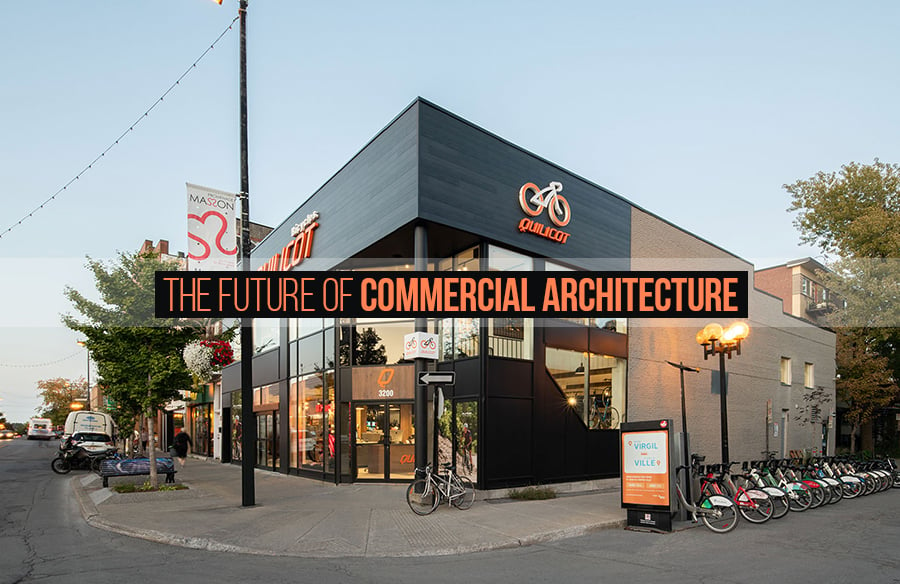
In the age of add-to-carts and online payment, there are still a lot of people who prefer to shop in person. The Indian bargaining custom appears to have vanished amid technological advancement. People take time out of their schedules to shop, not because they need to buy anything but to enjoy the small joys of being surrounded by many possibilities. In a technical sense, shopping is gender-neutral. Shopping is an exciting activity. Shoppers do not merely walk into any shop. They are affected and impressed by the shop’s outside, which generates excitement about what the brand proposes to them.
In such circumstances, businesses must develop a welcoming façade and a comfortable inside. Architecture in retail is similar to any other trickster. They deceive you into entering their franchise using their services by showcasing their brand idea through architectural designs.
What is Commercial Architecture?
Commercial architecture is the design and construction of buildings for commercial purposes. They include offices, retail stores, restaurants, hotels and other business facilities. This type of architecture focuses on designing functional and visually beautiful structures tailored to the demands of businesses and their clients.
One of the principal aspects of commercial architecture is functionality. Commercial structures intend to fulfil a specific purpose rather than simply providing a comfortable living place for individuals and families. Another notable distinction between commercial and other types of architecture is the significance of branding. Commercial buildings reflect the values and aesthetics of the business that will occupy them.

Commercial Architecture in the Past.
Markets and bazaars existed in antiquity. The earliest retail malls were the Roman Forum and Trajan’s Market. Guild halls, market halls, and trading centres appeared gradually, followed by the emergence of fortified towns and cities with commercial areas. Then came luxury retail districts, large public markets, and arcades.
The era of the Industrial Revolution ushered in a transformation in commercial architecture, giving rise to the development of factories, warehouses, and industrial buildings. This period saw the emergence of commercial architecture as a distinct profession, driven by the introduction of new materials and technologies like iron and glass. In the 20th century, suburban retail centres and office parks grew due to new technology, the emergence of skyscrapers, and the construction of high-rise office buildings. Construction of flagship stores, malls, and cutting-edge futuristic structures began gradually.

Current Trends.
Sustainability.
The architecture industry is undergoing a surge in sustainable and environmentally friendly designs. Architects are increasingly considering ecological and energy-efficient design in commercial buildings. This involves adopting renewable energy sources like solar and wind power. There is a demand for construction materials and lighting systems that are low in energy use and waste.
Mixed-use.
There is also an increasing emphasis on urban planning and mixed-use development, which blend residential, retail, office, and other uses to create a more connected and livelier neighbourhood. By combining several functions, these buildings may provide a more sustainable and diversified environment that better satisfies the demands of its inhabitants.

Inclusivity.
There is a greater emphasis on workplace wellness and user experience. Architects are currently constructing buildings that are friendly and accessible to all users based on their user experience. The venues are inclusive, and feature ramped entrances, accessible bathrooms, and visual and audio clues to help individuals navigate.
Smart Buildings.
Incorporating technology and smart building systems is becoming increasingly significant in commercial architecture. From interactive displays and virtual reality systems to smart building automation and improved security systems, architects are discovering new ways to integrate technology to revamp the user experience in commercial buildings.
Break-out Spaces.
The design of break-out rooms or informal areas intended for leisure, unexpected meetings, or just a change of scenery is becoming increasingly popular in modern offices. Many businesses claim an upsurge in social interaction and spontaneous cooperation after installing these collaborative zones, as well as higher staff productivity and retention rates.
Reuse and Renovation.
Adaptive reuse and renovation of existing structures are becoming increasingly popular to conserve ancient buildings while adapting them for modern usage.
- DB55 is a former lumber warehouse in Hout havens Amsterdam, an industrial district bordered by modern offices and residential buildings. The structure is designed around four pillars.
DB55 accommodates employment, relaxation, events, sports, and even a children’s playground. To maximise flexibility, they maintained the building’s free height mostly intact, avoided using screws or glue whenever practical, and placed plants and furnishings on wheels.

- The House of Vans. London was located in a historic structure from the nineteenth century. Before becoming the House of Vans, the building had a long history of being used for numerous purposes. The structure was initially built as a series of arches to support the railway lines entering Waterloo Station. The arches were later used as a wholesale market for fresh goods and flowers. After the market closed, the structure was utilised as a warehouse and storage facility. The structure was renovated into a prominent nightclub and music venue “The Arches” in the 1990s.
Vans turned the area into a one-of-a-kind event that combined music, art, skating, and culture, which remained open until 2019.

- Forkstone Renovation has transformed a disused industrial building into a thriving cultural hub with co-working spaces, art galleries, event spaces, restaurants, pubs, and a skate park. The refurbishment preserved the building’s historic industrial character while adding modern conveniences and environmentally friendly design components.
The refurbishment has exposed brick and stone walls, original wooden beams and ceilings, wide skylights and natural light, green areas and vertical gardens, eco-friendly materials, and energy-efficient technologies.
The future of commercial architecture is filled with sustainable and technology-oriented development. With examples of renovated projects, it is clear that the commercial architecture will respect the old and new aspects relating to the city and brand.
References:
- What is Commercial Architecture: All You Need To Know (no date). What is Commercial Architecture: All You Need To Know [Online] Available at: https://www.aeiforiaarchitects.com/blogs/commercial-architecture [Accessed August 28, 2024]
- Architecture MasterPrize / Architecture, Interior & Landscape Design Awards 2024 – Architecture Awards 2024 – Celebrating Excellence in Architecture, Interior & Landscape Design (2023). Emerging Trends in Commercial Architecture [Online] Available at: https://architectureprize.com/emerging-trends-in-commercial-architecture/#:~:text=Architects%20are%20increasingly%20prioritizing%20sustainable,minimize%20energy%20consumption%20and%20waste. [Accessed August 28, 2024]
- Urdesignmag (2023). A Closer Look at the House of Vans London [Online] Available at: https://www.urdesignmag.com/a-closer-look-at-the-house-of-vans-london/ [Accessed August 28, 2024]
- Journal (2023). Adaptive Reuse Revolution: 7 Commercial Projects Potently Preserving the Past [Online] Available at: https://architizer.com/blog/inspiration/collections/adaptive-reuse-revolution-commercial-architecture-preserving-the-past/ [Accessed August 28, 2024]
- Locastudio (no date). LoCa Studio: Forkstone [Online] Available at: https://www.locastudio.eu/forkstone [Accessed August 28, 2024]