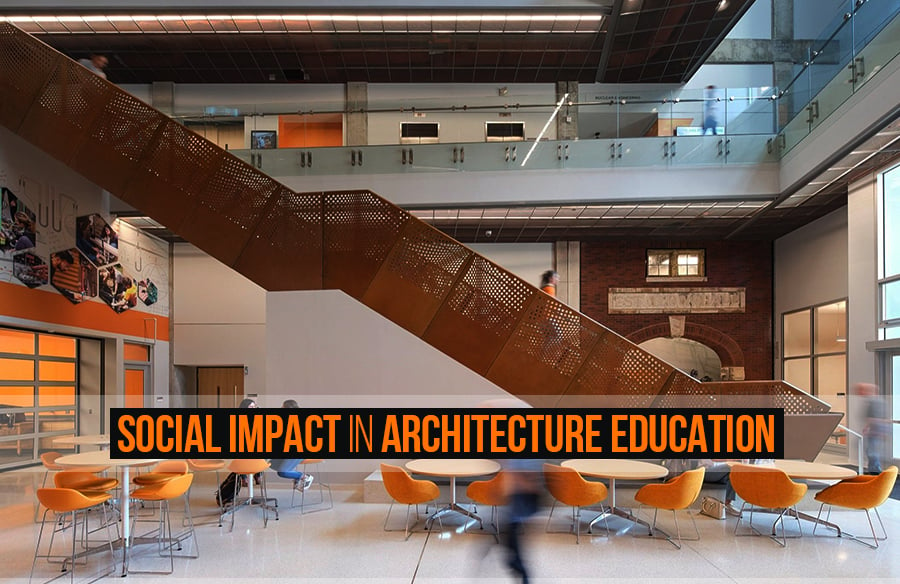
How and where do we teach about the social agency of architecture? Whilst the discipline’s core knowledge and skills to be a competent architect are essential in architecture education, architects’ ethical function is to serve the people. Despite the juxtaposed relationship between architecture and community, the emphasis on social impact is seen as an ideal rather than a reality in practice. Compounded by the shifting paradigms of Generation Z’s learners, an alternative way of delivering education is needed. Gen Z’s attitudes and preference for environmental and socially conscious realities point towards the need for architecture education to align with social impact.
Aga Khan Trust for Culture Education Programme
The Aga Khan Trust for Culture Education Programme propagates socially conscious education. The Trust is dedicated to fostering a broader and deeper understanding among young people of the philosophy and values of architecture’s role in positively impacting communities. With two of the Trust’s critical programmes – the Aga Khan Award for Architecture (AKAA) and the Aga Khan Historic Cities Programme (AKHCP) – at its core, it collaborates with educational institutions in various countries to develop dedicated elective courses that champion social impact. The AKAA acknowledges the fundamental role of the built environment in quality of life and promotes architectural projects that address the aspirations of societies worldwide. Meanwhile, the AKHCP has spearheaded over 350 restoration and conservation projects in historic areas, igniting social, economic, and cultural development.
Two institutions took the strategic position of revisiting past projects, examining to what extent social impact has been sustained since the buildings were awarded the AKAA in their respective countries. Incepted in 1977, the AKAA has been awarded to 128 projects in 15 cycles. Out of these, India and Malaysia have received six awards, respectively. Framing around the AKAA award winning projects, the School of Architecture, Building & Design, Taylor’s University, delivered the education programme in Malaysia, and the Kamla Raheja Vidyanidhi Institute for Architecture and Environmental Studies in India.
Analysing the Social Impacts of Architecture in Malaysia
In collaboration with the AKTC Education Programme, the School of Architecture, Building and Design at Taylor’s University, Selangor, Malaysia, they offered Master of Architecture students an elective, “Analysing Architecture”, in the autumn semester 2020. The course examined the AKAA projects to illustrate how projects that received the awards are sustained and the fate of those projects – the afterlife of the awards. Six projects that were awarded AKAA in Malaysia were studied – Tanjong Jara Beach Hotel (1981-1983 Cycle), Menara Mesiniaga (1993-1995 Cycle), Salinger Residence (1996-1998 Cycle), Datai (1999 -2001 Cycle), Petronas Office Towers (2002-2024 Cycle), and University of Technology, Petronas (2005-2007 Cycle). Throughout the course, the students focused on the buildings’ positive long-term cultural, economic and social impacts. The ARCHNET website, which hosts the voluminous archive of the AKAA, provided the foundational knowledge of each project. Several visits were conducted to these projects, and interviews with the architects were to uncover how each building has withstood the test of time and impacted its user community and society. Subsequently, in the spring semester of 2021, students continued to study the social impact of AKAA projects in Malaysia, focusing on architectural mappings and fieldwork.

These educational programmes culminated in an AKAA: Malaysia Symposium in July 2022. The symposium was framed around four buildings previously awarded with the Aga Khan award, including Menara Mesiniaga, Data, University Technology Petronas, and Salinger Residence, together with representatives of renowned figures in Architecture in Malaysia, to illuminate the insight and perspective of the creative works. Speakers included Ken Yeang, Jimmy Lim, Abdul Rahim Awang and Kamil Merican.

In the recent spring semester of 2024, the students conducted a technical visit to two of the six buildings – the Tanjong Jara Beach Hotel (1981-1983 Cycle), currently known as Tanjong Jara Resort, and the University of Technology, Petronas (2005-2007 Cycle). The respective management teams hosted the visits, giving students an in-depth and experiential engagement of each building. This culminated in reports that reflected on the Master Jury statements for which the project was selected for an Aga Khan Award and to justify whether the project would be chosen for the Award.
Revisiting Six Aga Khan Awards for Architecture Projects in India
More recently, from 2023-2024, KRVIA, under the guidance of the Institute’s Design Cell, students evaluated six projects in India that have been awarded the Aga Khan Award for Architecture. Similarly, assessing the life after the award formed the basis of the investigation. The course culminated in a specially prepared compilation documenting and analysing the six buildings disseminated on the ARCHNET website. The six buildings were the Mughal Sheraton Hotel, Agra (1980), Entrepreneurship Development Institute of India, Ahmedabad (1992), Aranya Community Housing, Indore (1995), Lepers Hospital, Lasur (1998), Slum Networking of Indore City (1998) and Vidhan Bhavan, Bhopal (1998).
The collaboration extended an earlier partnership with AKTC through an exhibition in 2019 and 2020 respectively. Attended by more than 1,000 visitors, the exhibition showcased the profound changes brought about by AKAA and AKHCP, building on the power of imagery to convey the social agency of architecture and the built environment.

In Reflection
The dissemination of the social impact of architecture through education is essential. While the education programmes differ by nature, they were framed within the broad question, “Do you think that today the project would be selected, and if so, for what reasons?” Building on the courses, seminars and exhibitions play an impetus role in elevating this significance, amplifying the message of social architecture to the larger public. These education initiatives provided a point of departure for students to rethink the social agency of architecture as a longitudinal and fluid process rather than a static one.
References:
Aga Khan Trust for Culture (2024). Aga Khan Trust for Culture [online]. Available at https://the.akdn/en/how-we-work/our-agencies/aga-khan-trust-culture [Accessed 16 August 2024]
Kamla Raheja Vidyanidhi Institute for Architecture and Environmental Studies (2024). An Architectural Evaluation: Six Aga Khan Award for Architecture Projects in India. Available at https://www.archnet.org/publications/15204 [Accessed 16 August 2024]