In today’s era of development, whether it is for fulfilling the community’s needs or for nationwide growth, architecture plays an important role in making these developments human-centric, to cultivate a sense of belonging or comfort. The purpose is to foster a sense of social, cultural, and economic well-being across the country. Every purpose is served by the fulfilment of the infrastructural requirements for different sectors like telecommunication, transportation, educational setups & their norms, proper sanitation & drainage, and health.
Among these, healthcare facilities are often overlooked, but for the overall development of the nation, the well-being of the citizens is a crucial factor. Architecture significantly influences this by shaping the spaces we live in, which have a profound impact on our health, and productivity.

The Concept of Well-Being
It is often considered that good health means being free from diseases, but as stated by the World Health Organisation, “Health is a state of complete physical, mental, and social well-being and not merely the absence of disease or infirmity.”, it is evident that universal growth comes from social, physical, economic, emotional, and psychological well-being of people.
For Instance, in the architecture industry, Vastu shastra is a concept established in ancient Indian texts that combines five elements to align the natural energies in the built environment to promote health, prosperity, and well-being.

Healthcare Facilities
Hospitals, clinics, nursing homes, rehabilitation centres, OPDs, community health centres, etc, provide the built environments that are designed to avail 24/7 healthcare services and supervision of healthcare professionals to the people in need. These facilities work as healing environments that offer the care, treatment, and medical support to the patients essential for their recovery. They offer necessary assistance through qualified professionals, providing medical, technical, and moral support throughout the entire process
In addition to the care provided, the architecture of these spaces plays a crucial role in creating environments that offer mental and psychological support, contributing significantly to the recovery process.

Therapeutic Potential
Healthcare facilities are designed to treat and heal patients using available resources. Beyond the medical care provided, there are spatial factors that can either enhance or detract from a patient’s healing experience. Patients can often recognize spaces that contribute positively to their recovery.
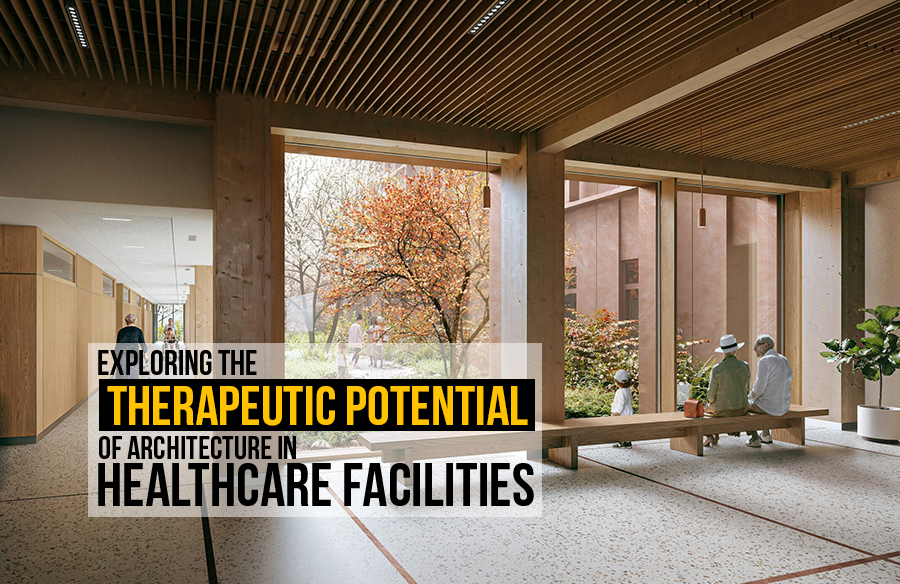
To create a positive impact on the human mind, it is important to minimise elements that can disrupt the process, such as excessive noise, poor lighting, and confusing or uncomfortable spatial arrangements. The therapeutic potential of space is enhanced by a sound ambiance around a person to rest and recover with comfort. Features like access to natural light, comfortable seating, quiet environments, and views of nature are all spatial enhancements that help patients feel more relaxed, comfortable, and supported throughout their healing journey.

The therapeutic potential of a space that is evoked by enhancing the spatial features, also contributes to providing psychological comfort to the patient. It is observed that stress is a significant factor that hinders patient’s recovery by affecting their mental health with adverse psychological, physical, and behavioural aspects. So providing comfort and a sense of control can alleviate stress, such as offering control over lighting, privacy, music selection, television, and clear wayfinding signs.
Incorporating spatial considerations that promote comfort and therapeutic architectural features can help soothe the mind and positively contribute to patients’ recovery.

Spatial Attributes in the Healthcare Facilities
The spaces we inhabit shape the way we work and think. The walls around us influence our thoughts, and our surroundings affect our perceptions. Visual connections with our environment expand our thinking, while open spaces with ample light and ventilation strengthen our connection with nature. Conversely, enclosed or compact spaces with limited light can induce feelings of claustrophobia or depression, negatively impacting mental health.
Additionally, creating spaces for friends and family is crucial, as the presence of loved ones can significantly boost a patient’s health. Access to nature, whether visual or direct, helps relieve stress and soothe the mind, enhancing well-being through quality time spent with loved ones or in natural surroundings.

Therapeutic Potential in the Variety of Spaces
The environments where we live or spend time have a great impact on our physical and mental wellness. Therefore, in a healthcare facility, the surroundings must create a sense of vitality, offering patients hope and a positive perspective as they seek to achieve treatment or recovery in body, mind, and soul.
While physical wounds may heal, mental recovery often takes more time. To support this process, the built environment, connection to nature, a sense of liveliness, and a feeling of belonging with the surroundings are crucial. Architecture plays a significant role in designing and planning these spaces, with careful consideration given to the holistic well-being of the people within them.

Conclusion
Human health is essential for leading a fulfilling life and actively contributing to society. A sound body, mind, and soul are the ultimate goals, and when challenges arise, healthcare facilities offer the necessary support to restore good health.
Architecture gives life to these spaces, allowing them to breathe and align with the human need for healing both mind and body. These spaces should be warm, nurturing, and welcoming, providing a sense of belonging while fostering well-being and growth. A healthy environment inspires people to live, interact, and find peace within nature and their surroundings. A thoughtfully designed space, balanced with natural light, ventilation, and hygiene, with clear circulation and movement, promotes physical and mental healing, leading to a better lifestyle.

Citation:
- Publication, I. (2021). The Impact of Architecture in the Process of Healing & Well-Being. International Journal for Research in Applied Science & Engineering Technology. [online] Available at: https://www.academia.edu/45598236/The_Impact_of_Architecture_in_the_Process_of_Healing_and_Well_Being.