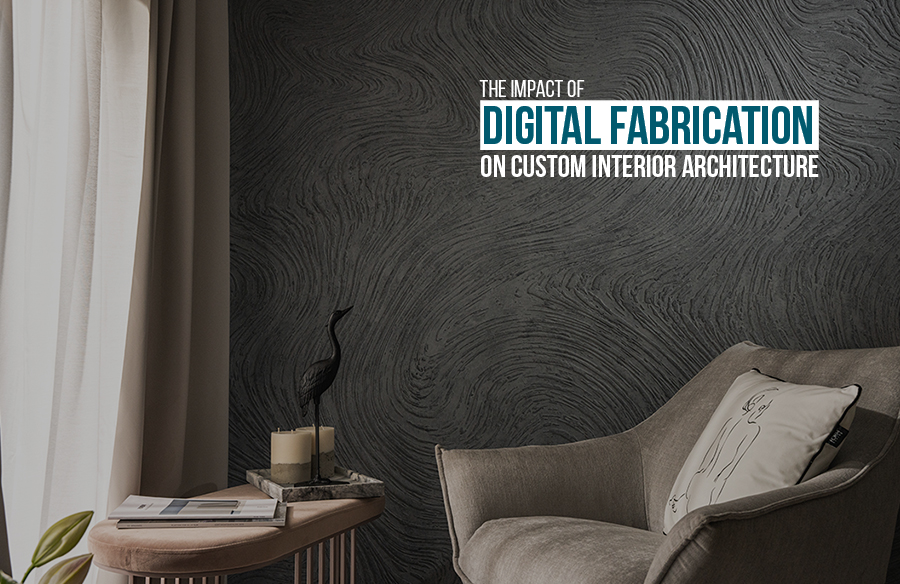
Digital fabrication is causing a revolution in interior architecture. It changes how we think about design possibilities and creates spaces. This tech shift allows designers to be more precise, creative, and custom in architectural interiors. Let’s explore this topic through a story of new ideas and creativity. We’ll look at key writings and examples that show how digital fabrication has changed things.

The Start of Digital Fabrication
Picture a world where architects and designers aren’t limited by old-school tools and techniques. Digital fabrication has made this a reality in interior architecture. At first, this tech was just a hint of what could be. Now, it’s a key part of modern design making it possible to create complex, custom pieces that people couldn’t even dream of before.
In “Fabricate: Making Digital Architecture,” edited by Ruairi Glynn and Bob Sheil, the authors examine the shift from hands-on craftsmanship to computer-based methods. They claim that digital fabrication has an impact on not just how we build structures but also changes the connection between the designer and the material. This change allows a new kind of interaction where designers can shape materials using digital tools reaching levels of intricacy and exactness that manual techniques could never achieve.
Unleashing Creativity: Customization and Precision
Tools for digital making like 3D printing, CNC milling, and laser cutting have made design more accessible to everyone. Designers can now try out shapes and structures that used to be too expensive or hard to make. In his book “Digital Fabrication in Architecture, Engineering, and Construction,” Nick Dunn looks at several examples where digital tools helped create custom interior pieces. From wall panels with complex patterns to one-of-a-kind furniture, the ability to make unique designs as needed has changed the world of interior architecture.

A striking case in point is the work of Zaha Hadid Architects known for their cutting-edge designs. Their application of digital fabrication in projects such as the Morpheus Hotel in Macau shows how technology can turn visionary ideas into reality. The hotel’s interiors boast flowing natural shapes that merge walls, ceilings, and furniture. These designs unachievable through conventional methods, highlight the revolutionary impact of digital fabrication.

Material Innovation and Sustainability
The story of digital fabrication in interior architecture goes beyond looks and creativity; it also covers new materials and sustainability. Michelle Addington and Daniel Schodek’s book “Smart Materials and New Technologies: For the Architecture and Design Professions” talks about how digital fabrication lets designers use new materials that are eco-friendly and cutting-edge. For example, makers can shape and put together materials from plants or recycled stuff with great accuracy, which cuts down on waste and helps the environment.
Dutch designer Dirk Vander Kooij shows how to use sustainable materials in his work. He makes furniture from recycled plastic. His method mixes digital production with a focus on helping the environment. This creates one-of-a-kind, custom designs while reducing harm to nature. More and more interior architects are following this trend of blending tech with eco-friendly thinking, thanks to what digital production can do.
Enhancing Functionality and User Experience
Digital fabrication does more than just make things look good and last longer – it also has a big impact on how well interior spaces work and how people use them. You can customise designs to fit specific needs and likes making them more comfortable to use. In their book “Interactive Architecture: Adaptive World,” Michael Fox and Miles Kemp look at how digital tools let us create spaces that change based on what people do and want.
Look at the MIT Media Lab’s CityHome project as an example. It uses digital fabrication to create living spaces that can transform. This groundbreaking idea features robotic furniture that can shift its setup based on what the user needs making the most of small city apartments. Digital fabrication’s precision and flexibility make these adaptable designs possible, giving us a peek into what interior architecture might look like in the future.

The Collaborative Renaissance
Digital fabrication also has an influence on team-based design approaches uniting architects, designers, engineers, and fabricators in a smooth process. In “The New Structuralism: Design, Engineering and Architectural Technologies” by Rivka Oxman and Robert Oxman, the authors explore how modern architectural work crosses different fields made possible by digital tools. This teamwork is essential to bring complex designs to life and make sure they work well and serve their purpose.
A prime example of this team effort is the Elbphilharmonie concert hall in Hamburg Germany. The design process saw the architectural firm Herzog & de Meuron work with acousticians and digital fabricators. The outcome is an interior space that boasts top-notch sound quality and eye-catching looks achieved by crafting complex shapes and materials.
Tackling Obstacles and Looking Ahead
The perks of digital fabrication in interior architecture are huge, but the road ahead isn’t smooth sailing. We need to think about things like the upfront costs of tech, the specialized know-how needed, and how to work with new materials. But as this field grows up, people are tackling these issues through ongoing studies, training, and tech breakthroughs.
Neil Leach talks about how architectural education and work are changing in his piece “Future Architectures: The Impact of Digital Technologies.” He stresses that it’s key to teach digital fabrication skills in architecture schools to get future designers ready for what the industry wants. By getting on board with these shifts, the next crop of architects and designers will be ready to make the most of what digital fabrication has to offer.

Conclusion: A New Era of Interior Architecture
Digital fabrication has a big impact on custom interior architecture. It’s changing things in major ways. This story shows how new ideas, creativity, and teamwork push for the best in design. As digital tools keep getting better, interior architecture can do more than ever before. We’re at the start of something new where technology and creativity will work together. This combo will shape our living spaces in ways we can’t even picture yet.
In this changing story digital fabrication’s inclusion marks a game-changing chapter. It makes us reconsider our methods, adopt new materials and techniques, and stretch the limits of what we can do in interior architecture. As we look ahead, we’re sure of one thing: the union of digital fabrication and interior architecture will keep us creating spaces as special and lively as the people who live in them.
References:
- Glynn R., & Sheil, B. (Eds.). (2011). Fabricate: Making Digital Architecture. Riverside Architectural Press.
- Dunn, N. (2012). Digital Fabrication in Architecture, Engineering, and Construction. Laurence King Publishing.
- Addington M., & Schodek D. (2005). Smart Materials and New Technologies: For the Architecture and Design Professions. Architectural Press.
- Fox, M., & Kemp, M. (2009). Interactive Architecture: Adaptive World. Princeton Architectural Press.
- Oxman R., & Oxman, R. (2010). The New Structuralism: Design, Engineering and Architectural Technologies. John Wiley & Sons.
- Leach N. (2015). Future Architectures: The Impact of Digital Technologies. Thames & Hudson.