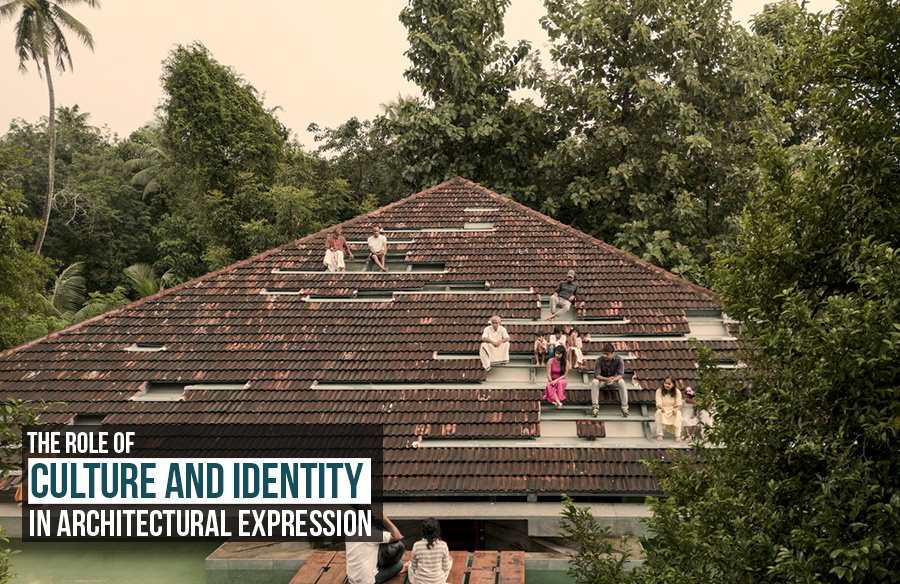
Among the many styles in our world, cultural uniqueness shines through, illuminating the concept and representation of the main structure. From large houses to small huts, all heritage traditions and practices constitute the home. The combination of traditional culture with modern structures in the field of architecture has led to the emergence of many designs that respect diversity and heritage. Let’s look at the great influence of personal culture on architectural expression and its role in the development of our architectural structures.

Exploring the Cultural Layers of Architectural Identity
Architecture reflects culture by integrating beliefs, practices, and lifestyles from around the world into the built environment. Knowledge and use of the environment truly inform culture. Environmentalism has a history and culture; International and regional principles affect the built environment. Cultural and natural heritage are important factors in the formation of different urban areas and neighbouring peoples. Architectural design can be a physical and important way of transforming the distinctive features of tradition into visual architecture, thus preserving the characteristics of various places and areas.

Social, cultural, and environmental development issues as well as cultural heritage, such as building solutions and the form of the building facade, all influence the conservation of particular buildings. For example, the construction of a mosque represents a personal culture, taking into account various forms and architectural elements from history and culture, as well as the sacred activities and standards specified in the Quran.
The elements that provide the atmosphere, trust, and uniqueness of its architecture. In this era, there is an urgent need to create a city that represents its culture and creates a sense of identity. This interaction has the potential to create an architecture that reflects the individual’s culture. Design can be used together to provide a sense of humanity while preserving the unique culture of a place, region, or community. Art and architecture are two principles that seek to express and represent. Culture, which is the basis of society, must have certain values.

Forging Identity in Structures: The Reflection of Society’s Essence in Architecture
Culture has become part of our daily lives. If the features of the structures can be presented from a cultural perspective, the unique characteristics of each region will be preserved. This research will explain the role of architecture as a physical tool to transform the spiritual components of culture into tangible objects, giving meaning to cultural practices and outcomes we can never forget. The place has thoughts, feelings, knowledge, and memories of the region; these can be past or future.

To create a sense of place, people need to connect to an area or place through its architecture, even if they live abroad, because this depends on their culture, i.e., how they should present themselves. Art and architecture are two principles that seek to express and represent. Cultural heritage, which is the foundation of the nation, should be given the same value. Culture thus becomes part of our daily lives. Globalisation has washed away our individuality and uniqueness, causing cities and countries to look like urban landscapes across the board.

Therefore, if the architectural character is expressed within the framework of culture and tradition, the unique characteristics of each place or region will be preserved. It is a design that represents a part of nature or a human being, showing the inner body of a human being, his thoughts, and feelings regarding his past and forgotten cultural traditions (religious, national, ethnic, etc.. Architecture is an important part of humanity; it is like a mirror that shows humans and all the other parts that make up the world.
Reimagining Heritage: Architectural Adaptation in a Globalised World
Architecture plays an important role in the construction of a country and should create beneficial silhouettes for the country and region. Thoughts on Cultural Identity Contemporary design is at the intersection of tradition and innovation, supported by a distinct cultural background that has made the world prosperous.
Architects and designers use cultural heritage elements in modern architecture through architectural forms, materials, or symbolic elements to create an environment rich in history and tradition. In cities around the world, we see a culture associated with famous buildings as symbols of identity and pride.

From the beautiful geometric designs of Islamic architecture to the shining faces of Latin American facades, each building tells a story of heritage and identity. The architecture embodies the dynamic relationship between history and modern times by embracing diversity and celebrating cultural symbols. Although interpretation is based on agreement, it is not limited to historical precedents. However, he rethinks tradition from a post-modern perspective, experimenting with new shapes, materials, and technologies to create unique and creative products. Designers are exploring new forms of architecture, combining traditional and modern design to create timeless designs and ideas.

Architects play an important role in preserving and promoting cultural heritage through the transformation and reuse of historical buildings and spaces for preservation. By renovating historic buildings, designers respect the heritage of past generations while preserving cultural assets to support future generations.
Keeping traditional culture alive in the natural landscape requires not only the protection of the structure but also the intangible assets (stories, traditions, history, and culture) that determine the character of the society. Architects honour the spirit of place by creating environments rich in narrative and purpose.

A city’s skyline, arrangement, and public space design, for example, can reinforce or challenge the neighbourhood’s traditional norms and values. Certain societies place greater importance on communal areas and diligently search for possibilities for individuals to interact with other individuals, while others may prioritise individuality and seclusion.

Beyond Aesthetics: The Social Dynamics of Architectural Design
Architecture grows into an instrument that may be utilised for solving the societal and interpersonal difficulties that exist. Similarly, architecture is a technique that may be employed in the field of building design to create environments that are sensitive to the physical and psychological requirements of the people who live in them.
It reflects societal attitudes and ideologies because architecture is identical. Every designer’s implicit endeavour is to elaborate on the manifestation of culture through the constructed form. In reality, cultures have a significant impact from the start of the development of design.
This is because every design that is intended to execute a certain purpose is directly or indirectly drawn from or synced with the user’s cultural identity. It is what defines our cognitive processes. It determines an individual’s identity and aids memory retrieval.

Cultral Heritage in Architecture: Building Identity
There are several instances where culture has consistently ruled, contradicting the built environment of a location. The extensive amount of legacy and tradition ingrained in the surroundings has always encouraged builders to combine parts of both characteristics, irrespective of period or design.
Greece’s Iconic Monument: The Parthenon’s Enduring Legacy
The Parthenon is one of the oldest monuments in the world and represents more than traditional Greek architecture. The temple was built in honour of Athena, the patron saint of ancient Athens, and represents the classical period in Greek history when the Athenians recognized the excellence of art. They also used their knowledge and skills in mathematics and science to create ideas in architecture and art. They use the golden ratio to calculate the building’s width and height ratio, door length, and even the position of the columns supporting the structure.

Egypt’s Majestic Marvels: Exploring the Pyramids of Giza
The Pyramids, one of the Seven Great Pyramids, challenge modern humans to understand their deepest secrets. In Egyptian mythology, the world arose from the depths of a lifeless ocean. When the waters parted, the sun rose first; When the body of water called the Nu River split, a pyramid-shaped mound (a river) emerged, the first part of the world and the first evidence of life. This legendary figure is said to represent Egypt’s surroundings. The Nile floods the region during the summer and then returns, making the land fertile enough to plant the crops that provide wealth and life (water) to Egypt.

St. Peter’s Basilica: A Renaissance Masterpiece in Vatican City
The cathedral is a Renaissance-style church located in Vatican City, the papal enclave of Italy. It takes its origin from Roman architecture during the early Christian art period. This church is now a papal cathedral. Following this practice, the Pope is now buried in the church. He has been a great supporter and supporter of Europe. He also received many decorations, including stained glass windows and tapestries, as well as frescoes, inscriptions, and miniatures. It has inspired many mosaics and paintings, especially in Eastern Europe. All these beautiful designs and religious images are designed to promote the spiritual community through the Christian message.

References:
View of architectural expression and identity- case studies in iconic building designs. Available at: https://propulsiontechjournal.com/index.php/journal/article/view/1127/792
What is the cultural identity, preserving the town’s historic and cultural identity.? | 5 answers from research papers. Available at: https://typeset.io/questions/what-is-the-cultural-identity-preserving-the-town-s-historic-3t5cxompro
Chief, J. editor in (no date) Call for paper, Journal JETIR follow UGC CARE List, UGC-CARE journal, UGC care, UGC care approved list, UGC approved journal, UGC care Journal, UGC-CARE, UGC Approved UGC CARE, UGC-CARE, UGC Approved List of Research Journal, UGC approved journal, research journal. Available at: https://www.jetir.org/
(PDF) Architecture: The Quest for Cultural Identity. Available at: https://www.researchgate.net/publication/274829351_Architecture_The_quest_for_cultural_identity
The connection between architecture and culture (no date) Indus University – University Ahmedabad. Available at: https://indusuni.ac.in/the-connection-between-architecture-and-culture.php
The cultural expression in Architecture (2022) Urban Design lab. Available at: https://urbandesignlab.in/the-cultural-expression-in-architecture/
Muhammad, M. (2024), The influence of cultural identity in contemporary architectural expression, INJ Architects. Available at: https://injarch.com/archives/30598