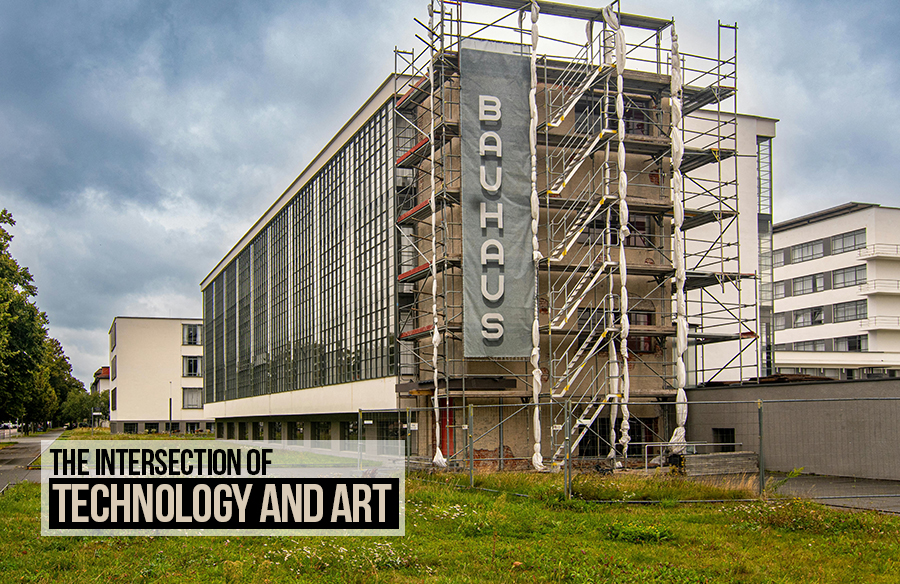
Art and technology have been inseparable right from time. From the Stone Age through the metal age, to the industrial age, the degree of artistic expression has always been subject to available and prevailing technology.
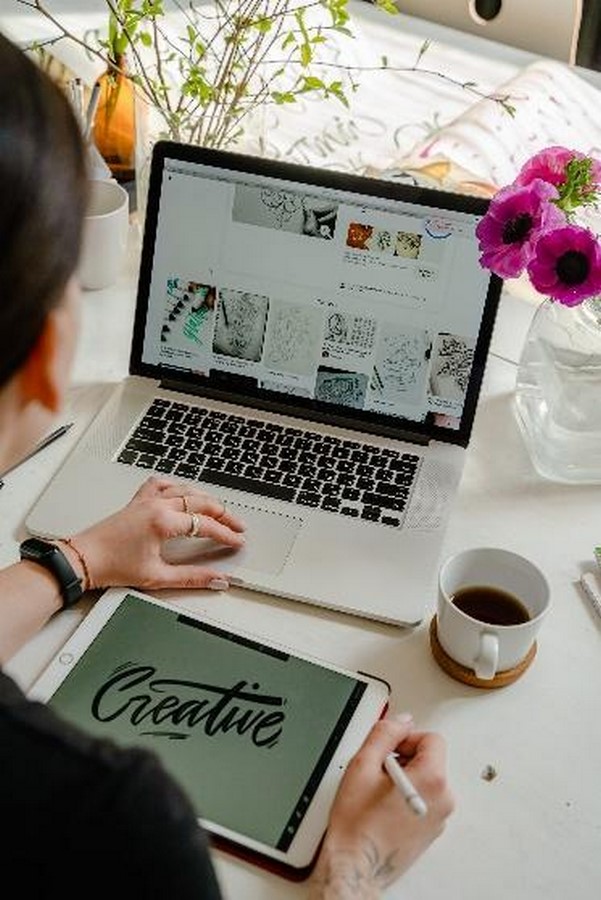
Technology and art have since shared a simple yet dependent relationship. To some, art and technology may seem opposites but they are interconnected now more than ever with technology pushing artists to be more creative and expanding artistic creativity through digital arts, blockchain arts, virtual reality etc
“Like art, technology is a lofty expression of human creativity. “
A quote from The Winding Passage
Technology and art over time have evolved with overlaps, especially in the digital era, what’s more interesting – arts generated by computers have emerged in diverse forms and come to be known under various umbrellas.
Revolt against Technology and Art – Arts & Crafts Movement
To understand the relationship between art and technology is to uncover a dynamic of activities set in the 19th century – the arts & crafts movement. This movement began as a response to industrialized arts, put correctly, arts made with technology. Whilst this period had been heralded by artists and architects alike, they unanimously agreed art and artistic expression should be strictly based on craftmanship, handwork and crude concepts negating technology as a tool for propagating art. It was both a social and artistic movement built on tenets of craftmanship, individualism and regionalism. Perhaps, this movement became the motivating factor for future avant-garde movements of technology and arts such as Art Nouveau, Art Deco and the eventual rise of the most influencing artistic/architecture school – Bauhaus.
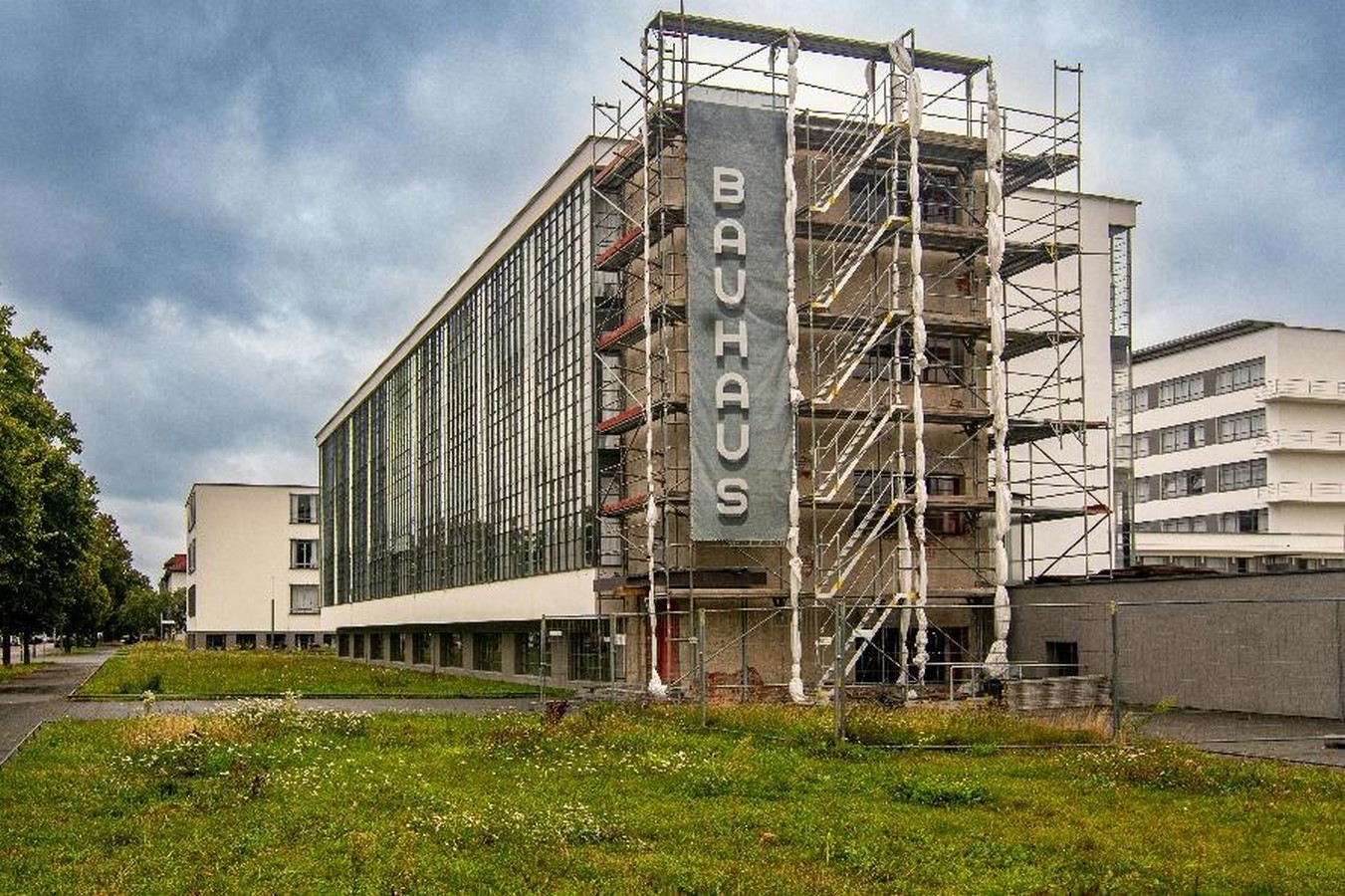
The revolt against technology and art had been championed by artists from different walks of life; among them was architect Augustus Pugin, John Ruskin – a writer, and William Morris – a sculptor and artist etc. events such as a decline in artistic standards as evident by the Great Exhibition of 1851 had spurred the birth of this movement; art and work of art had been described as too artificial, ornate and mechanized neglecting the supposed core belief of arts – naturality, craftmanship and beauty; technology had been blamed for this stripping arts of its originality. The result – a nostalgia for medieval age art and handwork arose creating a desperation for separation between technology and arts hence, the movement was born. Arts during this period peaked with characteristics of naturality, vernacular, detail and material truthfulness but at the cost of supply and utilitarian value.

An increase in demand meant more manpower which could not match up. Their rejection of new-age mechanization and technology for art’s sake became the undoing of the arts and crafts movement. The result – an art that is detailed and skillfully made but only in short supply hence only available to a small percentage of the population and affordability defined by the highest bidder. Without technology, art becomes lost.
Artificial Intelligence
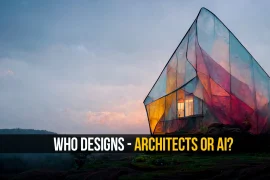
In recent times, artificial intelligence (AI) has promoted the fusion of technology and art thereby broadening the scope of creativity. Growing (and fully developed) sectors employ AI to foster creativity although, there have been concerns about AI lacking in the area of emotional intelligence. Another concern revolves around the possibility of AI displacing human artists and creators. Thanks to AI, technology can operate in a deeper realm of creativity. Areas of visual arts, performing arts, Literature and music have witnessed a change with the introduction of AI. The introduction of the General Adversarial Network (GAN) by Ian Goodfellow in the area of deep learning and artificial neural networks to generate lifelike realistic images has also revolutionized the visual arts.
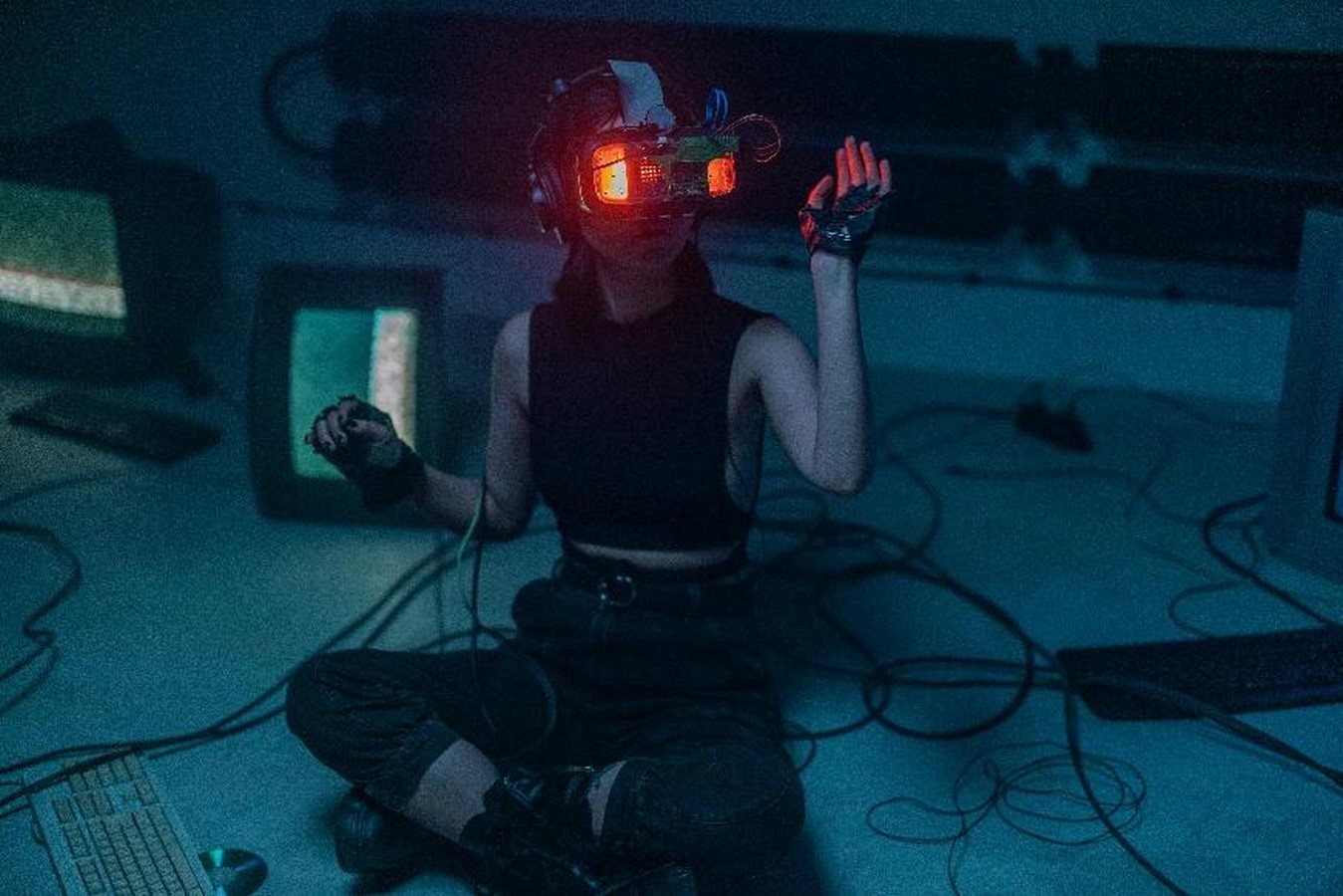
To further push the boundary of creativity through technology and art, AI subfields such as NLP (Natural Language Processing) have introduced GPT- 4 in a series of text generation and research algorithm systems. This initiative like its predecessors has opened up the world of literature and literary arts to endless possibilities. Other common initiatives such as Quillbot are good research and text organizing tools. It is noteworthy to state that with growing concerns about the usefulness of AI in arts and as a technical tool, the future of AI is yet unknown but its continued existence is established – for a fact. Going on, works are currently ongoing to increase human – AI collaboration while pushing the creative limits; the future of technology and art may be yet fully formed but the pivotal role of AI moving on is fixed.
Virtual Reality
Perhaps the earliest traces of art in virtual reality date back to the 20th century during the experimentation of immersive environments using optical illusions by artists and inventors alike. Virtual Reality (VR) art is a creative expression method that uses technology to allow people to engage with computer-simulated surroundings. These surroundings could be real or imagined. Virtual Reality has progressed beyond gaming and entertainment. VR art has come to incorporate technology and art; in a series of events unfolding recently, artists are using VR and VR-simulated mediums to create and display artistic pieces. Immersive and interactive walkthrough art experiences have been taking place globally. The “Van Gogh experience” is a virtual tour through the life and art of Van Gogh being on display in several cities around the world including Paris, Berlin & Toronto.
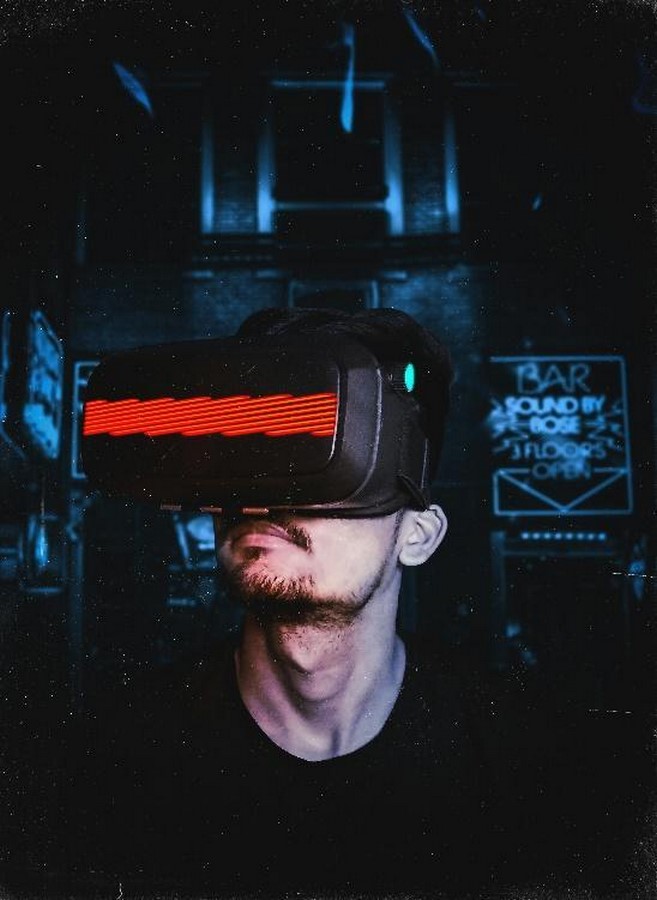
A major change in aesthetics has been brought about by virtual reality (VR) as an art form. Conventional artistic mediums such as painting and sculpture concentrate on stationary, material items, while virtual reality art presents viewers with a dynamic and absorbing experience. The lines separating the viewer from the artwork are thereby blurred, opening up new avenues for artistic expression and interaction. Because VR art is so transformative, new artistic genres have been explored, stretching the boundaries of creativity in previously unthinkable ways.
3D Printing
Three-dimensional printing like other intersections of technology and art have found use away from industrial purposes. The sculpting process is easier and faster; large moulds can be 3d printed in no time and fashioned to precision and utmost detail. At the expense of limitless geometric construction, artists and sculptors get the leeway needed – size no longer poses a threat. The 3D art process is both procedural and iterative but does not neglect the artistic inputs; based on CAD data, 3D printers can produce direct, immediate results allowing the artists to digitally transform idea creation to execution and eventual output.
The authenticity of art is a heavily debated discourse in 3D printing, some art scholars argue that “industrial production” (in this case 3D printing) strips art of its regional identity and authenticity. Sounds familiar? Yes. The arts and crafts ideal. There is a growing body of research work to counter this making a case for digital authenticity and originality in arts.
Technology and art are indispensable to both entities. Art yearns for expression through a medium created by available technology. With progress in technology and civilization, art is made more evident and brought closer to non-artists. What’s more? Technology is proving to redefine “who” an artist is. With each progress, The identity of an artist is less restricted to traditional artistic prowess and expanded to mean even more.
References:
Anon, (2023). Virtual Reality and the Future of Art Exhibitions. [online] Available at: https://artsartistsartwork.com/virtual-reality-and-the-future-of-art-exhibitions/.
Anon, (n.d.). Is Virtual Reality An Art Or Can It Be Used To Create Art – Draw & Code. [online] Available at: https://drawandcode.com/learning-zone/is-virtual-reality-an-art/
Cottonbro Studio (2021). Artificial Intelligence [Photograph].
Knight Foundation. (n.d.). Navigating the intersection of art and technology. [online] Available at: https://knightfoundation.org/articles/navigating-the-intersection-of-art-and-technology/.
Merigan, N. (2023). AI and Creativity: The Intersection of Art and Technology. [online] Pss Blog. Available at: https://www.pranathiss.com/blog/ai-technology-intersection/.
Ruan, Y. (2022). Application of Immersive Virtual Reality Interactive Technology in Art Design Teaching. Computational Intelligence and Neuroscience, 2022, pp.1–12. doi: https://doi.org/10.1155/2022/5987191.
Shivam, H. (2019). Virtual Reality. [Photograph]. (Hyderabad, Telangana, India)
Shkraba, A. (2019). Art and Technology. [Photograph].
Siegfried. P. (2023). Bauhaus School of Design. [Photograph] (Dessau-Roßlau, SA, Deutschland)
Team, B. (2023). Exploring the Intersection of Art and Technology. [online] CIIT Philippines School – Multimedia Arts, Web Design, 3D Animation, Mobile Game Development. Available at: https://www.ciit.edu.ph/exploring-the-intersection-of-art-and-technology/.
Tissen, L.N.M. (2022). 3D Printing and the Art World: Current Developments and Future Perspectives. [online] www.intechopen.com. IntechOpen. Available at: https://www.intechopen.com/chapters/85319.
Voxeljet. (n.d.). 3D printing in art. [online] Available at: https://www.voxeljet.com/additive-manufacturing/industries/art-and-design/
www.goodreads.com. (n.d.). A quote from The Winding Passage. [online] Available at: https://www.goodreads.com/quotes/1525433-technology-like-art-is-a-soaring-exercise-of-the-human.
www.linkedin.com. (n.d.). Artificial Intelligence in Art: Exploring the Intersection of Creativity and Technology. [online] Available at: https://www.linkedin.com/pulse/artificial-intelligence-art-exploring-intersection-creativity/[Accessed 22 Jan. 2024].
www.linkedin.com. (n.d.). The Growing Relationship between Art and Technology. [online] Available at: https://www.linkedin.com/pulse/growing-relationship-between-art-technology-drilers-india/ [Accessed 24 Jan. 2024].