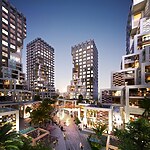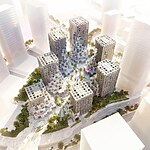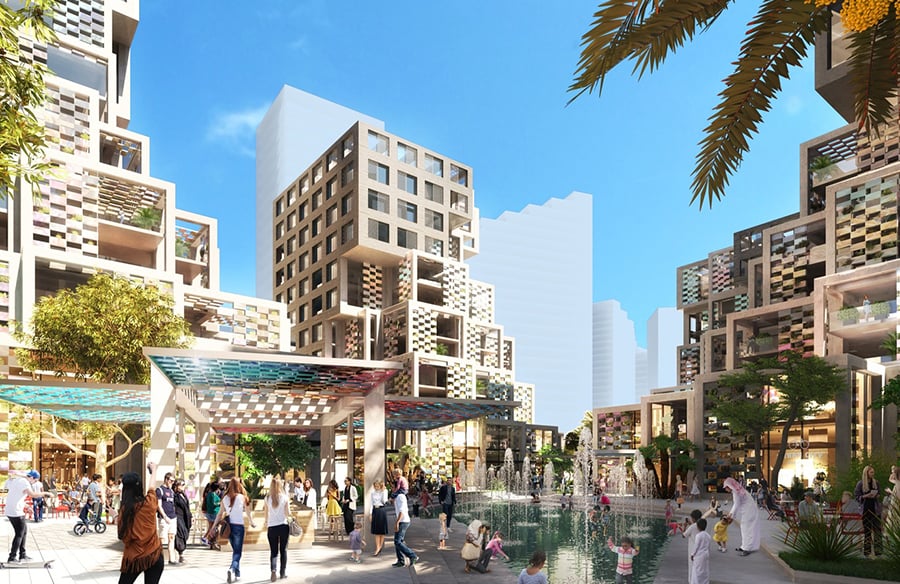
Pixel, an 85,000-square-meter mixed-use development in Abu Dhabi, features 525 apartments, retail, offices, and services centered around a vibrant communal plaza. The design encourages outdoor living and a sense of community, which is a novel concept in the Emirates. The project is located in the Makers District, a new development on the northeast side of Abu Dhabi’s Al Reem Island that developer IMKAN describes as the city’s new heart. Pixel serves as a creative counterpart to the city’s cultural hub on nearby Saadiyat Island, which is home to Ateliers Jean Nouvel’s Louvre Abu Dhabi and is soon to become home to Gehry Partners’ Guggenheim Abu Dhabi and Foster + Partners’ Zayed National Museum. The project is envisioned as a development that embraces the outdoors and fosters a feeling of community, departing from the typical pattern of detached skyscrapers in the United Arab Emirates.

Design Concept
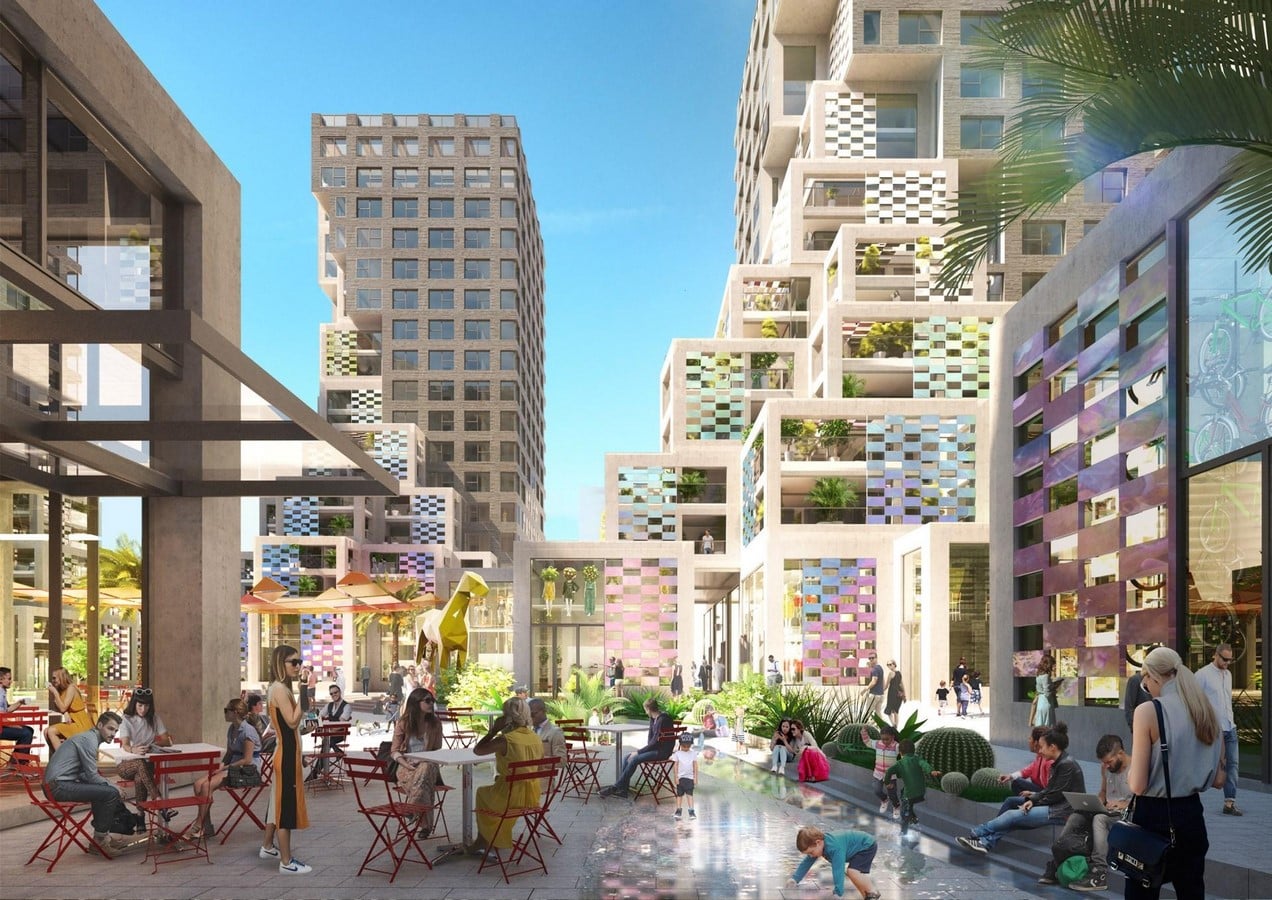
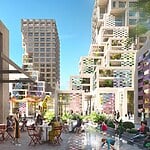
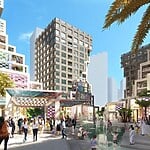
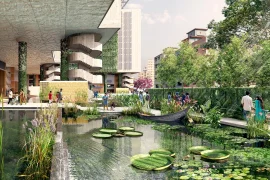
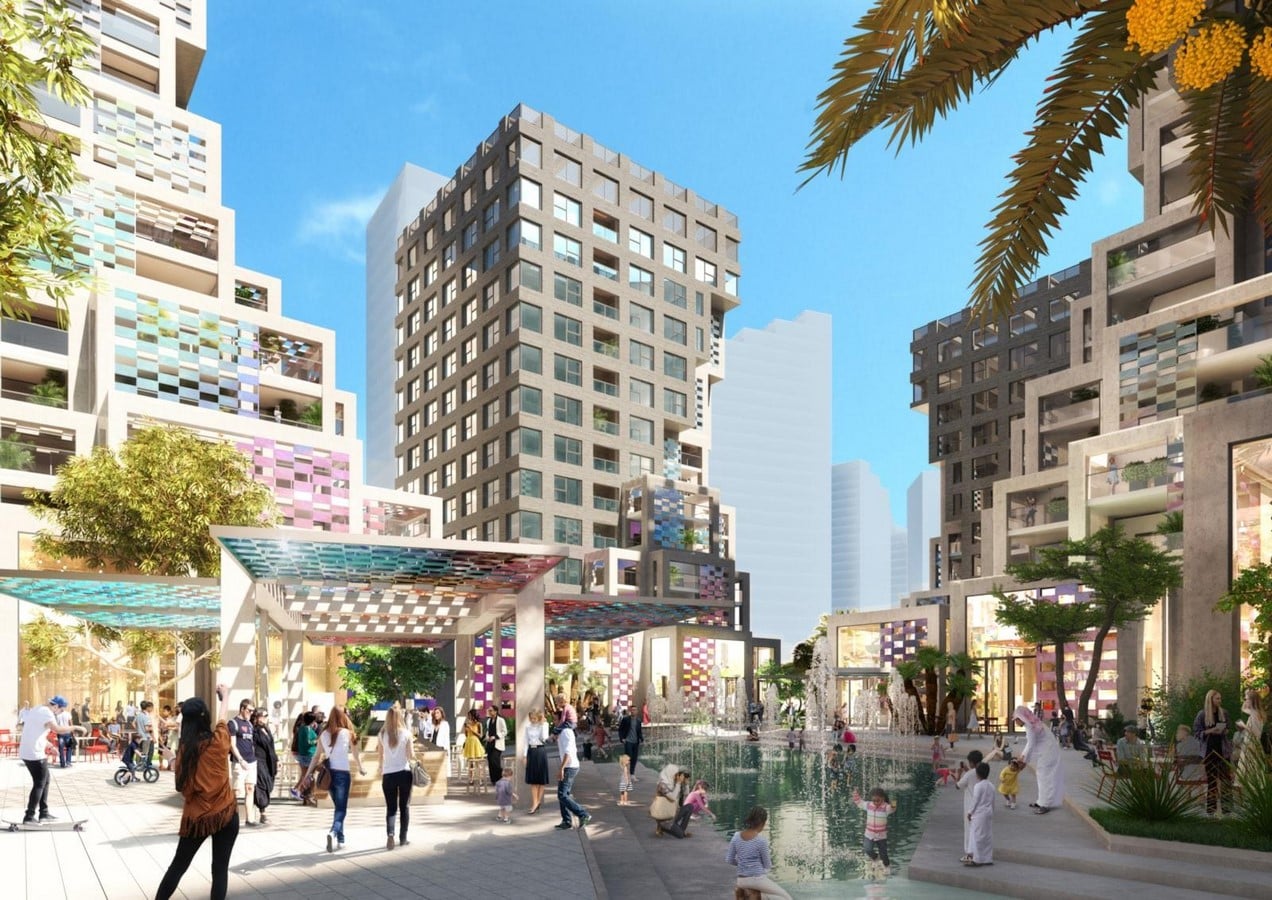
The development consists of seven compact mid-rise buildings that gradually grow in height from east to west over the site. Visually comparable to marble quarries, each tower is split so that “pixelated” cuboid masses are subtracted from the top sections of the towers while appearing to be added to the lower parts. This allows for a more human scale at ground level, resulting in a range of different-sized areas for shops, restaurants, and creative engagement. The space is ideal for the development’s offices, which have flexible layouts and can accommodate spaces as small as 50 square meters, as well as shops, cafes, restaurants, a clinic, and a variety of amenities such as a pool, gym, community spaces, and a children’s playroom. The buildings are pushed to the site’s borders, forming a central plaza with landscape design by BIG. The central plaza also serves as part of “The Artery,” a continuous pedestrian public area that runs through Makers District, connecting Pixel to the neighboring seaside.
The towers’ outward-facing facades have a simple design, with a three-dimensional graphic pattern. However, the facades facing the central plaza are what truly animates the development. Near the base of each tower, these facades convert into configurations of balconies and bay windows, offering an ideal environment for interaction with the vibrant plaza below as well as encouraging an outdoor lifestyle during the cooler months of the year. “The weather in Abu Dhabi is very pleasant for about eight months of the year, yet most housing there doesn’t really encourage people to spend time outside. With Pixel, we wanted to show that a connection with the outdoors is not only possible in this city, but beneficial,” says MVRDV founding partner Jacobs van Rijs. Moreover, these balconies are further veiled by ceramic screens that, in honor of Abu Dhabi’s pearl diving legacy, have a glittering pearlescent finish. These screens also decorate a series of identical pavilions that MVRDV placed in the center square to give additional shade. “So, our design creates outdoor spaces with the pedestrian plaza and ‘pixel’ balconies to encourage a sense of community spirit, enabling this social and creative atmosphere.”
Design Details
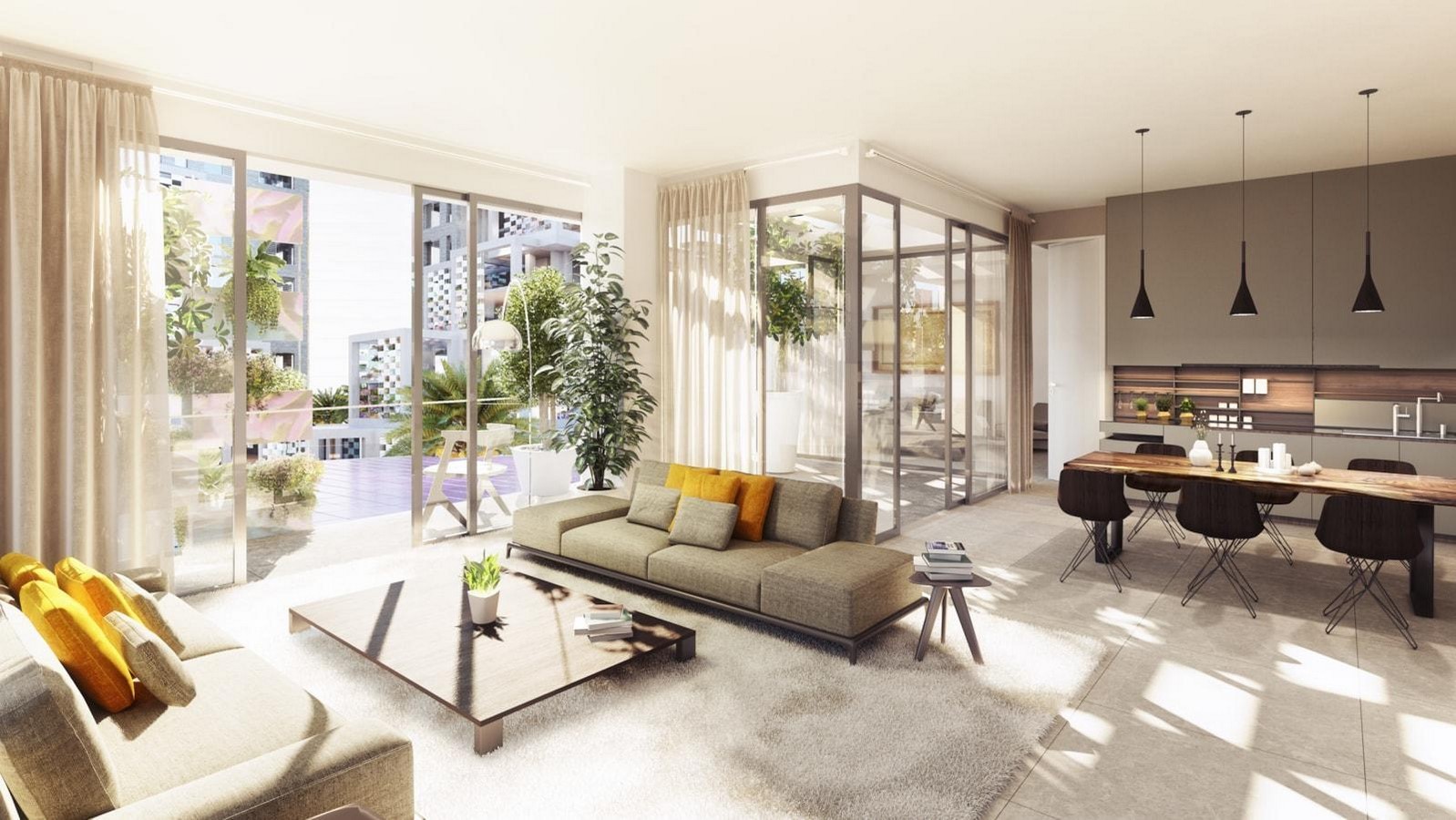
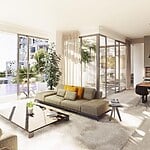
Pixel has 525 apartments of various sizes, ranging from studios to luxurious three-bedroom apartments. These apartments are arranged in a way that celebrates diversity, bringing together more expensive units and more affordable spaces, as opposed to the typical model in which the most expensive units are located at the top levels. This is made possible by the development’s central pedestrian plaza, which, with its bustling environment, benefits residents who live on the lower floors. All of the units have completely equipped fitted interiors, which were also designed by MVRDV.
Sustainability
Given that the built environment sector accounts for approximately 39% of global carbon emissions, and that decarbonizing the building industry is one of the most effective and significant climate change mitigation actions, the structural team has continuously optimized the design of various structural concrete elements since the project’s inception. A study shows that by implementing the following design ideas, each tower has significantly reduced its embodied carbon footprint. The tower slab compositions were altered from reinforced concrete to post-tensioned slabs, which reduced the concrete volume by 8%. Another focus of design optimization was on the structure’s vertical elements, with smaller diameters and perimeter columns, as well as a lower concrete grade for the higher levels. Furthermore, several V-shaped columns have been installed between levels 1 and 2. This has enabled the removal of transfer beams at level 2 on all seven towers.
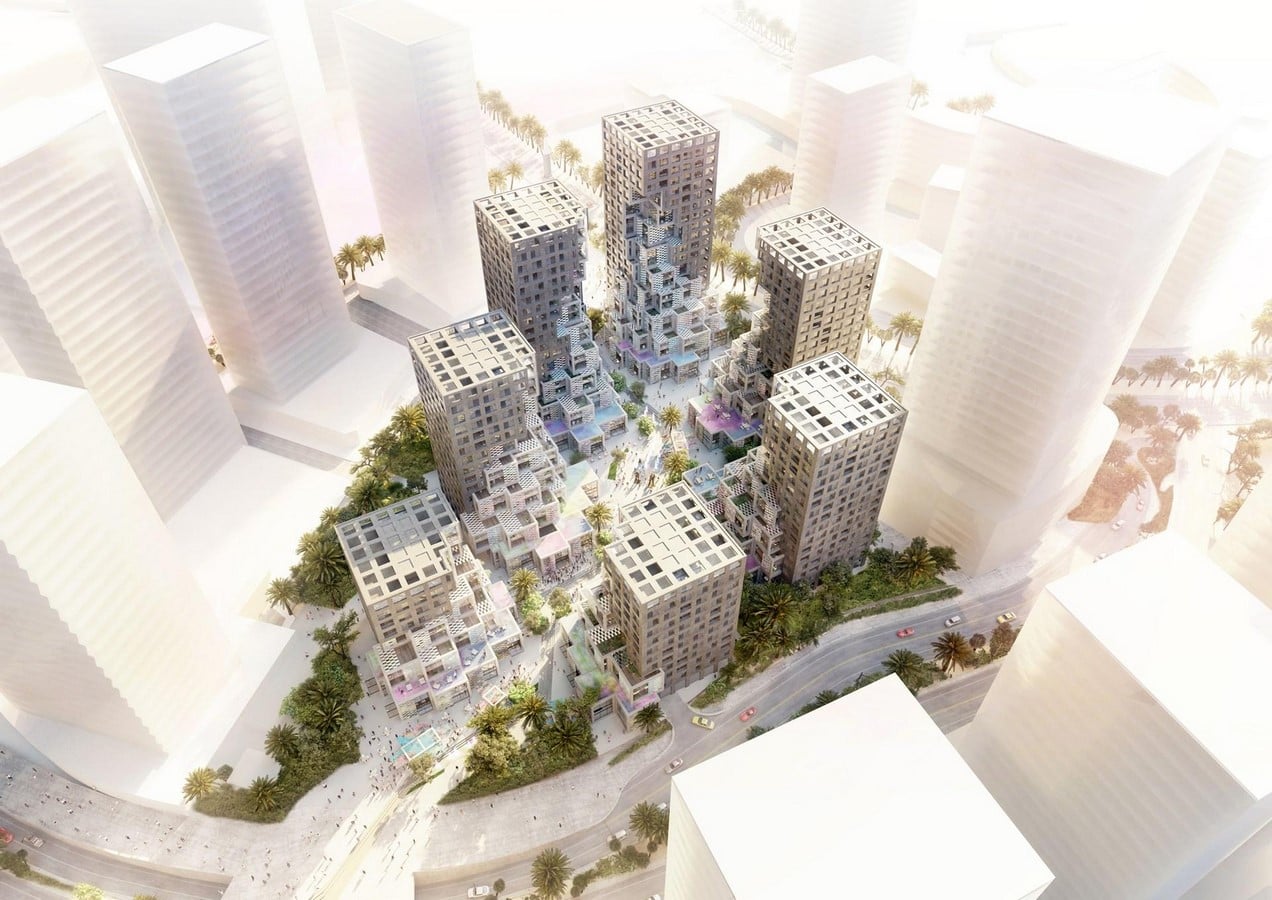
MVRDV has since created a variety of designs based on the pixel, including Downtown One Tirana in Albania, where the cantilevered offices and houses form a pixelated ‘map’ of Albania, and The Grotius Towers in The Hague with staggered rooflines. Nevertheless, this will be the firm’s first project in the United Arab Emirates. The project is being delivered in conjunction with Ramboll Middle East consultants and Dewan Architects + Engineers, a local architecture group.
References:
Amiri, A., & Sakeena, N. (2021). Sustainability: Towards the Carbon-Neutral High-Rise: The Role of Embodied Carbon. CTBUH Journal, 3, 36–43. https://www.jstor.org/stable/27169719 (Accessed: 09 February 2024).
Pixel (no date) MVRDV. Available at: https://www.mvrdv.com/projects/301/pixel (Accessed: 09 February 2024).