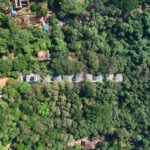
The site is an incredibly linear plot of land proportioned 1:8 with an equally narrow forest plot adjoining it. The 1:10 sloping site is typical of historic land parcels that stretch from access road to the fields or water bodies at the other end.
Project: Vana Villas
Studio: sP+a
Design Team: Aparna Dhareshwar, Saloni Parekh, Amaya Dsouza, Sakshi Ghulati
Area: 2750 Sq.Mt.
Year: Completed in 2019
Location: Assagaon, Goa
Photography: Suryan//Dang
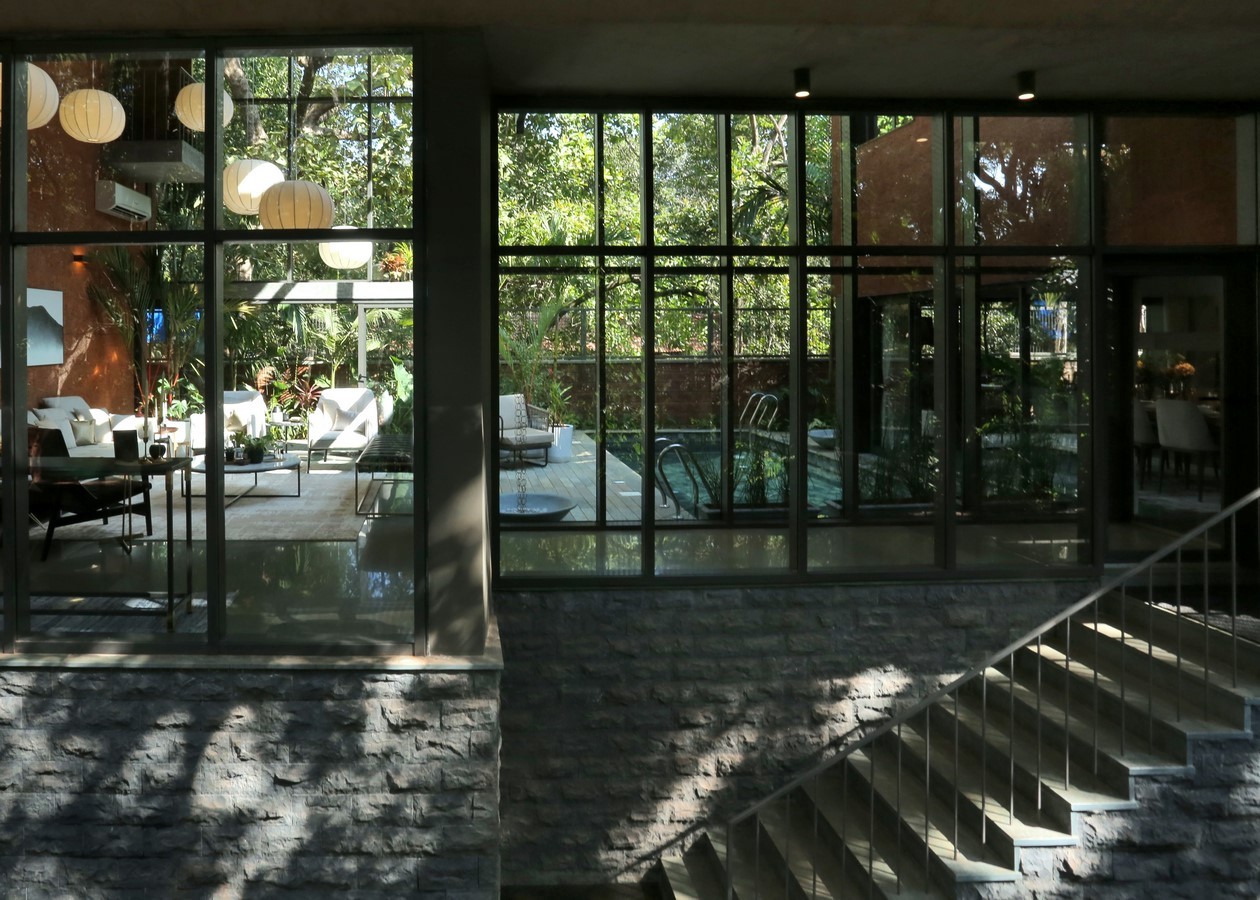
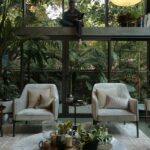
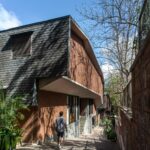
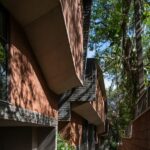
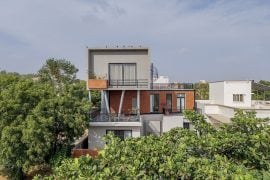
We limited the number of units being planned and further prompted splitting up each unit’s mass to allow for existing trees on our site to survive. Each unit differs slightly from the other in its response to adjust to the presence of the trees.
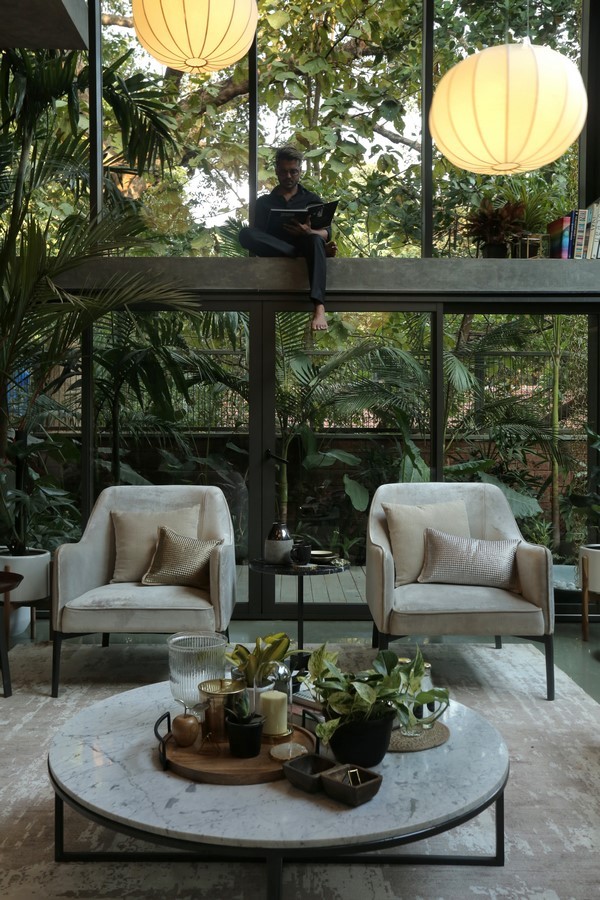
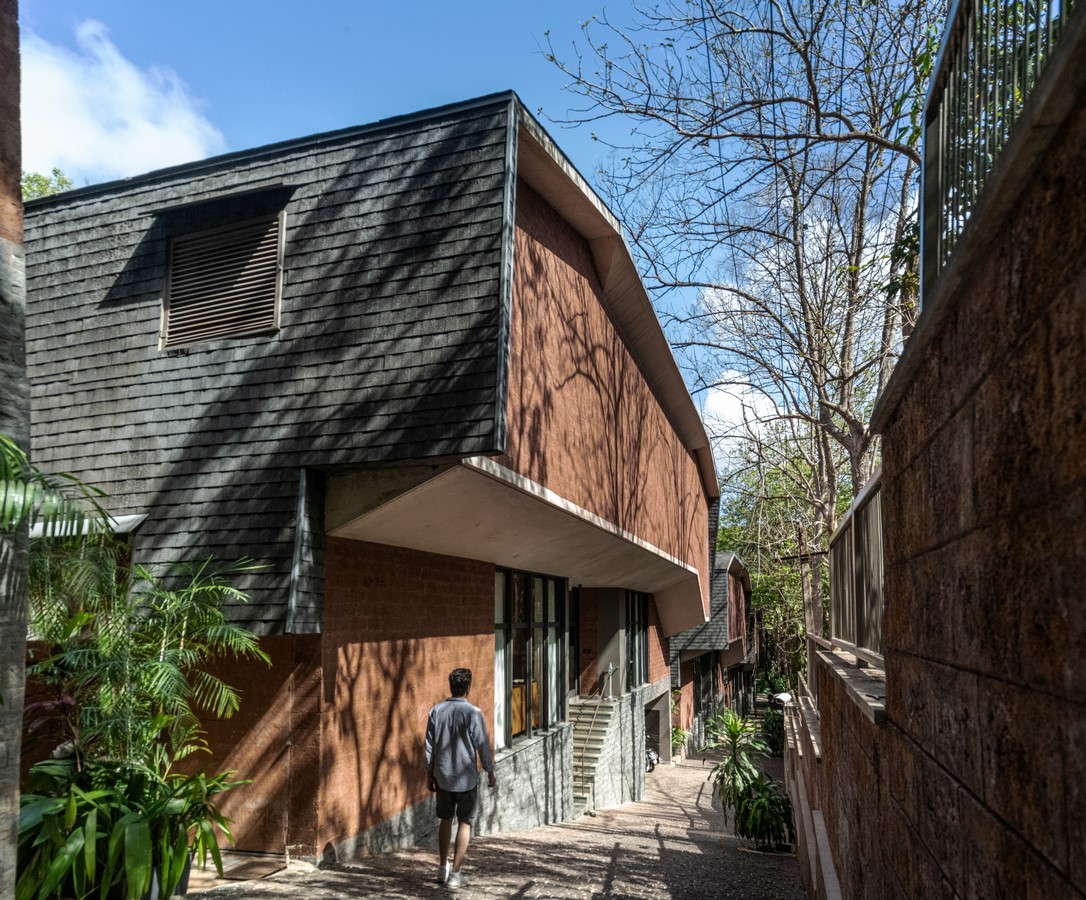
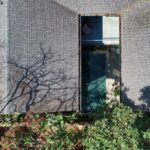
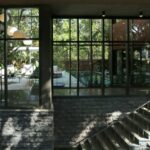
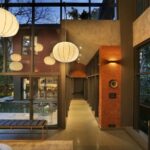
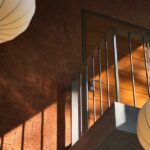
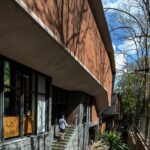
The individual units are planned lengthwise to allow for all to have views into the magnificent forest on the adjacent site. The arrival sequence takes you from the access road along an opaque building mass through an entry stairway onto a high plinth at which point the views into the forest are revealed. The living, dining programs are clustered around a courtyard on the first level and bedrooms on the upper.
About Firm:
Sameep Padora and Associates (sP+a) is an award winning, internationally acclaimed Architectural and Interior Design Consultancy Studio based out of Mumbai with projects across India.
Our studio of 50 architects & interior designers work through intense design processes strongly rooted in material, context and collaborative design.
As a practice we at sP+a believe that India’s vast breadth of socio-cultural environments require multifarious means of engaging with the country’s varying contexts. Type, Program, Design and Building processes are subservient to the immediacy of each project’s unique frame of reference. The studio’s approach hence is to look to context as a repository of latent resources connecting production process and network’s, appropriating techniques beyond their traditional use while allowing them to evolve and persist not just through preservation but more so through evolution. Our practice questions the nostalgia involved with the static ‘museumification’ of craft and tradition as well as the nature of what today comprises the ‘regional’ in contexts amplified by their place in global and regional networks. This attitude enables the practice to look at traditional project types, projecting their formal / relational history within the paradigms of current socio-economic forces. The studio structure actively engages with research, collaborations and collective models of practice not as isolated individual formats but as symbiotic streams feeding into each other. We advocate this hybrid model as an alternative to the traditional architectural practice, believing that this enables us to respond to the specificity of the local by evolving methodologies of extreme subjectivity.