Welcome to Future Talks by RTF, where design stories transcend mere structures and come alive through the visionary minds shaping our architectural landscape. Today, it is an honor to introduce a luminary whose journey spans over three decades, an architect whose passion, innovation, and dedication have left an indelible mark on the world of architecture and urban design.
Paul Lukez stands as a beacon within the architectural realm, a dynamic force seamlessly weaving practice, research, and education into an illustrious career. With a wealth of experience spanning 31 years, his contributions to projects worldwide reflect a profound understanding of the intricate interplay between design and the human experience.
The depth of Mr. Lukez’s expertise emerges not only from his founding of Paul Lukez Architecture in 1992 but also from his collaborations with esteemed firms such as Skidmore, Owings & Merrill, William Rawn Associates, and Arrowstreet Inc. His journey is adorned with over 60 academic and professional honors, a testament to his unwavering commitment to excellence in the field.
Please join us, as we explore the world of architecture and design with Paul Lukez, an architect whose dedication to design excellence and community collaboration continues to illuminate the path toward a more vibrant, sustainable, and inspiring future in architecture.
RTF: Hi Paul, We are glad to have you as a guest on Future Talks by RTF. Thanks for joining us. How rewarding have the last 31 years been for you building and scaling the Paul Lukez Architecture and what were the initial steps in your career like?
Paul: The last 31 years have been a very exciting and rewarding professional, creative and personal experience for me, which allowed me great opportunities for growth. Architecture is a unique profession which touches upon many different disciplines while requiring the continuous development of one’s emotional intelligence.
The greatest professional rewards include mentoring young designers and witnessing their growth. Of course, getting projects built and being able to see clients inhabit environments one helped shape is a most fulfilling experience. One realizes that design can be a powerful force in shaping people’s daily experience and their relationship to their communities and the environment.
RTF: You have taught design in prestigious institutes such as MIT and RISD. How important do you consider imparting architectural wisdom through lectures and workshops?
Paul: Being able to teach at any university or professional setting is a wonderful opportunity and privilege. I find that I have learned much from teaching students, continuously being reminded of ways in which design can be viewed through fresh eyes. Besides lecturing in more formal settings, architectural teaching in a studio setting offers unique learning experiences for students and teachers alike. In the studio, teaching and learning can become an interactive experience, where the search for solutions and ideas is explored as part of a common endeavor shared by students and teachers alike.
Teaching remotely has also offered new ways of communicating, perhaps with greater immediacy. Fully integrating digital technologies seamlessly into the teaching process, especially when combined with traditional / analog methods, will be the challenge and opportunity for the next generation of teachers.
RTF: What are the changes in the American Architectural and Design landscape that also mirror Global changes or vice-versa and how do you look at it?
Paul: There are, in my opinion, two sets of countervailing forces driving architectural design. On the one hand, the forces of globalization, whose residue is still evident, has tended to make design more the same such that architectural form, expression and technology are difficult to distinguish from place to place, whether culturally or formally. The resultant quality of architectural sameness is the result of instantaneous media transference of ideas and technology that have permeated the profession and culture.
On the other hand, we have also witnessed remarkable designs which are deeply connected to local cultures, environments, and materials. This may be resulting from a local reaction to globalized sameness, or as a more practical response dictated by the availability of materials and technologies. This trend is particularly evident in Africa, Asia and South America, where design solutions are so unique and idiosyncratic they could be designed for only one place. I find this inventive search for particularity connected to local conditions most encouraging and exciting, especially when augmented by a highly selective and limited integration of global technologies and concepts.
RTF: What are your views on sustainability in hospitality, residential, commercial and retail design? How far have we come from sustainability renders and plans to their real-life execution?
Paul: This question gets at one of the core challenges architects face in creating more sustainable environments. It is not enough to think about just making your building type sustainable, by integrating best practices associated with materials, renewable energy sources and new technologies. We must also contextualize sustainable strategies based on use patterns.
For instance, hospitality is inherently less sustainable, since this industry depends so heavily on travel, which can require increasing our carbon footprint. Similarly, some commercial, industrial programs and healthcare programs require heavier energy needs. The solution may be to consider fundamental questions about how to redefine standards of service and conventions in each industry and program type.
For instance, the post-COVID shakeout in the retail sector is evolving into a leaner bricks-and-mortar sales platform, allowing for opportunities to trim energy and land-use consumption. This new reliance on e-commerce must simultaneously examine ways in which sales and delivery networks are continuously refined to reduce the amount of resource allocation required per purchase and delivery.
In summary, leaders in each industry should continue to re-examine their business models as they relate to resource consumption and circularity. Architects can be part of this process, especially in helping to redefine changes in the physical spaces, networks and environments that support new business models.
RTF: What approach would you advise young design professionals to have to excel in the field? And what are some things to be wary of?
Paul: Like any aspiring professional, striving to develop skills and expertise post-graduation is key to becoming an excellent architect. The profession is especially well suited for those with both a visionary and practical approach to their professional development. That is, developing practical skills (tectonic, digital, management, etc.) guided and orchestrated by a personal and professional vision is possible in the field in ways that are unique to design. Aspiring young design professionals need to seek out mature, accomplished architects who can serve as mentors, mentors who recognize and embrace aspiring architects’ professional development in ways that can contribute to an office and society.
Be wary of any requests or demands that are made of you by a client, builder or employer that runs counter to the highest ethical standards and your moral compass. You can always find another client, contractor or boss.
RTF: Where does one find you when you’re not working?
Paul: I enjoy spending my free time with my wife and family, especially when traveling together. I also enjoy running, drawing, music and reading.
RTF: Which project of yours has been the most rewarding for you in terms of learning? Which is your favourite project and why?
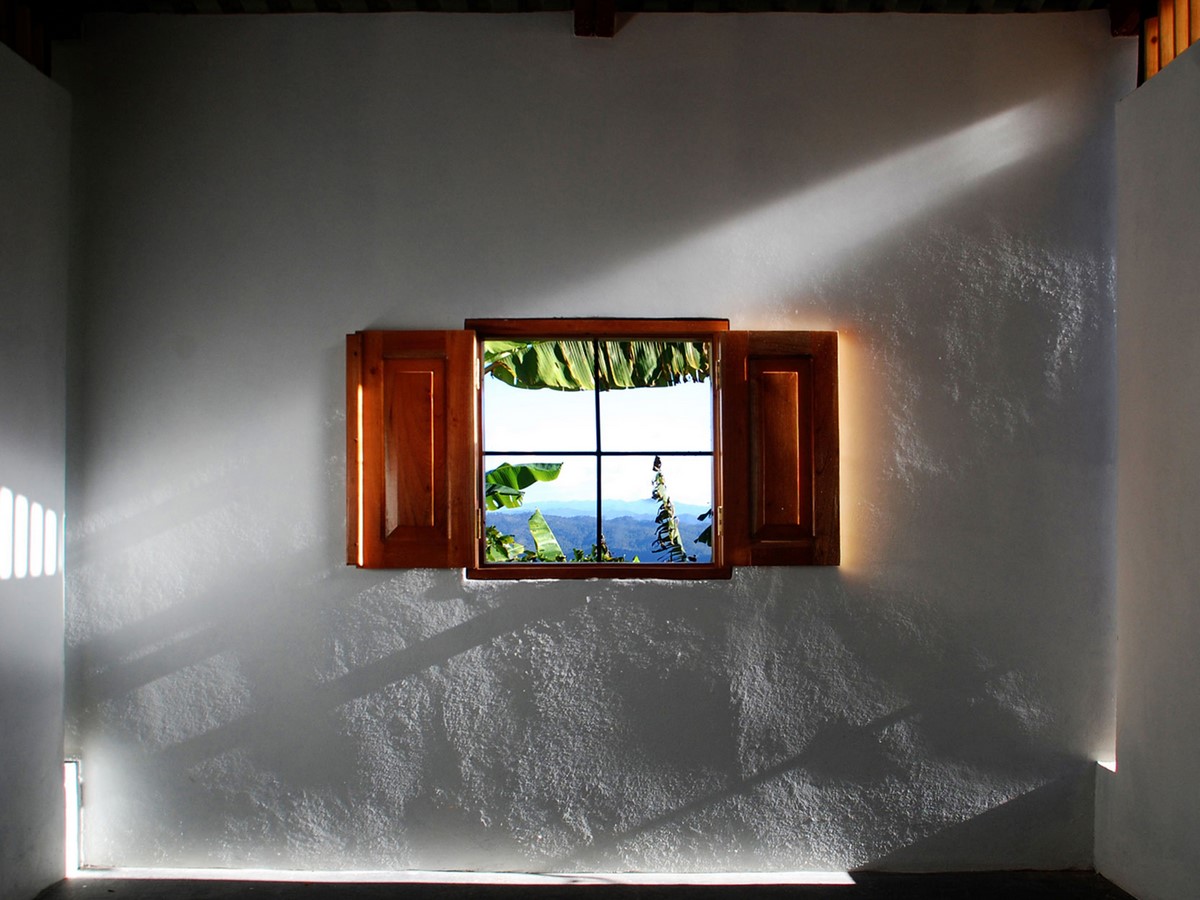
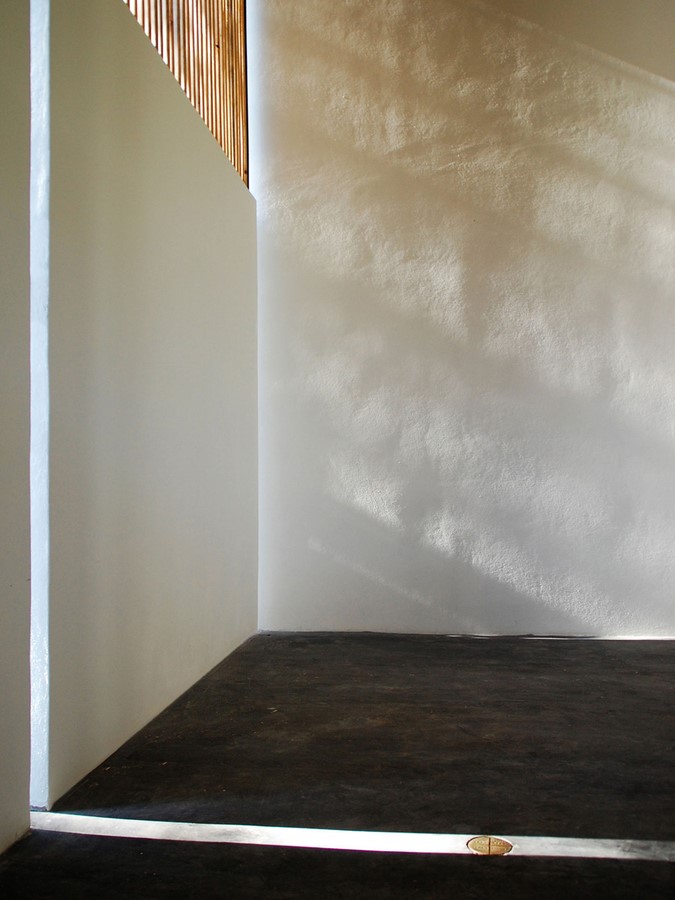
Paul: The most rewarding project, professionally and personally, was the design of the Proyecto Clamor de Paz (the clamoring for peace project) located in Guaimaca, Honduras. Designed both as a memorial and community center, this project arose out of the local community’s response to the violence experienced by local family members in a remote village in the mountains of Honduras.
Through the collaborative efforts of over 60 people (both local and international), a new structure was designed that commemorates the children’s bravery. It also empowers the local community to shape their vision for their communities’ and families’ future.
This project taught me that architecture can shape people’s lives, and that architecture can serve as a vehicle for creating new forms of community.

Thank you so much for doing this interview with us. It has been a pleasure getting to know about you and your work. We’re sure that your insights will be highly valuable to our audience which includes architects and design students.