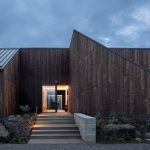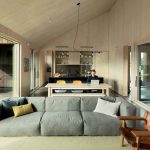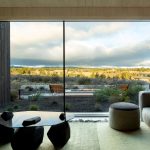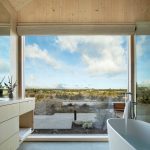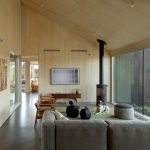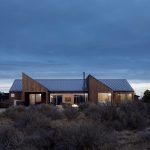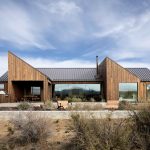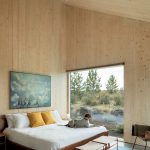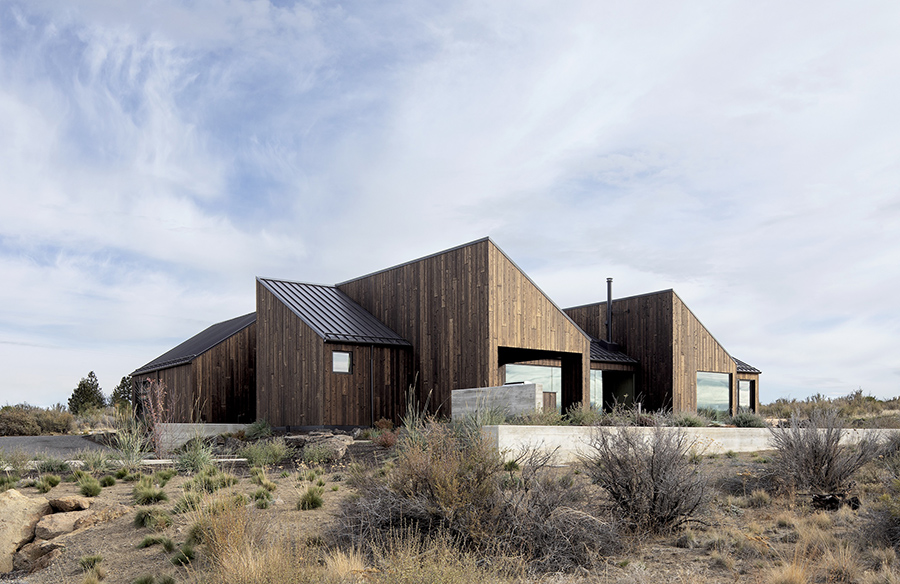
Octothorpe House was designed by Mork-Ulnes Architects for a couple of technologically progressive clients who decided to move away from San Francisco to embark on a more outdoor-centric life in Oregon’s high desert.
Project Name: Octothorpe House
Studio Name: Mork-Ulnes Architects
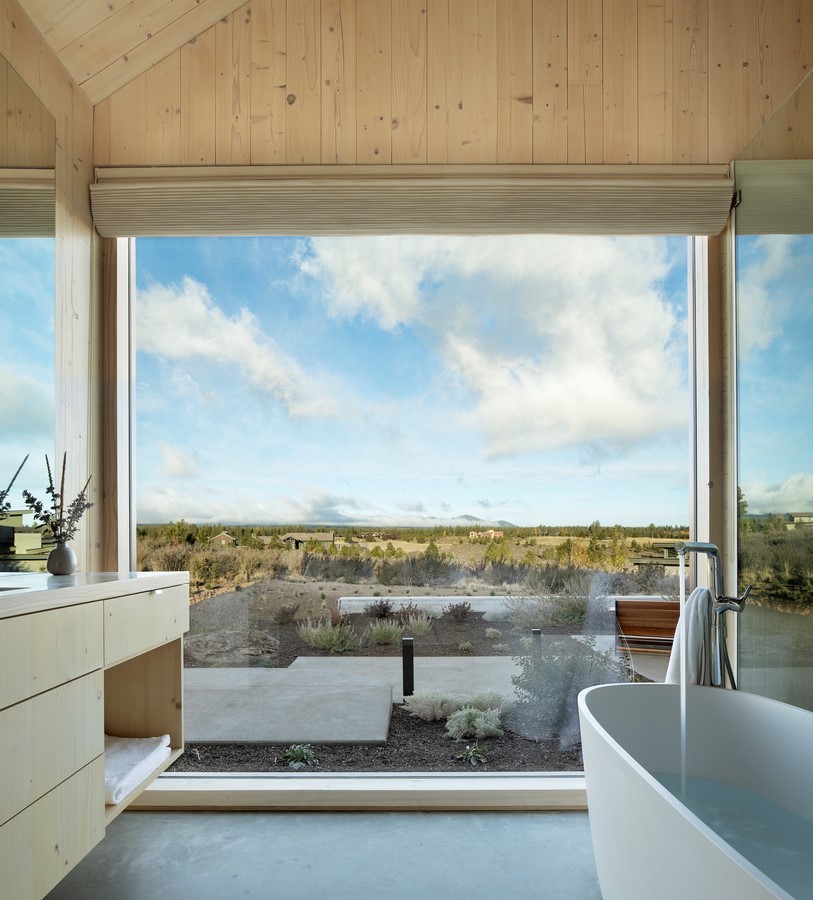
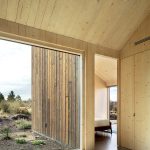
The architects employed CLT (Cross Laminated Timber), an environmentally sustainable and technologically advanced building method, quite new to the United States. CLT a is a high efficiency construction method whereby all materials are pre-cut off-site allowing for construction waste to be recycled responsibly at the factory.
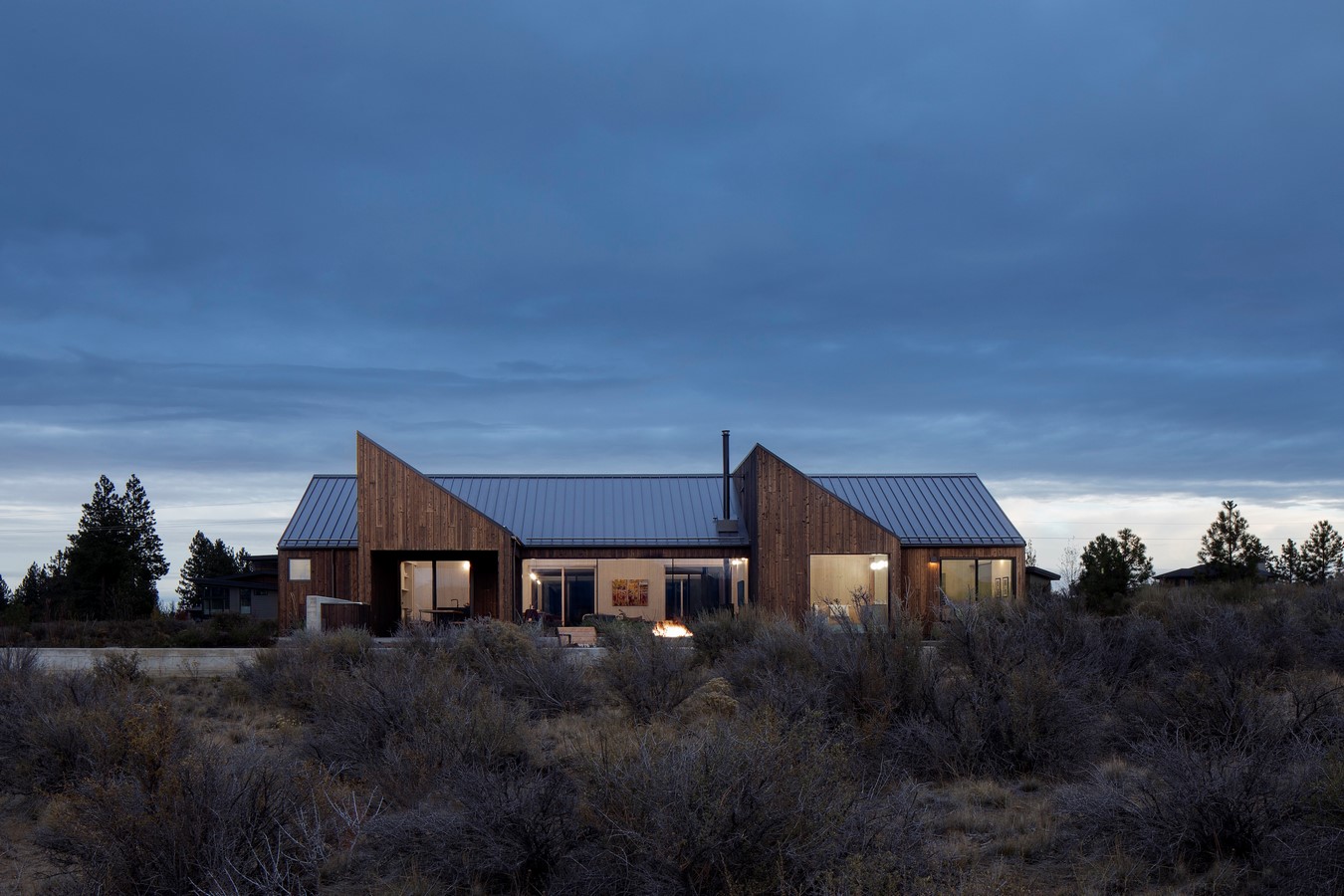
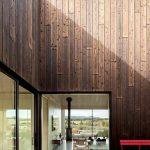
Encompassing 310 square meters, the single-floor dwelling reveals an ingenious plan layout. Four intersecting shed-roofed bars divide the plan into private and public areas, with a fully enclosed courtyard at the center of the building and seven semi-enclosed ones at its perimeter to bring air and light into every room.
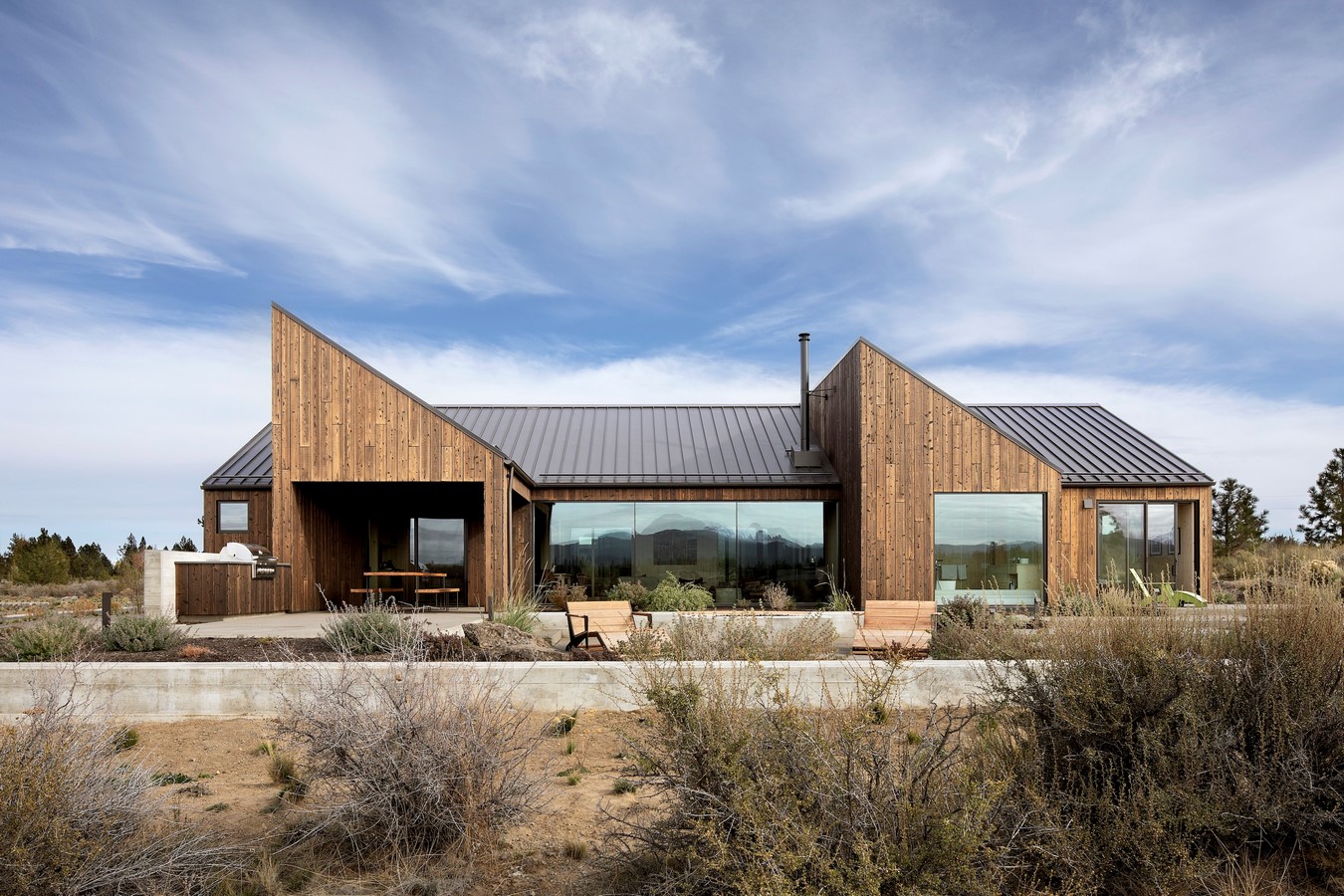
Mork-Ulnes capitalized on their experience in designing both mountain retreats and more permanent dwellings to develop the design for Octothorpe House. The outcome is a hybrid between a cabin and a house, possibly a new residential typology in an era when the relationship between Humans and their environment is being evaluated and redefined.
This house represents yet another opus in Mork-Ulnes Architects’ coherent portfolio of works. MUA’s designs testify to the office’s strong bicultural mentalities: a blend of Scandinavian straightforward practicality and Californian openness to innovation, considerations of sustainability always present in all of the practice’s projects