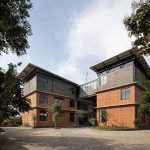
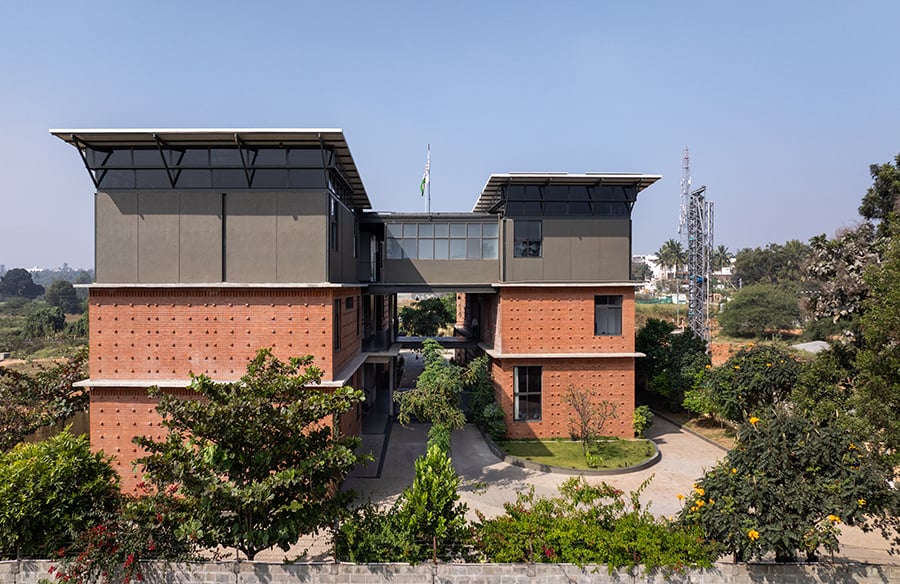
In response to a steady rise in student admissions, the NSB Institute for Advanced Studies in Bangalore commissioned a vertical expansion of its academic block—an ambitious intervention delivered within an accelerated 100-day timeline. The extension accommodates four lecture halls, a faculty room, workshop areas, an exam control center, and an expanded cafeteria, all conceived with a clear design philosophy: to do more with less, and to do it fast—with precision in execution.
Project Name: NSB 2.0 Campus Extension
Studio Name: HabitArt Studio
Project Location: Singena Agrahara, Electronic City, Bangalore
Completion Year: 2025
Gross Built Area (m2/ ft2): 11000 Sft
Lead Architects: Aditya Venkat , Thejas K , Jayasurya JS
Photo Credits: Shamanth Patil Photography
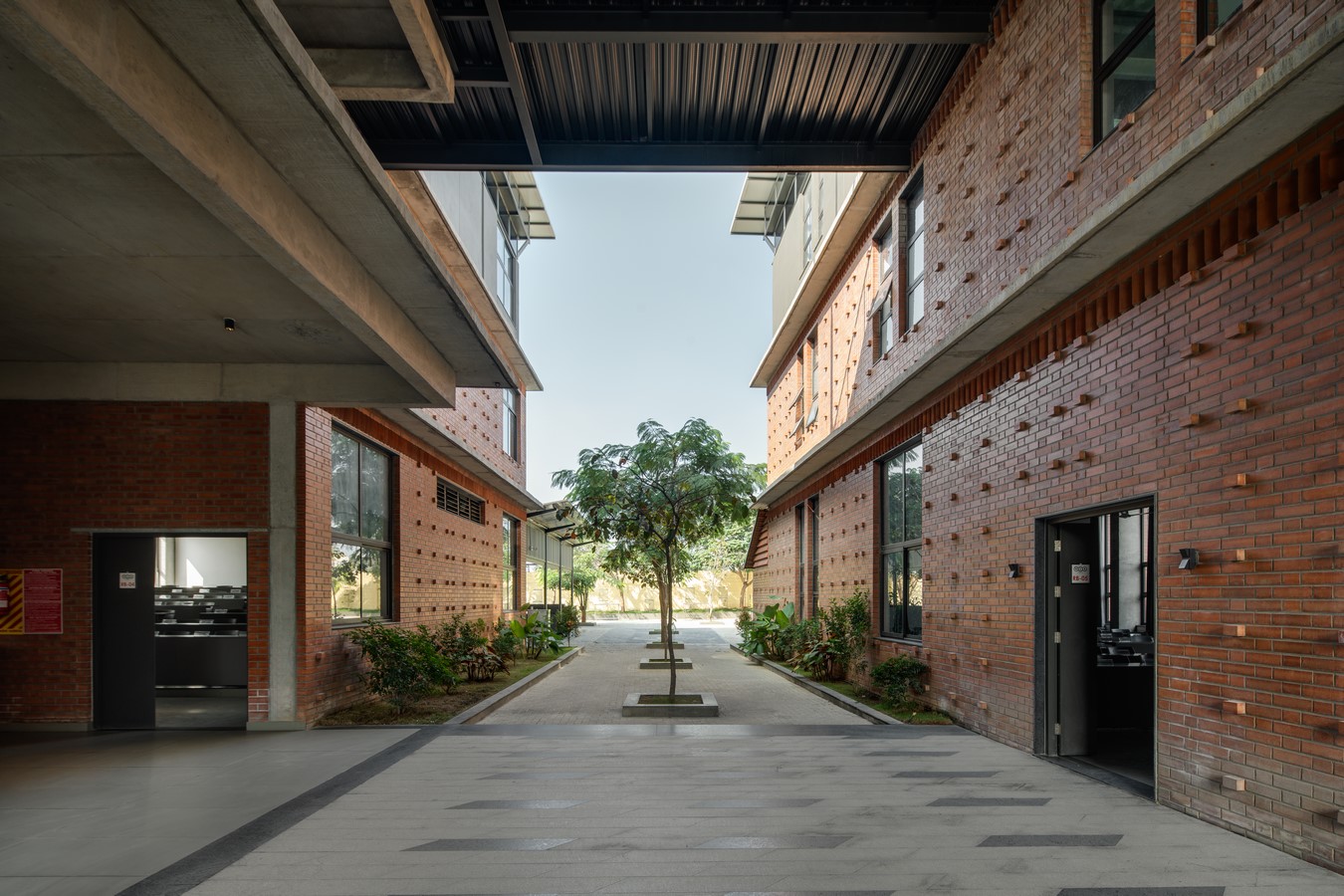
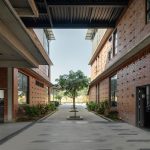
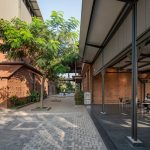
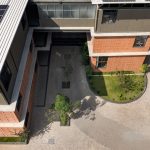
Rather than reinventing the building language, the design team at HabitArt Studio chose restraint. Working within the original structural grid, the added floor sits lightly atop the existing concrete-and-brick structure, built a year ago, offering space for 350 students across four lecture halls. At its core, a large open-to-sky courtyard anchors the plan—eschewing internal corridors in favour of a naturally lit, well-ventilated passage that encourages movement, gathering, and pause. The central sky court adapts the principle of the open-to-sky central spine on the ground floor.
This spatial strategy not only brings clarity to circulation but reinforces a central tenet of the design approach: simplicity as sophistication.
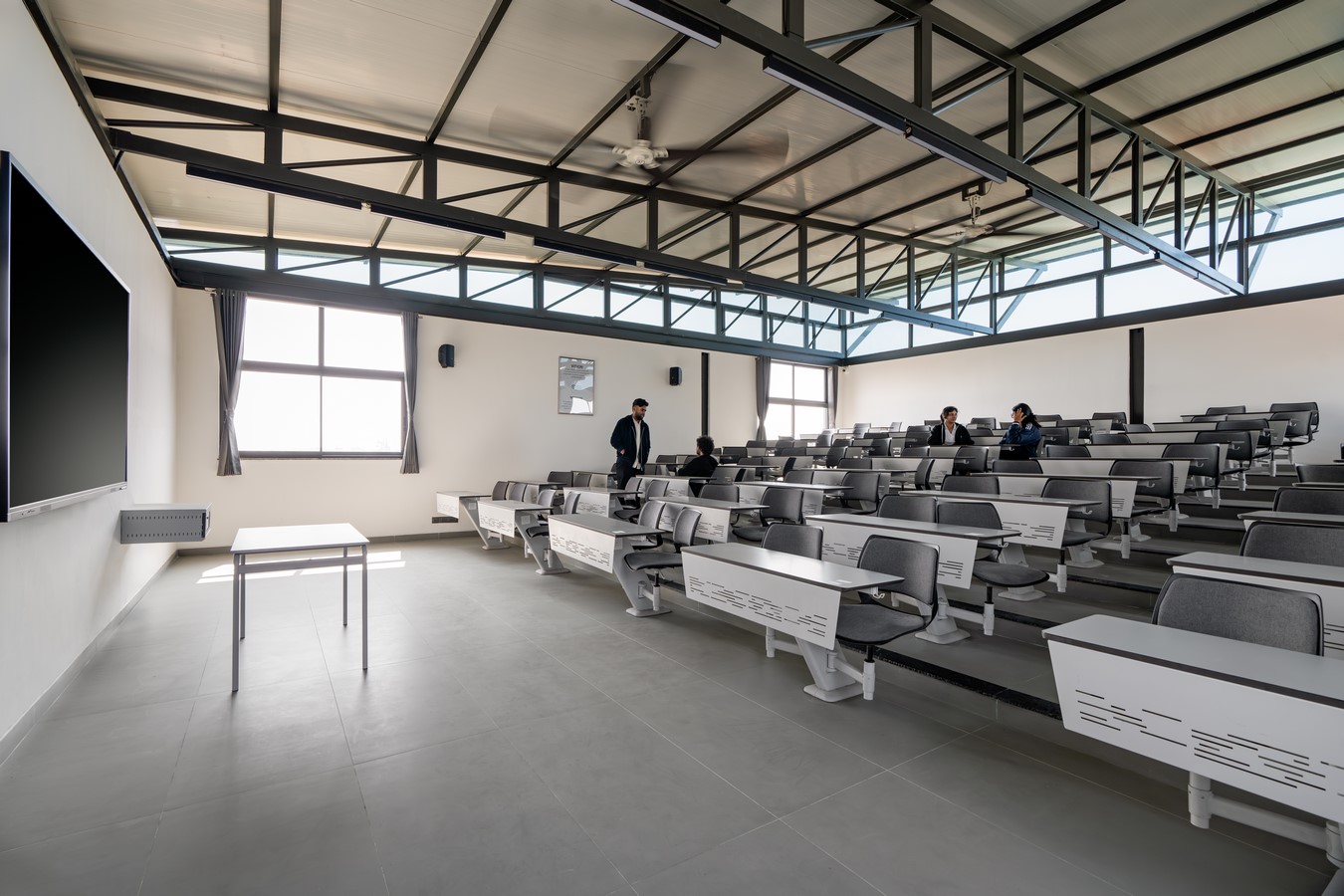
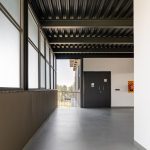
To meet the aggressive timeline, the structure was envisioned in prefabricated steel. Precision-engineered off-site and assembled using cranes, the system minimized on-site labor and construction time. Wall panels and plaster finishes were pre-designed to integrate seamlessly with standard window modules. A sloped PUF-insulated roof, 100mm thick, ensures thermal efficiency while enabling rapid enclosure.
Material choices throughout were driven by pragmatism and continuity. Doors, flooring, and windows matched existing specifications, streamlining procurement and reinforcing visual coherence with the previous phase.
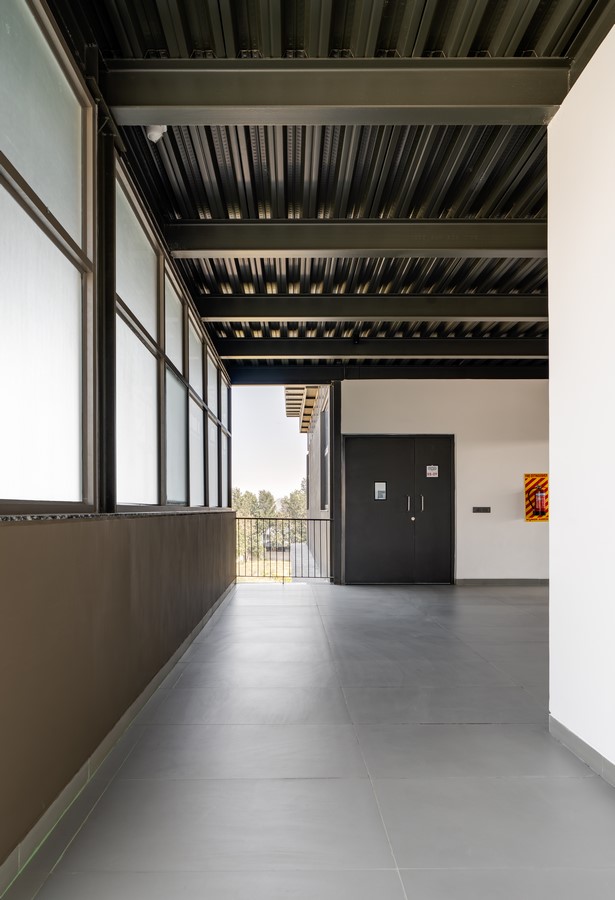
The extension was designed not to rely on air conditioning—a bold yet appropriate move in Bangalore’s temperate climate. Instead, passive strategies drive comfort: high-volume, low-speed (HVLS) fans circulate air in the classrooms, while elevated vents extract hot air. Windows are positioned to the North and East, optimizing daylight and reducing heat gain. North-facing windows overlook quiet surrounding semi-urban green context, while the east opens to the landscaped court, with natural shading from the buildings planned along the court.
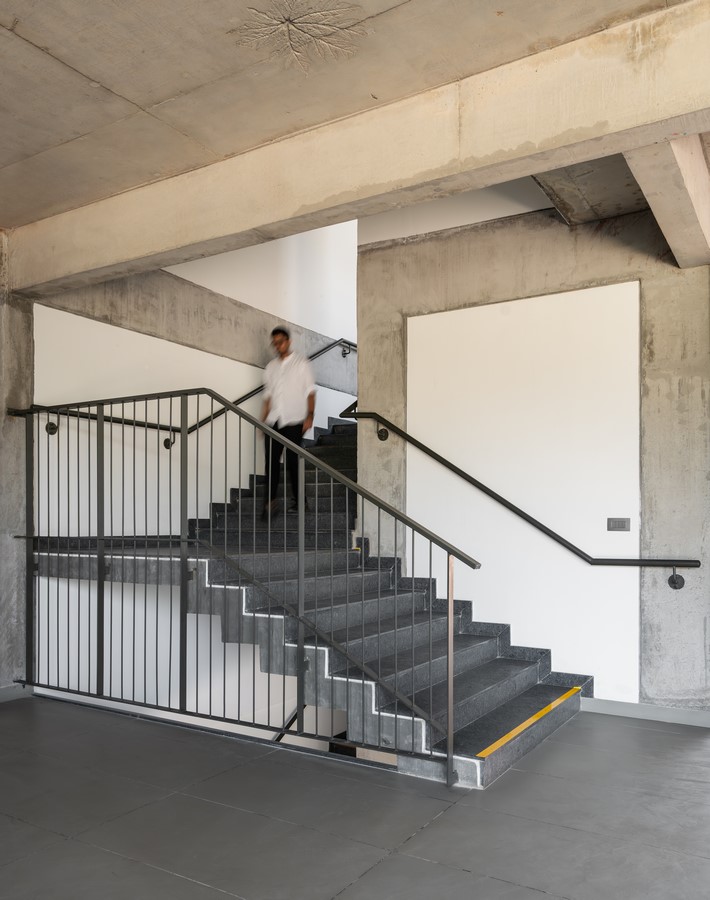
Glass surfaces are treated with high-performance sun-control films, reducing glare and UV ingress, and further enhancing occupant comfort.
On the roof, an 80KW solar array now powers the entire building, with surplus energy fed back into the grid. Sloping roof planes direct rainwater into harvesting systems, supporting landscape maintenance and non-potable water needs. The entire facility has been certified under India’s Green Building Sustainable Initiatives, achieving a high-performance index in both energy and water efficiency.
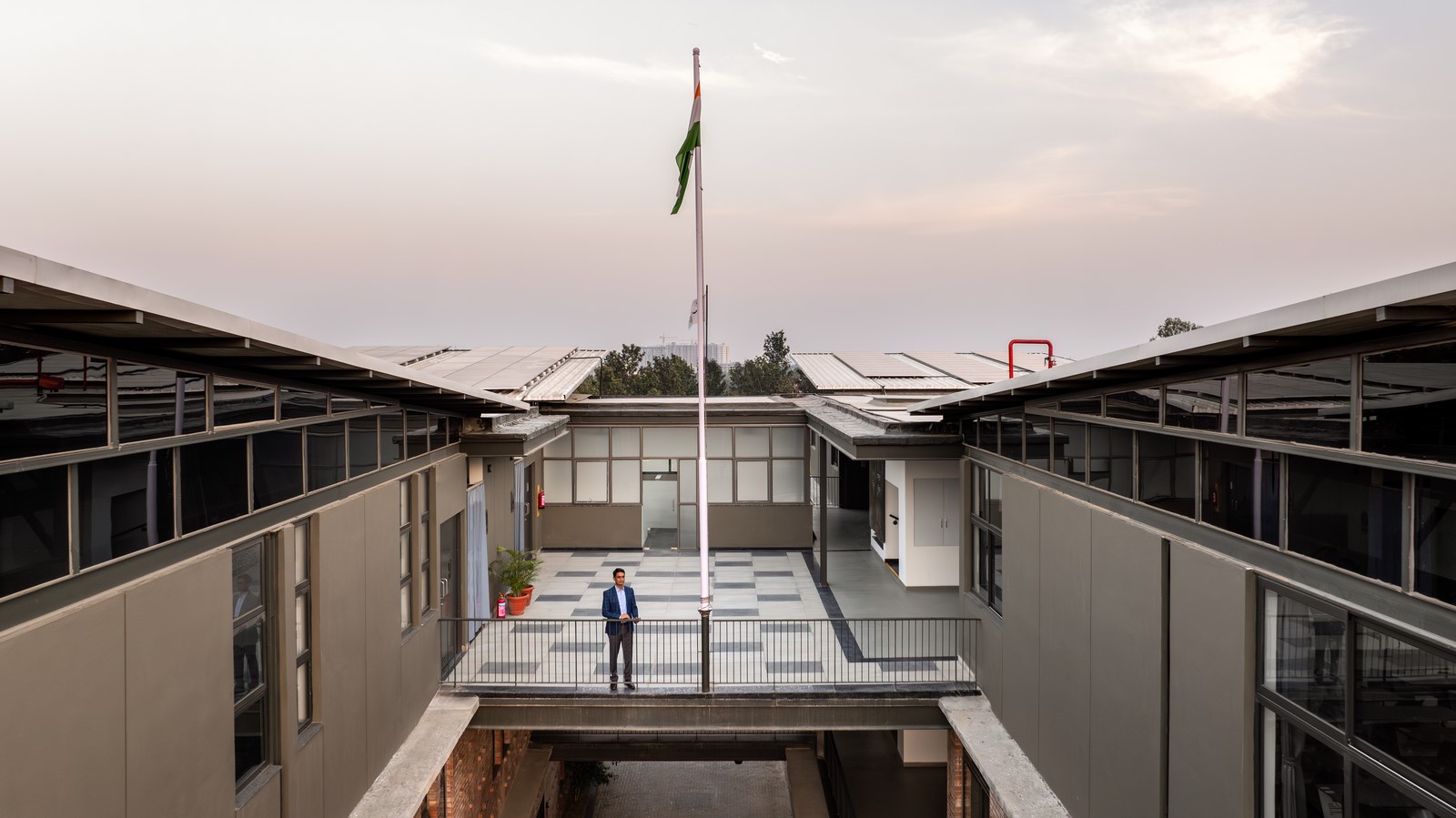
The NSB Bangalore Extension is a testament to what’s possible when speed, precision, and sensitivity come together. It reframes urgency not as a constraint, but as a catalyst for thoughtful, future-ready design. In doing so, it offers a model for academic institutions navigating rapid growth without losing sight of context, climate, and care.