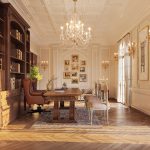

We don’t just live in spaces — we move through them. How a home guides that movement shapes not only how it functions but also how it feels. Doors, thresholds, and flow aren’t details. They’re the daily architecture of comfort.
Flow Is a Feeling: Why Transitions Matter More Than You Think
The visual aspects that compose architecture stand out to most people when they think about buildings. The primary element in a living space seems less about visual elements than it does about how inhabitants navigate its spaces.
Every entrance, every doorway, and every threshold quietly influences how we behave. Movement within a home sets the pace of daily life. It frames how we experience mornings, host friends, and retreat and rest. Doors, in particular, are not just passageways — they’re patterns.
The back door leads to the garden, the glass doors open onto a deck, and the side entrance is used for quiet returns — each creates its own rhythm. They shape habits, routines, and how energy flows through a space.
In many homes across Ontario, especially in climate-conscious cities like Ottawa, homeowners are starting to recognize how important those transitions really are. That’s why thoughtful choices — such as high-quality patio doors Ottawa homeowners rely on — are not just about style but about improving the lived experience.
The Door as a Daily Decision
Whenever we open a door, we do more than just move between spaces. We’re choosing to let in light, invite in air, welcome the world — or to pause, close it off, and retreat into quiet. Each movement carries meaning.
Considering this factor transforms doors into elements that serve beyond their functional purpose. They’re woven into the rhythm of the home, shaping how spaces breathe, connect, and respond to our routines. The layout convenience between the kitchen and garden through patio doors serves as an invitation rather than mere functionality. The entrance extends an invitation to spend time outdoors, whether people want morning coffee under the sun or want to eat spontaneously on the deck while children play outside with their bare feet during summer days.
When entrances are placed intuitively, movement flows. People linger where they feel welcome. They move more freely, with less interruption. And over time, those small movements create habits that feel natural.
This is why architects talk about “flow.” It’s not an abstract concept. We feel the physical and emotional ease when spaces are designed to support our instincts — not fight them.
Climate, Control, and Comfort
The movement also needs to be practical. Especially in regions like Ottawa, where seasons shift dramatically, entrances can either work with the environment — or against it.
Patio doors, in particular, must balance openness with insulation. They must welcome in sun, breeze, and beauty — but keep out drafts, moisture, and excess noise. Planning for the correct selection requires more than visual considerations. A proper selection determines a space’s usage frequency, its sensory experience, and maintenance expenses.
Good doors support thermal comfort. They protect the internal atmosphere while allowing homeowners to feel connected to the outside world. That connection is more important than ever in a world where indoor time has become the default. Simply seeing the sky from the kitchen table or stepping out barefoot onto a sheltered patio in spring can restore our sense of rhythm with nature.
Movement as Wellness
There’s a growing body of evidence that design affects well-being. Natural movement — walking through spaces that make sense, opening doors that feel good in the hand, entering and exiting without obstacles — all play into our sense of peace and satisfaction.
Disjointed, blocked, or awkwardly placed transitions create friction. They interrupt routine and dampen spontaneity. Think of how a poorly placed door can frustrate you or how a beautiful opening can inspire pause. Design doesn’t have to shout to matter — it works best when it’s felt, not seen.
Movement matters because it’s constant. It’s not a feature you use occasionally — it’s the background rhythm of life at home.
Conclusion: Rethinking Everyday Paths
Everything shifts when you look at your home as a place designed for motion, not just occupation. Entrances become cues. Doors become decisions. And how you move through space becomes a core part of how you feel within it.
Designing for movement isn’t about complexity. It’s about intention. The more clearly we define the way in and out, the more freedom we find in the space between.
Because sometimes, what shapes your day isn’t a destination — it’s the path you take to get there.