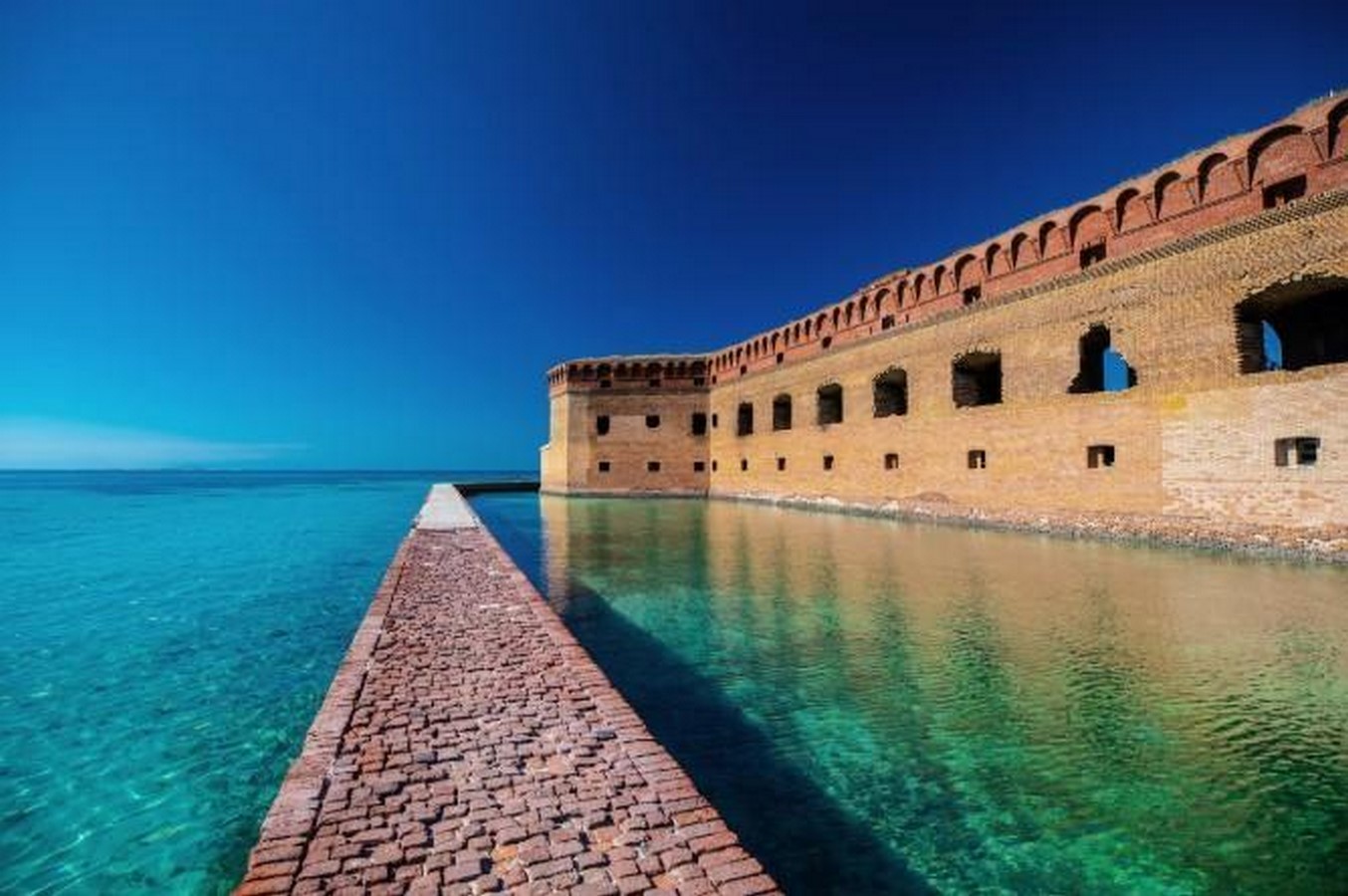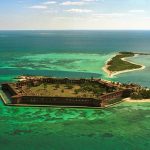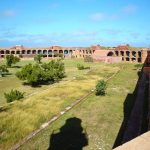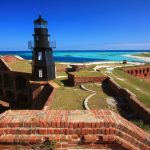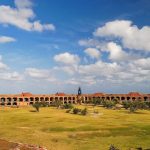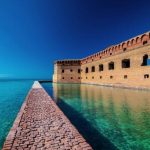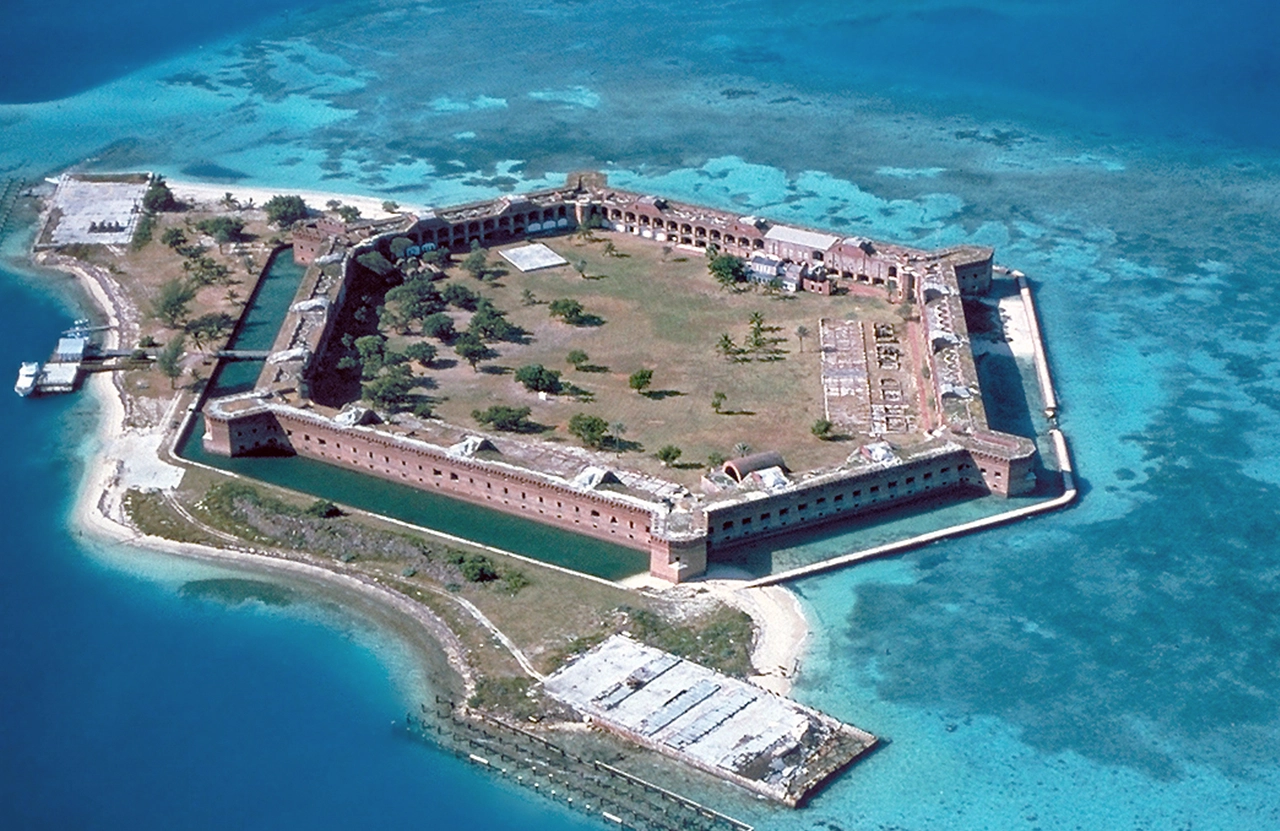
Stood in striking isolation amidst the turquoise waters of the Gulf of Mexico, Fort Jefferson is one of the most ambitious architectural feats of 19th-century America. Located within the Dry Tortugas National Park, nearly 70 miles west of Key West, Florida, this massive coastal fortress was constructed primarily from over 16 million bricks, epitomising the intersection of military engineering, architectural endurance, and human perseverance. Designed as part of the United States’ coastal defence system, Fort Jefferson’s sheer scale and precision reflect an era when architecture was both a weapon and a statement of power.
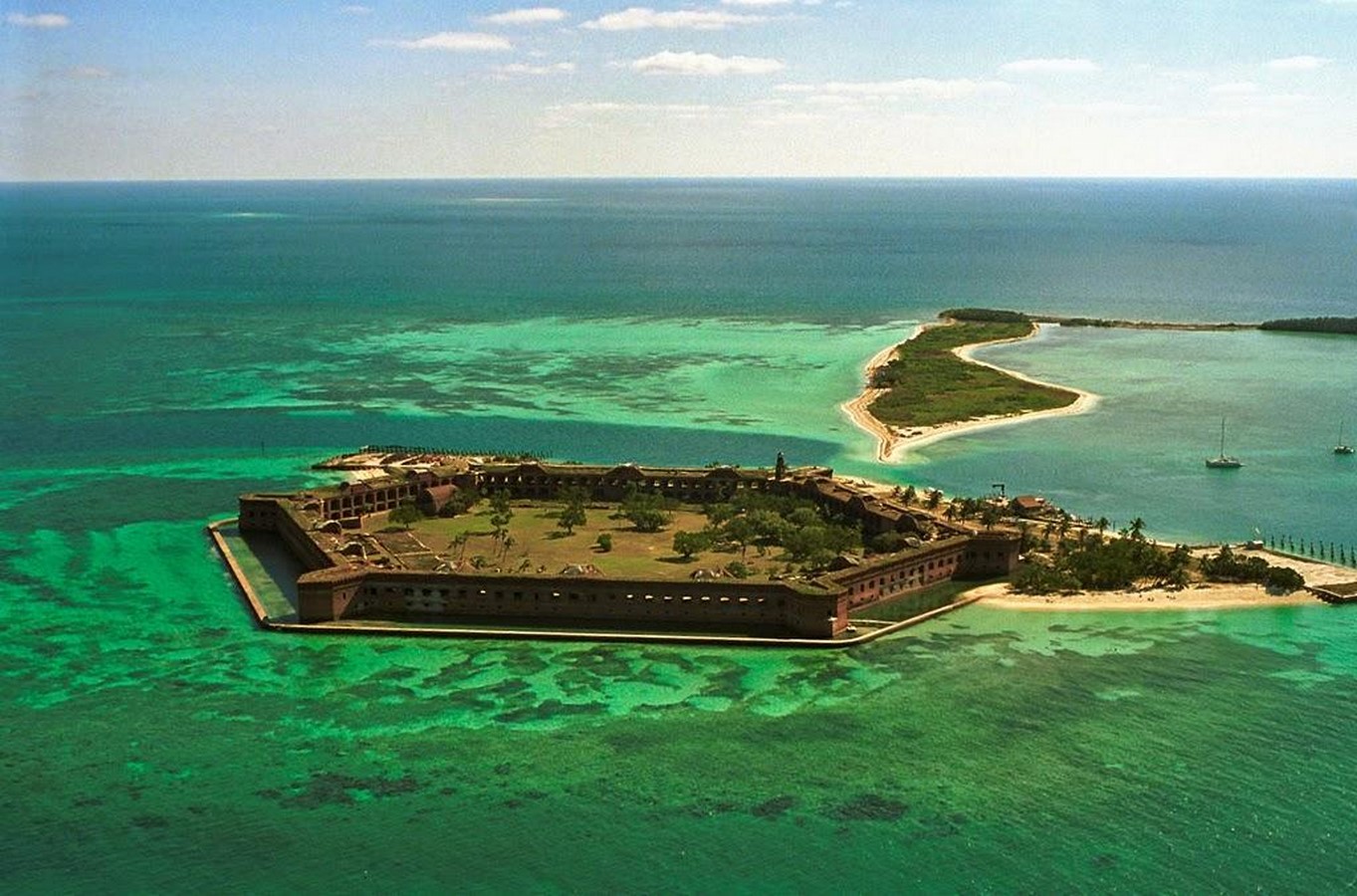
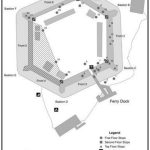
Spanning 16 acres, the fort is the largest masonry structure in the Western Hemisphere, featuring a hexagonal layout with towering bastions, wide moats, and intricate brick vaulting. Its design drew inspiration from classical fortification principles of European military architecture, echoing the geometric rigour of Vauban’s designs. Yet it was adapted ingeniously to its tropical, remote setting. Despite its unfinished state, the fort’s architectural integrity remains astonishing. Today, Fort Jefferson stands as both a relic of 19th-century defence strategy and a masterpiece of functional monumentality, embodying how architecture can transcend purpose to become an enduring testament to human ambition and craftsmanship.
The Geometry of Defence: Layout, Planning and Architectural Order
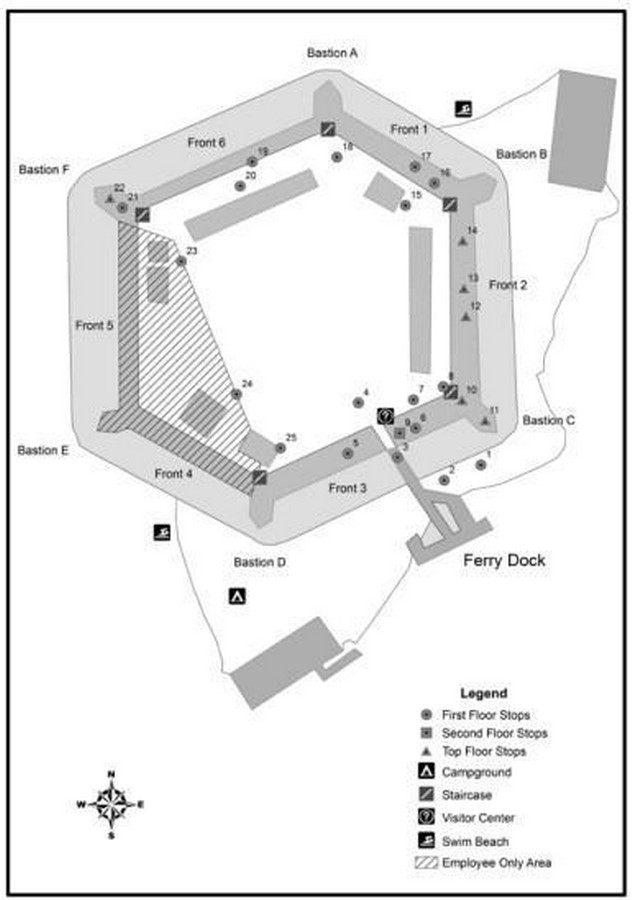
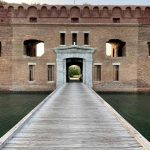
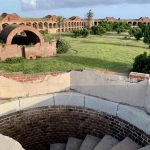
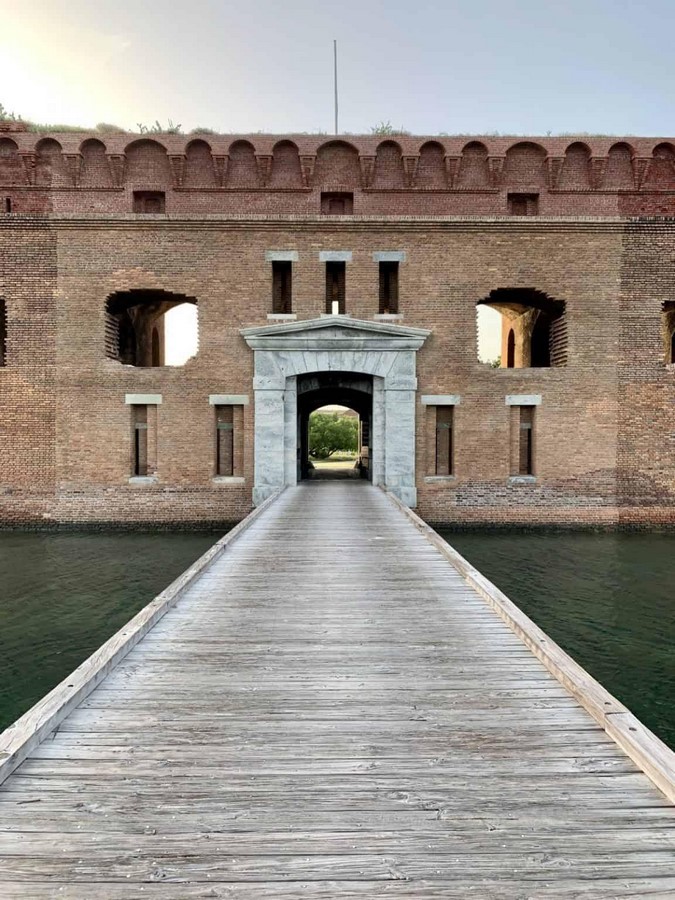
The design of Fort Jefferson is a remarkable exercise in military geometry and spatial logic, reflecting the precision of 19th-century fortification planning. The fort follows a regular hexagonal layout, with six bastions projecting at each corner. It allows for comprehensive crossfire coverage and minimises blind spots. The plan demonstrates a deep understanding of strategic visibility, ensuring that every wall and moat angle could be defended from multiple vantage points. Built primarily from red brick and coral stone, the fort’s outer walls extend nearly 325 metres per side, enclosing a vast interior courtyard. The structure rises three tiers high, each lined with arched chambers that housed cannons, ammunition, and soldiers. Directionally, the north face of the fort opens towards the Gulf of Mexico, acting as the main entry via a wooden drawbridge that crosses a wide moat encircling the structure. Inside, a central parade ground serves both functional and social purposes, surrounded by barracks, powder magazines, and officer quarters. The symmetry of the plan not only reinforced its military purpose but also reflected a rational aesthetic, architecture as order in the face of chaos. Every spatial decision, from orientation to circulation, was dictated by both defensive efficiency and architectural coherence.
Materiality and Construction Techniques
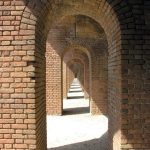
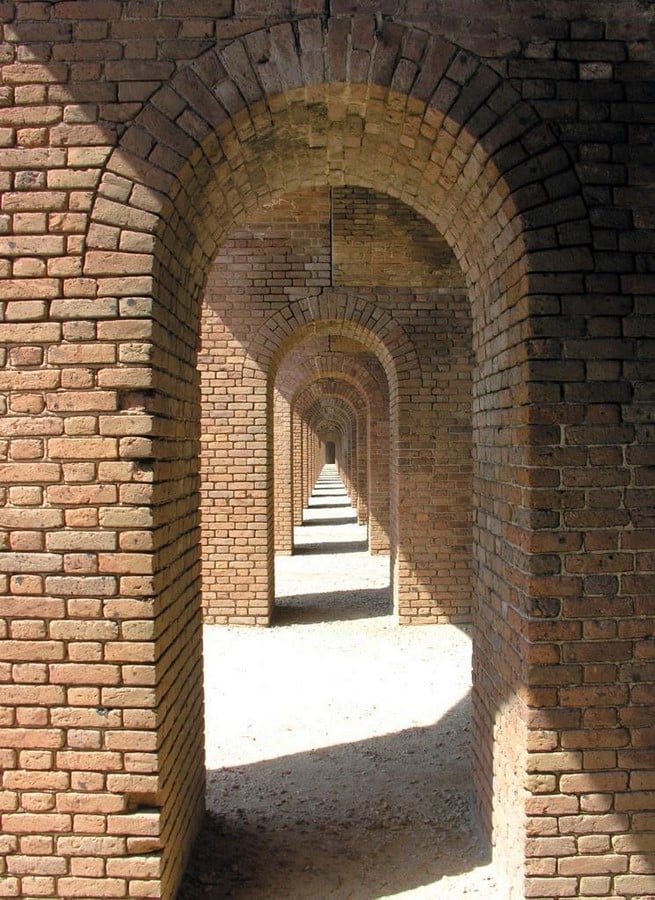
The construction of Fort Jefferson is an extraordinary testament to the engineering capabilities and material innovation of its time. Begun in 1846, the fort was built almost entirely from red brick and coral limestone, a logistical marvel considering its remote island location. Over 16 million bricks were shipped from the mainland and the Gulf states, each brick bearing the weight of an era that valued endurance over ease. The fort’s three-tiered structure was reinforced with Barrel vaults, iron beams, and thick masonry walls, some reaching 2.5 metres in thickness, to withstand bombardment and harsh marine conditions.
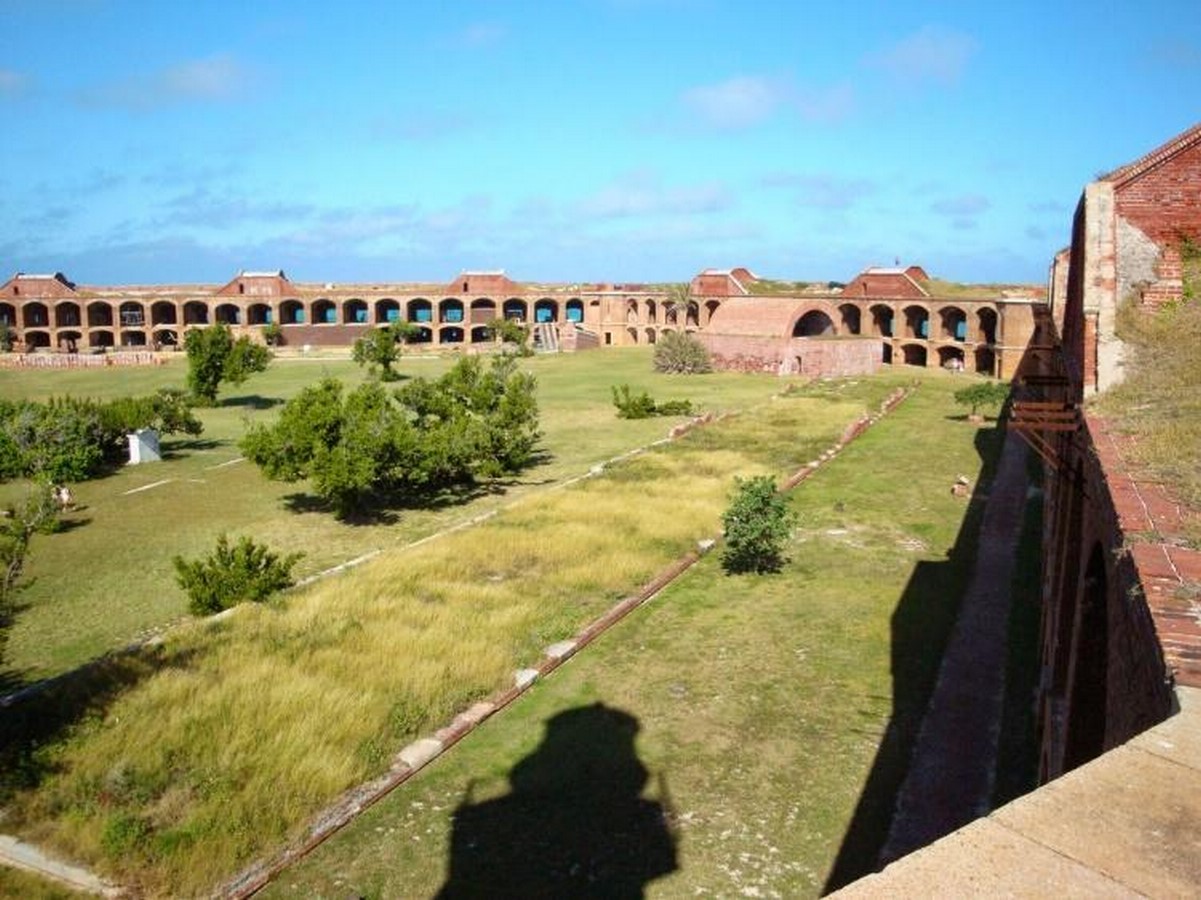
The architectural detailing reveals an intricate understanding of both aesthetics and function. Each casemate arch was constructed with precision to bear the heavy artillery above, while ventilation openings and drainage channels were seamlessly integrated to mitigate moisture accumulation. The use of hydraulic lime mortar, capable of setting underwater, reflected a pioneering approach to coastal construction. Despite incomplete fortification works and corrosion over time, the structure’s integrity endures, proving the genius of its layered masonry system. Fort Jefferson thus becomes not merely a defensive relic, but an archive of material intelligence where every brick, arch, and joint narrates a story of human ingenuity against the odds of isolation and nature.
Architecture of Endurance: Climatic Adaptation and Resilience
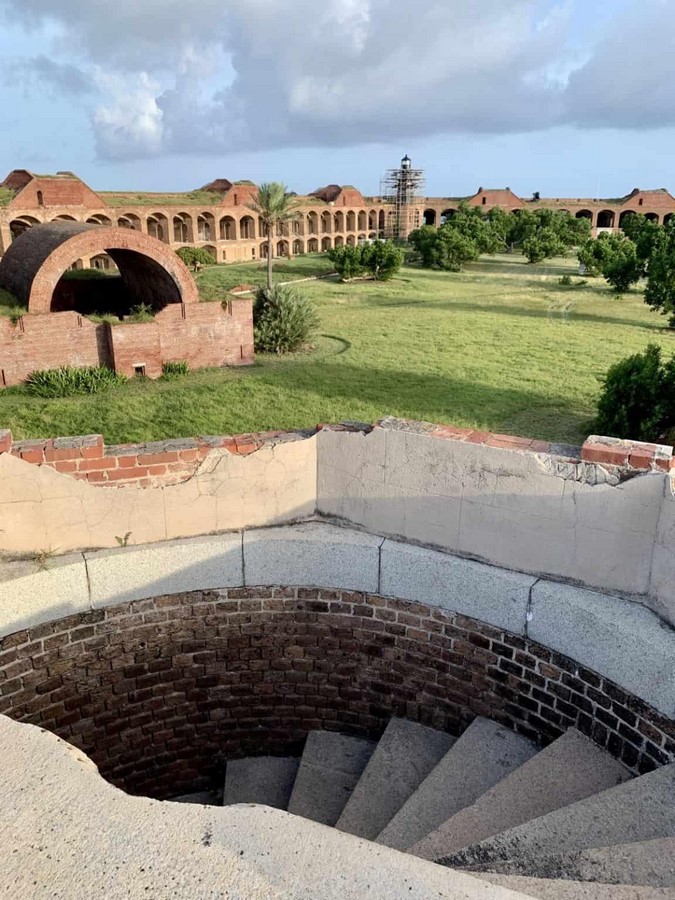
Today, as climate change and sea-level rise threaten the fort’s foundations, Fort Jefferson stands as both a caution and a model, a 19th-century structure intuitively tuned to its environment, yet challenged by it. Its architecture embodies endurance, not just in brick and mortar, but in the wisdom of designing with, rather than against, nature. Its massive masonry walls acted as thermal buffers, absorbing and slowly releasing heat to regulate interior temperatures. The fort’s arched casemates were designed to create a natural convection system, cooling interiors through cross-ventilation from sea-facing embrasures. The surrounding moat, beyond its defensive role, functioned as a microclimatic device—reducing glare and reflecting cooling breezes into the structure. Meanwhile, rainwater cisterns integrated into the vaulted floors harvested limited rainfall, a crucial necessity in an environment devoid of fresh water sources.
Cultural and Historical Significance: A Fortress of Stories
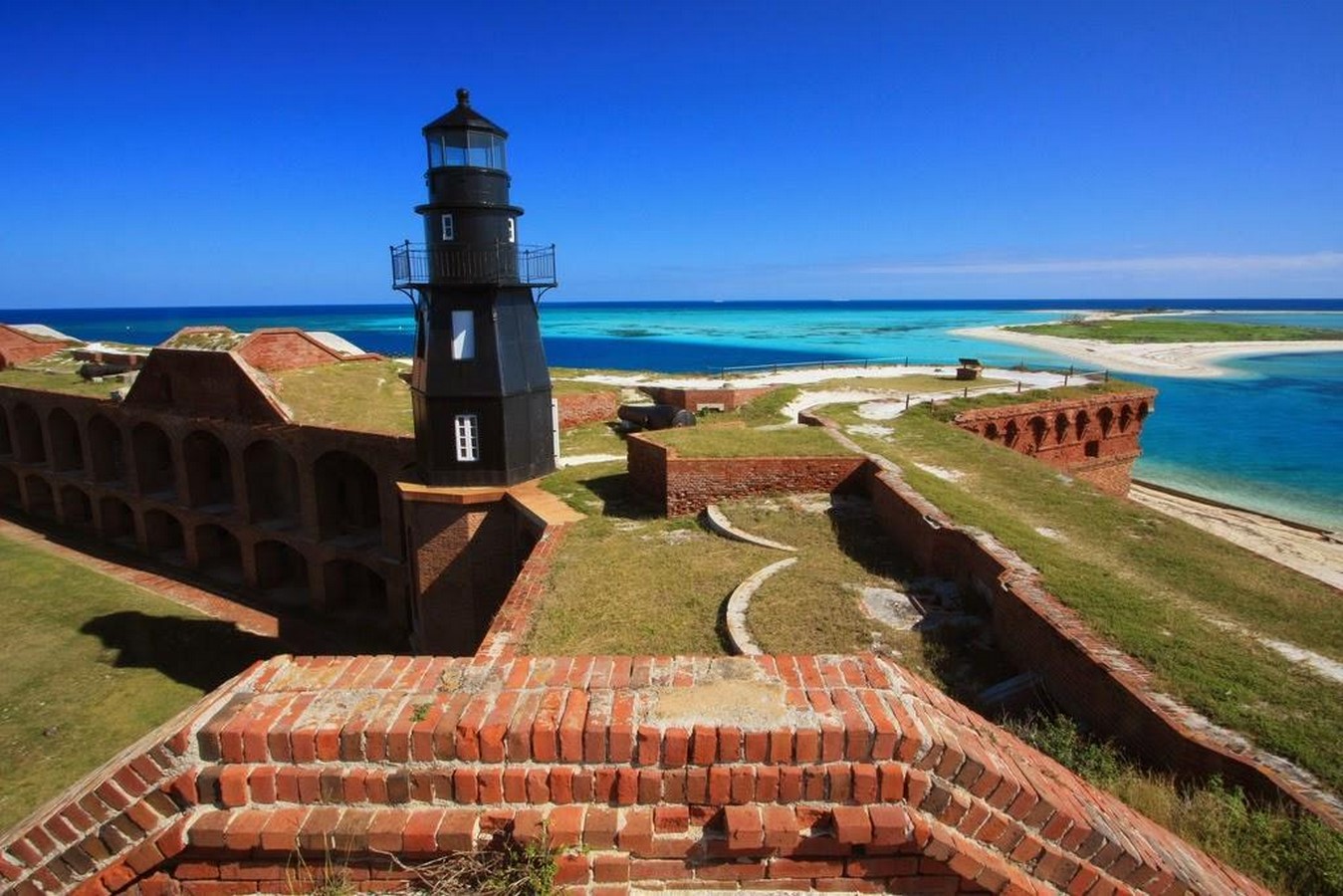
Beyond its formidable architecture, Fort Jefferson stands as a layered symbol of ambition, isolation, and transformation in American history. Conceived as part of a coastal defense strategy after the War of 1812, the fort was intended to assert U.S. control over the Gulf of Mexico and safeguard vital shipping routes. Yet, it never fired a single shot in battle; its greatest legacy instead lies in the human stories that unfolded within its walls. Today, it is part of the Dry Tortugas National Park, accessible only by seaplane or boat, evoking a surreal sense of remoteness. For visitors, walking its ramparts becomes a meditation on endurance and ephemerality, how stone and sea, history and memory, merge into a single, timeless landscape of cultural resonance.
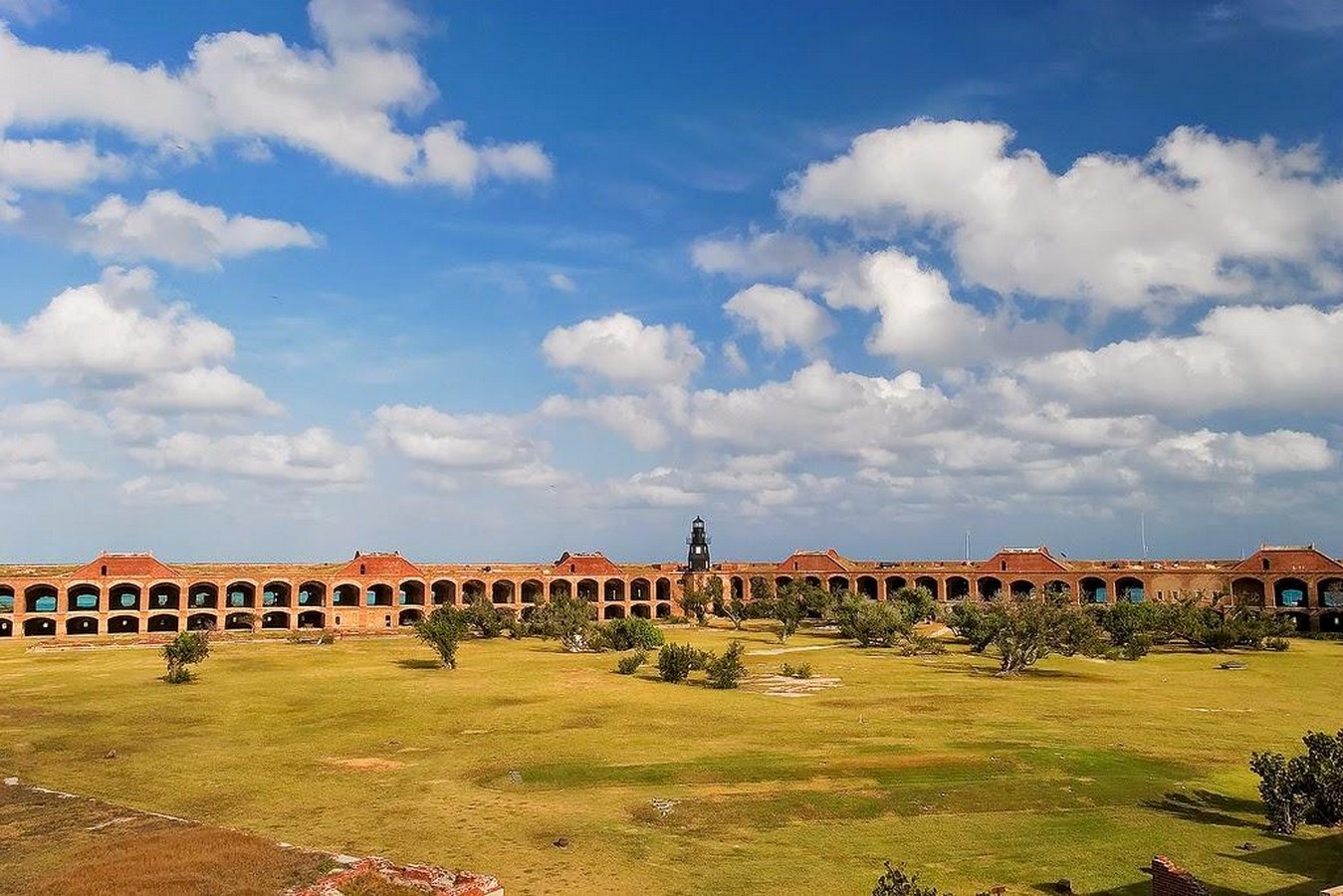
The fort thus offers more than ruins. It offers a story of transformation: from fortress to prison, from strategic outpost to national monument, from human endeavor to weathered monument. In its walls, a glimpse of both human hubris and humble survival can be seen; in its island setting, nature reclaiming stone and mortar. Fort Jefferson stands not just as an architectural feat, but as an enduring lesson in how place, purpose, and time intersect.