The discipline of architecture, engineering, and construction (AEC) is constantly attempting to optimize resource utilization and manage complicated processes. The need for digital transformation in AEC is greater than ever before. The increased accessibility of consumer-based head-mounted displays (HMD) is attracting researchers and entertainment professionals from various industries to immersive virtual reality (VR) applications. Building Information Modelling (BIM) is regarded as a promising technique in AEC.
However, the full potential of BIM for empowering this field has yet to be realized, which could be due to several technological and management constraints that BIM must overcome. One of these impediments is communication and collaboration among the design, building, operation, and maintenance phases. VR can address this gap by giving extra BIM features that were previously unavailable or impractical to use.
Augmented and virtual reality (AR/VR) technologies are quickly evolving. Improvements to these technologies, in turn, improve the virtual world user experience by allowing users to achieve previously impossible tasks.
VR technology enables users to enter a virtual world and interact with virtual objects. It is not restricted to gaming; additional applications include improving the educational system, allowing surgeons to do procedures remotely, and contributing to industrial manufacturing processes and quality control, among others.

Furthermore, AR and VR enable the connection of augmented/virtual displays to online platforms for individuals to share their perspectives. AR allows you to examine virtual information overlaid on real-world objects.
Augmented Reality (AR) and Virtual Reality (VR) are critical technologies for the Architecture, Engineering, and Construction (AEC) sectors because the built world is inextricably linked to three-dimensional (3D) space, and AEC professionals rely largely on imagery to communicate. Since the 1990s, built environment experts have used VR and AR to support the visualization of design, construction, and municipal operations, albeit to varying degrees.
AR is a technology that superimposes information and computer-generated pictures onto the actual world to improve or augment the user’s contextual sense of their surroundings. Augmentations are viewed using a mobile device, tablet, or head-mounted display (HMD). VR, on the other hand, is a computer-generated technology that replaces the user’s perspective of their surroundings with a virtual environment via HMDs, glasses, and multi-display setups.
Applications of AR and VR in Architecture and Design
In architecture and design, AR/VR technologies provide immersive and interactive experiences that transform how professionals visualize and convey their ideas. AR allows architects and designers to superimpose 3D models, textures, and annotations on real-time camera views by merging digital and physical overlays. This feature enables a better grasp of spatial relationships, materiality, and architectural purpose.
In contrast, VR offers a completely replicated environment in which users may navigate and interact. Architects and designers can use a VR headset to step into their projects and study them firsthand. This level of immersion provides a feeling of scale, mood, and spatial experience that traditional mediums cannot adequately convey.

While AR and VR share the goal of improving visibility, their applications vary within the area. AR is ideal for architectural presentations, as digital overlays can provide contextual information about a structure, such as its energy efficiency or structural components. It can also be utilized during the construction process to visualize 3D models on-site, which helps with coordination and decision-making.
VR, on the other side, excels at design exploration and client interaction. It enables stakeholders to interact with and explore virtual environments, delivering a realistic representation of how the final design will appear and feel. VR is very beneficial for displaying interior designs, producing virtual walkthroughs, and conducting interactive design assessments.
IoT in Architecture and Design
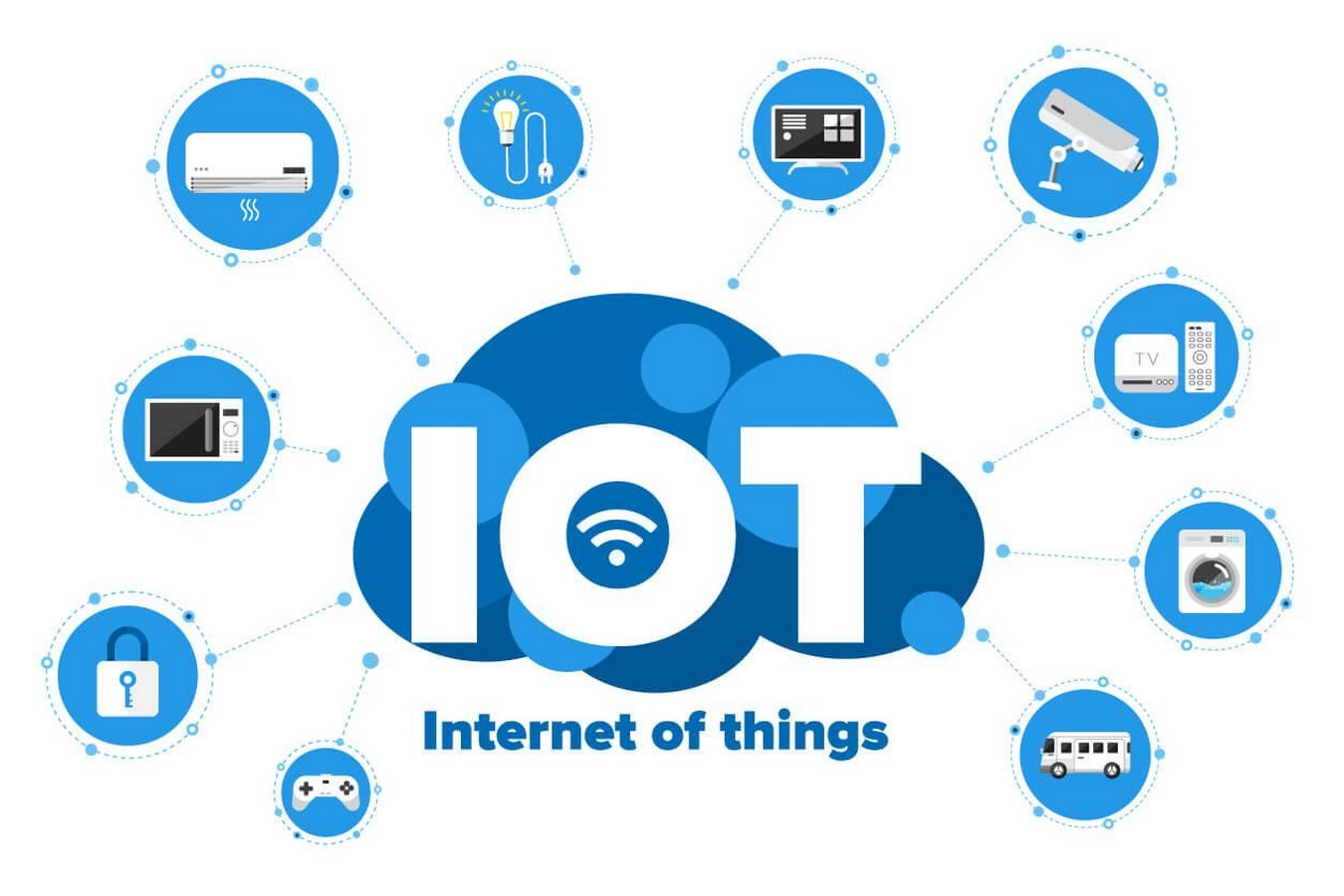
The Internet of Things (IoT) is about transforming physical objects into smart ones. It connects sensor-enabled devices to a shared infrastructure. This infrastructure can be an Extranet, the Internet, or a network that does not require human-to-computer interaction to transmit data. You may operate these gadgets by sending commands from a computer or a smartphone. We can now connect practically everything to the Internet, providing new methods to make our lives easier.
Architecture’s mission is to serve people and make their lives easier. IoT in architecture is at the centre of many systems that connect, monitor, and govern our data. They can offer solutions in a variety of domains, including design and practice. The following are the top IoT applications in architecture and design.
Data-aided design refers to systems that accept data and produce a response. This capability of data-aided design opens enormous opportunities for real-time interaction between users and their surroundings. This notion includes public installations that offer virtual models for interpreting the surroundings. Several data-driven structures have been built to allow a public intervention to evaluate emotive language from Twitter in real-time and project it back onto the installation via colourful displays. Alternatively, some additional structures connect via the Internet and respond to a combination of visitor presence and environmental elements using a wave of illuminated fibres.
Big data refers to massive amounts of data that typical data management solutions cannot handle. To fully leverage this technology, real-time access to vast IoT databases is required. Architects use big data in the end product’s development and design. As an example of big data use in architecture, Synthesis Design + Architecture collaborated with IBM Watson Analytics to build an interior wall and its spinning patterns using data from mobile phones influence on monthly consumer expenditure.
Buildings are transitioning from passive assets to active settings by becoming “smart.” Smart buildings represent the most promising IoT application. This approach connects buildings to environmental sensors that monitor temperature, ventilation, humidity, CO2, occupancy, and occupant density.
Indeed, intelligent buildings allow extensive control over their surroundings and activities. They enable the establishment of extremely efficient, high-capacity collaborative workplaces, in which a smart system consolidates data from multiple devices into one. Intelligent buildings connect humans to technology and the environment, allowing them to interact, learn, and adapt. These structures provide more visibility and actionable data than just the equipment within their outside walls.

The Future of AR and VR in Architecture and Design
The future of AR/VR in architecture and design has enormous potential to change the industry and revolutionize how professionals bring their designs to life. As technology advances, we should expect important breakthroughs and transformational improvements in the following domains:
- AR/VR will enable even greater collaboration between architects, designers, engineers, and clients. Virtual design meetings and shared virtual environments will allow for seamless collaboration, real-time feedback, and decision-making regardless of physical location.
- Future virtual environments will be more immersive and realistic, allowing architects and designers to experience spaces in unprecedented detail. Advanced rendering techniques, haptic feedback, and spatial sound will enable people to engage and explore designs in a manner that closely resembles the physical environment.
- AR/VR will work alongside other developing technologies to offer even more powerful design tools. For example, incorporating artificial intelligence and machine learning algorithms will allow for intelligent design help, generative design, and predictive analysis, enhancing experts’ creativity and problem-solving abilities.
- The application of AR/VR will go beyond the design stage. Construction teams will use these technologies for on-site visualization, project coordination, and safety training. Furthermore, AR/VR will have applications in facility management, such as virtual maintenance, asset tracking, and building performance monitoring.
Finally, IoT is at the core of any system that connects, monitors, and regulates data. As a result, it can assist with a variety of design and practical difficulties. Furthermore, IoT has become an intricately linked component in disciplines other than design. This fact is supported by the growing number of businesses that use digitization to collect, exchange, and analyse massive amounts of data, resulting in a substantial improvement in our daily lives and promising even more exciting possibilities in the future.
Adopting AR/VR technology is critical in the field of architecture and design because it provides several chances to improve visualization, collaboration, and client experiences. Using these tools, professionals can push the frontiers of creativity, increase design correctness, and provide remarkable results. In a competitive industry, embracing these technologies provides an opportunity to stay on the cutting edge of innovation, execute outstanding projects, and exceed customer expectations.
References:
- FellowBot. LinkedIn. How AI, IoT and AR and VR are shaping the future. [ online ]
Available at: Retail Revolution: How AI, IoT, and AR/VR Are Shaping the Future? (linkedin.com) - Arondale Withers. LinkedIn. UX in Emerging Technologies, IoT, Augmented Reality, MR, VR, AI, Machine Learning, NLP, Voice UX, Drones and more. The Future is happening now! [ online ]
Available at: UX in Emerging Technologies, IoT, Augmented Reality, MR, VR, AI, Machine Learning, NLP, Voice UX, Drones and more. The Future is happening now! (linkedin.com) - Juan Manuel Davila Delgado. Science Direct. A research agenda for augmented and virtual reality in architecture, engineering and construction. [ online ]
Available at: A research agenda for augmented and virtual reality in architecture, engineering and construction – ScienceDirect - Sheida Shakeri. Parametric Architecture. Top 7 IoT Applications in Architecture and Design. [ online ] Available at: Top 7 IoT Applications in Architecture and Design – Parametric Architecture (parametric-architecture.com)