“Imagination is more important than knowledge.” These were the words of the great scientist Albert Einstein. Imagination is an amazing human capability that has promoted the exploratory nature of humans and allowed them to discover the science of fire and land on the lunar surface. However, it is one of the most underestimated, and its importance in schooling and learning processes in present times is almost negligible. It is a key skill for progress in every field, especially the design-related fields. Architectural design is one such field where the scope and vitality of imagination and creativity are significantly higher. A space can be designed with an infinite number of forms, patterns, styles, orders, and arrangements. Hereby, this article discusses the significance of advanced software in the contemporary architectural design process.
Architectural Designing Process
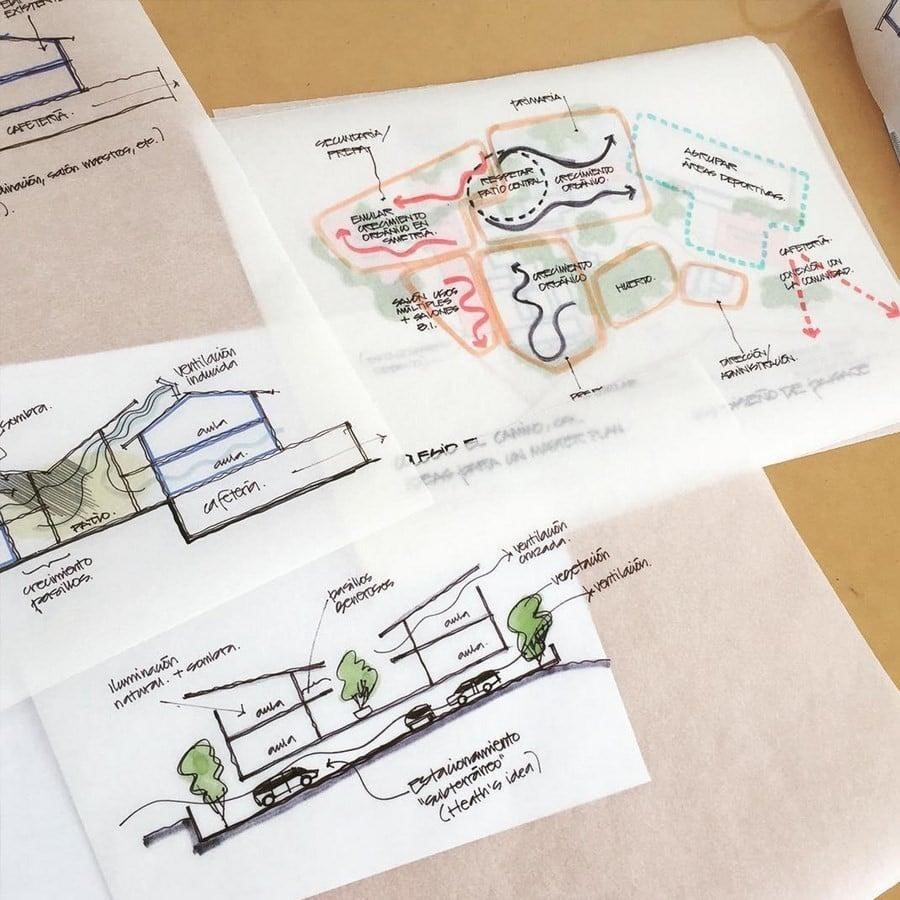
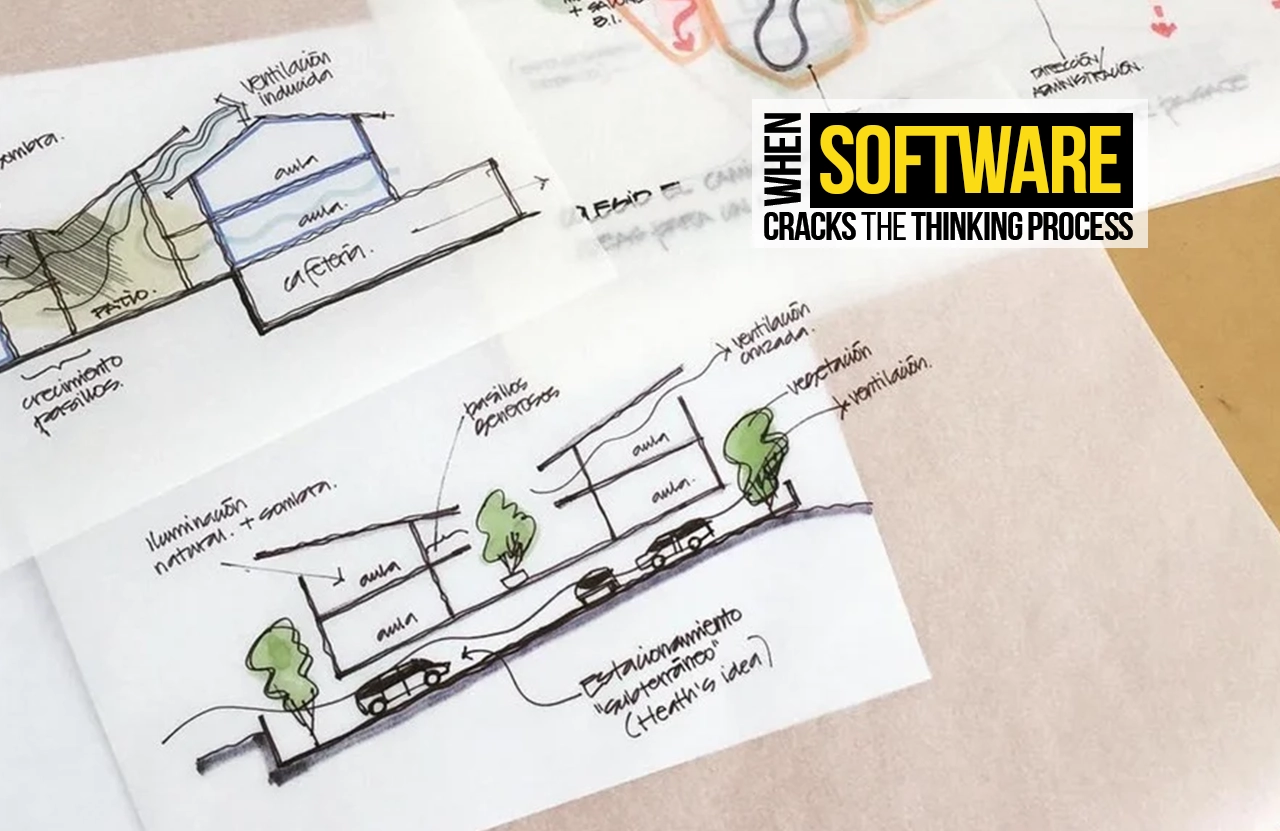
An architectural design is a highly complex drawing that contains intricate details, including dimensions, positions, structural features, and attributes of countless elements in a projected plane. The aspects of one element or system are subjected to its suitability and order with the other elements when placed in a three-dimensional space. These innumerable elements and systems can be varied in shape, dimensions, structure, and features that can further be fixed with endless permutations and combinations. Moreover, the design process is assisted by multidisciplinary specialists, with everyone contributing their own rationality. This would give rise to perplexity in the design process and lead to task chaos. An architect, designer, or any other professional involved is proficient in skills of modifying and arranging these elements in real-time space and weaving them into creativity and drafting a model that is also relevant to suitability in use and fulfilling concerns of clients, stability and reliability in structure, appealing in a visual manner, efficient in the construction process, and other recommended factors. However, it becomes evident that processing this load of information and data requires some sort of data handling unit for a smooth design process that enables planners and designers to understand the model meticulously and enhance their creativity in design.
In view of technological advancements, there are various such software persisting to serve the purpose of a compatible and efficient planning-designing process with special specifications for architectural designing and analysis.
Purpose of Software in Architectural Designing
Usually, in the field of architectural design, by the term software, we refer to BIM (Building Information Modelling) software. Here, Building refers to designing or drafting a concept of a project. Information mentions decision-making or evaluation. Modelling refers to generating a virtual model of the pertaining design. Thus, BIM is a process of planning, designing, evaluating, spatial analysis, consulting, coordinating, compiling, and comprehending the real-time data, and virtually interpreting real-time space through related software. Besides, this software allows for the participation of distinct professionals in the process of drafting, contemplating, and creating the model ahead of commencing the construction.
How Software Aids the Thinking Process
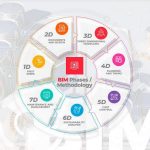
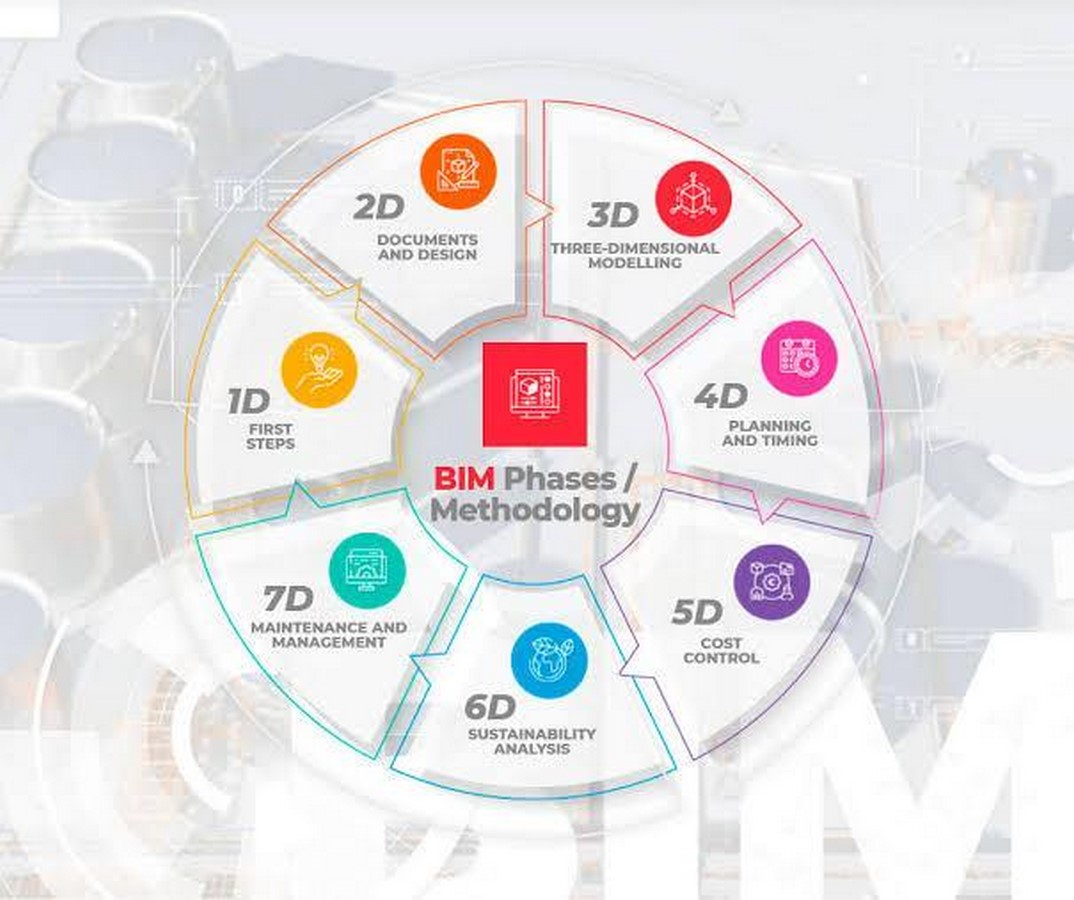
BIM software facilitates creating designs through a phase-by-phase and step-by-step manner. A layout is laid at first, and an extensive plan is drafted upon that, which inculcates accurate dimensions and conceptual clarity that can further be optimised to 3D space. In three-dimensional spatial analysis, elevation design can be interpreted. On the basis of the basic conceptual form, assessment for MEP (Mechanical, Electrical, Plumbing) systems can be done. Various other evaluations, such as sun-path analysis and wind-flow analysis, can be done too. This would help an architect to modify the design accordingly. Structural analysis would further authenticate the reliability of the design, and various other technicalities can also be examined. Furthermore, the functional, operational, and maintenance analysis can also be evaluated. Advanced features of BIM also enable 4D, 5D, and 6D representations that allow navigating through real-time space and experiencing the functionality in a virtual scenario.
These software programs propose significant advantages in the arena of architectural designing, promoting the technical advancements which would be rather difficult to understand inIIn the case of their unavailability. In some instances, the failure of systems occurs due to certain technical glitches. This would stagnate the design process. The entire design data and information are stored in the software. If that turns inaccessible, it would ruin the process, as further operation would not be able to take place in the absence of a conceptual form. The critical analysis of the model would get very challenging. Certain shortcomings would be faced while handling design operations in manual or alternative ways.
Advantages of Software in Architectural Design
- Precision – Software can be credited for its pinpoint accuracy, which is almost unexpected with any other way.
- Time consumption – It is obvious that manual ways are very time-consuming, while software is quick enough.
- Collaboration – Multidisciplinary tasks carried out in a single framework are one of the key components of software benefits.
- Data storage – Software is reliable for storing large amounts of data, which in turn would aid in complexity management and data compatibility.
Various loopholes, such as miscommunications, design errors, and a lack of clarity leading to arguments and chaos, can be eliminated through a software-aided design process.
Thus, software becomes integral to the immaculate design process, especially in the start or end phase of a project.
References:
Autodesk (2020) Building Information Modeling (BIM): A guide. Available at: https://www.autodesk.com/solutions/bim (Accessed: 25 January 2026).
Eastman, C., Teicholz, P., Sacks, R. and Liston, K. (2011) BIM Handbook: A guide to building information modeling for owners, managers, designers, engineers and contractors. 2nd edn. Hoboken: John Wiley & Sons.
Kolarevic, B. (2003) Architecture in the digital age: Design and manufacturing. New York: Spon Press.
Succar, B. (2009) ‘Building information modelling framework: A research and delivery foundation for industry stakeholders’, Automation in Construction, 18(3), pp. 357–375.
Azhar, S. (2011) ‘Building information modelling (BIM): Trends, benefits, risks, and challenges for the AEC industry’, Leadership and Managementagement in Engineering, 11(3), pp. 241–252.
Smith, D.K. and Tardif, M. (200) . Building information modelling A strategic implementation guide. Hoboken: John Wiley & Sons.