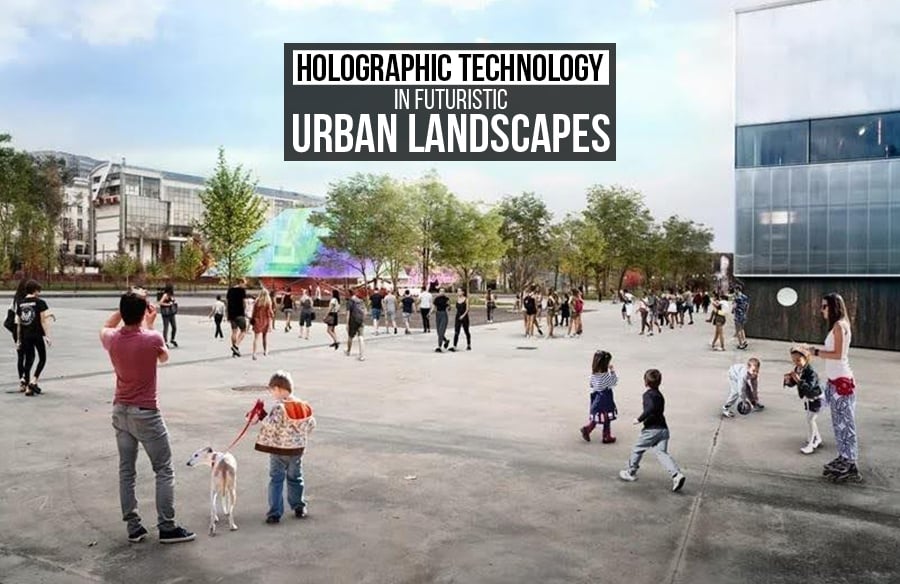
Holographic technology produces images with the use of light diffraction that seem three-dimensional, with depth and movement. The integration of holographic technology is transforming how individuals in urban environments interact with information, locations, and each other. Urban landscapes are being dramatically transformed by holographic technology, which is improving public art displays and transforming navigation systems, among other things. This article investigates the effects of holographic technology on urban environments, looking at its uses, advantages, drawbacks, and prospects.
Application in urban spaces
Urban areas may be turned into captivating galleries that enthral onlookers and enhance the visual experience with the use of holographic technologies. Imagine holographic art installations and sculptures in the middle of the city that seem to come to life. By superimposing navigational signals and directional information in real-time, holographic displays can facilitate easier navigation in metropolitan areas. This allows both locals and visitors to navigate through the maze-like streets with ease. In terms of marketing and promotion, holographic technology is the newest, flashiest thing on the scene.
Holographic technology is being adopted by cities all around the world to improve public areas and provide distinctive attractions. Urban experiences are being redefined by installations such as interactive displays in urban plazas and holographic light shows in parks. As many as the holographic pictures themselves are the advantages, which range from increasing tourism to fostering innovative creativity.


One of the main benefits of holographic architecture is the ability to test and see urban plans and designs before they are implemented in the real world. By creating holographic models of potential buildings, streets, and public spaces, architects may examine the impact of their design decisions on topics such as traffic flow, pedestrian access, and environmental sustainability.

Along with holographic design tables, the addition of augmented reality (AR) enhances our creative process. AR technologies superimpose digital information on the real world, improving our grasp of site context, materiality, and environmental effect. The seamless integration of virtual and real components results in an immersive and dynamic design experience. As holography and other innovations progress, we can see a greater integration of sustainability and performance analysis tools. From energy simulations to material optimization, these technologies enable us to design with sustainability in mind. We aspire to provide ecologically sensitive design through data-driven decision-making.

References:
- Lilly Cao “Holography: How it could change Architectural space” (2021). Holography in futuristic urban environments [Online]. (Last updated on 10 June 2021). Available at: https://www.archdaily.com/963011/holography-how-it-could-change-architectural-space [Accessed on 09 May 2024].
- Ramon Vrielink “Holographic design in Architecture” (2023). Holography in futuristic urban environments [Online]. (Last updated on 14 July 2023). Available at: https://www.linkedin.com/pulse/holographic-design-architecture-ramon-vrielink/ [Accessed on 09 May 2024].
- Transforming architectural spaces: The impact of Holograms (2023). Holography in Architectural design [Online]. (Last updated on 12 April 2023). Available at: https://marvut.com/transforming-architectural-space-the-impact-of-hologram/ingles/#:~:text=With%20holograms%2C%20architects%20can%20create,the%20vision%20of%20the%20project. [Accessed on 09 May 2024].