

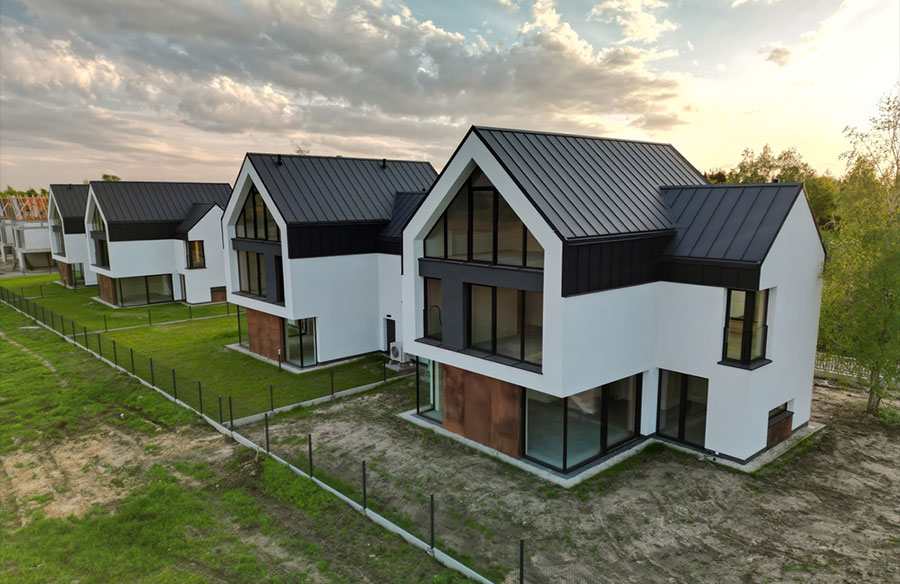
As Australia possesses one of the most uniquely harsh climates found across the globe which will most likely only be exacerbated by the ongoing climate crisis, passive design principles are set to revolutionise the way Australian architects and civil planners ensure their projects are climate-ready.
Today, we’ll be outlining some of the key advantages to embracing passive design in Australia in particular, alongside presenting some of the major considerations made by Australian architects when developing passive homes and buildings.
Passive design: a definition
Simply put, passive design is an architectural method of design that specifically focuses on leveraging environmental elements (like sunlight, shade, and wind patterns) to maintain naturally comfortable indoor temperatures and reduce the need for artificial heating or cooling systems. This equates to cooler summers and warmer winters – and all with a reduced reliance on artificial energy, which ultimately means fewer carbon emissions. In this regard, passive design has become a vital component of any climate-conscious development strategy across the globe.
With Australia’s unique population distribution and naturally harsh climate, passive design considerations have become readily utilised by Australian architects and development firms for producing climate-ready homes and buildings. By designing properties that can withstand harsh climatic conditions without accruing damage or requiring heating and cooling, property owners can not only lower their carbon emissions, but also save on their home insurance policies, as insurance providers are beginning to factor the damaging impacts of climate change into their policy estimates.
Whilst passive design has grown in popularity in Australia, the concept itself originated in Germany in the ‘90s (called passivhaus). It demands that a home’s thermal envelope (the layer separating inside from outside) provides healthy and comfortable conditions inside. These same principles of passive heating utilised in passivhaus designs, were amended to also provide passive cooling in Australia, with additional considerations for variations in solar orientation between the far north and far southern hemispheres.
Know your climate
The first step toward effective passive design is understanding the climate where you plan to build. The better you know the area, from its seasons to its soil to its native flora, the better placed you are to use passive design techniques to develop truly sustainable buildings that exist in harmony with their surroundings.
Australia has eight climate zones. The spectrum runs from high-humidity summers and warm winters (climate zone 1) to alpine (climate zone 8). Most Australians live on the east coast of the continent, a mix of climate zone 2 (humid summer, mild winter), climate zone 4 (hot, dry summer, cool winter), and climate zone 6 (mild temperate).
Understanding the distinct characteristics of the climate zone you’re looking to build in is foundational to any passive design strategy. Some key meteorological and climate metrics you’ll want to familiarise yourself with include:
- Solar orientation
- Annual rainfall
- Daily average temperatures
- Humidity
- Wind speeds
- Soil conditions
Passive cooling vs. passive heating
Given Australia’s diverse range of climate zones, property developers and designers aren’t just considering passive cooling techniques, but passive heating features as well. This is vital for developing properties that can stay naturally comfortable year-round in temperate and alpine climates (i.e. across Victoria, Tasmania, and along the Great Dividing Range in VIC/NSW).
Passive cooling
If home’s a short walk from pandanus trees, blinding sands, and warm ocean currents, then chances are you’re in Australia’s tropical north. Here, passive cooling is a primary focus for architects. Passive cooling uses techniques like cross-ventilation; if you live coastal, this means positioning your windows and vents to capture the winds common to that stretch.
With wind, it’s a numbers game. If the location spends most of the year enjoying a southerly sea breeze, ensuring that home design and orientation corresponds to this wind pattern is vital for supporting passive cooling for that property.
Passive heating
If keeping a generous pile of chopped stringybark in the back shed is a weekly chore, heating takes priority. Effective passive heating invites heat inside and keeps it there for as long as needed. Larger windows and skylights keep the invite open during winter when the sun withdraws.
In a cold climate, the orientation of windows in an alpine property must ideally meet the afternoon sun, and meet it proudly. That way, building occupants won’t feel the need to huddle around the fireplace as much.
Thermal mass is also a vital concern for properties in naturally cooler climates. With good thermal insulation and insulating exterior cladding, alpine properties can be designed to naturally trap heat and ensure comfortable temperatures year-round.
Passive design: 5 principles to obey
Passive design is built on five key principles. If you build in accordance with these, the Australian Passivhaus Association will grant passive design accreditation.
1. Airtightness
Nevermind that you enjoy opening the front door when a spring breeze arrives. Airtightness is closing that door and still feeling the pleasant effect of the breeze. Nothing undermines comfort more than a home that leaks air. If you obey only one principle, make sure it’s this.
2. Thermal insulation
Proper insulation is making sure your home’s thermal envelope is doing its job. A home that responds efficiently to the conditions outside is a home with good insulation. In Australia, there is no shortage of natural origin insulator materials, like wool, wood fibre, and even hemp. Consider the unique qualities of the insulation options available to you when identifying the best solution for your property.
3. High performance windows
Let there be light. Glazed windows absorb the sun when you need it and reflect it when you don’t. Double glazing can also aid in trapping heat gained through solar heat transfer for alpine properties, ensuring that your windows don’t just act as natural light sources, but also aid in temperature regulation for your passive house.
4. Mechanical ventilation
With mechanical ventilation, it’s less about creating a warmer or cooler environment and more about improving the air quality in your home. An effective ventilation system fights air pollution and regulates humidity.
5. Thermal bridge-free construction
Thermal bridges are weak spots in your home’s thermal envelope. They cause heat loss, promote condensation, and negatively affect your home’s insulation. The aim is to keep penetrations in your thermal envelope to a minimum.
Passive design: the future of Australian architecture
When you look at the architectural history of Australia, you can clearly observe that weather protection was always a primary concern. Colonial-era properties boasted European weatherproofing elements like sturdy brick roof shingles and glazed windows. Today, Australian property developers have swapped out these European elements for more cost-effective, lightweight Australian elements, like Colorbond steel walling, roofing, and fencing, and shutters and awnings for light and temperature control, with minimal wall insulation as the 20th century saw a greater reliance on gas heating and cooling.
From here, passive design principles are modernising Australian properties, with developers swapping out outdated shutters and awnings for strategic window positions, and ducted heating and cooling for improved insulation and thermal mass. These considerations are allowing Australian homeowners to enjoy more consistent interior temperatures and more robust home designs, building with their climate rather than against it.
And aside from providing a healthy and comfortable place to live, this approach reduces your carbon footprint, improves the longevity of your property, reduces risks of property damage caused by the adverse effects of climate change, and, ultimately, saves you money. In this regard, passive properties are a win in any language.







