

Winter brings with it the beauty of snow-covered landscapes, but also the challenges of icy roads, driveways, and walkways. Ensuring the safety and accessibility of your property during the winter months requires effective ice removal, and rock salt has long been a trusted solution for homeowners and businesses alike. But why is rock salt such a popular choice for melting ice, and how does it work its magic?
The Science of Rock Salt
Rock salt, also known as sodium chloride, is a naturally occurring mineral that possesses a unique property: it lowers the freezing point of water. When rock salt comes into contact with ice, it dissolves and forms a brine solution. This brine solution has a lower freezing point than pure water, preventing ice from forming or causing existing ice to melt.
The process of rock salt dissolving in water is exothermic, meaning it releases heat. This heat further aids in melting the ice and accelerating the de-icing process. The combination of lowering the freezing point and generating heat makes rock salt an effective and efficient solution for tackling icy surfaces.
Benefits of Rock Salt
Cost-Effectiveness
Rock salt is one of the most affordable de-icing options available. Whether you’re buying a bag of salt for snow at your local hardware store or sourcing it in bulk from suppliers, its cost-effectiveness makes it an attractive choice for homeowners and businesses. For those needing larger quantities, searching for “bulk ice melt suppliers near me” can help locate the best deals.
Wide Availability
Rock salt is readily available at most hardware stores, home improvement centers, and even grocery stores during the winter months. Its widespread availability makes it easy to stock up before a snowstorm hits, ensuring you’re prepared to tackle icy conditions.
Ease of Use
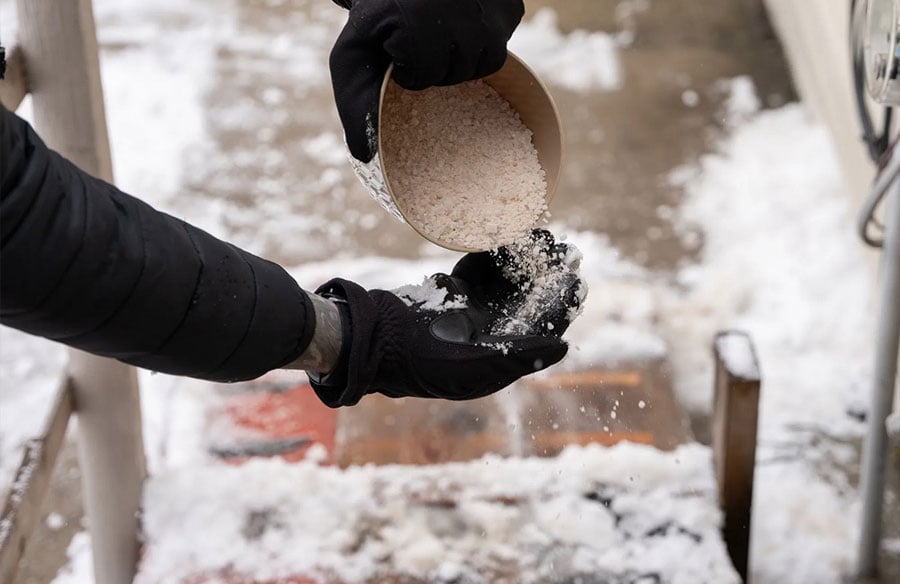
Applying rock salt is relatively simple. You can spread it manually using a shovel or spreader, or for larger areas, consider using a walk-behind or truck-mounted spreader. Rock salt can be applied before, during, or after a snowfall to prevent ice from forming or to melt existing ice.
Choosing the Right Rock Salt
Rock salt for snow is available in various forms, including coarse rock salt, fine rock salt, and blends with other minerals. Coarse rock salt is typically used for larger areas, such as parking lots and driveways, while fine rock salt is better suited for sidewalks and steps. Some rock salt blends incorporate additives like calcium chloride or magnesium chloride to enhance their performance in extremely cold temperatures.
While rock salt is an effective de-icer, it’s important to be mindful of its potential environmental impact. Excessive use can harm plants, pollute waterways, and damage concrete and asphalt surfaces. Use rock salt judiciously, following recommended application rates, and consider eco-friendly alternatives when possible.
Maximizing Effectiveness
Timing is Key
Applying rock salt before or during a snowfall can prevent ice from bonding to surfaces, making it easier to remove. If applying after a snowfall, be sure to clear away as much snow as possible before spreading the salt.
Even Distribution
Distribute rock salt evenly over the surface to ensure consistent melting. Avoid creating piles or uneven coverage, as this can lead to ineffective de-icing and potential damage to surfaces.
Temperature Considerations
Rock salt is most effective at temperatures above 15 degrees Fahrenheit. In extremely cold temperatures, its effectiveness decreases. Consider using a blend with calcium chloride or magnesium chloride for enhanced performance in frigid conditions.
Safety Precautions
Protect Your Skin and Eyes
Rock salt can be irritating to the skin and eyes. The coarse texture can cause abrasions, and the salt itself can dry out your skin, leading to irritation and discomfort. When handling rock salt, especially during prolonged periods or when spreading large quantities, be sure to wear gloves to protect your hands. Additionally, consider wearing eye protection, such as safety glasses or goggles, to prevent salt particles from getting into your eyes.
Pet Safety
Rock salt can pose hazards to pets, particularly if they ingest it. Dogs and cats walking on treated surfaces may get salt on their paws, which they can then ingest while grooming. Ingesting rock salt can cause gastrointestinal upset, and in severe cases, it can lead to more serious health complications. To protect your furry friends, keep them away from treated areas as much as possible. After they’ve been outside, wipe their paws with a damp cloth or use pet-safe wipes to remove any salt residue.
Plant Protection
While rock salt effectively melts ice, it can also have detrimental effects on plants and vegetation. The salt can dehydrate plants, disrupt their nutrient uptake, and damage their roots. When applying rock salt, avoid applying it directly to plants, flower beds, or soil surrounding trees and shrubs. Consider using physical barriers, such as burlap or snow fencing, to protect vulnerable plants from salt spray and runoff. If you have sensitive vegetation near areas that require de-icing, consider using alternative de-icing methods, such as calcium chloride or magnesium chloride, which are generally less harmful to plants.
Beyond De-icing
While de-icing roads, driveways, and walkways is the primary use for rock salt, its versatility extends beyond snow and ice removal. It can be a valuable tool for addressing other winter challenges and even for creative purposes:
De-icing car windows: In a pinch, rock salt can help de-ice car windows. Mix a small amount of rock salt with water to create a brine solution and apply it to your windshield to speed up the melting process.
Preventing frozen pipes: Rock salt can help prevent pipes from freezing in extremely cold temperatures. Dissolve rock salt in water and pour the solution down drains or around exposed pipes to lower the freezing point of the water and reduce the risk of freezing.
Winter crafts: Rock salt can be used for various winter crafts, such as creating decorative salt dough ornaments, making sparkling snowflakes, or adding a snowy texture to paintings and other art projects.
Its versatility and affordability make rock salt a valuable household staple during the winter months, offering solutions for various challenges and even sparking creativity.
Conclusion
When winter’s icy grip takes hold, rock salt remains a reliable and effective solution for maintaining safe and accessible surfaces. Its ability to lower the freezing point of water, combined with its affordability and ease of use, makes it a top choice for snow removal. Whether you’re a homeowner keeping your driveway clear or a business owner ensuring the safety of your customers, understanding the science behind rock salt and following best practices for its application can help you melt ice the smart way and navigate the winter season with confidence. Just remember to use it responsibly, considering its potential environmental impact and taking precautions to protect your property, plants, and pets. And if you’re in need of a large supply, don’t forget to search for “bag of salt for snow” at your local store bulk ice melt suppliers.







