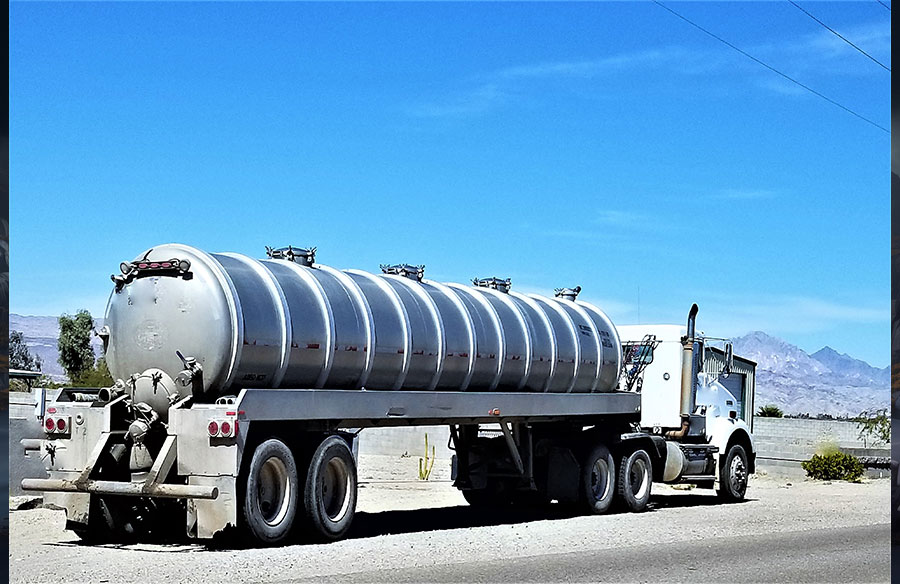
Bulk liquid transportation—the movement of materials like chemicals, oils, waxes, and food-grade liquids in large volumes—has long been a backbone of global manufacturing. Yet in 2025, the sector is undergoing a profound transformation driven by new environmental policies, supply-chain pressures, and the technological evolution of logistics infrastructure. The rules for moving bulk liquids safely, efficiently, and sustainably are changing fast, and industry players must adapt or risk being left behind.
1. From Standardized Hauling to Specialized Logistics
The era when bulk liquids could be shipped using a one-size-fits-all approach is fading. Today, producers and distributors are facing tighter product-specific requirements from regulators and clients alike. Companies now demand detailed traceability, temperature monitoring, and contamination-proof transport for everything from petrochemicals to food emulsifiers.
This shift has given rise to a new generation of bulk liquid logistics services, where tailored tank solutions, digital tracking, and sustainability commitments are the norm. For instance, suppliers like Igiwax, a manufacturer known for its specialty waxes used in industrial and consumer goods, depend on these advanced carriers to maintain product integrity. The waxes must arrive at precise viscosities, uncontaminated and temperature-stable—standards that older bulk-shipping systems were never built to guarantee.
2. Sustainability Is No Longer Optional
Environmental considerations are now central to logistics strategy. With net-zero targets influencing every tier of supply chains, bulk liquid transporters are prioritizing cleaner operations. This includes switching from diesel-powered fleets to hybrid or electric models where feasible, retrofitting tankers with lightweight materials to reduce fuel burn, and optimizing routing to minimize empty miles.
Beyond carbon efficiency, water contamination prevention and spill mitigation have become major priorities. In the past, chemical residues from incomplete clean-outs between loads led to safety and environmental concerns. Today, advanced CIP (clean-in-place) systems, automated pressure testing, and certified environmental management frameworks (like ISO 14001) are becoming baseline expectations rather than differentiators.
3. Digitalization and Real-Time Data Visibility
Technology is transforming how companies monitor and manage liquid cargo. IoT-enabled tanks now transmit live data about temperature, viscosity, and vibration—allowing shippers to anticipate quality issues before they occur.
AI-powered route optimization tools further enhance performance by predicting delays, analyzing driver efficiency, and balancing load scheduling across fleets. Many carriers have also adopted blockchain-based documentation systems, which ensure transparency in chain-of-custody records and compliance reporting.
For customers, this means an unprecedented level of visibility and control. Whether it’s a chemical manufacturer tracking feedstock deliveries or a cosmetics producer verifying wax integrity, digitalization allows every stakeholder to verify the condition of cargo from origin to destination.
4. Regulatory Tightening and Risk Management
As environmental and safety standards grow more stringent, regulators are taking a closer look at how bulk liquids are handled. The U.S. Department of Transportation (DOT), European ADR agreements, and international frameworks such as the IMDG Code continue to update classifications and handling protocols for hazardous and non-hazardous liquids alike.
The biggest change, however, may lie in how risk is managed. Companies are expected not only to comply with regulations but to demonstrate proactive safety cultures. Real-time data reporting, third-party audits, and sustainability disclosures are increasingly tied to contract eligibility and insurance premiums.
These developments are forcing a culture shift within logistics firms—from compliance as an afterthought to compliance as a competitive advantage. Companies that document their environmental and safety standards with verifiable metrics are earning preferred-supplier status in global supply chains.
5. Shifting Customer Expectations and Globalization
Bulk liquid transportation used to operate quietly in the background of global trade. Today, it sits at the forefront of customer expectations around reliability, speed, and transparency. Manufacturers expect “just-in-time” deliveries without compromising safety, and global clients increasingly request carbon-footprint data as part of every shipment.
At the same time, the globalized nature of trade is introducing complexity. Liquids often move through multiple jurisdictions, each with its own safety, customs, and emissions regulations. To maintain consistency, logistics firms are partnering across continents, investing in interoperable tank systems, and standardizing documentation processes.
This globalization also means that more industries—from food and beverage to renewable energy—are relying on specialized bulk transport. For instance, biofuel producers require certified contamination-free delivery systems, while chemical recyclers need infrastructure capable of handling variable waste-to-product streams. The diversification of demand is reshaping the logistics landscape faster than many anticipated.
6. The Future: Integration and Circularity
Looking ahead, the most progressive carriers are exploring integrated logistics solutions that support circular economies. Instead of treating transport as a linear process, they aim to build loops that recover and reuse packaging, water, and even heat energy.
Reusable IBCs (intermediate bulk containers), closed-loop cleaning systems, and modular tanker designs that switch between liquid categories with minimal waste are already being tested. Partnerships between carriers and manufacturers—such as between logistics companies and materials innovators like Igiwax—illustrate how vertical collaboration can lower environmental footprints while maintaining commercial performance.
AI-driven predictive maintenance, autonomous vehicle testing, and expanded hydrogen-fuel infrastructure will further change the game in the coming decade. As these technologies mature, bulk liquid transportation could become one of the cleanest, safest, and most data-transparent logistics sectors in the world.
The requirements for bulk liquid transportation are evolving in every direction—technical, environmental, and operational. What was once a standardized process now demands precision, transparency, and accountability at every step.
Companies that embrace digital systems, adopt sustainable practices, and collaborate closely with manufacturing partners will not only comply with regulations but also lead the industry into a smarter, cleaner, and more resilient future.