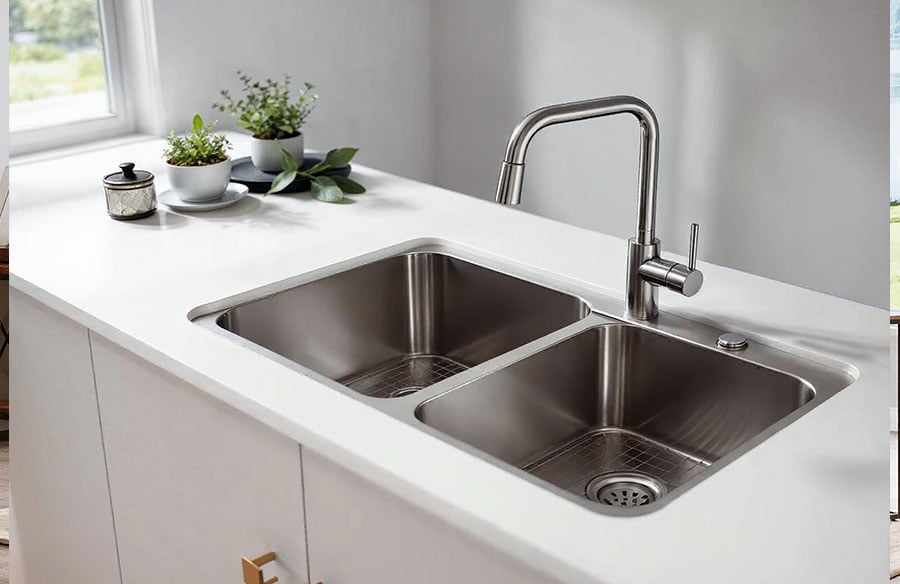
For a fixture used every single day, the kitchen sink still doesn’t get the design attention it deserves. Beyond function, its placement, size, and shape have a major impact on how well a kitchen works—and looks.
Among all materials, stainless steel remains the dominant choice for both residential and commercial kitchens, thanks to its durability, affordability, and versatility. However, within that broad category, there are dozens of options to consider, including single or double bowls, square or round corners, top-mount or under-mount installation, and more.
Choosing the right stainless kitchen sink isn’t just about matching appliances. It’s about selecting a style that supports your layout, suits your cooking and cleaning habits, and integrates smoothly with your cabinetry and benchtop. This article breaks down how to choose the most suitable kitchen sink for your layout, based on practical experience from thousands of kitchen projects.
Match Your Sink to Your Kitchen Layout
Kitchen layouts vary widely, and so should your choice of sink. A well-matched stainless steel sink should work with your space—not against it. Whether it’s about maximising bench space, improving workflow, or simply keeping things visually balanced, layout plays a key role in finding the right fit.
Single Wall or Galley Kitchens
In tighter spaces, compact sinks are essential. A single-bowl stainless steel kitchen sink—either undermount or top mount—with a drainer offers maximum practicality without eating into benchtop real estate. These options are space-efficient while still offering enough room for washing and prep.
L-Shape or U-Shape Kitchens
With more bench space to play with, these layouts can accommodate larger sinks. Double-bowl or one-and-three-quarter bowl sinks are popular choices here, offering flexibility for multitasking—like rinsing veggies while soaking dishes. A large square sink with straight lines also complements contemporary cabinetry styles often used in these layouts.
Island Benches
Sinks on island benches are increasingly common in open-plan designs. In these cases, design plays as big a role as function. An integrated stainless sink or workstation sink can become a centrepiece—visually sleek, and highly practical with optional accessories like cutting boards and colanders.
I once fitted a compact rental kitchen with a deep single-bowl sink to save space without sacrificing function. It made the space feel more open and proved to be more than enough for everyday use—proof that the right choice often depends more on layout than anything else.
Pick the Right Bowl Configuration
The number of bowls in a kitchen sink directly impacts how efficiently you can cook, clean, and prep. It’s a small design decision with big practical consequences.
Single Bowl
A single-bowl kitchen sink is a popular choice for smaller kitchens or those with a minimalist design. With fewer edges and more uninterrupted space, it’s easier to clean and ideal for washing larger pots and pans. It also pairs well with compact layouts where bench space is limited.
Double Bowl
In larger kitchens—especially those used by families or keen home cooks—a double-bowl kitchen sink is often the better option. It lets you soak dishes on one side while rinsing or prepping on the other. This split function can streamline tasks and reduce bench clutter.
One-and-Three-Quarter or One-and-a-Half Bowl
These hybrid sink configurations offer flexibility without taking up as much space as a full double bowl. They’re ideal for multitasking in mid-sized kitchens and suit renovators who want extra utility without losing too much bench area.
Quick tip: Before settling on a configuration, consider your cooking and cleaning habits. Do you handwash frequently? Do you often prep meals while dishes pile up? Your answers should guide the bowl choice more than looks alone.
Choose a Shape That Complements Your Kitchen Style
A kitchen sink isn’t just a utility—it’s also a design element that should complement your cabinetry, benchtops, and overall style. Whether you’re aiming for a classic family kitchen or a sleek, modern design, the sink shape and corner radius (R value) play a key role.
Traditional Sinks with Rounded Corners
Traditional stainless steel sinks tend to feature a rectangular bowl with generous corner curves—commonly around R25. These larger radii make cleaning easier and provide a softer, more familiar look. They’re often paired with integrated drainers and top mount installation, making them a go-to choice in many classic Australian kitchens and investment properties.
This style suits transitional or traditional kitchens and is particularly practical for family homes where function and low maintenance are top priorities.
Modern Square and Round Sinks
In contemporary kitchens, sharper geometry is often preferred. Square sinks with tight corners—typically R10 or R5—offer a bold, architectural look that pairs well with flat-panel cabinetry and stone benchtops. These are often installed as undermount sinks for a seamless effect and are popular in minimalist or high-end interiors.
Round bowls are another modern option, usually used as a secondary prep sink or in butler’s pantries. They provide a soft visual break and are also easy to clean due to their continuous curve.
While smaller R values deliver clean lines and a designer look, they do require more attention when cleaning, as debris can build up in the tighter corners. The choice ultimately comes down to balancing style preferences with everyday practicality.
Flush Mount, Top Mount, or Undermount?
Installation style matters just as much as sink shape.
- Flush mount sinks sit level with the benchtop, offering a sleek look but requiring a precise install.
- Top mount sinks are the most straightforward to install, sitting on top of the bench and often used in laminate benchtops.
- Undermount sinks are installed below the bench surface, creating a seamless look and making bench cleanup easier—but they typically suit stone or solid surfaces.
From experience, square undermount kitchen sinks tend to be the go-to for high-end builds where design and finish are top priorities. In contrast, top mount options remain a smart and reliable choice for investment renovations, thanks to their easy installation and broad compatibility with various bench materials.
Size Matters – But Bigger Isn’t Always Better
Choosing the right size kitchen sink isn’t just about personal preference—it’s about proportion. A sink that’s too large can dominate the space, while one that’s too small can quickly become frustrating to use.
Bench Space and Layout
A general rule of thumb: your kitchen sink should be about one-third the length of your benchtop. This allows enough room for food prep, dish drying, and other tasks without making the sink feel cramped or oversized. In galley and single-wall kitchens, a compact single-bowl model is often the best choice. Larger layouts can comfortably accommodate double-bowl or even workstation sinks.
Surrounding Fixtures
It’s also important to consider the proximity of the sink to cooktops, dishwashers, and refrigerators. Allow enough space for water to flow away from the benchtop edge and ensure the tap location won’t crowd wall cabinets or windowsills.
Benchtop Material and Mounting
Material matters more than most people realise. Some benchtops—like laminate—are better suited to top mount sinks, while stone surfaces allow for undermount or flush mount installation.
Always consider the benchtop material before choosing a kitchen sink. Certain materials—like stone or composite—are ideal for undermount installations, while laminate surfaces typically suit top mount models. This decision can influence not just the mounting style but the overall size and fit of the sink.
Finishing Touches: Thickness, Finish and Accessories
With the main design decisions made, it’s worth considering the finer details that influence performance, durability, and day-to-day convenience.
Material and Thickness
Not all stainless steel sinks are created equal. For kitchen applications, 304-grade stainless steel is the standard to look for—it offers excellent corrosion resistance and is highly durable, making it ideal for everyday use in Australian homes.
Thickness is another key factor. Most quality sinks range from 1.0mm to 1.2mm. Thicker steel provides a more solid feel, helps dampen sound, and resists denting. It also supports a cleaner finish, particularly around the edges and mounting areas.
Finish: Brushed vs Polished
A brushed finish is the most popular choice for stainless kitchen sinks. It hides fine scratches, resists fingerprints, and blends well with most appliances. Polished finishes, while striking in the right setting, tend to show marks more easily and often require more upkeep.
Accessories: Simple Upgrades with Big Impact
Many stainless steel kitchen sinks now come with optional accessories that extend their functionality—such as matching drainers, roll mats, chopping boards, and colanders. These can turn a basic sink into a flexible prep zone, particularly useful in kitchens where bench space is limited.
To explore a wide range of stainless sink options—across different sizes, shapes, and installation styles—Ross’s Discount Home Centre’s range of kitchen sinks is a good place to start.
Conclusion
Choosing the right stainless steel kitchen sink goes beyond looks—it’s about finding the best fit for your layout, cooking habits, and available space. From bowl configuration and corner radius to finish and accessories, each detail plays a part in creating a kitchen that works effortlessly day to day.
Planning ahead is key. Getting the sink right is one of the simplest ways to future-proof your kitchen and avoid design compromises in the long run.
At Ross’s Discount Home Centre, we offer a wide range of stainless options suited to every layout and budget—and have helped thousands of Perth homeowners and renovators make the right choice first time.