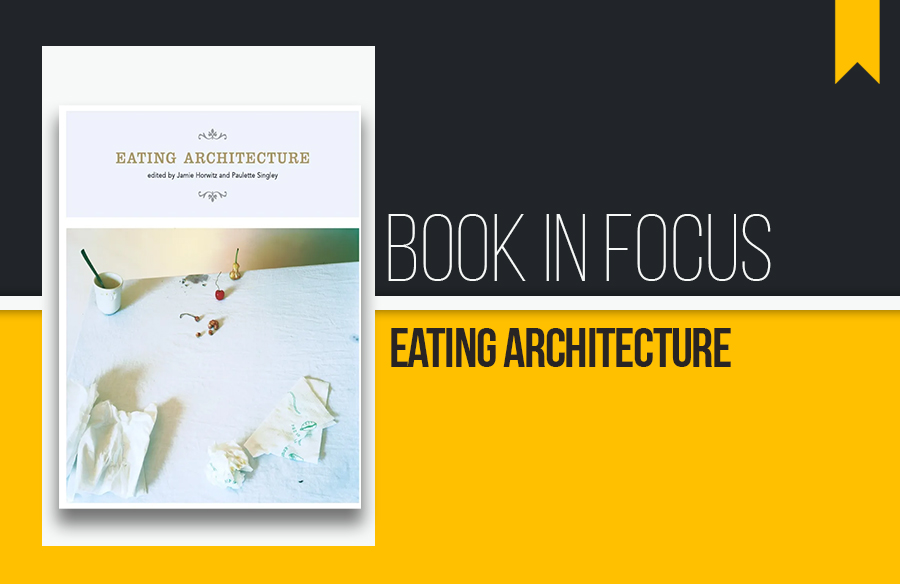
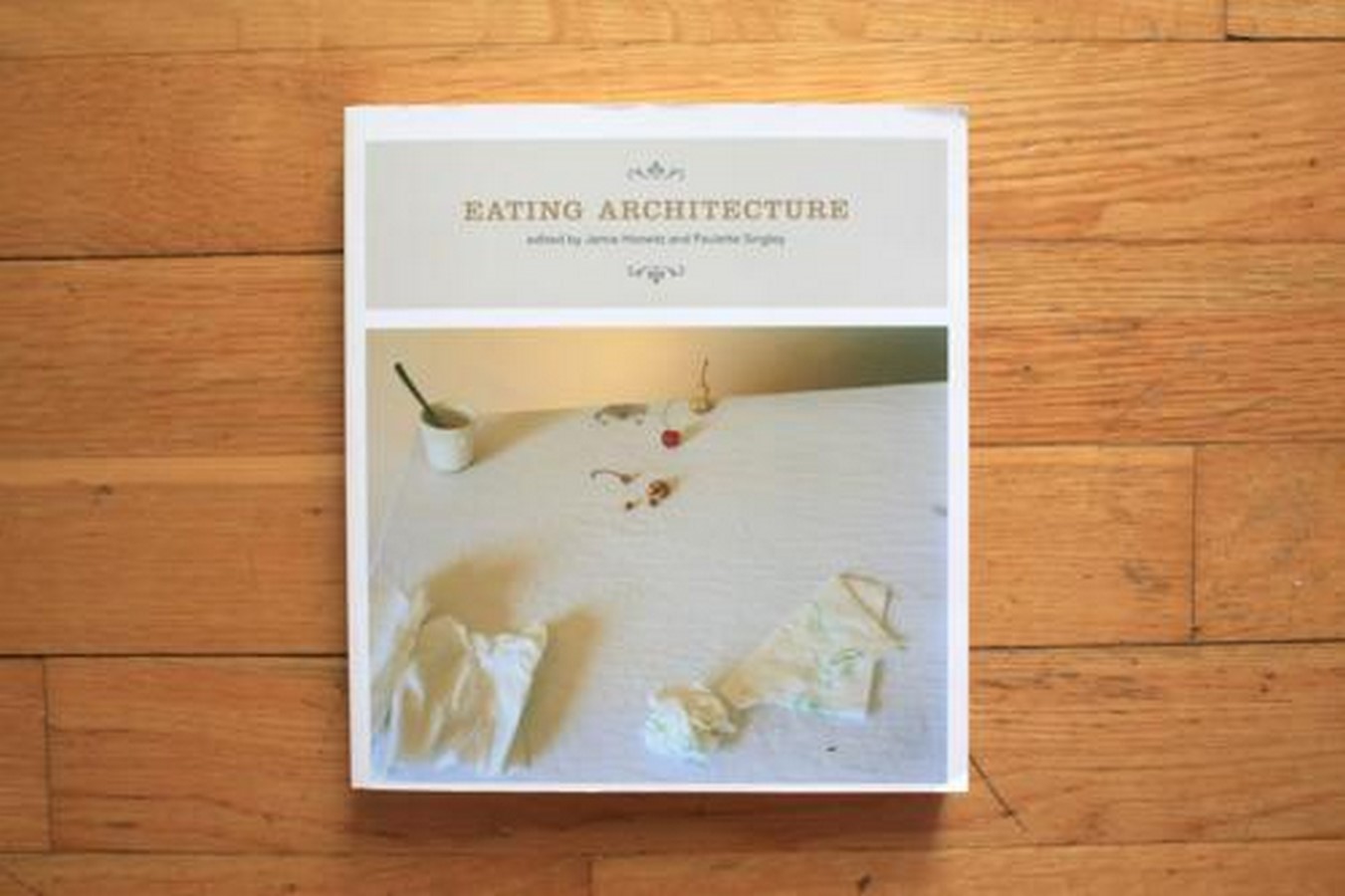
Eating Architecture (MIT Press, 2004) is an anthology of essays that explore the intersection of food culture and design. Editors Jamie Horwitz and Paulette Singley gather nineteen essays, arranged in a “Gallery of Recipes”, addressing the (often metaphorical) convergence of the production of meals and the production of space (Horwitz and Singley, 2006). Organized into four thematic sections: Place Settings, Philosophy in the Kitchen, Table Rules, and Embodied Taste, the book proceeds in measured steps from landscape through kitchen through table through mouth. En route, the essays address such questions as food locality and globalization (culinary colonialism and tourism), kitchen ritual and edible art (gingerbread house, cookbook drawing), social custom of commensality (social rules governing eaters at the table), and the sensual life of eating food as artwork (Leonardo.info, 2025). As an aside, Eating Architecture brings food as a lens through which architecture and architecture through which food to consider (Horwitz and Singley, 2006).
Structure and Main Themes
The anthology is structured within a four-part “meal” for the mind (Leonardo.info, 2025). In “Place Settings,” the essays marry regions and food, i.e., the manner in which regional architecture and regional cooking negotiate regional culture or how worldwide tourism and culinary colonialism rework space (Horwitz and Singley, 2006). The “Philosophy in the Kitchen” section takes cooking itself as a design site, considering the everyday kitchen routine, cookbook illustrations, and even edible architecture such as gingerbread buildings as architectural imaginative provocations (Leonardo.info, 2025). “Table Rules” brings the act and reality of the eatery into public and social space, examining the ritual and performance of the common table nodding in the direction of the work of people such as Claude Lévi-Strauss and how the dining room becomes an architectural setting (Leonardo.info, 2025). Lastly, “Embodied Taste” zeroes in on the sensory and bodily dimension of food, the tangible, olfactory, and gustatory registers, and even how artwork by people from George Bataille through Damien Hirst incorporates food in artwork in order to confront space and desire (Leonardo.info, 2025). The book concludes in a Gallery of Recipes, a set group of architectural photographs by food theme, which playfully recapitulates and illustrates the ideas in the book.

All in all, the essays together make up an interwoven tapestry of themes: cultural politics of the table (colonialism, tourism, authenticity), the kitchen poetics of daily life, the dinner table as performative space, and the body in space. They pose large questions, i.e., “What can be learned from analyzing the intersections of meals and space?” (Horwitz and Singley, 2006), even as they happily dither through food metaphors in art and architecture. Most authors utilize rich exemplars like Aldo Rossi’s “set the table” plans, Gehry’s fish sculpture, etc., in describing the secret architecture of food. Generally speaking, the voice is quirky and at times playful, in the manner of a conceptual cookbook of ideas. As one reviewer explains it, “the result is a handsomely designed collection that has all the user-friendlyness of a cookbook, none of the pretentiousness of a design monograph” (Horowitz and Singley, n.d.).
Contributors and Content
The editors are from design, architecture, art history, and the study of culture. Phyllis Pray Bober, prologue, art historian, Marco Frascari, architectural theorist, and a selection of architects and scholars from diverse schools are featured. The book even publishes Frascari’s original 1986 essay “Semiotica Abedendo: Taste in Architecture” as a starting point, and then reacts (Horowitz and Singley, n.d.). Horwitz and Singley gather architects, historians, theorists, and artists to garnish, slice, and otherwise reprocess Frascari’s presuppositions (Horwitz and Singley, n.d.). Susan Herrington has a culinary portrait of Canada, Daniel Friedman writes on the film Babette’s Feast on architectural issues, and Donald Kunze has an imaginative essay on hospitality as topology. The table of contents lists essays on subjects as diverse as local food production and territorial identity, Victorian and modernist regimes of food, and even film architecture (Horwitz and Singley, 2006).
In the accompanying essays and the “Gallery of Recipes,” the “Gallery of Recipes” is comprised of graphic work by architects in the modern era, drawing on space and food. The section lends a design visual dimension and highlights the interdisciplinary nature of the publication. At all times, the editors have resisted the temptation to elicit homogeneity, so the anthology contains a fearless polyphony of lone voices (Horwitz and Singley, 2006). There are chapters analytical and theoretical, others anecdotal or poetic. As one reviewer explains, there are pieces in which one may learn things palatable, hilarious, and wise, and others more extravagant or essayistic (Leonardo.info, 2025).
Interdisciplinarity: Connecting Architecture and Food
Why should architects or designers be concerned with Eating Architecture? The book’s basic premise is that building and cooking are identical acts of imagination; both take raw materials and transform them by rule and fancy (Horowitz and Singley, n.d.). By looking at food metaphors and food rituals, designers can go back to their work with fresh ideas. The process in a kitchen, for instance, can generate ideas about movement through space, or food’s perishability can express itself in architectural ephemera. In written language, the editors note, the rituals of dining, the design of meals, and the process of cookery form and inform a distinctly expressive architecture.
Readers will see that this cross-pollination benefits both disciplines. One critic hails the book as food for thought, as it were, for bon vivant architects everywhere, arguing that gastronomy and architecture have parallel histories and can speak to one another (Horowitz and Singley, n.d.). Another critic observes that the essays disrupt architecture’s and architects’ typical preoccupation with singular visual or rational solutions, rather contaminating canonical Kantian aesthetics by reintroducing texture, taste, and body experience (Horowitz and Singley, n.d.). Beyond being useful, the book turns architects and designers on to thinking more seriously about everyday activities such as eating as culturally and spatially rich, and vice versa, to find aesthetic and social meaning in what they do.
This interdisciplinary appeal renders the book extensively read in design student training, in food studies scholarship, and by students of sensory culture. It addresses popular topics like sustainability, local food culture, and restaurant and kitchen design. Basically, Eating Architecture gives architects and urban designers an alternative perspective; it invites authorities to recall that food and shelter are as essential to civilization as any building infrastructure (Leonardo.info, 2025), and that the two can be addressed together and yield novel insights.
Who should read it
Eating Architecture is for individuals who will enjoy inter-disciplinary thinking. Students and practitioners in architecture who will enjoy cultural theory, anthropology, or design by the senses will find something to think about. The book is mostly readable; some of the contributions are well-written and richly evocative, but it is an academic theory-based book with theory chapters included. Readers who enjoy the culture of food, the history of cookery, or the design of cookbooks will find its tone equally engaging. MIT Press asserts that this is a book for all those who choose the combination platter of cultural investigation (Horwitz and Singley, 2006).
In practice, the book is most valuable for readers who are open to different styles. If you’re after architectural guidance on a step-by-step level, this is not the kind of book. Rather, it is a think-piece anthology, among the things you learn from it is the fact that design draws from the ordinary, sensual world as readily as from drawing up blueprints. Teachers in architecture have employed the essays in getting class discussion going on the way design gathers in the mundane, experiential world. Designers interested in the way taste, smell, and occasionally even the sense of sound in restaurants or bazaar conditions could equally well.
Worth and Limitations
Overall, Eating Architecture is grand and formidable, and in being original, stands widely in praise. Its readers applaud it as immensely original and fascinating, describing reading it as a stately banquet with four menus of increasingly erudite conclusions (Horwitz and Singley, 2006). Whatever Eating Architecture most successfully does is have a grand vision functioning across genres, vivid description, and the curious examples it places side by side from Art Deco dessert service through modernist buildings from feeding in gastronomy art installations through feeding regularities in ethnography. Visually, too, the book is enlivening and helpful in the employment of photographs and parsimonious arrangement. Its reviewers recommend it as user-friendly in the presence of scholastic material (Horowitz and Singley, n.d.), and it will thus most likely be enliven and never bored.
All of which aside, there are some restrictions to consideration. Of course, with any anthology of essays, the quality is inconsistent. Numerous reviewers state some of the essays are uneven (Leonardo.info, 2025), some lucid, original, and witty at times, others obscure or based on heavy theory. One reviewer confesses they have difficulty stomaching some articles which dabble in recondite comparison. A warning should most definitely be given in advance to readers that there is no finale, great and sweeping; the book gathers opinions, not a unifying theory. What this means is the book can likely be thumb-through’d for the most readable essays or read by theme.
Finally, since the book was published in 2004, there are certain outdated cultural allusions and new developments like current foodie architecture of social media absent in the book. But the basic ideas behind the book in terms of place, ritual, and the body still hold.
Briefly, Eating Architecture is richest as a provoking reader. Open-minded practice architects and design students may be provoked to new analogies and against limited assumptions on architecture’s senses and culture. Not a guidebook, but an ideational feast, an interdisciplinary combination platter in essay form, which rewards the adventurous in interdisciplinary thinking.
References:
- Horwitz, J. and Singley, P. (2006). Eating architecture. Cambridge, Mass. ; London: Mit.
- Leonardo.info. (2025). Leonardo Digital Reviews. [online] Available at: https://leonardo.info/reviews_archive/nov22005/eating_ryssen.html# [Accessed 23 Jul. 2025].
- Horowitz, J. and Singley, P. (n.d.). Book Reviews Eating Architecture. [online] Available at: https://re.public.polimi.it/bitstream/11311/1182121/1/2005-JOAE.pdf [Accessed 24 Jul. 2025].