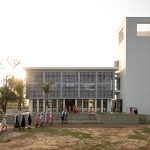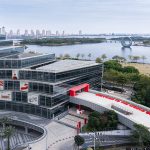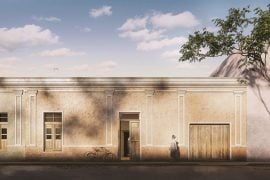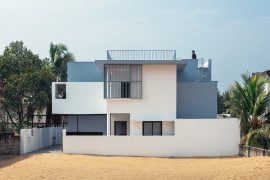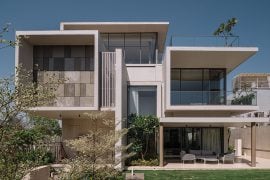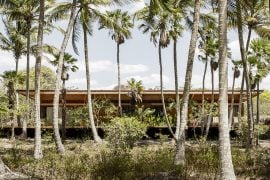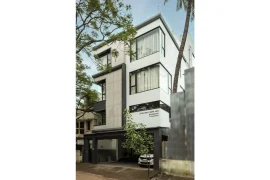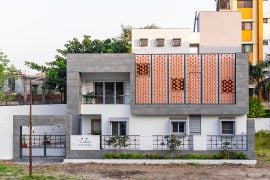
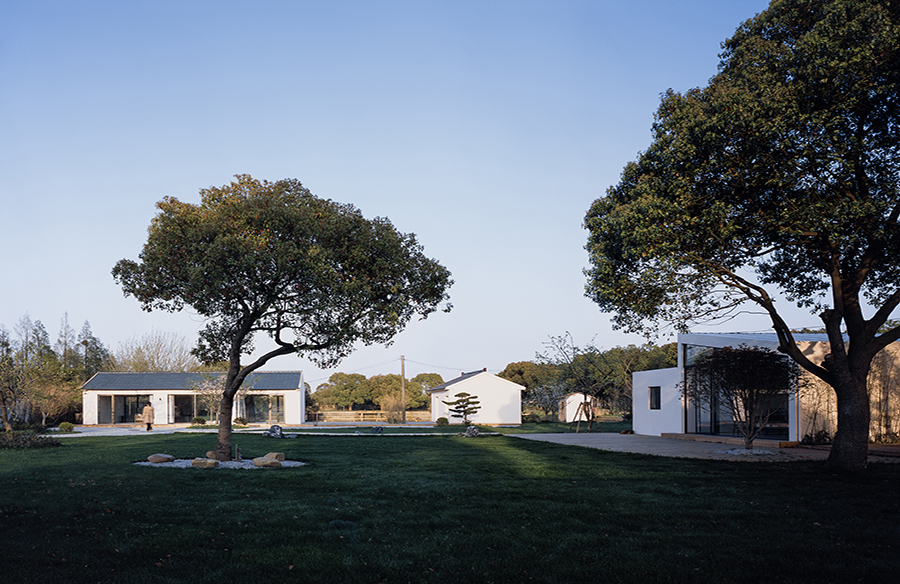
The site is a deserted crab breeding base in Shanghai suburbs with forest on the south and lake on the east. The owner wants to keep and reuse the existing buildings, and invest minimally to turn the place into a multi-function resort with courtyard. We attempt to give the old buildings new functions with proper intervention, and fully blend them with the nature in great harmony.
Project Name: Lan Ruo Resort
Studio Name: STEPS Architecture
Location: Mexico
Status: built
Image Credits: Chen Hao
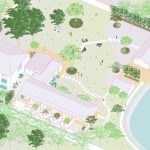
The original site was defined by walls, road, and lake as an introverted place with undermaintained buildings and courtyard in poor shape. A second-floor building and several scattered buildings are spatially disconnected with each other. With very limited budget and schedule, rather than demolishing and rebuilding everything, we choose to renovate with precision on small scales and adaption to the physical properties. By repairing existing buildings and connecting them with platforms, paths, and landscape, we fully reactivate the site and make it a whole and independent small world.
We evaluated the existing conditions of every building, and adapted strategies of “renovation/extension /construction” accordingly.
Renovation
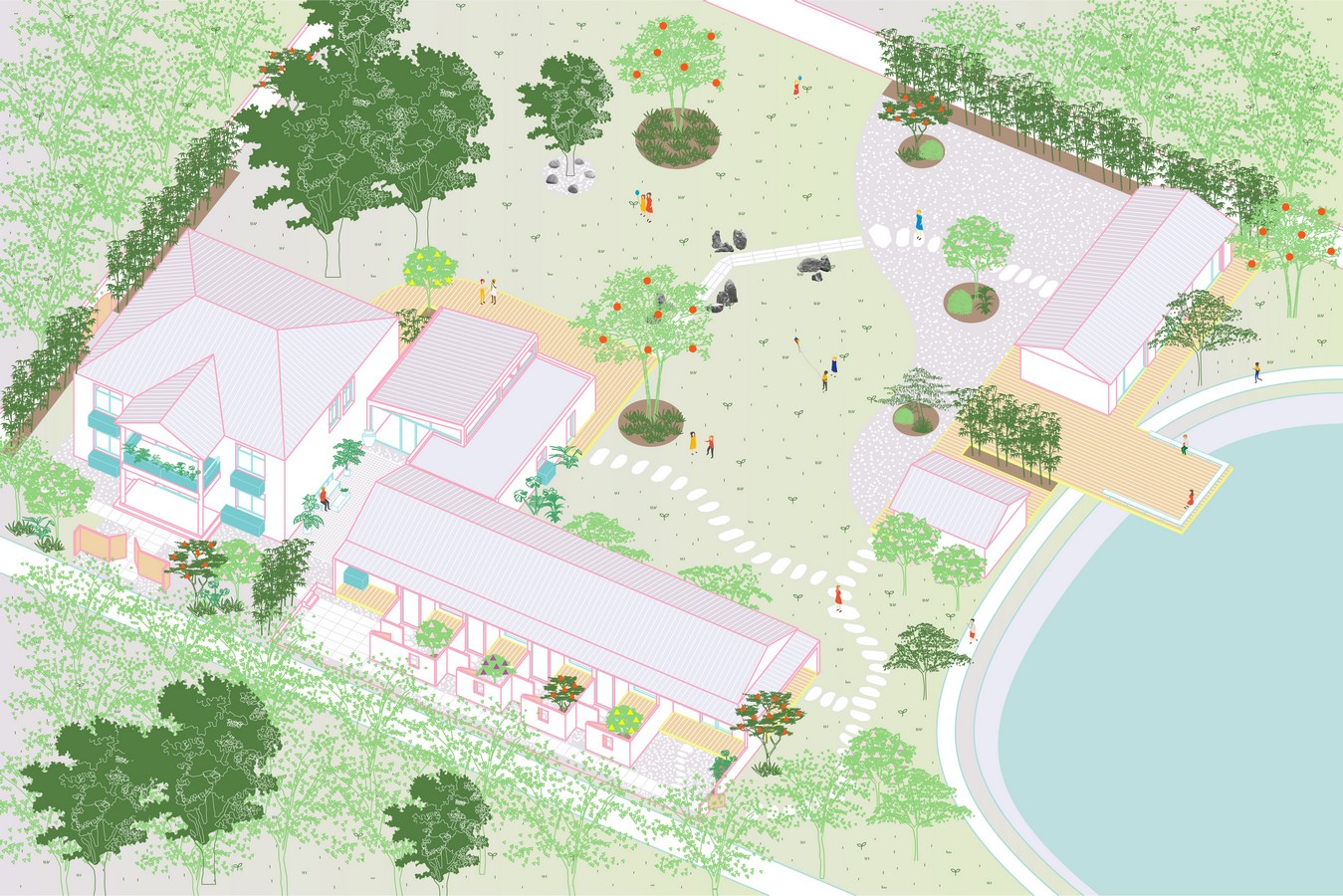
The second-floor main building near the site entrance is the largest and in rather good shape, so we only undertook minor actions for it. Since the form of building looks heavy and cannot be changed, we planted diverse trees and shrubs with different height around it to soften its rigid profile. Meanwhile, we implanted black perforated aluminum boxes for AC on façade and plant box as railing on balcony, together with beige paint of exterior walls, they help make the building look more modest and quietly blend in surrounding landscape.
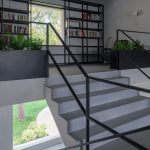
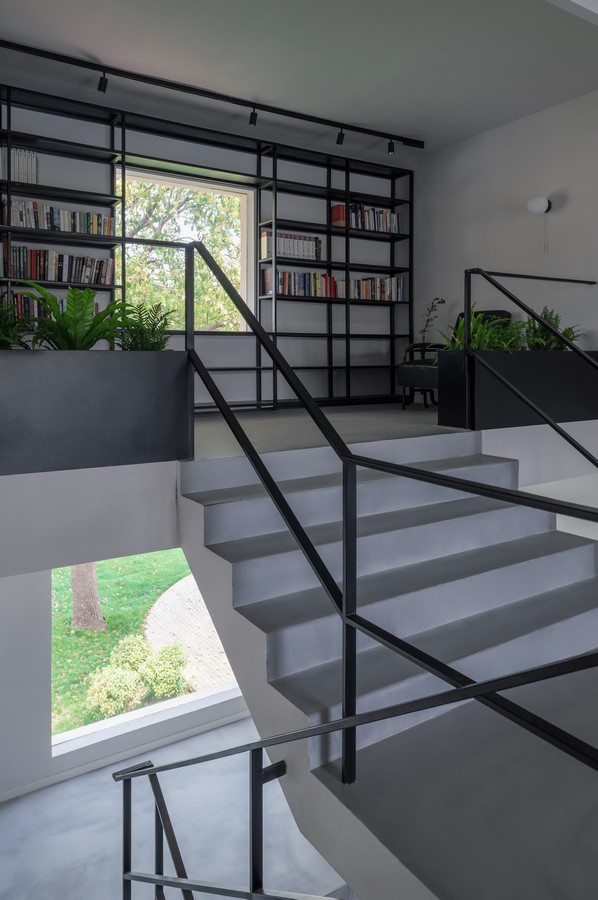
By demolishing several interior partitions of the main building, we get 8 symmetric guest rooms with same size. The in-between spaces of first and second floor become public spaces. We enlarged the window opening with beautiful view on first floor staircase platform and added fixed glass without frame, bringing scenery into entrance lobby in great depth. We use simple black bookshelves to frame the opening of second floor, bringing the shadow of trees and natural light into interior space. The black railings and plant boxes with diverse ferns create simple yet comfortable reading space.
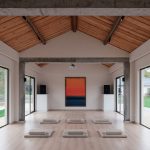
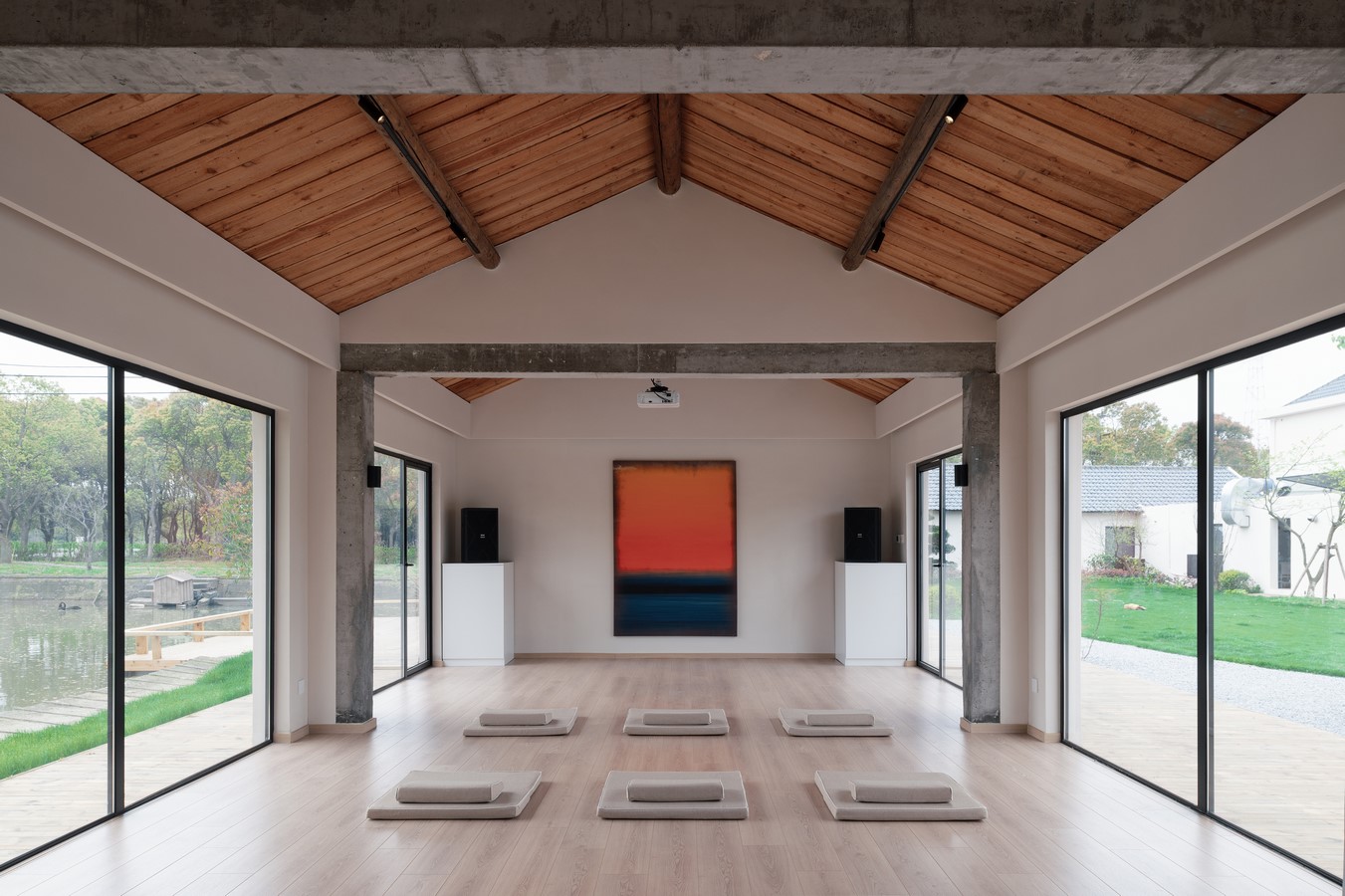
On the north-east corner of the site, there is a brick-concrete building, which is far away from the main building and quietly stands near the lake. We demolished all partitions and implanted new concrete columns and beams to reinforce it, and integrated three original rooms into one open multi-function space for meditation, yoga, movies and KTV. We also changed the small windows to floor-to-ceiling windows on both sides to maximize the scenery of lake and courtyard.
Extension
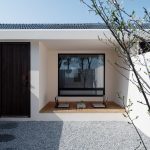
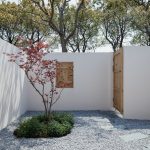
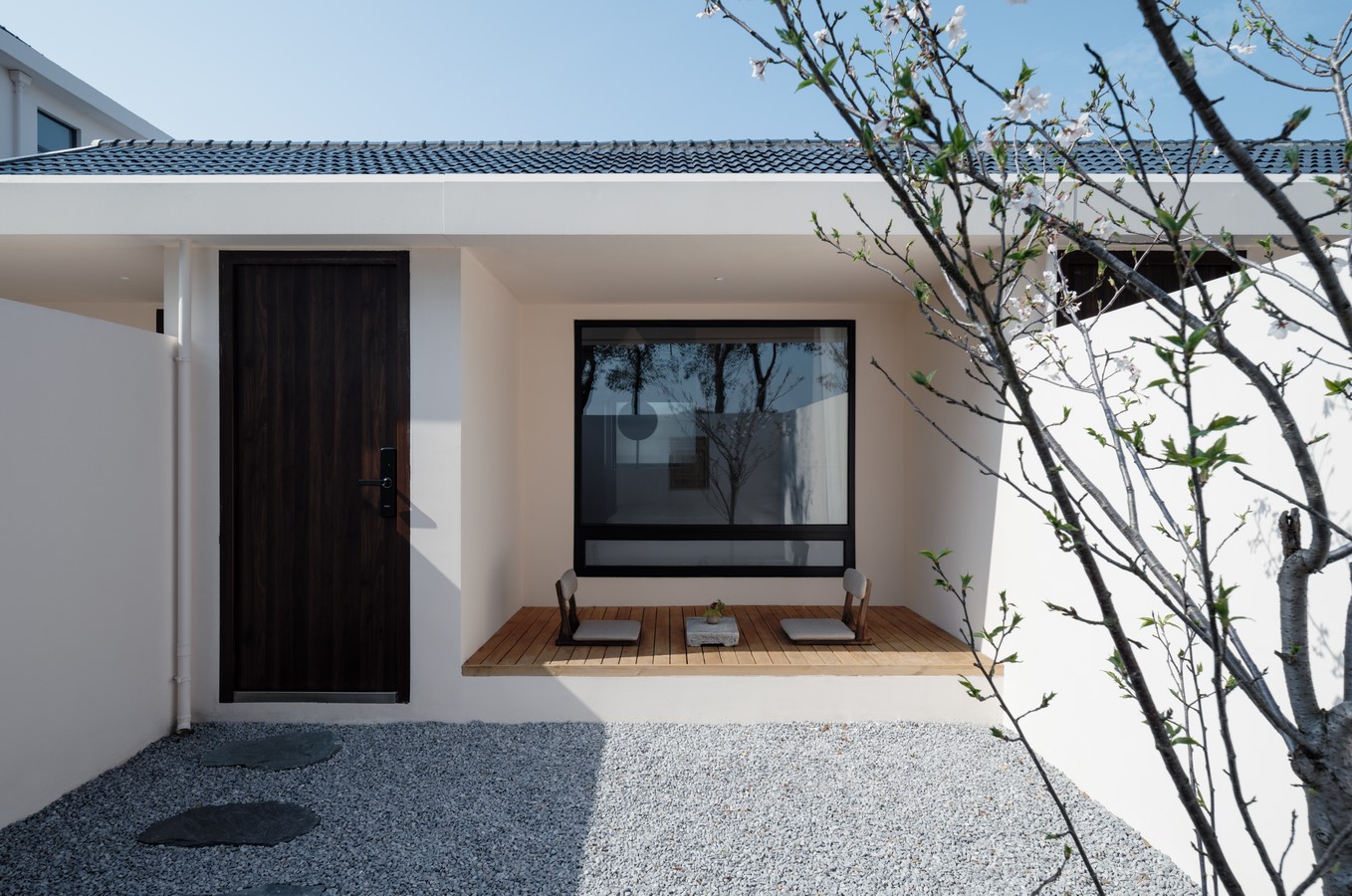
On the south of the site, the long brick-concrete annex building is turned into four tatami guest rooms and a tea room. The original building is separated with the road with the sunken open space in between. Taking advantage of the open space, we extended the original building to create a small courtyard for each room. By replacing wood columns with new walls, the original colonnade is transformed to comfortable semi-outdoor resting spaces.
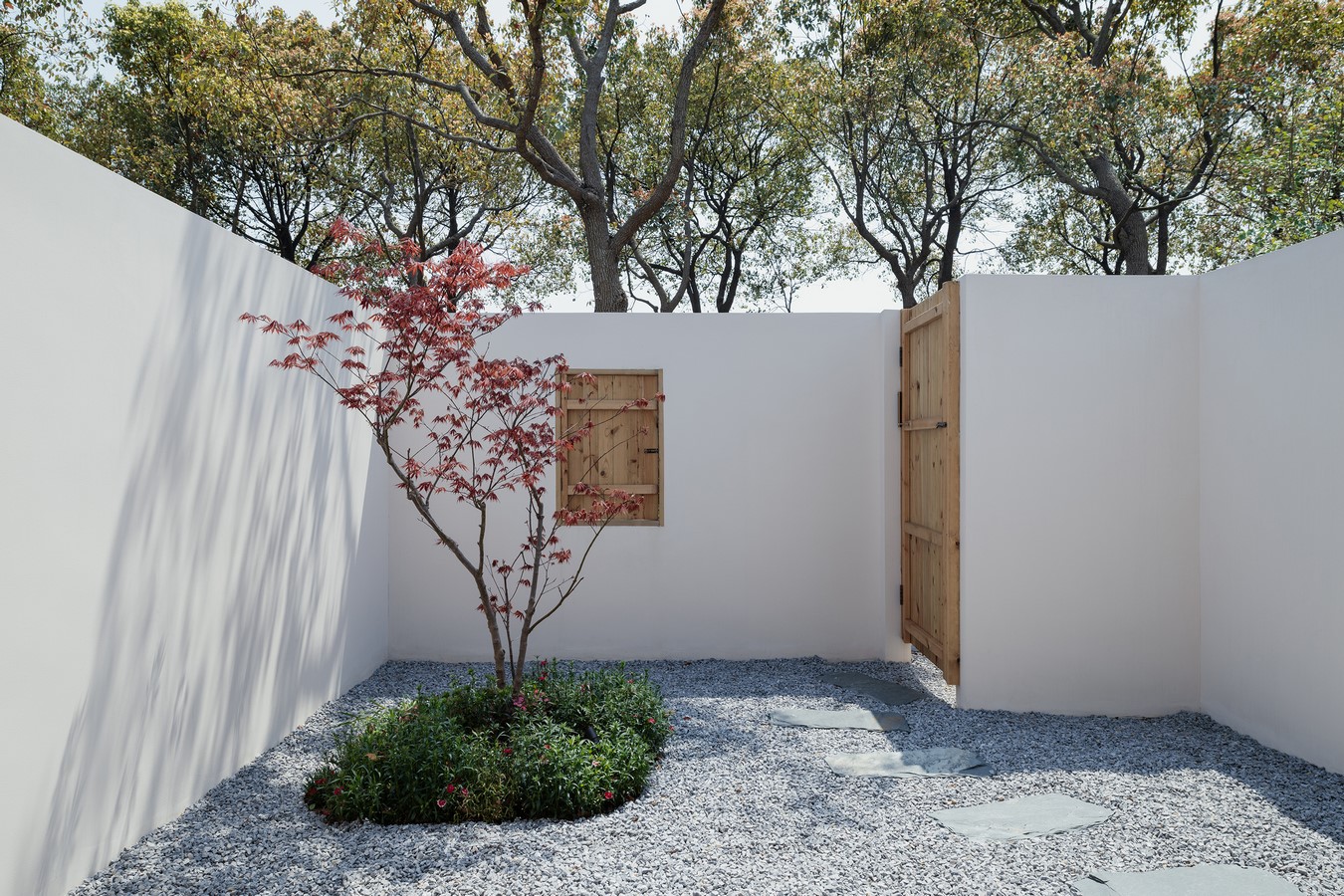
Through precise control of wall heights, the courtyards will not make guests feel constrained while providing privacy. Looking outside through windows, the courtyard walls connect interior space and exterior space, with view of sky and forest on top. We paved the existing concrete slab with gravels and stone slates, and demolished part of the slab to plant small trees, creating the sense of a small quiet and natural world.
Elongated eaves gutter forms continuous horizontal cornice, which connects all the guest rooms and the tea room to visually emphasize the horizontality. The east side courtyard wall of tea room is lowered to 1.2m to form the sense of hierarchy with 2m wall of guest room courtyard behind. Along the short wall of tea room courtyard, we demolished the concrete slab and planted shrub and flowers to create the landscape of tea room entrance. The gable wall on the east is partially demolished and reinforced to form open floor-to-ceiling window, the South door and window openings are enlarged to form one floor-to-ceiling window, now the tea room can have both lake view and courtyard view. By adding new walls, we created comfortable semi-outdoor grey spaces under the eave on both sides of the tea room.
Construction
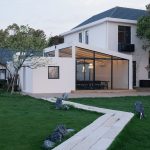
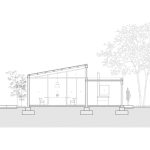
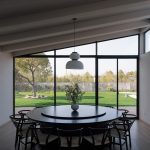
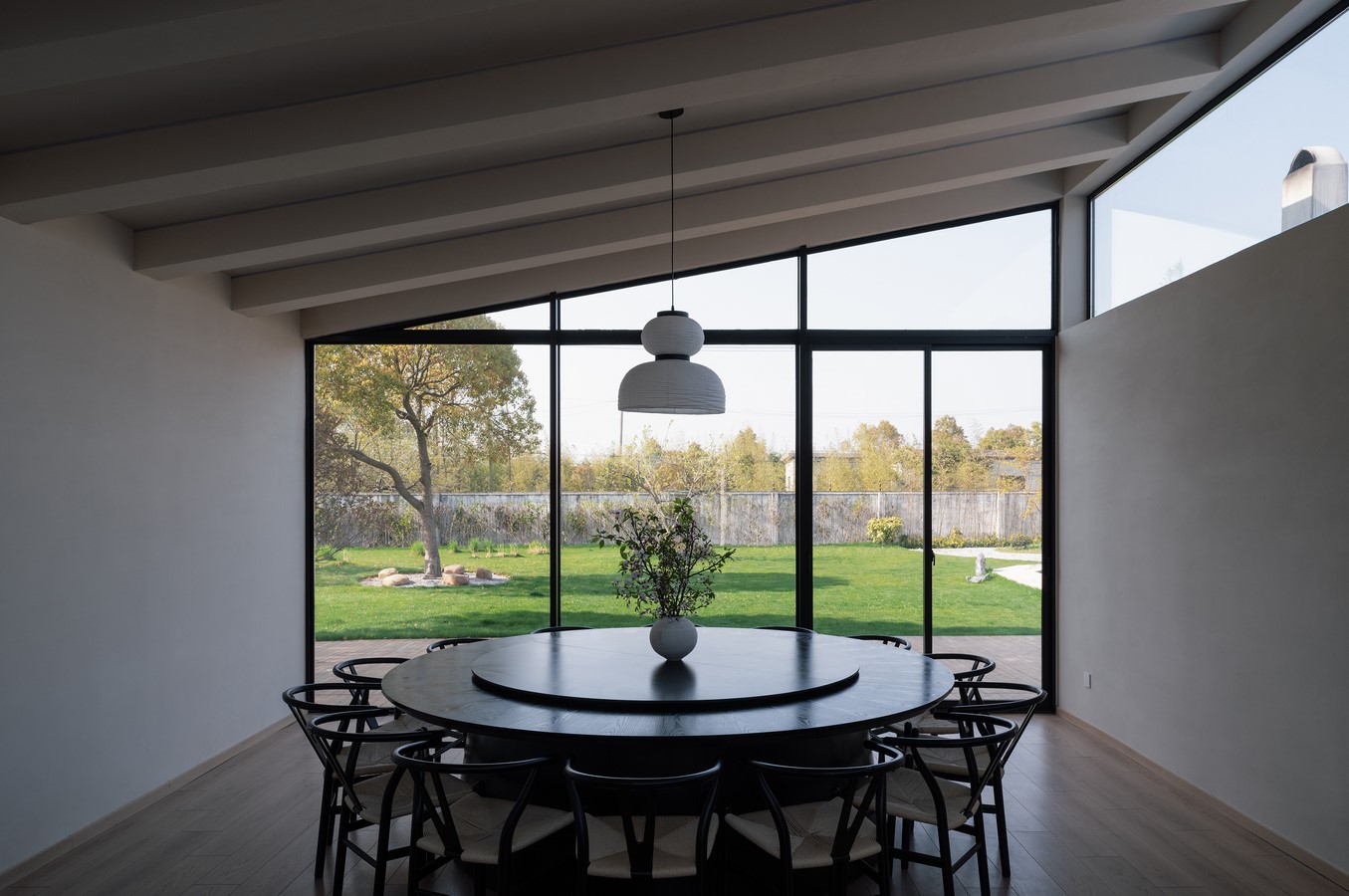
Due to the poor quality, we decided to demolish the original brick-concrete building between main and annex building, and construct a new transparent steel frame building as restaurant, and an enclosed brick-concrete building as kitchen connecting with it. The height and form of two volumes are controlled carefully, harmoniously serving as the visual transition between the main and annex building, together with wooden platform, those buildings are merged together. The restaurant is designed to be walked-through on north-south direction. It is the circulation hub connecting the main building, annex building, and meditation room. Besides enjoying food, the restaurant is also the main space for people to gather and relax. Large area of glass allows courtyard scenery into interior space. We lifted one side of the roof, forming high window and allowing more light into the restaurant.
We kept the glass roof between the main building and annex building, only reorganized drainage and added stone paving with simple decoration, forming comfortable transition space in front of the restaurant.
We hope the courtyard could make people feel open, free, and relaxed. Every tree on site is protected and pruned carefully. The four-season Bermuda lawn is laid all over the courtyard. Besides the restaurant, there is a small camphor tree, we paved gravels and put several stones around it, making it the visual center of courtyard, people can relax seating on stones. We use wooden platform to connect meditation room, laundry room and linen room. A gentle curve defines a piece of land paved with gravels, on which we plant a cherry blossom, a maple tree and a pine tree to create three “little oasis” reminding people of “water”. The gravel land is connected with the wooden platform of restaurant by a floating stone bridge, which has several black stones scattered around. We also plant a sweet persimmon tree and scented osmanthus tree to add some “flavors” for it.
Constrained by highly limited budget, schedule, and rigid form of existing buildings, we don’t have much space to play with the design. But through the four months staying on site, we have to face and solve a lot of realistic and detailed problems, and then we realized the most basic things are the most important issues that influence the comfort of space. During this process, our desire of “trying to design something” is gradually vanished. It is true that architecture, interior, and landscape are an inseparable whole, which form holistic spatial experience. It is all worth it when we could witness the process of this once deserted place brought to life again day by day.