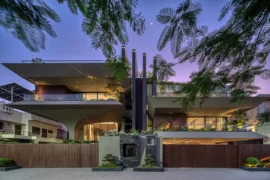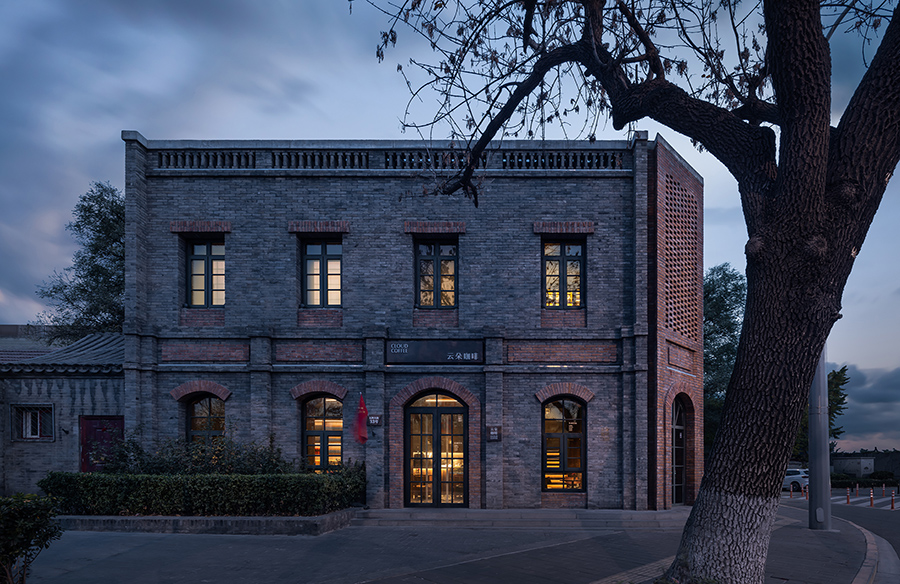
The Japanese banquet restaurant is located at No. 33 Wusi Street, Dongcheng District, Beijing. It was transformed from a 200-year-old building from the Republic of China era and offers a 300-year-old tradition of Japanese banquets. The restaurant overlooks the Forbidden City, an ancient imperial palace that is over 600 years old.
Project Name: SUSHI ZEN
Project Location: F2, No. 33 Wusi Street, Dongcheng District, Beijing
Project Area: 260 sqm
Completion Time: 2022.2
Design Company: LDH Architectural Design Firm (www.ldhdesign.cn)
Chief Designers: Liu Daohua, Cheng Qianyuan, Guan Ji, Shi Naixin, Wang Xiaonuo, Xie Dafeng, Lan Pengzhen, Wang Shang
Lighting Consultant: Beijing Light-House Lighting Design Co. Ltd.
Brand Consultant: Beijing XinYu Brand Consultant Co., Ltd.
Photography: As you see – Wang Ting
Video: SheShiDu – Zhang Peng
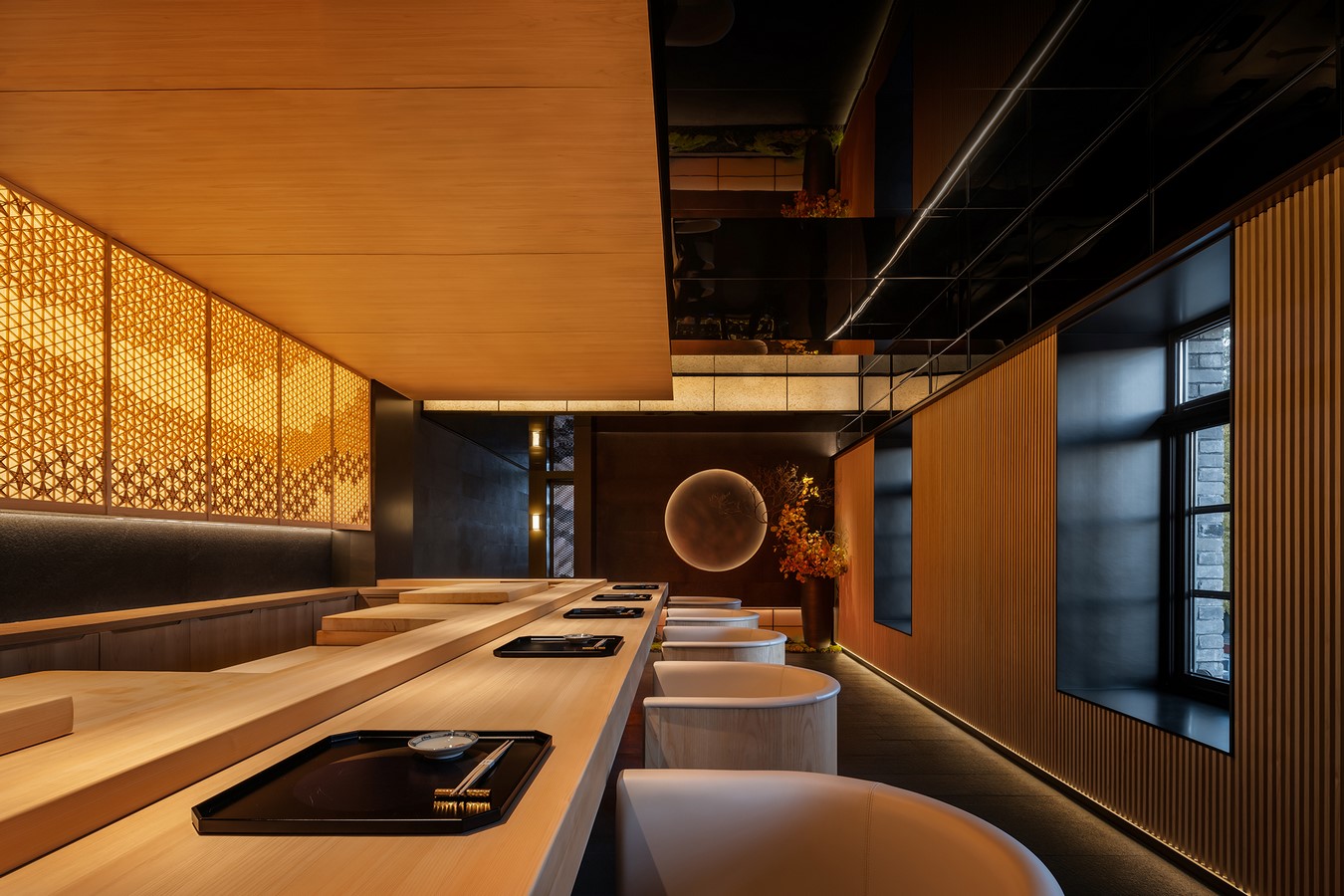
As the designer, Daohua emphasized the fusion of Eastern and Western cultures and showcased oriental aesthetics in the restaurant’s spatial design. Every dish served at the restaurant allows guests to experience a rich cultural heritage and tradition.
On the first floor of the building, there is Cloud Café, which sets a vibrant atmosphere for SUSHI ZEN on the second floor, providing a unique cultural and artistic experience.
Behind the diamond-shaped lattice doors and windows, guests will find a spacious cigar room with brick grating sills and a fireplace. The welcoming counter on the second floor is made of natural marble with firelight lines, resembling a warm and cozy fire.
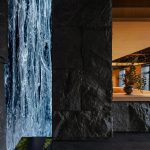
The combination of elements such as the shimmering paper windows, rough stone walls, wabi-sabi bryophytes in the corner, and a small flowing “mountain stream” creates a serene ambiance reminiscent of a mountain temple.
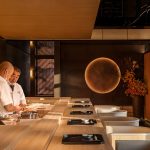
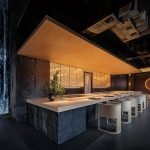
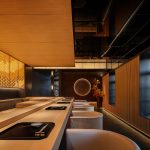
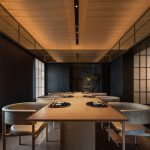
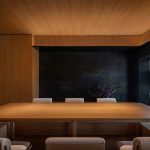
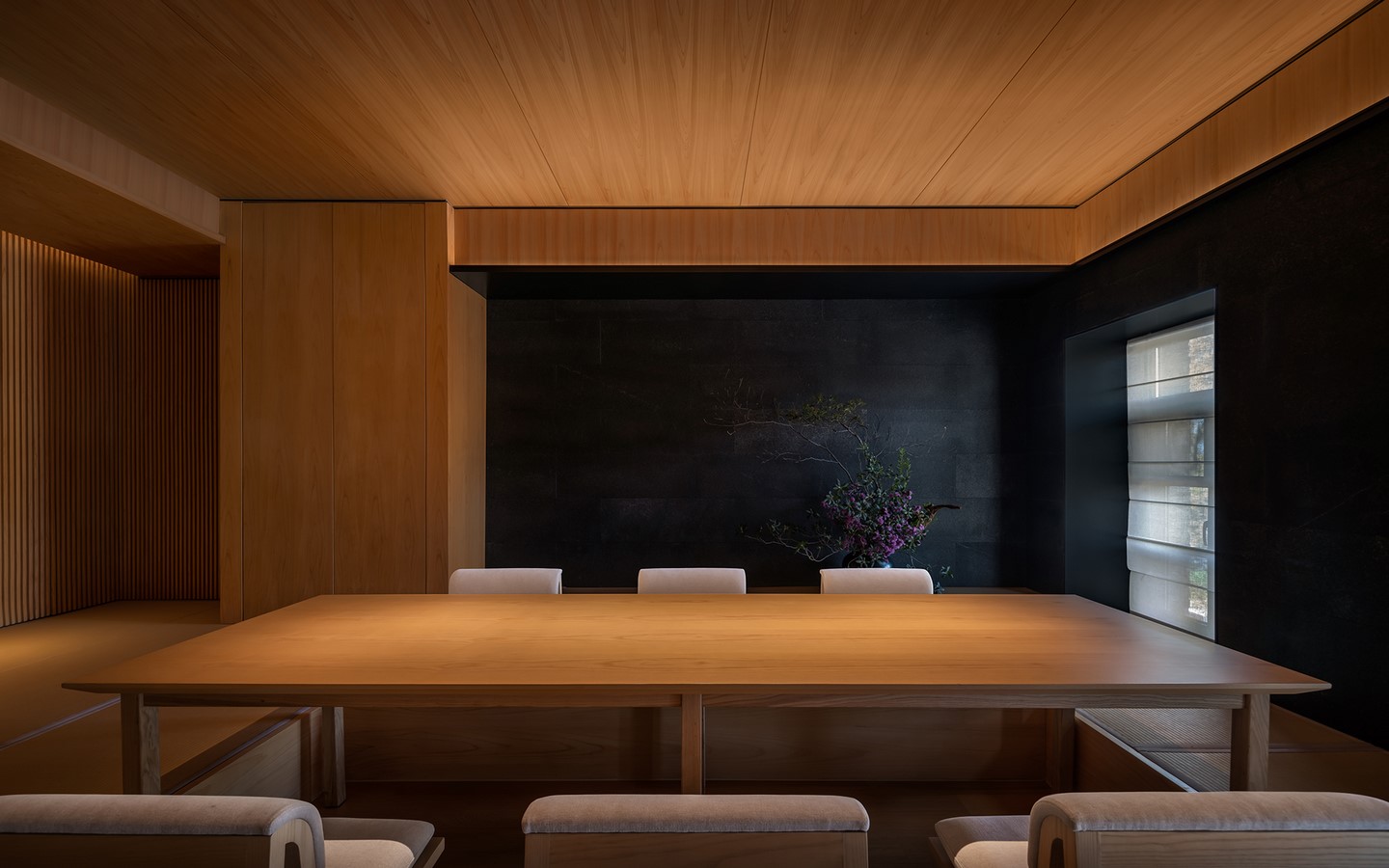
In the central dining area, all the architectural features and flowing lines converge towards the centerpiece table. A large hinoki table is surrounded by round chairs, cloth curtains, and shadow windows. Renowned chef Suzuki Ohki, titled Asia’s Top 10 Chef in 2017, prepares exquisite delicacies in this space.
With the use of special culinary techniques, the chef transforms precious ingredients sourced from mountains and seas into seasonal delicacies suitable for spring, summer, autumn, and winter. Guests can savor these delicate creations in a ceremonial area, allowing for a serene dining experience.
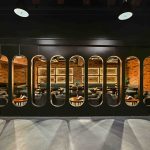
The interplay between black steel and mirrors creates an infinite sense of spatial extension. The contrasting dark and light colors add visual depth and establish a warm balance throughout the design.
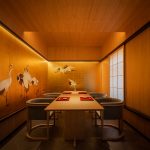
The restaurant features four separate elegant dining rooms named Chuan, Ze, Song, and He, symbolizing mountain, river, green pine, and green cypress, respectively. Each window is intricately crafted with carved hollow pine and maple patterns. The corner boasts a path adorned with grass and flowers, while a full moon shape on the wall creates a sense of openness and spaciousness.
The courtyard, typical of Beijing’s architectural style, exudes tranquility and warmth. Stepping into the courtyard feels like entering a private world. The doors, house, screen walls, veranda, grass, trees, flowers, birds, fish, and stone scenery all contribute to this peaceful ambiance.
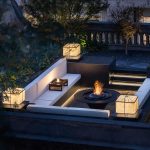
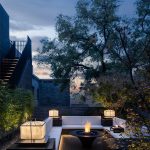
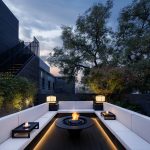
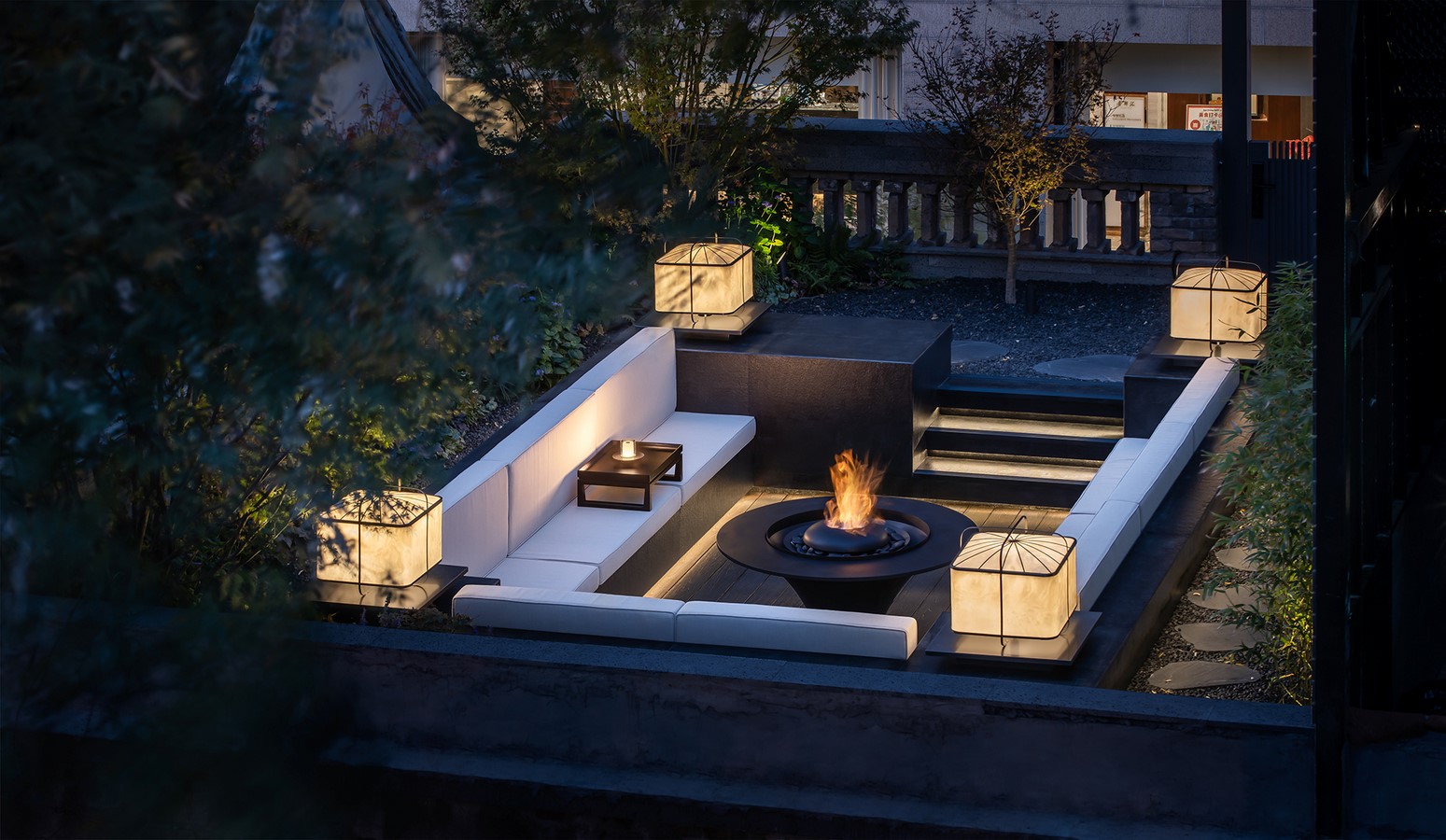
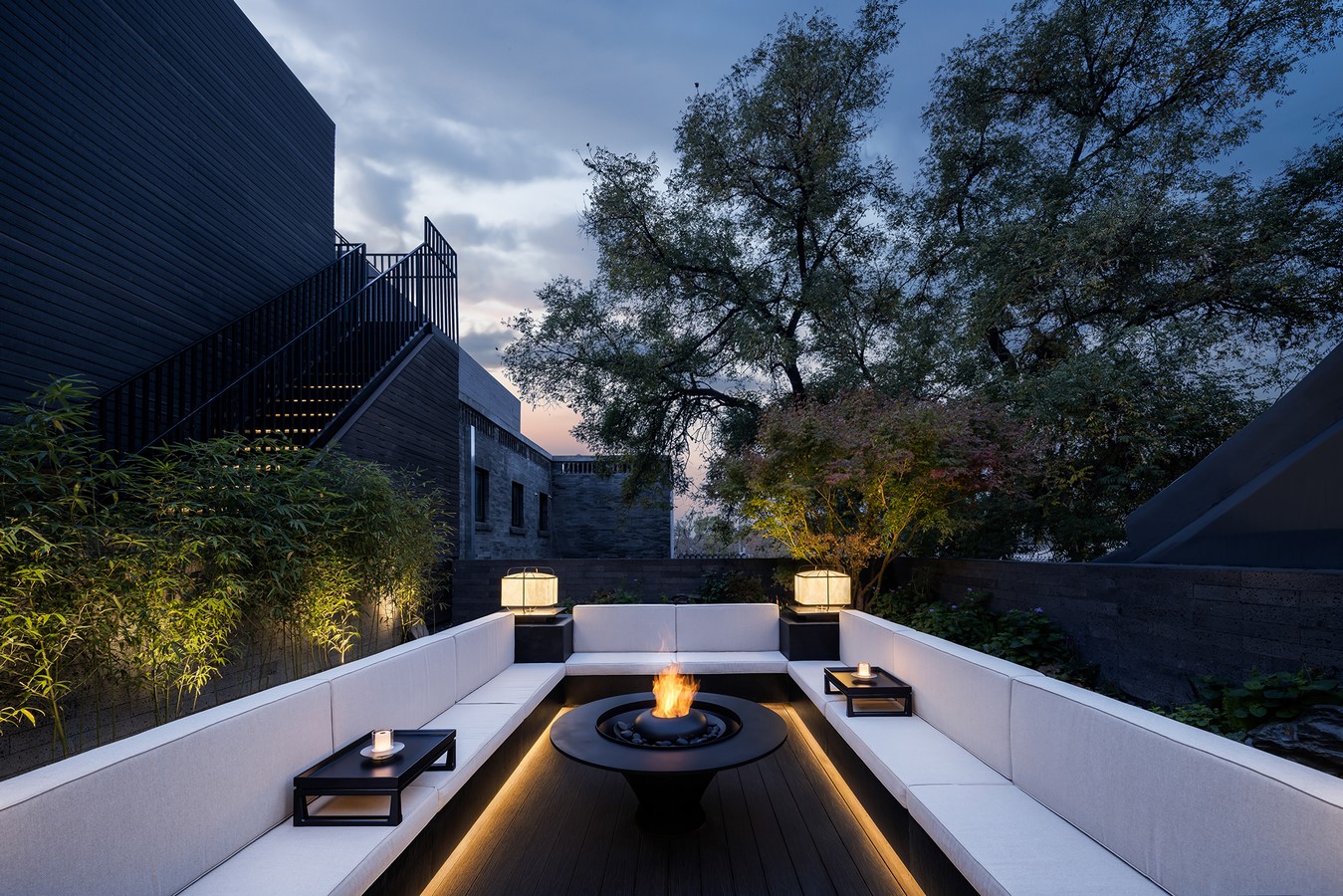
The ultimate goal of the design is to establish a connection between humans and nature. At SUSHI ZEN, the courtyard forms a secluded oasis. Guests can access sunken courtyards on all four sides via winding wooden walkways on the roof. Surrounded by maple and bamboo trees and adorned with irregular flagstone paths, these courtyards provide a cozy spot to enjoy drinks warmed by fire.
The turret of the Forbidden City showcases the grandeur of royal architecture, featuring Xieshan gables, hip roofs, horizontal and vertical eaves, and carefully arranged eaves corners of varying heights.
Every dawn, noon, and dusk, the roof courtyard of SUSHI ZEN and the Forbidden City face each other, allowing for a harmonious connection between man and nature. During these moments, guests can listen, smell, watch, and feel the beauty that surrounds them.